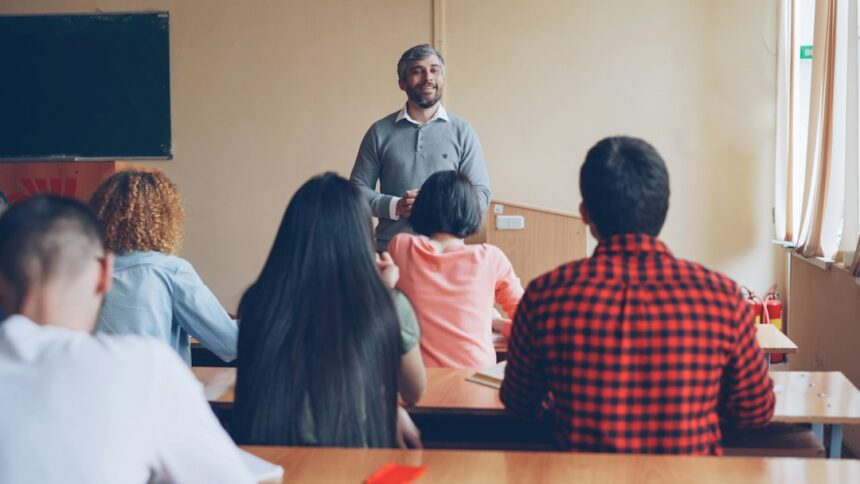
The Art of Responding: Igniting Active Participation
The classroom, a vibrant ecosystem of learning, thrives on engagement. While educators meticulously plan lessons, design activities, and present information, the true heartbeat of a dynamic learning environment lies in the spontaneous and thoughtful interactions that arise. Foremost among these are effective response opportunities, the moments when students are prompted to think, articulate, and contribute. These aren’t mere interrogations; they are carefully orchestrated invitations to participate, to demonstrate understanding, and to deepen their learning journey. Mastering the art of responding, both by the teacher in eliciting student input and by students in formulating their contributions, transforms a passive audience into an active community of scholars. This article explores the multifaceted nature of effective response opportunities in the classroom, delving into strategies for their implementation, the diverse forms they can take, and the profound impact they have on student learning and motivation.
The genesis of effective response opportunities lies in the teacher’s pedagogical intent. It is not enough to simply ask a question; the question must be crafted to provoke thought, to uncover misconceptions, and to encourage higher-order thinking. This requires a nuanced understanding of learning objectives and a keen awareness of the cognitive processes students are undergoing. The teacher’s role is to skillfully weave these response opportunities into the fabric of instruction, creating a natural flow of interaction rather than an artificial interruption. This proactive approach ensures that every student has a chance to engage, fostering a sense of inclusion and valuing diverse perspectives. The goal is to cultivate a classroom culture where questioning and answering are not seen as tests, but as integral components of the learning process itself, where every voice is potentially heard and every contribution is potentially valuable.
In exploring the various response opportunities in the classroom, it is essential to consider how different teaching strategies can enhance student engagement and learning outcomes. A related article that delves into this topic is available at Unplugged Psychology, where you can find insights on effective classroom practices that promote active participation and critical thinking among students.
Crafting the Spark: Intentional Questioning Strategies

The foundation of any successful response opportunity is the question itself. A well-crafted question acts as a catalyst, prompting students to move beyond rote memorization and engage in deeper cognitive processing. It’s about moving from recall to analysis, from comprehension to creation. Educators must become adept at formulating questions that are not only clear and concise but also strategically designed to elicit specific types of thinking. This involves a deliberate shift from superficial inquiries to those that probe for understanding, encourage critical evaluation, and stimulate creative problem-solving. The aim is to spark curiosity and to reveal the intricate pathways of student thought, providing invaluable insights into their learning progress.
Probing for Deeper Comprehension
Moving beyond simple recall, teachers can employ a range of strategies to encourage students to articulate their understanding in more profound ways. This involves asking “why” and “how” questions that necessitate explanation and justification. For instance, instead of asking “What is photosynthesis?”, a teacher might ask, “Explain why photosynthesis is crucial for the survival of most life on Earth.” This shifts the focus from a factual answer to an explanation of significance and interconnectedness. Similarly, prompting students to connect new information to prior knowledge or to real-world applications can foster deeper comprehension. “How does this concept relate to what we learned about ecosystems last week?” or “Can you think of a real-world example where this principle is applied?” are excellent avenues for encouraging this deeper level of engagement.
Stimulating Higher-Order Thinking Skills
The true power of response opportunities lies in their ability to cultivate higher-order thinking skills. Bloom’s Taxonomy provides a useful framework for educators to design questions that move students up the cognitive ladder, from remembering and understanding to applying, analyzing, evaluating, and creating. For example, after introducing a historical event, a teacher might ask students to analyze the different perspectives of those involved, or to evaluate the long-term consequences of the event. A science lesson could culminate in asking students to create a hypothetical experiment to test a related hypothesis. These types of questions demand more than just regurgitation; they require students to synthesize information, make judgments, and generate new ideas, thereby solidifying their learning and fostering critical thinking abilities.
Anticipating and Addressing Misconceptions
Effective response opportunities are not solely about eliciting correct answers; they are also crucial for identifying and addressing student misconceptions. By posing questions that touch upon common areas of confusion, teachers can gain a clear picture of where students might be struggling. For instance, in a mathematics class, asking students to explain their reasoning behind solving a particular problem can reveal flawed logic or incorrect assumptions. The teacher’s role then becomes that of a facilitator, guiding students towards understanding the correct concepts through targeted questioning and clarification. This proactive approach prevents misconceptions from becoming entrenched and allows for timely intervention, ensuring that all students are building a solid foundation of knowledge.
Diversifying the Landscape: Varied Response Formats

The effectiveness of response opportunities is significantly amplified when educators move beyond traditional question-and-answer formats. By incorporating a diverse range of response modalities, teachers can cater to different learning styles, engage a wider spectrum of students, and create more dynamic and engaging learning experiences. The goal is to provide multiple avenues for students to demonstrate their understanding and contribute their thoughts, ensuring that every student feels empowered to participate and that the learning environment remains vibrant and inclusive.
Think-Pair-Share: Collaborative Idea Generation
The Think-Pair-Share strategy is a cornerstone of effective classroom interaction. It provides a structured opportunity for individual reflection, collaborative discussion, and public sharing. First, students are given time to individually think about a question or prompt. This quiet contemplation allows for processing and initial idea generation. Following this, they pair up with a classmate to discuss their thoughts, share ideas, and perhaps refine their understanding. This peer-to-peer interaction can be incredibly powerful, as students often explain concepts in ways that resonate with their peers. Finally, pairs share their collective insights with the larger group. This gradual release of ideas builds confidence and ensures that multiple perspectives are considered, fostering a more robust understanding of the topic.
Quick Writes and Exit Tickets: Snapshot of Understanding
Quick writes and exit tickets are invaluable tools for obtaining immediate feedback on student learning. Quick writes, short, focused writing activities, can be used at any point during a lesson to gauge comprehension, explore a concept further, or brainstorm ideas. For instance, after introducing a new vocabulary term, students might be asked to write a sentence using the word in context. Exit tickets, typically completed at the end of a class period, serve as a summary of learning and a check for understanding. Questions might include, “What was the most important thing you learned today?” or “What question do you still have about this topic?” These concise responses provide teachers with a quick snapshot of individual student progress, highlighting areas that may need further attention in subsequent lessons.
Visual and Non-Verbal Responses: Beyond Spoken Words
Not all students excel at articulating their thoughts verbally, and not all learning can be effectively captured through spoken or written word alone. Incorporating visual and non-verbal response opportunities caters to a broader range of learning styles and provides alternative pathways for participation. This could involve asking students to draw a diagram to explain a scientific process, create a concept map to illustrate relationships between ideas, or use hand gestures to indicate agreement or disagreement. In a history lesson, students might be asked to create a timeline visually. These methods allow for creative expression and can reveal a deeper understanding of complex concepts that might be difficult to articulate verbally. They also foster a more inclusive environment, ensuring that students who are less vocal can still actively contribute and demonstrate their learning.
Digital Tools for Interactive Engagement
The proliferation of digital tools has opened up a wealth of new possibilities for interactive response opportunities. Online platforms, interactive whiteboards, and educational apps can transform passive learning into dynamic engagement. Tools like Kahoot! or Quizizz gamify learning, allowing students to answer questions in real-time and receive immediate feedback. Polling software can be used to quickly gauge class understanding or collect opinions on a particular issue. Collaborative document editing tools enable students to brainstorm and contribute to a shared document simultaneously. These digital avenues not only make response opportunities more engaging but also provide teachers with valuable data on student performance and participation patterns, allowing for more personalized instruction.
Fostering a Culture of Response: Building Trust and Encouraging Risk-Taking
Creating an environment where students feel comfortable and empowered to respond is paramount. This is not simply a matter of implementing specific strategies; it requires cultivating a classroom culture built on trust, respect, and a genuine appreciation for every student’s contribution. When students feel safe to express their ideas, even if they are incorrect, they are more likely to engage deeply with the material and take intellectual risks. This culture shift is an ongoing process, requiring consistent effort and a genuine commitment from the educator.
The Teacher as Facilitator, Not Just Authority
In a responsive classroom, the teacher’s role evolves from that of a sole dispenser of knowledge to that of a facilitator and guide. This means actively listening to student responses, providing constructive feedback, and modeling thoughtful engagement. It involves creating an atmosphere where questions are welcomed and where mistakes are viewed as learning opportunities. The teacher must be approachable and willing to engage in dialogue, demonstrating that learning is a collaborative journey. This shift in perception encourages students to see the teacher as a partner in their learning, rather than an adversary to be impressed.
Valuing Every Voice: Strategies for Inclusivity
Ensuring that every student feels heard and valued is crucial for fostering a truly responsive classroom. This requires conscious effort to create equitable opportunities for participation. Strategies such as calling on a diverse range of students, not just those who raise their hands enthusiastically, can be beneficial. Using think-pair-share and small group discussions allows quieter students to express their ideas in a less intimidating setting. Teachers can also implement strategies like “talking sticks” or designated speaking turns to ensure everyone has a chance to contribute. Furthermore, acknowledging and validating all contributions, even those that may be partially correct or require further development, builds confidence and encourages continued participation.
Constructive Feedback: Guiding Growth, Not Just Correcting Errors
The feedback provided on student responses is as important as the response itself. Constructive feedback goes beyond simply stating whether an answer is right or wrong. It aims to guide students towards deeper understanding and improvement. This involves explaining why an answer is correct or incorrect, offering suggestions for refinement, and highlighting strengths. For instance, instead of saying “That’s wrong,” a teacher might say, “That’s an interesting approach, but let’s consider this aspect…” or “You’re on the right track. Can you explain how you arrived at that conclusion?” This type of feedback encourages students to reflect on their thinking processes and to see mistakes as opportunities for growth rather than as indicators of failure.
In exploring effective response opportunities in the classroom, it is essential to consider various strategies that enhance student engagement and learning outcomes. One insightful resource on this topic can be found in a related article that discusses innovative approaches to fostering classroom interaction. For more information, you can check out this helpful article that provides practical tips and techniques for educators looking to improve their teaching methods.
The Transformative Impact: Benefits of Enhanced Engagement
| Response Opportunity | Description | Frequency | Effectiveness | Example |
|---|---|---|---|---|
| Choral Response | All students respond aloud simultaneously | High (multiple times per lesson) | High engagement, quick assessment | Teacher asks a question, students answer together |
| Individual Response | One student answers at a time | Moderate (several per lesson) | Allows for individual assessment | Student answers a question aloud |
| Written Response | Students write answers on paper or whiteboards | Moderate (once or twice per lesson) | Good for formative assessment | Students write answers to a prompt |
| Think-Pair-Share | Students think individually, discuss with a partner, then share | Low to moderate (once per lesson) | Encourages deeper thinking and collaboration | Students discuss a question in pairs then share |
| Response Cards | Students hold up cards to answer multiple-choice questions | Moderate (several per lesson) | Quick visual feedback for teacher | Students show A, B, C, or D cards |
The consistent and intentional implementation of effective response opportunities yields profound benefits that extend far beyond immediate comprehension. These strategies cultivate a more dynamic and engaging learning environment, fostering deeper understanding, enhanced critical thinking, and a more positive attitude towards learning. The cumulative effect is a generation of students who are not only knowledgeable but also confident, curious, and equipped with the essential skills to navigate an ever-changing world. The ripple effect of these engaged learners touches not only their academic trajectory but also their future personal and professional lives.
Deeper Knowledge Retention and Transfer
When students actively participate in their learning through thoughtful responses, the information they encounter becomes more deeply ingrained. The process of articulating ideas, defending their reasoning, and engaging in dialogue strengthens neural pathways, leading to enhanced knowledge retention. Moreover, the ability to apply learned concepts in different contexts, a direct outcome of higher-order questioning and discussion, fosters knowledge transfer. Students become adept at recognizing patterns, making connections, and utilizing their understanding in novel situations, a hallmark of true academic mastery and a crucial skill for lifelong learning.
Development of Critical Thinking and Problem-Solving Skills
Effective response opportunities are inherently designed to cultivate critical thinking and problem-solving abilities. By asking students to analyze, evaluate, and synthesize information, educators are actively shaping their capacity to think independently and to approach challenges with a reasoned and analytical mindset. The ability to articulate a well-supported argument, to identify flaws in logic, and to generate creative solutions are all skills honed through regular engagement with well-structured response activities. These are not merely academic skills; they are essential life skills that empower individuals to make informed decisions and to navigate complex situations with confidence.
Increased Motivation and Ownership of Learning
When students are given opportunities to voice their ideas and feel that their contributions are valued, their intrinsic motivation to learn skyrockets. The sense of agency and ownership that comes with active participation transforms learning from a passive reception of information into an active co-creation of knowledge. This increased engagement fosters a more positive attitude towards education, reducing feelings of apathy and increasing enthusiasm for academic pursuits. Students who are motivated and feel ownership over their learning are more likely to persevere through challenges, seek out new information, and become lifelong learners.
Enhanced Communication and Collaboration Skills
The interactive nature of effective response opportunities inherently fosters the development of crucial communication and collaboration skills. Students learn to articulate their thoughts clearly and concisely, to listen actively to others, and to engage in respectful dialogue. Collaborative activities, such as Think-Pair-Share or group problem-solving, provide practical experience in working effectively with peers, sharing ideas, and reaching common goals. These interpersonal skills are invaluable not only in academic settings but also in the professional world and in personal relationships, contributing to a student’s overall social and emotional development.
Sustaining the Momentum: Integrating Response into the Long Term
The true power of response opportunities is realized when they are not treated as isolated incidents but as integral, ongoing components of the classroom experience. Sustaining this momentum requires a conscious effort to weave these strategies into the fabric of daily instruction, to consistently nurture a culture of engagement, and to continuously reflect on and refine their implementation. This long-term commitment ensures that the benefits of active participation are not fleeting but contribute to a lasting transformation in student learning and development.
Embedding Responses into Lesson Planning
Effective response opportunities should be intentionally integrated into lesson plans from the outset. Rather than tacking on a few questions at the end of a lesson, educators should consider how and when student responses can be most effectively leveraged to deepen understanding. This might involve designing activities that naturally elicit student input, planning for moments of collaborative discussion, or identifying key junctures where quick checks for understanding are crucial. By making response opportunities a non-negotiable element of the planning process, teachers ensure their consistent and purposeful application.
Ongoing Professional Development and Reflection
The landscape of effective pedagogy is constantly evolving, and educators must remain committed to continuous learning and self-reflection. Participating in professional development opportunities focused on active learning strategies, classroom discourse, and formative assessment can provide valuable insights and new approaches. Equally important is the practice of ongoing reflection. Teachers should regularly analyze the effectiveness of their response strategies, considering what worked well, what could be improved, and how to better cater to the diverse needs of their students. This iterative process of learning, applying, and reflecting is essential for sustained success.
Fostering Student Agency in Response
Ultimately, the most powerful response opportunities are those where students themselves take ownership of their participation. This involves empowering students to ask their own questions, to challenge ideas respectfully, and to seek clarification when needed. By fostering student agency, educators cultivate independent thinkers who are not only receptive to learning but are also active drivers of their own educational journeys. This shift towards student-led inquiry and engagement is the ultimate goal, creating classrooms that are not just responsive, but truly alive with intellectual curiosity and a shared passion for discovery.

The Famous IQ Study That Fooled the World
FAQs
What are response opportunities in the classroom?
Response opportunities in the classroom refer to the various chances provided to students to actively engage with the material being taught, such as answering questions, participating in discussions, or completing tasks.
Why are response opportunities important in the classroom?
Response opportunities are important in the classroom as they help students to process information, demonstrate understanding, and receive feedback on their learning progress. They also promote active participation and critical thinking skills.
How can teachers create effective response opportunities in the classroom?
Teachers can create effective response opportunities in the classroom by asking open-ended questions, providing wait time for students to formulate their responses, using a variety of response formats (such as written, verbal, or digital), and encouraging peer-to-peer discussions.
What are some examples of response opportunities in the classroom?
Examples of response opportunities in the classroom include think-pair-share activities, group discussions, written reflections, quizzes, polls, debates, and hands-on activities that require students to demonstrate their understanding.
How do response opportunities benefit student learning?
Response opportunities benefit student learning by promoting active engagement, enhancing retention of information, improving communication skills, fostering critical thinking, and providing valuable feedback to both students and teachers on the learning process.