
The pursuit of knowledge is a noble endeavor, but throughout history, the quest to understand the human psyche has sometimes led down paths both illuminating and deeply unsettling. Disturbing psychology experiments, born from the desire to unravel the mysteries of behavior, decision-making, and obedience, have revealed profound insights into the human condition. Yet, these same studies often pushed ethical boundaries, forcing society to confront the darker aspects of human nature and the potential for exploitation in the name of science. This exploration delves into some of the most notorious psychological experiments, examining their methodologies, findings, and the enduring ethical debates they ignited.
Stanley Milgram’s obedience experiments, conducted in the early 1960s at Yale University, remain some of the most widely discussed and ethically controversial studies in psychology. The experiment was designed to investigate the extent to which ordinary people would obey an authority figure, even when instructed to perform actions that conflicted with their personal conscience.
The Setup and Procedure
The participants were recruited through newspaper advertisements and informed they were participating in a study on memory and learning. They were then introduced to an “experimenter,” a stern figure in a lab coat, and another “participant,” who was actually a confederate of Milgram. The real participant was always assigned the role of “teacher,” while the confederate was designated as the “learner.” The experiment involved a simulated shock generator, with switches labeled from 15 volts to 450 volts, marked with “Slight Shock,” “Moderate Shock,” “Intense Shock,” “Very Intense Shock,” “Extreme Intensity Shock,” “Danger: Severe Shock,” and finally, “XXX.”
The “teacher” (the actual participant) would read a series of word pairs to the “learner” (the confederate). For each incorrect answer the learner gave, the teacher was instructed to administer an electric shock, increasing the voltage with each mistake. The learner, of course, was not actually receiving any shocks, but would feign pain, protest, and eventually fall silent as the “shocks” became more severe. Crucially, the experimenter would provide a series of pre-determined prods to encourage the teacher to continue, such as “Please continue,” “The experiment requires that you continue,” “It is absolutely essential that you continue,” and “You have no other choice, you must go on.”
The Shocking Results
The results of Milgram’s experiment were profoundly disturbing. Despite the apparent distress of the learner and the ethical qualms of many participants, a significant number of them continued to administer what they believed to be increasingly severe electric shocks. In the initial study, an astonishing 65% of participants, referred to as “teachers,” administered the maximum 450-volt shock. Even when the learner pleaded for the experiment to stop and expressed concerns for his heart condition, the majority of participants continued to obey the experimenter’s commands.
Ethical Implications and Critiques
The Milgram experiment sparked intense ethical debate. Critics argued that the deception involved was profound, causing significant psychological distress to participants who believed they were genuinely harming another person. The potential for long-term psychological harm, including guilt, anxiety, and trauma, was a major concern. Furthermore, the experiment raised questions about informed consent, as participants were not fully aware of the potential emotional toll of their participation.
Despite these criticisms, Milgram defended his research, arguing that the findings provided crucial insights into the nature of obedience and the influence of situational factors on human behavior. He suggested that the experiments demonstrated how ordinary individuals, under the direction of an authority figure, could be induced to perform harmful acts, a phenomenon that could help explain atrocities like those committed during the Holocaust. The experiment’s legacy continues to fuel discussions about the balance between scientific advancement and ethical responsibility.
One of the most thought-provoking articles on disturbing psychology experiments can be found at Unplugged Psych, where they delve into the ethical implications and psychological impact of such studies. For those interested in exploring this topic further, I recommend reading the article available at Unplugged Psych, which provides an in-depth analysis of various controversial experiments and their lasting effects on participants and the field of psychology as a whole.
The Stanford Prison Experiment: When Roles Define Reality
The Stanford Prison Experiment, conducted by Philip Zimbardo in 1971, aimed to investigate the psychological effects of perceived power, focusing on the struggle between prisoners and prison officers. The experiment was designed to simulate a prison environment within the basement of Stanford University’s psychology department, creating a microcosm of societal power dynamics.
The Mock Prison and Its Inhabitants
Zimbardo recruited male college students, screening them for psychological stability. They were randomly assigned to one of two roles: “prisoner” or “prison guard.” The prisoners were subjected to a simulated arrest, fingerprinted, and stripped of their identities, given uniforms and numbers instead. Their “prison” was equipped with small, stark cells, and their daily routines were heavily controlled. The guards, on the other hand, were given uniforms, batons, and mirrored sunglasses, empowering them with authority and a sense of anonymity.
The Rapid Descent into Cruelty
The experiment was intended to last for two weeks, but it had to be terminated after only six days due to the alarming escalation of the guards’ abusive behavior and the prisoners’ increasing distress and passivity. The guards quickly began to exhibit tyrannical and sadistic tendencies, imposing arbitrary rules, humiliating the prisoners, and denying them basic privileges. They created elaborate punishments, enforced silence, and reveled in their power.
Conversely, the prisoners began to exhibit signs of severe emotional disturbance. Some experienced acute anxiety and depression, while others became withdrawn and apathetic. Their sense of self-worth eroded, and they increasingly identified with their prisoner status, struggling to distinguish between the simulated reality and their own identities.
Ethical Failings and Enduring Questions
The Stanford Prison Experiment is another prime example of ethical oversights in psychological research. The experimenters, including Zimbardo himself, became too immersed in their roles, blurring the lines between researcher and participant. Zimbardo, acting as “prison superintendent,” failed to intervene sufficiently to protect the prisoners from the escalating abuse. The level of psychological distress experienced by the participants was immense, and the experiment arguably caused lasting harm.
The experiment, however, provided a powerful, albeit disturbing, demonstration of how situational factors and assigned roles can profoundly influence behavior. It suggested that external pressures, rather than inherent personality traits, might be more significant in determining how individuals act in positions of power or powerlessness. The question of whether people are inherently good or evil, or if their behavior is primarily shaped by their environment, continues to be debated in light of this experiment.
The Little Albert Experiment: Fear Conditioning in Infants
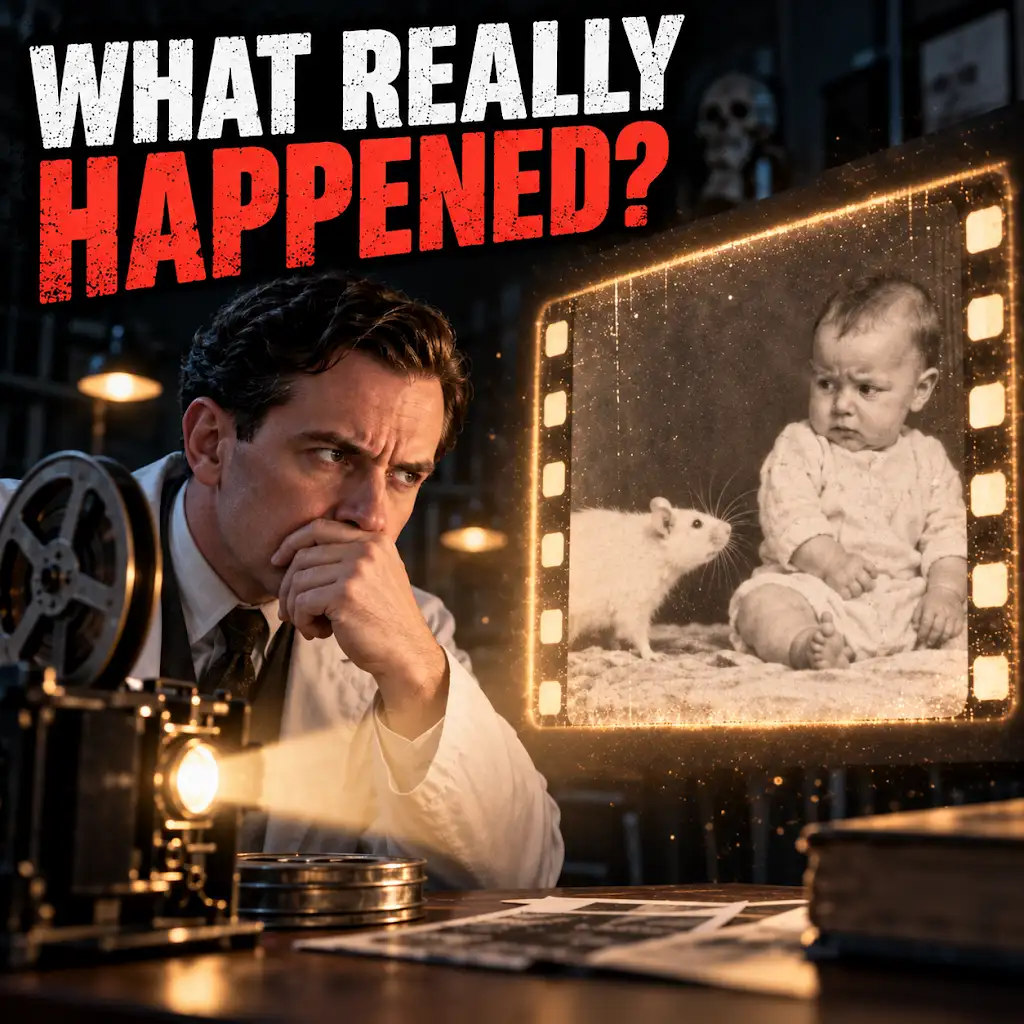
The Little Albert experiment, conducted by John B. Watson and Rosalie Rayner in 1920, is a classic demonstration of classical conditioning in humans, specifically focusing on the acquisition of phobias. While it provided valuable insights into how fears can be learned, it is widely considered unethical by modern standards due to the deliberate infliction of distress on an infant.
The Target and the Stimuli
The subject of the experiment was an infant named Albert, who was approximately nine months old at the time. Albert was described as generally healthy and unafraid of any stimuli, including loud noises, fire, or animals. Watson and Rayner’s goal was to condition Albert to fear a white rat, a stimulus he initially showed no aversion to.
The conditioning process involved presenting Albert with the white rat while simultaneously striking a steel bar with a hammer behind his head. This loud, sudden noise served as an unconditioned stimulus, naturally eliciting a fear response in the infant. The experimenters repeated this pairing numerous times.
Generalization of Fear
The results indicated that the conditioning was successful. After several pairings, Albert began to show fear and cry whenever he saw the white rat, even without the accompanying loud noise. This demonstrated that the rat had become a conditioned stimulus, capable of eliciting a conditioned fear response.
Furthermore, the experiment revealed the phenomenon of stimulus generalization. Albert began to exhibit fear not only towards the white rat but also towards other furry white objects, such as a rabbit, a dog, a fur coat, and even a Santa Claus mask. This suggested that the learned fear had generalized to stimuli that shared similar characteristics with the original conditioned stimulus.
Ethical Condemnation and Lasting Impact
The Little Albert experiment is a stark reminder of the ethical boundaries that must be respected in research involving vulnerable populations, particularly infants. The experiment involved no attempt to decondition Albert’s fear, leaving him with a potentially lifelong phobia. The distress inflicted on the child and the lack of parental consent (Albert’s mother was reportedly unaware of the full scope of the experiment) are significant ethical violations.
Despite its ethical shortcomings, the experiment provided strong evidence for the principles of classical conditioning and demonstrated that phobias could be learned rather than being solely innate. It laid the groundwork for behavioral therapies aimed at treating phobias by unlearning fear associations.
The Bystander Effect and the Kitty Genovese Case: Diffusion of Responsibility

While not a controlled experiment in the traditional sense, the tragic murder of Kitty Genovese in 1964 and the subsequent public outcry led to groundbreaking research by psychologists Bibb Latané and John Darley on the bystander effect. The case, as reported, suggested that numerous witnesses saw or heard the attack but failed to intervene or call the police.
The Incident and the Public Narrative
Kitty Genovese was reportedly attacked and murdered outside her apartment in Kew Gardens, Queens, New York. Initial media reports claimed that dozens of neighbors witnessed the attack or parts of it and did nothing. This sensationalized narrative ignited a wave of public shock and condemnation, questioning the apathy and moral decay of society.
The Birth of Research: Diffusion of Responsibility
Latané and Darley, intrigued by the apparent lack of intervention, proposed the concept of the “diffusion of responsibility.” They theorized that in a group situation, the responsibility to act is spread out among all the individuals present. The more bystanders there are, the less personal responsibility each individual feels to intervene, leading to inaction.
Laboratory Investigations
To test their hypothesis, Latané and Darley conducted a series of experiments. One notable study involved participants who believed they were in separate rooms, filling out a questionnaire. Some participants were alone, while others were in groups of three. They were then exposed to a staged emergency, such as smoke filling the room.
The results consistently showed that individuals who were alone were more likely to report the smoke and seek help than those who were in groups. In the group condition, participants often ignored the smoke or took longer to report it, demonstrating the bystander effect in action. Other experiments explored different emergency scenarios, consistently supporting the diffusion of responsibility theory.
Societal Impact and Ethical Considerations
The research on the bystander effect has had a significant societal impact, raising awareness about the importance of individual responsibility even in group settings. It has encouraged people to be more proactive in emergencies. Ethically, the research itself was conducted with less overt harm compared to some other experiments. Participants were not directly harmed, but the deception involved in staging emergencies and the potential for participants to feel anxious about their inaction were considered. The Genovese case itself, however, was a real-life tragedy that, while not an experiment, served as a powerful catalyst for psychological inquiry into human behavior.
In exploring the unsettling realm of psychology experiments, one cannot overlook the infamous Milgram experiment, which revealed the extent to which individuals would go to obey authority figures, often at the expense of their own moral compass. For a deeper understanding of such disturbing psychological studies, you may find it insightful to read this related article on the topic. It delves into various experiments that challenge our perceptions of human behavior and ethics. To learn more, visit this article for an in-depth analysis.
The Asch Conformity Experiments: The Power of the Group
| Experiment Name | Year | Researcher(s) | Purpose | Method | Outcome | Ethical Concerns |
|---|---|---|---|---|---|---|
| Stanford Prison Experiment | 1971 | Philip Zimbardo | Investigate psychological effects of perceived power | Participants assigned roles of guards/prisoners in mock prison | Guards became abusive; experiment terminated early | Psychological harm, lack of informed consent, researcher bias |
| Milgram Obedience Study | 1961 | Stanley Milgram | Study obedience to authority figures | Participants instructed to deliver electric shocks to learner | Majority obeyed authority despite distress | Emotional distress, deception, lack of informed consent |
| Little Albert Experiment | 1920 | John B. Watson & Rosalie Rayner | Condition fear response in infant | Paired loud noise with white rat to induce fear | Albert developed fear of white rat and similar objects | Emotional harm, lack of consent, no deconditioning |
| Monster Study | 1939 | Wendell Johnson | Investigate effects of positive vs negative speech therapy | Orphans given positive or negative feedback on speech | Negative feedback caused some children to develop stuttering | Psychological harm, vulnerable subjects, lack of consent |
| Robbers Cave Experiment | 1954 | Muzafer Sherif | Study intergroup conflict and cooperation | Boys split into groups competing then cooperating | Conflict arose, cooperation reduced hostility | Deception, manipulation of children, psychological stress |
Solomon Asch’s conformity experiments, conducted in the 1950s, explored the extent to which social pressure from a majority group could influence a person to conform to obviously incorrect answers. These experiments revealed the powerful human desire to fit in and be accepted, even at the expense of one’s own judgment.
The Simple Task, Complex Dynamics
The experimental setup was deceptively simple. Participants were shown a card with a single line on it, followed by another card with three lines of varying lengths. They were asked to identify which of the three lines on the second card matched the length of the line on the first card. This was a straightforward visual task that most people could easily perform correctly.
However, unbeknownst to the real participant, the other individuals in the group were confederates of Asch, instructed to give deliberately incorrect answers on certain trials. The real participant was typically placed in the last position to answer.
The Surprising Outcome of Compliance
The results of Asch’s experiments were striking. In a control group, where participants answered alone, errors were rare. However, when placed in a group with confederates who unanimously gave the wrong answer, a significant number of real participants conformed to the majority opinion, even when it was clearly incorrect.
On average, about 75% of participants conformed to the incorrect majority opinion at least once. In some instances, participants expressed considerable distress and internal conflict, yet still yielded to the group’s pressure. This demonstrated a powerful normative social influence, where individuals conform to be liked and accepted by the group.
Variations and Interpretations
Asch conducted various modifications to his experiments to understand the factors influencing conformity. He found that the size of the majority group mattered, but only up to a certain point. Having just one dissenting confederate significantly reduced conformity, highlighting the importance of social support in resisting group pressure.
The Asch experiments, while not causing direct physical harm, involved deception and could have led to feelings of inadequacy or confusion for participants who conformed against their better judgment. The experiments offered profound insights into the power of group dynamics and the human tendency to align with the perceived consensus, even when that consensus is demonstrably wrong. They continue to be relevant in understanding phenomena ranging from fashion trends to political polarization.
In conclusion, these disturbing psychology experiments, while ethically questionable by today’s standards, have left an indelible mark on our understanding of human behavior. They have illuminated the complex interplay of authority, social influence, situational factors, and individual psychology. While we must condemn the methods employed, the lessons learned from these studies continue to inform ethical guidelines in research and prompt critical reflection on the dark side of human nature and our capacity for both profound cruelty and remarkable resilience. The ongoing dialogue about the ethical boundaries of scientific inquiry ensures that future research will prioritize the well-being and dignity of its participants, even as it strives to unravel the most profound mysteries of the human mind.
The Little Albert Experiment May Not Have Worked
FAQs
What are some examples of disturbing psychology experiments?
Some examples of disturbing psychology experiments include the Stanford Prison Experiment, the Milgram Experiment, the Little Albert Experiment, the Monster Study, and the Harlow Monkey Experiments.
What ethical concerns are raised by disturbing psychology experiments?
Disturbing psychology experiments raise ethical concerns regarding the treatment of human or animal subjects, informed consent, potential harm or distress caused to participants, and the overall impact on the psychological well-being of those involved.
What were the results or findings of these disturbing psychology experiments?
The results of disturbing psychology experiments varied, but they often revealed insights into human behavior, obedience to authority, the effects of trauma, attachment and bonding, and the consequences of unethical research practices.
How have disturbing psychology experiments influenced the field of psychology?
Disturbing psychology experiments have influenced the field of psychology by highlighting the importance of ethical guidelines and informed consent in research, sparking debates on the limits of experimentation, and shaping our understanding of human behavior and psychological processes.
What measures are in place to prevent unethical psychology experiments?
To prevent unethical psychology experiments, institutions and researchers must adhere to ethical guidelines set by organizations like the American Psychological Association (APA), obtain approval from Institutional Review Boards (IRBs), prioritize the well-being of participants, and promote transparency in research practices.