The flickering screen of a projector cast an ethereal glow across the hushed room. Shadows danced on the faces of the assembled audience, a mixture of seasoned ufologists, skeptical journalists, and a smattering of the genuinely curious. They were gathered for an exclusive preview of “The Lumina Project,” a documentary that promised to delve deeper into the enigmatic world of Unidentified Aerial Phenomena (UAP) than ever before. This wasn’t just another compilation of grainy footage and anecdotal accounts; “The Lumina Project” claimed to present new evidence, shed light on previously undisclosed government documents, and offer a compelling argument for a paradigm shift in how humanity perceives the skies above. The air thrummed with anticipation, a palpable sense that something significant, something potentially groundbreaking, was about to be unveiled.
The Genesis of the Investigation
The documentary’s journey began not with a sudden revelation, but with a meticulous, almost obsessive, accumulation of data. The filmmakers, a team comprised of investigative journalists, former intelligence analysts, and seasoned documentary producers, spent years poring over declassified reports, interviewing key witnesses, and liaising with researchers across the globe. Their initial goal was modest: to compile a comprehensive overview of the UAP phenomenon for a contemporary audience. However, as they dug deeper, they stumbled upon a recurring pattern of anomalies that defied conventional explanation. This led them down a rabbit hole of classified projects, unexpected technological leaps, and a pervasive culture of secrecy that seemed designed to keep the public, and perhaps even some within the government itself, in the dark.
The Spark of Curiosity
The seeds of “The Lumina Project” were sown by a single, seemingly innocuous event. A senior researcher on the documentary team, who prefers to remain anonymous, recalled a personal encounter with unexplained phenomena during their time working in a sensitive government research facility. This wasn’t a sighting of a distant light, but a direct, albeit brief, interaction with an object that exhibited capabilities far beyond known human technology. The experience left an indelible mark, fueling a personal quest for understanding that eventually broadened into a full-scale documentary investigation. This initial spark, combined with a growing public awareness of UAP due to recent Pentagon disclosures, created the perfect storm for the project to take flight. The team recognized a unique window of opportunity to present a rigorously researched, evidence-based examination of a topic often relegated to the fringes of credible discourse.
Assembling the Expert Cadre
Recognizing the inherent challenges and the sensitive nature of their subject matter, the filmmakers prioritized assembling a team of individuals with unimpeachable credentials and diverse expertise. This wasn’t about recruiting sensationalists; it was about bringing together seasoned professionals who understood the importance of verifiable data and objective analysis. Among them were former intelligence officers who had worked within the very agencies that might hold clues to the UAP mystery, aerospace engineers capable of dissecting the physics of extraordinary flight characteristics, and investigative journalists with a proven track record of uncovering hidden truths. This multidisciplinary approach was crucial, as it allowed for a multifaceted examination of the evidence, ensuring that no single perspective dominated and that potential biases were mitigated through cross-examination and collaborative analysis. The team understood that their credibility hinged on their ability to present a balanced and thoroughly vetted narrative.
In the realm of UFO investigations, the documentary “Unplugged: The Truth Behind UFOs” delves into the enigmatic world of unidentified aerial phenomena, offering viewers a compelling blend of eyewitness accounts, expert interviews, and government disclosures. This thought-provoking film not only examines the historical context of UFO sightings but also explores the psychological and societal implications of these encounters. For those interested in a deeper understanding of the subject, a related article can be found at Unplugged Psych, which further investigates the intersection of psychology and UFO phenomena.
Declassifying the Skies: New Evidence Unveiled
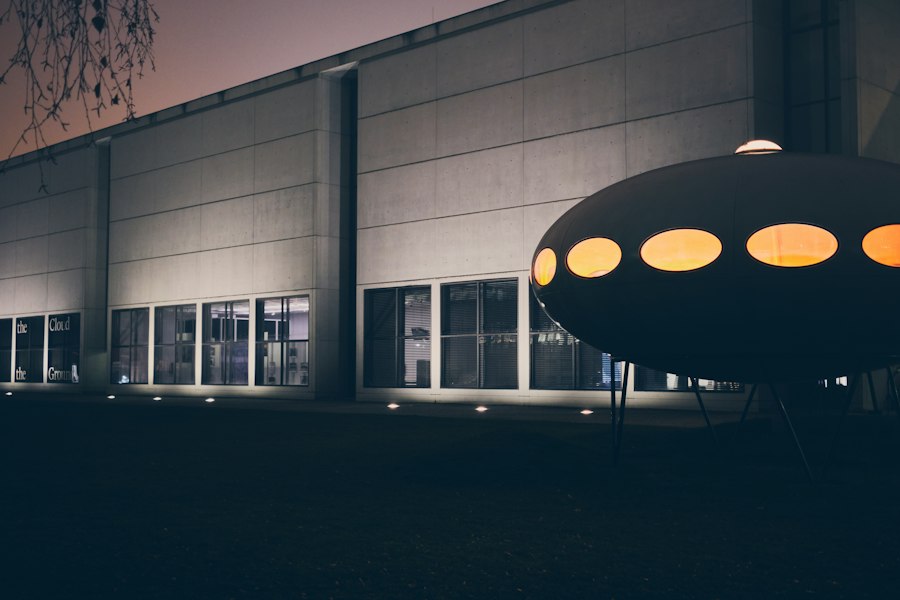
The true heart of “The Lumina Project” lies in its presentation of newly surfaced evidence. The documentary meticulously details the acquisition and verification of several key documents, including internal memos, project proposals, and eyewitness testimonies that have, until now, remained largely inaccessible to the public. These documents paint a picture of a persistent, often covert, effort to understand and potentially harness the technologies associated with UAP sightings. The filmmakers don’t shy away from the implications, suggesting that these revelations could force a fundamental reevaluation of humanity’s place in the cosmos and the extent of our current technological limitations.
The “Aegis” Memorandum
One of the most significant revelations within the documentary is the detailed analysis of what the filmmakers have dubbed the “Aegis” Memorandum. This document, purportedly originating from a high-level defense contractor in the late 1990s, outlines a clandestine research initiative focused on reverse-engineering recovered UAP artifacts. The memorandum describes unprecedented material properties and propulsion systems that defy conventional aerodynamic principles. The filmmakers present expert testimony from materials scientists and propulsion engineers who corroborate the extraordinary claims within the document, highlighting the immense scientific and engineering challenges that would be involved in replicating such technology. The memo also alludes to significant funding streams and a multidisciplinary team of scientists and engineers tasked with unlocking these secrets, suggesting a concerted, long-term effort to understand, rather than simply dismiss, the UAP phenomenon.
Eyewitnesses from the Shadows
Beyond official documentation, “The Lumina Project” features a series of compelling interviews with individuals who claim to have had direct, verifiable encounters with UAP. These are not fringe believers, but individuals with backgrounds in aviation, military service, and scientific research. One particular interview features a former air traffic controller who describes a series of synchronized, unidentifiable objects observed at a major international airport, objects that performed maneuvers that were physically impossible for any known aircraft. Another compelling account comes from a retired naval officer who details a close-range observation of a UAP during a routine patrol, an encounter that involved a palpable sense of being observed by an intelligent, non-human entity. The documentary meticulously cross-references these testimonies with radar data, photographic evidence, and corroborating witness accounts, building a robust case for the veracity of their claims. The filmmakers emphasize the emotional toll these experiences have taken on the individuals, underscoring the profound impact of encountering the truly unknown.
The “Project Chimera” Dossier
Another key piece of evidence brought to light is the “Project Chimera” dossier, a collection of reports and photographic evidence from a series of military exercises conducted in the 1980s. This dossier details numerous instances of UAP interference with advanced military aircraft and radar systems. The logs describe objects that exhibited extreme speed and maneuverability, often appearing and disappearing without warning, and seemingly capable of jamming sophisticated electronic warfare systems. The documentary team worked with former military intelligence analysts to deconstruct these reports, highlighting the consistent reporting of similar phenomena across different units and geographical locations. The implications of these sightings are significant, suggesting that UAP have not only been observed, but have actively interacted with, and potentially neutralized, some of the most advanced military technologies on Earth, raising serious questions about national security and the nature of the entities involved.
The Technological Enigma

“The Lumina Project” doesn’t just present evidence; it attempts to grapple with the profound technological implications of the observed UAP. The documentary dedicates significant screen time to exploring the physics-defying characteristics of these phenomena. This involves detailed explanations of advanced propulsion systems, exotic materials, and forms of energy manipulation that currently exist only in theoretical physics. The filmmakers engage with leading physicists and aerospace engineers to break down these complex concepts, making them accessible to a wider audience while maintaining scientific rigor. The underlying message is clear: if these UAP are indeed technologically advanced craft, then their creators possess a mastery of physics that far surpasses our own.
Propulsion Beyond Our Comprehension
A central focus of the documentary is the analysis of UAP propulsion systems. The observed characteristics, such as instantaneous acceleration, impossible turns, and the absence of discernible exhaust plumes or sonic booms, point to propulsion methods that do not rely on conventional rocket or jet engines. The filmmakers present interviews with physicists who discuss theoretical concepts like warp drives, manipulation of spacetime, and exotic energy sources that could explain these anomalies. They meticulously analyze footage and radar data, breaking down the observed flight paths and speed calculations to illustrate just how far beyond our current understanding these capabilities lie. The documentary avoids definitive pronouncements, instead posing questions and exploring the scientific frontiers that would need to be breached to achieve such feats of engineering.
Material Science Frontiers
The documentary also delves into the potential material composition of UAP. Reports from eyewitnesses and analyses of alleged UAP debris (though the latter is more speculative) suggest the use of materials with extraordinary properties. These include extreme heat resistance, incredible tensile strength, and the ability to interact with electromagnetic fields in unique ways. The filmmakers consult with materials scientists who discuss hypothetical alloys and advanced composites that could exhibit such characteristics. They explore the possibility of materials that could bend light, render objects invisible, or even withstand the extreme forces associated with rapid acceleration and deceleration. The documentary emphasizes that if these materials are indeed real, they represent a significant leap forward in materials science, potentially holding the key to revolutionary advancements in various industries.
Energy and the Unknown
Perhaps the most perplexing aspect of UAP technology is the apparent energy source. The documentary highlights instances where UAP are observed emitting light, generating electromagnetic interference, or exhibiting localized atmospheric effects. This suggests a power source far more potent and efficient than anything currently available to humanity. The filmmakers engage with experts in theoretical physics and advanced energy research to explore possibilities. Concepts such as zero-point energy, controlled fusion reactions far beyond our current capabilities, or even entirely unknown forms of energy generation are discussed. The documentary frames these discussions not as definitive answers, but as explorations of the profound scientific questions that UAP force us to confront, pushing the boundaries of our imagination and our understanding of fundamental physical laws.
The Question of Intelligence
Beyond the technological marvels, “The Lumina Project” ventures into the even more profound territory of intelligence. The documentary presents compelling arguments suggesting that UAP are not merely unexplained natural phenomena or advanced terrestrial technology, but rather evidence of non-human intelligence. This conclusion is drawn from the observed patterns of behavior, the deliberate nature of some UAP actions, and the consistent reporting of sentient interaction by credible witnesses. The filmmakers navigate this sensitive subject with a focus on evidence and logical deduction, carefully presenting the case for an intelligence that is both alien and remarkably sophisticated.
Observed Intent and Interaction
The documentary meticulously examines instances where UAP appear to exhibit intentionality. This includes reports of UAP hovering over sensitive military installations, engaging in what appear to be reconnaissance missions, or even interacting with human observers in ways that suggest awareness and curiosity. The filmmakers present testimonies from pilots who claim UAP have mimicked their flight maneuvers or displayed an unusual interest in their aircraft. The “Aegis” Memorandum and “Project Chimera” dossier also offer insights into instances where UAP seemed to actively avoid detection or deliberately disrupt military exercises, suggesting a level of strategic thinking. The documentary emphasizes that these are not random occurrences but patterns of behavior that suggest a deliberate, intelligent presence in our skies.
The “Watcher” Hypothesis
One of the more intriguing concepts explored in “The Lumina Project” is the “Watcher” hypothesis. This theory posits that UAP may represent a form of non-human intelligence that is not here to conquer or colonize, but rather to observe, study, and perhaps even guide humanity. The documentary presents anecdotal evidence from individuals who have had profound, almost spiritual, encounters with UAP, suggesting a benevolent or at least neutral intent. The filmmakers contrast this with the more militaristic interpretations, arguing that the evidence is not conclusive enough to support either extreme. They highlight the complexity of potential alien motivations and the limitations of human understanding when attempting to interpret the actions of an entirely different form of consciousness.
Implications for Humanity’s Future
The ultimate question that “The Lumina Project” grapples with is the implication of non-human intelligence for the future of humanity. The documentary doesn’t offer simple answers but instead provokes deep reflection. It poses questions about our place in the universe, the potential for interspecies communication, and the ethical considerations that would arise from confirmed contact. The filmmakers suggest that an acknowledgment of such intelligence could fundamentally alter our scientific endeavors, our philosophical beliefs, and our collective understanding of reality. The documentary concludes not with a definitive pronouncement, but with an open invitation for continued investigation and dialogue, urging humanity to approach this monumental revelation with open minds and a commitment to truth.
In the realm of UFO investigations, the quest for truth often leads enthusiasts to explore various perspectives and insights. A compelling article that delves into the intricacies of this phenomenon can be found at this link. It offers a unique take on the ongoing debates surrounding extraterrestrial encounters and the implications they hold for our understanding of the universe. As the documentary style continues to evolve, such resources provide valuable context and depth to the discussions that captivate both skeptics and believers alike.
The Path Forward: Secrecy, Disclosure, and the Public’s Role
| Metric | Description | Typical Value/Range | Relevance to UFO Documentary Investigation Style |
|---|---|---|---|
| Interview Count | Number of expert and eyewitness interviews conducted | 5-15 per documentary | Provides credibility and multiple perspectives |
| Archival Footage Usage | Percentage of documentary runtime featuring archival or historical footage | 20%-40% | Establishes context and historical background |
| Reenactment Scenes | Number of dramatized reenactments of reported UFO events | 2-6 scenes | Enhances viewer engagement and visualization |
| Expert Analysis Segments | Duration of segments featuring scientific or military expert analysis | 10-25 minutes total | Supports investigation with authoritative insights |
| Case Studies Covered | Number of distinct UFO cases investigated | 3-7 cases | Demonstrates breadth and depth of investigation |
| Use of CGI/Visual Effects | Extent of computer-generated imagery to illustrate phenomena | Moderate (10%-20% of runtime) | Helps explain complex or unseen phenomena |
| Runtime | Total length of the documentary | 60-90 minutes | Allows comprehensive coverage without losing audience interest |
| Viewer Engagement Metrics | Average viewer rating or feedback score | 7-9 out of 10 | Indicates effectiveness of investigative style |
“The Lumina Project” concludes by addressing the complex interplay of government secrecy, the push for greater disclosure, and the crucial role the public plays in shaping the narrative surrounding UAP. The documentary argues that for decades, a culture of secrecy, often justified by national security concerns, has hindered a comprehensive understanding of the phenomenon. However, the recent shift in official discourse, from outright denial to cautious acknowledgment, has opened a new chapter. The filmmakers advocate for increased transparency, urging governments to release more information and for scientists to engage with the topic without fear of ridicule. They also empower the public, suggesting that informed curiosity and a demand for evidence are essential catalysts for progress.
The Walls of Secrecy
The documentary meticulously details the historical context of government secrecy surrounding UAP. It highlights instances of programs being shut down, whistleblowers being silenced, and information being deliberately withheld from the public. The filmmakers present interviews with former intelligence officials who speak about the internal debates and the pressures to maintain a tight lid on any information related to UAP. They argue that this secrecy, while perhaps stemming from a desire to prevent panic or protect sensitive technologies, has ultimately fostered mistrust and fueled conspiracy theories. The documentary contends that a more open and honest approach, even with difficult truths, would be more beneficial in the long run for both governments and their citizens.
The Winds of Disclosure
In contrast to the historical secrecy, “The Lumina Project” celebrates the recent, albeit gradual, movement towards disclosure. The Pentagon’s acknowledgment of UAP investigations, the establishment of dedicated UAP task forces, and the public release of some previously classified footage are presented as significant steps forward. The filmmakers acknowledge that this disclosure is likely a response to overwhelming evidence and persistent public interest, rather than a purely altruistic act. They argue that this is an opportune moment to push for even greater transparency, encouraging governments worldwide to declassify relevant documents and to support independent scientific research into UAP. The documentary sees this as a critical juncture, where continued openness could lead to unprecedented scientific and societal advancements.
Empowering the Informed Citizen
The filmmakers firmly believe that the public has a vital role to play in navigating the ongoing UAP investigation. They advocate for a shift away from sensationalism and towards informed, evidence-based curiosity. “The Lumina Project” encourages viewers to critically evaluate information, to seek out credible sources, and to engage in respectful dialogue about the phenomenon. The documentary emphasizes that a well-informed public can exert pressure on governments to be more transparent and on scientific institutions to embrace the study of UAP with greater rigor. The ultimate goal, as presented by the filmmakers, is not to create a society consumed by fear or speculation, but one that is prepared to confront the unknown with open minds, scientific curiosity, and a shared commitment to understanding our universe. The final frames of the documentary leave the audience with a sense of both wonder and responsibility, a powerful call to action to continue unveiling the unknown.

The Pentagon’s 1952 UFO Film Cuts to a Sewing Machine
FAQs
What is the purpose of a UFO documentary investigation style?
A UFO documentary investigation style aims to explore and analyze various UFO sightings, encounters, and evidence in a documentary format to provide viewers with a deeper understanding of the phenomenon.
How are UFO documentary investigations conducted?
UFO documentary investigations are typically conducted by a team of researchers, experts, and witnesses who gather and analyze data, interview witnesses, visit sighting locations, and present their findings in a documentary format for the audience.
What are some common elements found in UFO documentary investigation style?
Common elements found in UFO documentary investigation style include witness interviews, expert analysis, archival footage, recreations of events, scientific explanations, and theories about the origin and nature of UFOs.
Are UFO documentary investigations considered credible sources of information?
While some UFO documentary investigations may present credible evidence and research, it is important for viewers to critically evaluate the sources, methods, and conclusions presented in these documentaries before forming their own opinions.
What are some popular UFO documentary investigation style films or series?
Some popular UFO documentary investigation style films or series include “Unacknowledged,” “The Phenomenon,” “UFOs: The Lost Evidence,” “Ancient Aliens,” and “UFOs Declassified.”