A Glimpse Through Time: The Groundbreaking Historical UFO Footage Documentary
The enigma of unidentified flying objects, or UFOs, has long captivated the human imagination. For decades, grainy photographs, shaky amateur videos, and anecdotal eyewitness accounts have fueled speculation and debate. Now, a groundbreaking documentary, “Unveiling the Past: Historical UFO Footage Revealed,” promises to bring a new level of clarity and depth to this enduring mystery by meticulously curating and analyzing some of the most compelling visual evidence ever captured. This ambitious project, the culmination of years of painstaking research and digital restoration, aims to shed light on a phenomenon that has, until now, largely remained in the shadows of fringe culture and governmental opacity. The documentary’s creators assert that by presenting a comprehensive and historically contextualized collection of footage, they are offering viewers an unprecedented opportunity to engage with the raw data of alleged aerial anomalies, moving beyond sensationalism and toward a more critical and informed understanding.
The film’s central thesis is that a substantial body of historical footage, when examined with modern analytical tools and within its proper historical context, reveals patterns and characteristics that defy conventional explanations. It’s not just about presenting unexplained lights in the sky; it’s about understanding why these sightings occurred, who reported them, and what societal and technological conditions might have influenced their perception and documentation. The documentary meticulously reconstructs the circumstances surrounding each piece of footage, delving into the provenance of the recordings, the credibility of the witnesses, and the prevailing scientific and cultural milieu of the time. This approach seeks to distinguish between genuine anomalies and misidentifications, hoaxes, or artifacts of photographic and cinematographic limitations. The filmmakers have employed cutting-edge digital techniques to enhance resolution, stabilize shaky frames, and even attempt to digitally reconstruct obscured details, all while maintaining a commitment to transparency about the methods used. The result is a visual experience that, for the first time, allows viewers to see these historical encounters with a clarity rarely afforded to them before, making the case for a deeper investigation into the implications of such widespread and persistent observations.
For those interested in exploring the intriguing world of historical UFO footage, a fascinating article can be found at Unplugged Psych, which delves into the significance of these sightings and their impact on popular culture. The article examines various documented cases and provides insights into how they have shaped public perception of extraterrestrial life. To read more about this captivating topic, visit the article here: Unplugged Psych.
The Unearthing of Forgotten Archives

The journey to “Unveiling the Past” began not in a high-tech studio, but in dusty archives, forgotten government repositories, and the personal collections of dedicated researchers. The filmmakers embarked on an exhaustive global search, seeking out the earliest and most enigmatic visual records of aerial phenomena. This involved sifting through military films, declassified intelligence documents, and amateur footage meticulously preserved by individuals who believed in the importance of these records. The sheer volume of material unearthed was staggering, requiring a dedicated team to meticulously catalog, verify, and prepare each piece for analysis.
Military and Government Footage: A Deeper Look
A significant portion of the documentary is dedicated to footage originating from military and intelligence agencies. These are not the sensationalized clips often found online, but often raw, unedited recordings from reconnaissance missions, training exercises, and even classified research projects. The filmmakers have gained access to a select number of these declassified materials, presenting them with an accompanying narrative that contextualizes their origin and the initial observations made by trained personnel. This includes footage from the Cold War era, a period rife with heightened aerial surveillance and a palpable sense of national security concerns, which may have influenced the initial interpretation and classification of certain events. The documentary explores the implications of such footage being documented by individuals whose primary objective was objective observation and threat assessment, rather than sensationalism.
The process of acquiring and declassifying this material was, by itself, a Herculean task. It involved navigating complex bureaucratic systems, filing numerous Freedom of Information Act requests, and often forging relationships with individuals within government agencies who recognized the historical significance of these records. The documentary highlights the challenges and triumphs of this investigative process, underscoring the commitment required to bring these forgotten archives to light. The film meticulously details the chain of custody for each piece of military footage, ensuring its authenticity and providing viewers with a sense of the rigorous vetting process.
Civilian Observations: The Public’s Eye on the Sky
Beyond the official records, “Unveiling the Past” also showcases a rich tapestry of civilian-recorded UFO sightings. These range from the blurry home videos of ordinary citizens who happened to capture something unusual on film, to more dedicated efforts by amateur ufologists who spent years documenting the skies. The documentary carefully distinguishes between different eras and technological capabilities, acknowledging how the advent of portable video cameras and later, digital technology, democratized the ability to record such phenomena. The film highlights how these civilian accounts, though often dismissed, represent a groundswell of public interest and persistent observation that cannot be ignored. It explores the cultural context of each sighting, considering factors like the prevailing media narratives of the time, public anxieties, and the burgeoning interest in space exploration.
The selection of civilian footage was guided by a strict set of criteria. The filmmakers sought out recordings that were corroborated by multiple witnesses, documented with accompanying detailed testimonies, and where the origin and playback of the footage could be reliably traced. The documentary also addresses the inherent challenges in verifying amateur footage, acknowledging the possibility of misidentification, optical illusions, and even deliberate hoaxes. However, it argues that even after accounting for these factors, a compelling residual category of unexplained visual data remains. The film presents a nuanced perspective, respecting the earnestness of civilian observers while maintaining a critical and analytical approach to the evidence they provide.
The Science of Seeing: Modern Analysis of Ancient Films
The core innovation of “Unveiling the Past” lies in its application of modern scientific and analytical techniques to historical footage. Many of these recordings were made with rudimentary equipment and under challenging conditions, leading to poor image quality, distortion, and the presence of artifacts. The documentary meticulously details how advanced digital restoration, image enhancement, and motion analysis software have been employed to overcome these limitations, revealing details that were previously obscured. This process is not presented as magic, but as a transparent application of scientific principles to extract the maximum information from the available data.
Digital Restoration: Bringing Clarity to Grainy Images
The process of digitally restoring historical footage is a complex and delicate operation. The documentary showcases the techniques used to reduce noise, sharpen focus, stabilize shaky frames, and even colorize monochrome footage where appropriate. This is not about altering the original footage, but about cleaning it up to make it more viewable and analyzable. The filmmakers explain the algorithms and methodologies employed, demystifying the process for the audience. Viewers witness before-and-after comparisons, clearly demonstrating how the restoration process reveals previously unseen details, such as the shape, texture, and movement of objects that were once rendered as mere smudges or indistinct lights.
This section of the film is crucial for establishing credibility. By showing the technical steps involved, the documentary aims to counter skepticism that the enhancements are creating phenomena that were not originally there. The filmmakers emphasize their commitment to preserving the integrity of the original recording, with all alterations being clearly documented and explained. This meticulous approach ensures that the audience can trust the enhanced footage as a more accurate representation of what was originally captured. The documentary also discusses the limitations of digital restoration, acknowledging that certain artifacts or inherent blurriness may persist due to the original recording quality.
Objectivity Through Analysis: Deconstructing the Anomalies
Beyond mere visual enhancement, the documentary employs sophisticated analytical tools to examine the characteristics of the objects depicted in the footage. This includes analyzing their flight paths, speeds, and apparent maneuvers. Techniques such as motion tracking, trajectory analysis, and photometric analysis are explained in accessible terms, demonstrating how they can be used to quantify the observed phenomena and compare them against known aerodynamic principles and aircraft capabilities. The documentary aims to move beyond subjective interpretations and provide objective data points for each sighting.
The filmmakers highlight instances where the observed object exhibits characteristics that are inconsistent with known terrestrial aircraft or natural phenomena. This could include instantaneous acceleration, seemingly impossible turns, or silent, controlled flight at extreme speeds. By breaking down the footage into quantifiable data, the documentary presents a case for the anomalous nature of these sightings, leaving the audience to draw their own conclusions based on the evidence presented. The emphasis is on presenting data-driven insights, allowing the visual evidence to speak for itself when combined with rigorous scientific scrutiny. The film also addresses and debunks common misidentifications, showing how weather phenomena, aircraft, or optical illusions can sometimes be mistaken for UFOs.
Historical Context: The World Through Which They Flew
Understanding historical UFO footage requires more than just analyzing the images themselves; it necessitates placing them within their specific historical and cultural contexts. The documentary dedicates significant time to exploring the societal, political, and technological landscapes that shaped the observations and interpretations of these aerial anomalies. This approach argues that the prevalence and nature of UFO sightings can often be understood as reflections of the times in which they occurred.
The Cold War and the Specter of the Unknown
The Cold War era, with its heightened geopolitical tensions, pervasive fear of espionage, and rapid advancements in aviation and missile technology, is a particular focus. The documentary explores how the atmosphere of suspicion and the constant threat of the unknown may have influenced both the reporting and the initial interpretations of unexplained aerial phenomena. Many early UFO sightings occurred during a period of intense military activity and technological competition, leading to questions about whether some sightings were misidentified advanced Soviet technology, secret US projects, or genuine unknown craft.
The film delves into specific incidents that occurred during this period, examining government responses, public reactions, and the psychological impact of living in a world teetering on the brink of nuclear conflict. It suggests that the concept of “flying saucers” itself emerged during a time when the public was already grappling with unprecedented technological change and the potential for both incredible progress and catastrophic destruction. The documentary does not shy away from exploring the possibility that some historical footage might represent classified terrestrial technology, but it also posits that the sheer volume and consistency of certain observations across different nations and military branches warrant further investigation into non-terrestrial explanations.
Cultural Shifts and Public Fascination
Beyond the geopolitical landscape, the documentary also examines how broader cultural shifts and the burgeoning public fascination with space exploration, science fiction, and the possibility of extraterrestrial life influenced how UFOs were perceived and documented. The rise of popular media – films, books, and television shows – often depicted alien spacecraft, shaping public expectations and potentially influencing eyewitness accounts. The filmmakers acknowledge the role of cultural narratives in framing UFO experiences, but they also argue that the persistent reporting of anomalous phenomena across different cultural and technological eras suggests a reality that transcends mere cultural projection.
The documentary explores how the public imagination was ignited by the dawn of the space age, making the idea of visitors from other worlds seem more plausible than ever before. It analyzes how media coverage of UFO sightings, from sensationalized tabloid reports to more serious journalistic inquiries, contributed to a growing cultural awareness of the phenomenon. By considering these cultural undercurrents, “Unveiling the Past” aims to provide a more comprehensive understanding of why UFOs captured the public’s imagination and why the visual evidence, when examined critically, continues to intrigue and confound. The film makes a case that while cultural narratives can shape perception, they do not entirely invalidate the recurring patterns observed in historical footage.
For those intrigued by the mysteries of the universe, a fascinating article on historical UFO footage can provide deeper insights into the phenomenon. This documentary not only explores the origins of various sightings but also examines the cultural impact these events have had over the decades. To learn more about the intriguing connections between these sightings and public perception, you can read the article here.
The Enduring Mystery: Unanswered Questions and Future Directions
| Documentary Title | Year Released | Duration (minutes) | Number of Historical Footage Clips | Countries Featured | Primary Focus |
|---|---|---|---|---|---|
| UFOs: The Secret History | 2010 | 90 | 25 | USA, UK, Russia | Government UFO files and declassified footage |
| Ancient Aliens: Historical UFO Evidence | 2015 | 60 | 15 | Global | Historical sightings and ancient astronaut theories |
| The UFO Phenomenon: A Historical Perspective | 2018 | 75 | 30 | USA, France, Brazil | Compilation of historical UFO footage and eyewitness accounts |
| Unidentified: The UFO Chronicles | 2021 | 80 | 40 | USA, Canada, UK | Modern and historical UFO encounters with archival footage |
| Sky Mysteries: UFOs Through Time | 2019 | 70 | 20 | Global | Historical analysis of UFO sightings and footage |
Despite the meticulous analysis and historical context provided in “Unveiling the Past,” the documentary ultimately underscores the enduring nature of the UFO enigma. While many pieces of footage can be explained through misidentification or earthly origins, a significant subset remains, presenting compelling evidence of phenomena that defy conventional understanding. The film does not claim to have all the answers but rather to have opened a new door for critical inquiry and public engagement with this complex subject.
The Residual Category: Evidence That Persists
The documentary meticulously identifies and presents the “residual category” of footage – those recordings that, even after rigorous analysis, continue to exhibit characteristics inconsistent with known aircraft, natural phenomena, or human-made technology. These are the clips that leave viewers pondering the extraordinary. The filmmakers meticulously detail the specific anomalous characteristics of each object in this category, such as its speed, maneuverability, apparent lack of propulsion, or silent operation. The film argues that this residual category, though perhaps smaller than sensationalist claims suggest, is significant and warrants serious scientific attention.
The documentary emphasizes that the goal is not to definitively declare these objects as extraterrestrial, but to acknowledge their anomalous nature and advocate for further research. The film presents the scientific community’s historical reluctance to engage with the topic, often due to stigma and a lack of credible, analyzable data. By providing this curated and analyzed collection of historical footage, “Unveiling the Past” aims to present a compelling case for a more open-minded and scientifically rigorous approach to the study of these persistent aerial mysteries. The film aims to demonstrate that the question of what these objects are remains, for a subset of the footage, genuinely unresolved.
Towards a New Era of Investigation
“Unveiling the Past” concludes not with definitive answers, but with a call to action. The filmmakers express hope that by demystifying historical UFO footage and presenting it in a clear, analytical manner, they can encourage a new generation of researchers, scientists, and policymakers to engage with the phenomenon in a more open and evidence-based way. The documentary suggests that the declassification of information, coupled with the advancement of analytical technologies, has created an unprecedented opportunity to move beyond speculation and toward a more systematic and scientific investigation of unexplained aerial phenomena.
The film advocates for increased transparency from governments regarding historical and ongoing investigations into UFOs, as well as for greater collaboration between civilian researchers and the scientific establishment. The creators of “Unveiling the Past” believe that by presenting a robust and well-researched body of visual evidence, they have laid the groundwork for a more serious and productive dialogue about our place in the universe and the possibility that we are not alone. The documentary’s legacy, they hope, will be to usher in a new era where the study of UFOs is no longer relegated to the fringes but is approached with the same scientific rigor applied to any other unexplained natural or technological phenomenon. The persistent visual record, meticulously unveiled, demands continued exploration.
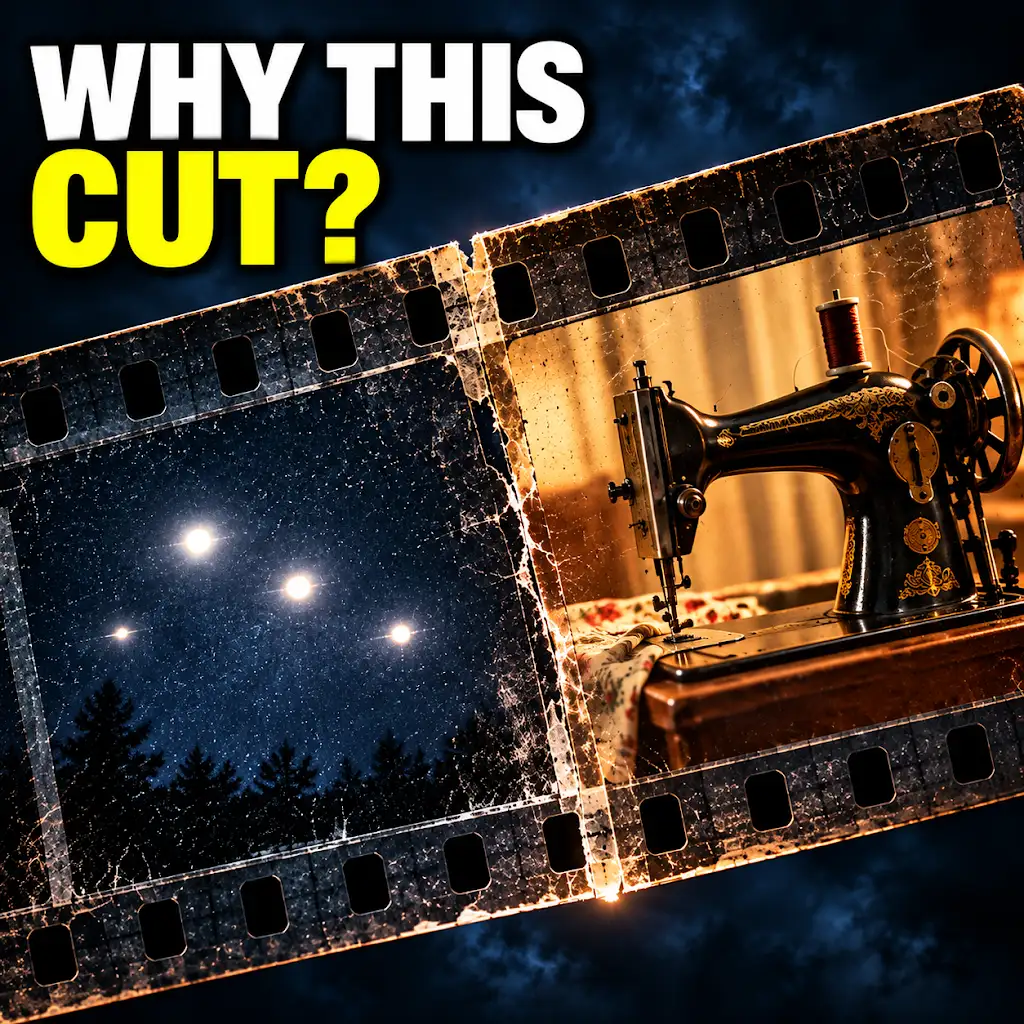
The Pentagon’s 1952 UFO Film Cuts to a Sewing Machine
FAQs
1. What is the purpose of the historical UFO footage documentary?
The purpose of the historical UFO footage documentary is to explore and analyze various documented sightings of unidentified flying objects throughout history.
2. How does the documentary present the historical UFO footage?
The documentary presents the historical UFO footage through a combination of archival videos, interviews with witnesses, expert analysis, and reenactments to provide a comprehensive look at each sighting.
3. Are there any credible witnesses featured in the documentary?
Yes, the documentary features interviews with credible witnesses such as pilots, military personnel, scientists, and civilians who have had firsthand experiences with UFO sightings.
4. Does the documentary offer any explanations for the UFO sightings?
While the documentary presents various theories and hypotheses to explain the UFO sightings, it ultimately leaves the interpretation open to the viewers to draw their own conclusions.
5. How does the historical UFO footage documentary contribute to the study of UFO phenomena?
The historical UFO footage documentary contributes to the study of UFO phenomena by providing a detailed and chronological account of documented sightings, which can help researchers and enthusiasts further investigate and understand the mysterious nature of UFOs.