The story of Little Albert is a cornerstone of behavioral psychology, a chilling tale of a young child conditioned to fear a white rat, and by extension, anything resembling it. For decades, this experiment has been a potent illustration of classical conditioning, a foundational concept that shaped our understanding of how humans and animals learn through association. However, as the decades have passed and closer scrutiny has been applied, a disquieting question has begun to surface: was the Little Albert experiment, as it is commonly understood, entirely real? This article delves into the historical context, the ethical controversies, and the investigative efforts that have cast a long shadow of doubt over the authenticity and ethical standing of this infamous study.
The Little Albert experiment, conducted by John B. Watson and Rosalie Rayner in the early 20th century, has long been a topic of debate regarding its ethical implications and the authenticity of its findings. For those interested in exploring this controversial study further, a related article can be found at Unplugged Psychology, which delves into the details of the experiment and its impact on the field of psychology.
The Genesis of a Landmark Study
John B. Watson and the Dawn of Behaviorism
The early 20th century was a fertile ground for new psychological paradigms, and John B. Watson emerged as a leading figure in this intellectual revolution. A staunch advocate for behaviorism, Watson posited that psychology should focus solely on observable behaviors, rejecting the introspective methods that dominated earlier psychological thought. He believed that all behavior, including complex emotions like fear, could be learned through environmental interactions. The Little Albert experiment, conducted around 1920 at Johns Hopkins University, was intended to be a powerful demonstration of this principle.
The Experiment’s Design: A Simple, Yet Profound, Premise
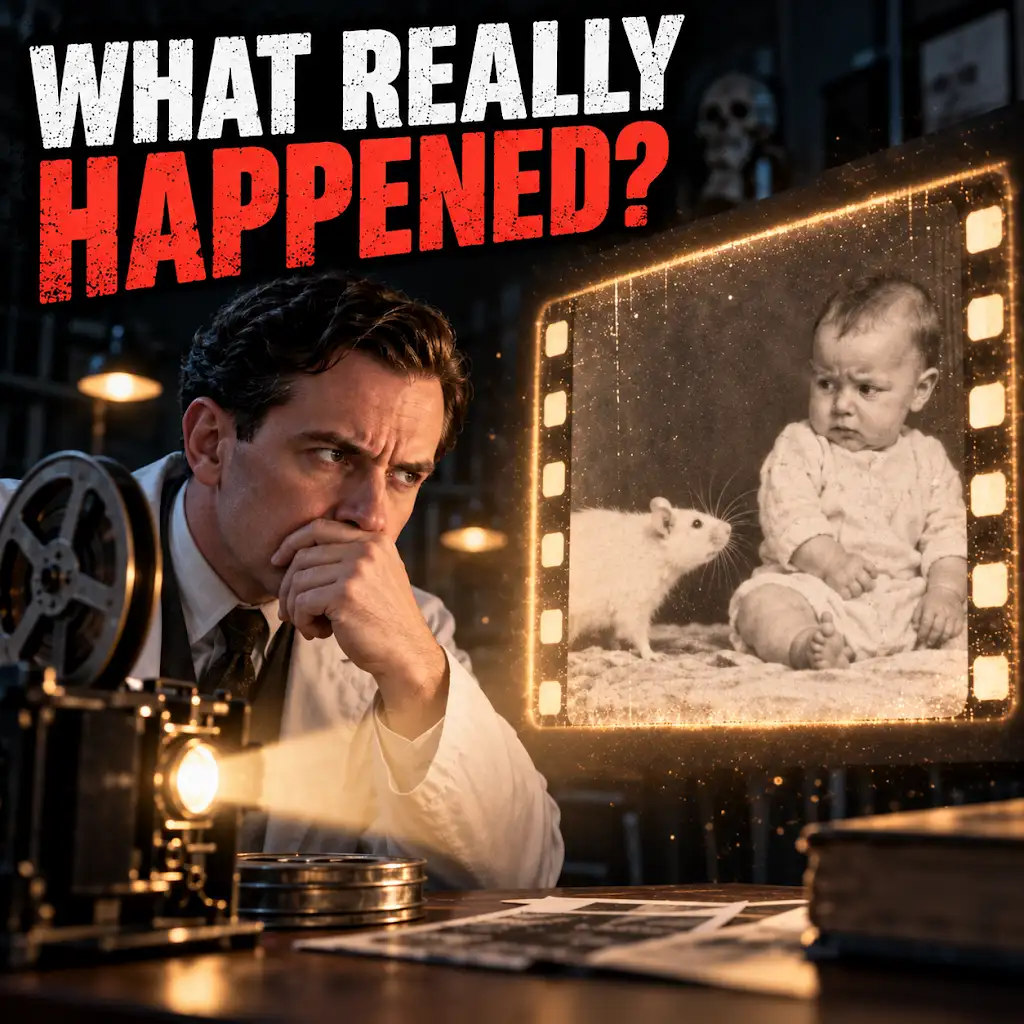
The experiment’s design, as it has been presented in textbooks and academic discourse, is deceptively straightforward. A nine-month-old infant, identified only as “Albert B.” (later famously nicknamed “Little Albert”), was purportedly selected from a hospital ward. Initially, Albert was claimed to show no fear of a white rat, a rabbit, a dog, monkeys, masks, or burning newspapers. The core of the experiment involved presenting the white rat to Albert, and simultaneously striking a steel bar with a hammer, producing a loud, startling noise. This pairing was repeated, leading to the hypothesis that Albert would eventually associate the rat with the frightening sound, developing a conditioned fear response.
The Claimed Outcomes: A Powerful Demonstration of Conditioning
The widely disseminated accounts of the Little Albert experiment claim that after several pairings, Albert began to cry and recoil at the mere sight of the white rat, even without the accompanying noise. Furthermore, it is asserted that this conditioned fear generalized to other furry objects, including a rabbit, a dog, and even Watson’s own hair, and a Santa Claus mask. These purported outcomes were presented as irrefutable evidence for the power of classical conditioning in shaping emotional responses, even in very young children.
Ethical Shadows and Enduring Questions
The Ethical Minefield of Early Psychology
It is crucial to acknowledge the vastly different ethical landscape of psychology in the early 20th century compared to today. While contemporary ethical guidelines are rigorous and prioritize the well-being of research participants, the standards of Watson’s era were far more lax. The very nature of the Little Albert experiment raises immediate red flags for modern ethical review boards. The deliberate induction of fear in an infant, without parental consent in the manner we understand it today, and the subsequent failure to decondition the fear, are considered highly unethical by contemporary standards.
The “Informed Consent” Conundrum
A significant ethical hurdle in evaluating the Little Albert experiment is the question of informed consent. While Albert’s mother was purportedly a wet nurse at the hospital, the extent of her understanding of the experimental procedures and her ability to provide truly informed consent for her child’s participation is highly questionable. In the context of the time, it is plausible that consent was obtained in a perfunctory manner, or that the mother was unaware of the full implications of allowing her son to be part of such a study.
The Unanswered Question of Deconditioning
Perhaps one of the most troubling aspects of the Little Albert narrative, and a key area of investigation, is the alleged failure to decondition Albert’s fear. While the experiment successfully demonstrated the acquisition of fear, the lack of any reported effort to reverse this learned fear is ethically problematic. The long-term psychological impact on a child subjected to such intense, deliberately induced fear, without any attempt at alleviation, is a grave concern that has fueled much of the criticism.
The Search for Little Albert: Unraveling the Mystery
The Elusive Identity of the Subject
For years, the true identity of “Little Albert” remained an enigma. This anonymity, while perhaps intended for privacy, also made it exceedingly difficult to independently verify the claims made by Watson and his colleague, Rosalie Rayner. The lack of definitive identification meant that no one could trace Albert’s life after the experiment, assess his long-term psychological state, or even confirm his existence beyond the laboratory records.
The Groundbreaking Research of Hall and Watson
In the early 2000s, a dedicated effort by researchers began to shed light on this historical mystery. Pioneers in this quest included psychologists Caroline Pridham, Gregory ó’Donohue, and then, most notably, Dylan F. E. Frawley and Sally H. Wise. Their meticulous research involved delving into archival records, hospital registers, and biographical information related to Johns Hopkins University during the period of the experiment.
Sally H. Wise and the Albert 2 Identification
A significant breakthrough came with the work of Sally H. Wise. Her extensive archival research pointed towards a boy named Douglas Merritte as the most likely candidate for Little Albert. Douglas was the son of a wet nurse employed at the Harriet Lane Home for Invalid Children, where Watson conducted his research. Wise’s findings suggested that Douglas was healthy and had been selected from the general infant population.
Dylan F. E. Frawley’s Counter-Evidence and the Albert 3 Hypothesis
However, Frawley’s own extensive archival investigations proposed a different individual: Albert Barger. Frawley argued that Albert Barger, who was also institutionalized at the hospital, was a more plausible subject due to his perceived health issues and potential vulnerability. Frawley’s research suggested that Albert Barger might have suffered from hydrocephalus, which could have explained some of his supposed behavioral traits. This led to the “Albert 3” hypothesis.
The Role of Joanne L. Baker and the Albert 1 Theory
Further complicating the identity puzzle was the work of Joanne L. Baker, who proposed that the subject might have been a child named Arthur L. – the “Albert 1” theory. Baker’s research focused on the original consent forms and suggested that Arthur L. was institutionalized and his mother may have had limited capacity to provide consent.
The Ongoing Debate and Unresolved Questions
Despite these rigorous investigative efforts, the identity of Little Albert remains a subject of ongoing debate among historians of psychology. While the Merritte identification (Albert 2) has gained considerable traction, the Barger identification (Albert 3) also has strong proponents. The Arthur L. identification (Albert 1) also presents compelling arguments. The lack of definitive, irrefutable documentation means that the “true” Little Albert may never be definitively known. This ongoing debate highlights the challenges of reconstructing historical events with incomplete records.
The Little Albert experiment, conducted by John B. Watson and Rosalie Rayner in the early 20th century, has sparked considerable debate regarding its ethical implications and the authenticity of its findings. Many researchers have questioned whether the experiment truly demonstrated classical conditioning in humans or if it was simply a fabricated narrative. For those interested in exploring this topic further, a related article can provide additional insights into the experiment’s validity and its impact on psychology. You can read more about it in this informative piece on Unplugged Psych.
Examining the Experimental Rigor and Validity
| Aspect | Details |
|---|---|
| Experiment Name | Little Albert Experiment |
| Researcher | John B. Watson and Rosalie Rayner |
| Year Conducted | 1920 |
| Purpose | To demonstrate classical conditioning in humans |
| Subject | Infant known as “Little Albert” |
| Experiment Reality | Yes, the experiment was real and conducted, but details about the subject and ethical standards are debated |
| Ethical Concerns | Experiment lacked informed consent and caused distress to the child |
| Subject Identity | Likely Douglas Merritte, though some debate exists |
| Outcome | Conditioned fear response to white furry objects |
| Legacy | Important in psychology history but criticized for ethics and methodology |
The Questionable State of the Subject
A crucial aspect of the debate surrounding the Little Albert experiment concerns the actual health and developmental status of the child. If Little Albert was indeed a child like Douglas Merritte, who suffered from significant health issues, particularly neurological conditions, then his baseline emotional state and reactivity might have been compromised from the outset. This raises the question of whether his responses were genuinely a result of learned conditioning or a manifestation of pre-existing vulnerabilities.
The “Rat-Phobic” Baby Hypothesis
Some researchers have proposed that Little Albert may have already possessed a predisposition towards fear of certain stimuli. The “rat-phobic” baby hypothesis suggests that the child might have already been fearful of rats or similar creatures before the experiment began. If this were the case, the experiment would not have been demonstrating the acquisition of a new fear but rather the intensification of an existing one.
The Absence of a Control Group
A fundamental weakness in the experimental design, from a scientific standpoint, is the absence of a control group. A proper scientific experiment would typically involve a control group that is exposed to similar procedures but without the conditioning element. This would help isolate the effect of the conditioning itself from other potential influences. The lack of such a control group makes it difficult to definitively attribute Albert’s fear solely to the paired stimuli.
The Generalization of Fear: A Real or Exaggerated Claim?
The extent to which Albert’s fear generalized to other objects has also been questioned. While the accounts suggest a widespread fear of furry things, some researchers argue that the evidence for this generalization might be exaggerated or misinterpreted. The intensity and breadth of the generalized fear could have been amplified in the telling of the experiment over time.
The Role of Performance and Presentation
It is also possible that the “results” of the experiment were influenced by the performance and presentation of Albert. Younger infants can be easily influenced by the reactions of adults. It is conceivable that Albert’s responses were, to some extent, shaped by the expectations and reactions of Watson and Rayner themselves. The pressure to produce a dramatic outcome might have inadvertently influenced the child’s behavior.
The Legacy and Ethical Implications
The Enduring Influence on Psychology
Despite the controversies and questions surrounding its authenticity, the Little Albert experiment has undeniably left an indelible mark on the field of psychology. It served as a powerful, albeit ethically problematic, illustration of classical conditioning and its role in shaping human emotions and behavior. Its influence can be seen in various therapeutic approaches, particularly those focusing on behavior modification and the treatment of phobias.
The “Ghost in the Machine” of Psychological Research
The story of Little Albert also serves as a cautionary tale about the uncritical acceptance of historical research. It highlights the importance of constantly re-examining established narratives, questioning assumptions, and demanding evidence. The “ghost in the machine” of psychological research refers to the tendency to repeat and cite foundational studies without fully interrogating their methodological rigor and ethical underpinnings.
Towards a More Ethical Future in Research
The ongoing debate surrounding Little Albert has undoubtedly contributed to the evolution of ethical guidelines in psychological research. The discussions about informed consent, the potential for harm, and the responsibility of researchers to protect vulnerable populations have been significantly influenced by the controversies surrounding this experiment. It has underscored the need for transparency, accountability, and a paramount commitment to the well-being of participants.
Reinterpreting the “Little Albert” Narrative
Ultimately, the question of whether the Little Albert experiment was “real” is complex. If “real” means that an infant was subjected to a procedure that induced fear of a white rat through association with a loud noise, then the answer is likely yes. However, if “real” implies a perfectly executed, ethically sound, and unequivocally documented scientific study that yielded unambiguous results, then the answer is far less certain. The investigations into Little Albert’s identity and the critiques of the experimental design reveal a more nuanced and problematic reality than the textbook accounts often portray.
The legacy of Little Albert is therefore not just one of scientific discovery, but also a profound lesson in the importance of critical evaluation, ethical reflection, and the continuous pursuit of truth, even when that truth is uncomfortable and challenges long-held beliefs. The story of Little Albert continues to be a vital, albeit contentious, chapter in the ongoing evolution of psychological science.
The Little Albert Experiment May Not Have Worked
FAQs
What was the Little Albert experiment?
The Little Albert experiment was a controversial psychology experiment conducted by John B. Watson and Rosalie Rayner in 1920. It involved conditioning a young boy, known as Little Albert, to fear a white rat by pairing its presence with a loud, startling noise.
Was the Little Albert experiment real?
Yes, the Little Albert experiment was a real study conducted by John B. Watson and Rosalie Rayner at Johns Hopkins University in 1920. The details of the experiment were published in a journal article in 1920.
What were the ethical concerns surrounding the Little Albert experiment?
The Little Albert experiment raised ethical concerns due to the lack of informed consent from Little Albert’s mother, the potential for causing psychological harm to the child, and the lack of debriefing after the experiment was concluded.
What were the long-term effects of the Little Albert experiment on the child involved?
The long-term effects of the Little Albert experiment on the child involved are not well-documented. Little Albert’s real identity was never definitively confirmed, so it is unclear how the experiment may have impacted him later in life.
What was the significance of the Little Albert experiment in the field of psychology?
The Little Albert experiment is significant in the field of psychology as it demonstrated the principles of classical conditioning and the potential for fear to be learned through association. It also sparked discussions about research ethics and the treatment of human subjects in psychological studies.