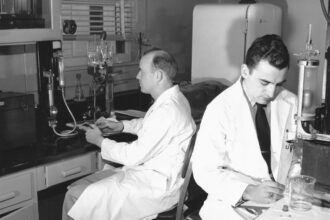
The hushed corridors of the Navy’s Photographic Interpretation Center (PIC) once held a trove of intelligence, meticulously gathered and analyzed. Among the classified documents and visual evidence, a persistent enigma emerged: reports and imagery pertaining to Unidentified Flying Objects (UFOs), now more commonly referred to as Unidentified Aerial Phenomena (UAP). The declassification and subsequent release of portions of these Navy PIC UFO files have opened a new chapter in the public’s understanding of the government’s historical engagement with these mysterious occurrences. These documents, spanning decades, offer a glimpse into the analytical processes employed by skilled intelligence personnel tasked with assessing potential threats and anomalies in the skies.
The Genesis of Naval Interest in Aerial Anomalies
The U.S. Navy, with its global reach and extensive aerial operations, has long been at the forefront of encountering the unexplained in the air. From the early days of aviation to the modern era of advanced surveillance, naval aviators and personnel have reported sightings that defied conventional explanation. The establishment of the PIC and its role in analyzing photographic and visual intelligence provided a structured framework for examining these incidents.
Early Encounters and Initial Investigations
The mid-20th century saw a surge in public and official interest in UFOs. The Navy, as a key player in national defense, was compelled to investigate. Reports from pilots and ship crews described objects exhibiting flight characteristics far beyond the capabilities of known aircraft. These early encounters, often documented through pilot debriefings and logbooks, formed the initial dataset for analysis. The PIC’s role was to sift through these accounts, looking for patterns, corroborating evidence, and potential explanations, ranging from misidentification of conventional aircraft and natural phenomena to more speculative possibilities. The sheer volume of reports, particularly during periods of heightened global tensions, necessitated a dedicated effort to categorize and assess their significance.
The PIC’s Mandate and Methodologies
The Photographic Interpretation Center’s core mission was to analyze imagery – photographs, film, and later, video – to glean actionable intelligence. When applied to UFO/UAP reports, this meant meticulously examining visual evidence submitted by naval personnel. This involved scrutinizing the quality of the imagery, identifying potential sources of distortion or misinterpretation, and cross-referencing sightings with known flight activities, weather conditions, and astronomical events. The analysts were trained to be objective, seeking rational explanations before considering more extraordinary possibilities. Their methodologies were grounded in established intelligence analysis principles, emphasizing source reliability, corroboration, and the exclusion of known variables.
The Navy Photographic Interpretation Center (NPIC) has played a significant role in the analysis of unidentified flying objects (UFOs) throughout its history, particularly during the Cold War era. For a deeper understanding of the NPIC’s involvement in UFO investigations and its impact on military intelligence, you can read a related article that explores these themes in detail. Check it out here: Unplugged Psych.
Unveiling the Contents: Key Themes and Document Types
The declassified Navy PIC UFO files are not a monolithic entity but rather a collection of diverse documents, each offering a unique perspective on the ongoing investigation of UAP. These files reveal the types of evidence collected, the analytical approaches taken, and the evolving understanding within the naval intelligence community.
Photographic and Video Evidence: The Visual Clues
A significant portion of the released files consists of photographic and video evidence. These materials, often captured by naval aviators during training exercises or operational patrols, depict objects that exhibit unusual shapes, speeds, and maneuverability. The quality of this evidence varies, from grainy, long-distance shots to clearer, closer-range footage. The PIC’s analysts would meticulously study these visuals, attempting to determine the size, shape, and relative velocity of the objects. They also considered the context of the sighting – the altitude, weather, and the presence of other aircraft or ground observation points. This visual data was crucial in attempting to identify the objects or, at least, to categorize their observed characteristics.
Written Reports and Debriefings: Eyewitness Accounts
Complementing the visual evidence are numerous written reports and debriefing transcripts. These documents contain detailed accounts from naval personnel who witnessed UAP firsthand. These accounts often describe the objects’ appearance, their perceived movement, and the duration of the sightings. The analysts would use these narratives to corroborate visual evidence, fill in gaps in photographic or video records, and assess the credibility of the witnesses. The rigor of these debriefings aimed to extract the most objective information possible, minimizing subjective interpretation by the witnesses themselves. Questions would focus on precise observations, timelines, and any unusual sensory perceptions.
Technical Analysis and Expert Opinions
The PIC did not operate in a vacuum. The analysis of UFO/UAP sightings often involved collaboration with other scientific and technical experts. The released files may include reports from engineers, physicists, and other specialists who were consulted to assess the feasibility of certain observed flight characteristics, the potential for misidentification of known technologies, or the possibility of natural phenomena mimicking UAP. This interdisciplinary approach underscores the seriousness with which these reports were treated, seeking to apply the best available scientific knowledge to the problem.
The Analytical Process: From Sighting to Assessment
The process by which the Navy’s PIC evaluated UFO/UAP reports was a critical aspect of its mandate. It involved a systematic approach designed to achieve a definitive explanation where possible, and to identify areas requiring further investigation or monitoring.
Source Verification and Credibility Assessment
A fundamental step in any intelligence analysis is verifying the source of the information. In the context of UFO/UAP reports, this meant assessing the reliability of the reporting individual or group. Naval aviators, due to their training and experience in observing aircraft and atmospheric phenomena, were generally considered highly credible sources. However, even their reports would be scrutinized for consistency and potential biases. The PIC would cross-reference accounts from multiple witnesses, looking for corroboration that strengthened the validity of a sighting. Situations involving only a single, uncorroborated report would be treated with a higher degree of caution.
Elimination of Conventional Explanations
A core tenet of the PIC’s analytical process was to exhaust all plausible conventional explanations before considering more unusual possibilities. This involved systematically ruling out known aircraft, such as experimental military planes or foreign intelligence assets. Natural phenomena, such as unusual cloud formations, atmospheric optical effects (e.g., lenticular clouds, mirages), or celestial bodies like planets and meteors, were also carefully considered and compared against the observed characteristics of the UAP. Weather data, astronomical charts, and flight logs of known aircraft were integral tools in this elimination process.
Identification of Anomalous Characteristics
When conventional explanations could not adequately account for the observed phenomena, the PIC would identify and document the anomalous characteristics. These might include extreme acceleration, instantaneous changes in direction, sustained hovering at high altitudes, or the apparent absence of propulsion systems. The persistence of these anomalous characteristics across multiple reports, even from different sources and locations, would elevate the level of concern and trigger further analysis or higher-level reporting.
Evolving Perceptions and the Shift Towards Transparency
The release of these Navy PIC UFO files is part of a broader, more recent trend towards greater transparency regarding UAP. For decades, these phenomena were largely relegated to the fringes of public discourse, often associated with conspiracy theories. However, a growing body of evidence, coupled with increasing reports from credible military sources, has prompted a more serious and official engagement.
From “Cover-Up” Narratives to Official Acknowledgment
For many years, the government’s handling of UFO sightings was characterized by narratives of denial and cover-up. This perception was fueled by the initial dismissal of many reports and the classification of related documents. However, the declassification of the Navy PIC files, alongside other government initiatives, signals a shift. While not necessarily confirming the extraterrestrial hypothesis, these releases acknowledge the existence of unexplained aerial phenomena that warranted official investigation. The term “UAP” itself represents a broader, more scientific approach, moving away from the more sensationalistic connotations of “UFO.”
The Modern UAP Task Force and Its Predecessors
The modern UAP Task Force (UAPTF), established by the U.S. Navy and now part of the Department of Defense, builds upon the legacy of earlier investigative efforts, including those conducted by the PIC. The UAPTF aims to standardize reporting procedures, collect and analyze UAP data across different branches of the military, and assess potential threats to national security. The historical work of the PIC, therefore, serves as a crucial foundation for understanding the ongoing efforts to address the UAP issue. The lessons learned from decades of analysis by PIC intelligence officers are invaluable in shaping current methodologies.
The Implications for National Security and Scientific Inquiry
The declassified Navy PIC UFO files have significant implications for both national security and scientific inquiry. From a national security perspective, unexplained aerial phenomena, regardless of their origin, represent potential airspace incursions or technological anomalies that require monitoring and understanding. From a scientific standpoint, these files offer a historical record of encounters with phenomena that may push the boundaries of our current understanding of physics and technology. The continued analysis of these documents may reveal overlooked patterns or insights that could contribute to scientific advancement.
The Navy Photographic Interpretation Center has played a significant role in the analysis of unidentified flying objects, contributing to our understanding of aerial phenomena. For those interested in exploring this topic further, an insightful article can be found that delves into the historical context and implications of the center’s work. You can read more about it in this related article, which provides a comprehensive overview of the investigations and findings associated with UFO sightings.
Legacy and Future Directions: What the Files Reveal About the Unseen
| Metric | Details |
|---|---|
| Organization Name | Navy Photographic Interpretation Center (NPIC) |
| Primary Function | Photographic analysis and interpretation for the U.S. Navy |
| Involvement with UFOs | Analyzed aerial and satellite imagery related to unidentified flying objects |
| Time Period of UFO Analysis | Primarily during the Cold War era (1950s-1970s) |
| Notable Projects | Evaluation of UFO sightings and photographic evidence for military intelligence |
| Declassified Documents | Some NPIC UFO-related reports have been declassified and released to the public |
| Collaboration | Worked with other intelligence agencies such as the CIA and Air Force on UFO investigations |
| Impact on UFO Research | Provided expert photographic analysis that contributed to official assessments of UFO phenomena |
The legacy of the Navy Photographic Interpretation Center’s UFO files is one of meticulous, albeit often classified, investigation into a persistent mystery. These documents provide tangible evidence that the U.S. Navy, and by extension the U.S. government, has taken reports of unexplained aerial phenomena seriously for decades. The act of declassification itself represents a significant evolution in how such matters are handled, fostering a more open dialogue and encouraging further research.
Unanswered Questions and Lingering Mysteries
Despite the declassification, many questions surrounding the Navy PIC UFO files remain unanswered. The majority of the released documents often redact sensitive information, such as specific dates, locations, and the identities of individuals involved, to protect national security interests. This redaction, while understandable from an intelligence perspective, leaves many specific cases shrouded in mystery. The sheer volume of reports, coupled with the limitations of early analytical technologies, means that definitive explanations for many sightings may never be fully achieved through these historical records alone. The core question of what these objects truly represent – be they advanced human technology, natural phenomena not yet fully understood, or something entirely novel – continues to be a subject of intense interest.
The Role of Public Engagement and Future Research
The release of these files has undeniably spurred public engagement and renewed interest in UAP research. This increased attention can be a powerful catalyst for future investigation. Academic institutions, independent researchers, and citizen science initiatives are now better positioned to contribute to the understanding of UAP, building upon the foundation laid by the historical work of organizations like the PIC. The future direction of UAP research will likely involve a multi-faceted approach, integrating historical data from declassified files with contemporary observations, advanced sensor technology, and rigorous scientific methodologies.
Bridging the Gap Between Intelligence and Public Understanding
The Navy PIC UFO files serve as a crucial bridge between historical intelligence operations and contemporary public understanding of UAP. They demonstrate that the “UFO question” has long been a legitimate subject of official concern and rigorous analysis. By making these documents accessible, the government is not necessarily providing definitive answers but rather offering a glimpse into the process of investigation and the challenges involved in understanding anomalous aerial phenomena. This transparency is vital for fostering informed public discourse and for guiding future efforts to address what may be one of the most enduring enigmas of our time. The secrets unveiled are not just about what was seen, but also about how such sightings were analyzed and integrated into the broader intelligence landscape.

The Pentagon’s 1952 UFO Film Cuts to a Sewing Machine
FAQs
What is the Navy Photographic Interpretation Center (NPIC)?
The Navy Photographic Interpretation Center (NPIC) was a U.S. Navy facility responsible for analyzing aerial and satellite imagery for intelligence purposes.
What role did the NPIC play in UFO sightings?
The NPIC was involved in analyzing photographs and other visual evidence related to UFO sightings reported by military personnel and civilians.
Did the NPIC ever encounter unidentified flying objects (UFOs) in their analysis?
While the NPIC did analyze various aerial phenomena, there is no concrete evidence to suggest that they definitively encountered extraterrestrial spacecraft or UFOs beyond conventional explanations.
How did the NPIC approach the analysis of potential UFO sightings?
The NPIC applied rigorous analytical methods to assess the credibility and nature of reported UFO sightings, often seeking to identify conventional explanations before considering extraordinary possibilities.
Is there any declassified information from the NPIC regarding UFO sightings?
Some declassified documents from the NPIC have been released to the public, shedding light on their analysis of aerial phenomena, but no conclusive evidence of extraterrestrial visitation has been officially confirmed.