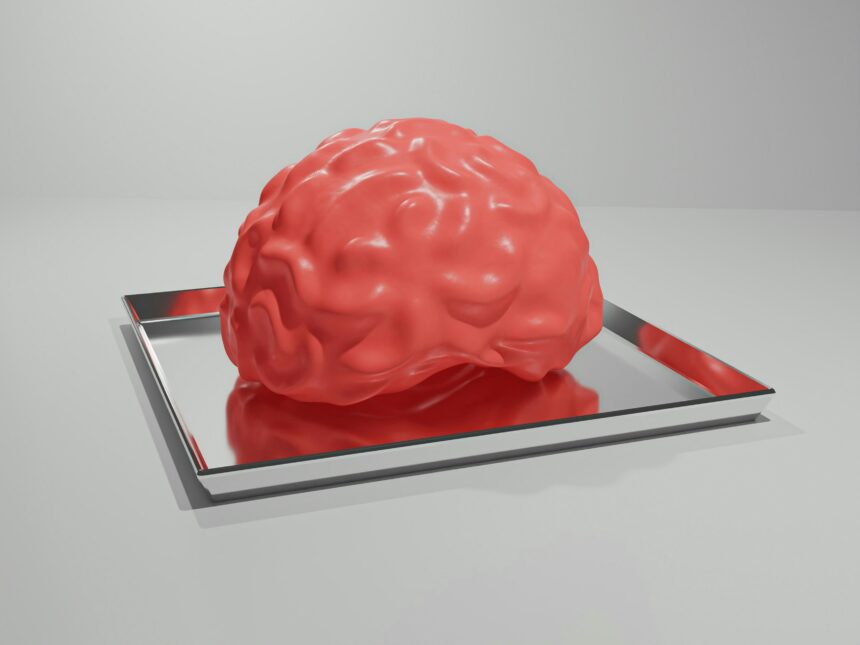
The annals of scientific inquiry are punctuated by moments of profound revelation, and within the vast landscape of human understanding, psychology’s journey of discovery is intricately woven with the evolution of its experimental methodologies. From nascent attempts to quantify the unquantifiable to the sophisticated, ethically grounded research of today, psychology experiments have undergone a remarkable transformation. This evolution reflects not only advancements in scientific rigor but also a deepening appreciation for the complexity of the human mind and a commitment to responsible investigation. To truly grasp the trajectory of psychological science, one must delve into the historical roots of its experimental practices, tracing the threads of innovation, ethical awakening, and methodological refinement.
Before the formal establishment of psychology as a distinct scientific discipline, early thinkers grappled with understanding human behavior and cognition through various, often rudimentary, methods. While not strictly “experiments” in the modern sense, these early endeavors laid the groundwork for a more systematic approach.
Phrenology: A Bold, Though Flawed, Attempt at Localization
One of the most influential, and ultimately controversial, early movements was phrenology, championed by Franz Joseph Gall in the late 18th and early 19th centuries. Gall posited that the human skull’s surface reflected the development of underlying brain regions, and that specific mental faculties were localized in these areas.
The “Science” of Skull Reading
Phrenologists meticulously cataloged the supposed “bumps” and “dents” on skulls, correlating these physical features with observed personality traits and abilities. While the underlying premise of brain localization proved to be largely incorrect in its specifics, phrenology’s emphasis on the brain as the seat of mental processes was a crucial conceptual shift. It moved away from purely philosophical speculation towards an interest in physical correlates of mental phenomena.
Methodological Shortcomings and the Rise of Skepticism
The methodologies employed in phrenology were observational and correlational, lacking controlled manipulation of variables. The interpretations were highly subjective, and the conclusions lacked empirical validation. As scientific scrutiny increased, phrenology was increasingly criticized for its pseudoscience and unsubstantiated claims, ultimately fading from mainstream scientific discourse. However, its legacy lies in its early attempt to link observable physical characteristics to internal mental states.
Early Physiological Investigations: Measuring Reaction Times
Concurrently, in the mid-19th century, physiologists began conducting more quantitative studies that would later inform psychological experimentation. Pioneers like Hermann von Helmholtz and Donders focused on measuring the speed of neural impulses and reaction times.
Helmholtz’s Nerve Conduction Experiments
Helmholtz’s experiments, particularly those measuring the speed of nerve impulses in frogs and humans, were groundbreaking. By stimulating nerves at different points and measuring the time it took for a response, he provided empirical evidence for the physiological basis of sensation and movement. This work introduced the concept of measuring the time it takes for internal processes to occur, a fundamental aspect of many future psychological experiments.
Donders’ Subtractive Method
Franciscus Donders, a Dutch ophthalmologist, developed the “subtractive method” to measure the duration of mental processes. He compared the time it took to perform a simple task (e.g., pressing a button when a light appeared) with the time it took to perform a more complex task that involved an additional mental step (e.g., pressing a specific button depending on the color of the light). By subtracting the simpler reaction time from the complex one, he aimed to isolate the time required for the specific mental operation. This was a significant step towards experimental control and the isolation of cognitive processes.
The history of psychology is rich with groundbreaking experiments that have shaped our understanding of human behavior and mental processes. One notable article that delves into this fascinating topic is found at Unplugged Psychology, where you can explore various influential studies and their implications on modern psychology. This resource provides valuable insights into the evolution of psychological research, highlighting key figures and experiments that have left a lasting impact on the field.
The Birth of Experimental Psychology: Wundt and the Introspectionist Era
The late 19th century is widely recognized as the period when psychology formally emerged as an independent scientific discipline, largely thanks to the work of Wilhelm Wundt. He established the first formal psychological laboratory at the University of Leipzig in 1879, marking a pivotal moment in the history of psychological experimentation.
Wundt’s Laboratory: The Founding of Experimental Psychology
Wundt’s goal was to study the “contents of consciousness” and the “structure of the mind” through systematic and controlled observation. His approach, often referred to as structuralism, aimed to break down mental experiences into their basic elements, much like chemists broke down compounds into atoms.
The Method of Introspection
The primary experimental method employed in Wundt’s lab was introspection, also known as experimental self-observation. Trained participants were asked to report their subjective experiences in response to carefully controlled stimuli. For instance, they might be presented with a specific sound or light and then asked to describe their sensations, feelings, and images associated with it.
Rigorous Training and Controlled Stimuli
Wundt emphasized the need for rigorous training of his introspectors to ensure that their reports were as objective and consistent as possible. Stimuli were presented under controlled conditions to minimize external influences and allow for replication. The goal was to move beyond casual introspection to a more disciplined and systematic form of self-report.
Limitations of Introspection
Despite its historical significance, introspection faced considerable limitations. Its reliance on subjective experience made it difficult to verify findings objectively. Different introspectors often reported different experiences, leading to inconsistencies. Furthermore, it was largely limited to studying conscious mental processes, neglecting the vast realm of unconscious thought and behavior. This inherent subjectivity eventually led to the decline of introspectionism as the dominant experimental paradigm.
Titchener and Structuralism in America
Edward Titchener, a student of Wundt, brought structuralism and the experimental methods of the Leipzig laboratory to the United States. He further refined introspectionist techniques, aiming to identify the basic “elements” of consciousness, such as sensations, images, and affections. While influential in establishing psychology departments in American universities, Titchener’s rigid adherence to introspection ultimately contributed to its eventual obsolescence as a primary research tool.
The Rise of Behaviorism: Shifting Focus to Observable Actions

The inherent subjectivity of introspection led to a significant paradigm shift in psychology with the emergence of behaviorism in the early 20th century. Behaviorists, most notably John B. Watson and B.F. Skinner, argued that psychology should focus solely on observable behavior, which could be objectively measured and studied.
Watson and the Rejection of the Unobservable
John B. Watson, in his influential 1913 manifesto, “Psychology as the Behaviorist Views It,” declared that psychology should abandon the study of consciousness and instead focus on the relationship between environmental stimuli and observable responses. He famously claimed that he could take any healthy infant and train them to become any type of specialist, regardless of their innate talents or inclinations, by controlling their environment.
Classical Conditioning: Pavlov’s Enduring Influence
While not a behaviorist himself, Ivan Pavlov’s work on classical conditioning, discovered in the early 20th century, profoundly influenced behaviorism. His experiments with dogs, demonstrating how a neutral stimulus (like a bell) could become associated with an unconditioned stimulus (food) to elicit a conditioned response (salivation), provided a powerful model for understanding learning through association.
Experimental Design in Classical Conditioning
Pavlov’s experiments involved carefully controlled pairings of stimuli. The unconditioned stimulus (UCS) naturally elicits an unconditioned response (UCR). A neutral stimulus (NS) is then repeatedly paired with the UCS. Eventually, the NS becomes a conditioned stimulus (CS) that elicits a conditioned response (CR), which is similar to the UCR. This methodology allowed for the precise measurement of stimulus-response relationships and the identification of principles of learning.
Operant Conditioning: Skinner’s Principles of Reinforcement
B.F. Skinner further developed behaviorism with his theory of operant conditioning. He proposed that behavior is shaped by its consequences, specifically through reinforcement (increasing the likelihood of a behavior) and punishment (decreasing the likelihood of a behavior).
The Skinner Box and the Study of Reinforcement Schedules
Skinner’s famous “Skinner box” (or operant conditioning chamber) provided a controlled environment for studying the effects of reinforcement. Animals, such as rats or pigeons, would learn to perform specific behaviors (e.g., pressing a lever) to receive rewards (e.g., food pellets). Skinner systematically manipulated reinforcement schedules (e.g., continuous reinforcement, intermittent reinforcement) to observe their impact on response rates and resistance to extinction. These experiments provided a wealth of data on how behaviors are learned and maintained.
The Strengths and Weaknesses of Behaviorism
Behaviorism’s focus on observable behavior and its use of rigorous experimental methods led to significant advancements in understanding learning and behavior modification. Its principles have been widely applied in areas such as education, therapy, and animal training. However, critics argued that behaviorism was too reductionist, neglecting the role of internal mental processes, such as thoughts, feelings, and motivations, in shaping behavior.
The Cognitive Revolution: Re-examining the Inner Workings of the Mind

By the mid-20th century, a growing dissatisfaction with the limitations of pure behaviorism led to the rise of the cognitive revolution. This new wave of research sought to understand the mental processes that underlie behavior, such as memory, attention, problem-solving, and language.
The Information-Processing Approach
Cognitive psychologists adopted an information-processing approach, viewing the mind as analogous to a computer. This metaphor allowed researchers to conceptualize mental operations as stages of information processing, from input (sensory perception) to processing (cognition) to output (behavior).
Memory Research: Encoding, Storage, and Retrieval
Experiments in memory became a central focus. Researchers designed studies to investigate how information is encoded into memory, how it is stored over time, and how it is retrieved. Classic experiments explored different types of memory (e.g., short-term, long-term), the effects of rehearsal, and the phenomenon of forgetting.
Serial Position Effect Studies
The serial position effect, for instance, was investigated by presenting participants with a list of words and then testing their recall. Findings consistently showed that participants remembered the first few words (primacy effect) and the last few words (recency effect) better than those in the middle. This provided evidence for distinct short-term and long-term memory stores.
Attention Studies: Selective Attention and Divided Attention
Experiments on attention sought to understand how individuals select and process relevant information from a constant stream of stimuli. Techniques like dichotic listening tasks, where participants listened to two different auditory streams simultaneously and were asked to attend to one, revealed the remarkable capacity for selective attention.
The Cocktail Party Effect
The “cocktail party effect,” the ability to focus on one conversation in a noisy environment, became a key phenomenon studied. Experiments explored how individuals filter out irrelevant information, demonstrating the active nature of attentional processes.
The Development of Cognitive Models
Cognitive experiments were instrumental in the development of theoretical models of mental processes. These models, often depicted as flowcharts or diagrams, represented the proposed steps and mechanisms involved in cognition. The experimental findings provided empirical support for these models, allowing for refinement and further investigation.
The history of psychology is rich with fascinating experiments that have shaped our understanding of the human mind. One particularly intriguing article discusses various landmark studies and their implications for modern psychology. For those interested in exploring this topic further, you can read more about it in this insightful piece on the evolution of psychological experimentation. The article can be found here, where it delves into the methodologies and ethical considerations that have emerged over time.
Modern Psychology Experiments: Ethics, Technology, and Interdisciplinary Approaches
| Experiment | Year | Researcher(s) | Purpose | Key Findings | Ethical Considerations |
|---|---|---|---|---|---|
| Stanford Prison Experiment | 1971 | Philip Zimbardo | To study the psychological effects of perceived power in a prison setting | Participants quickly adopted abusive or submissive roles; situational factors influence behavior | Severe psychological distress; early termination; criticized for ethical violations |
| Milgram Obedience Study | 1961 | Stanley Milgram | To investigate obedience to authority figures | Majority of participants administered what they believed were painful shocks | Deception used; emotional stress; led to stricter ethical guidelines |
| Pavlov’s Classical Conditioning | 1890s | Ivan Pavlov | To study associative learning in dogs | Demonstrated conditioned reflexes through stimulus pairing | Minimal ethical concerns by modern standards |
| Little Albert Experiment | 1920 | John B. Watson & Rosalie Rayner | To demonstrate conditioned emotional responses | Showed that fear could be conditioned in humans | Ethical issues due to lack of consent and no desensitization |
| Asch Conformity Experiments | 1951 | Solomon Asch | To study conformity to group pressure | Individuals often conformed to incorrect majority opinions | Generally considered ethically acceptable |
Contemporary psychological research benefits from a rich methodological toolkit, a strong ethical framework, and an increasingly interdisciplinary perspective. The evolution of experimental design has been driven by a continuous pursuit of greater precision, validity, and ethical responsibility.
Ethical Considerations: Protecting Participants and Ensuring Integrity
The history of psychological experimentation is not without its ethical controversies. Studies from earlier eras, such as the Milgram obedience experiments or the Stanford prison experiment, raised serious questions about the potential harm to participants and the responsibilities of researchers.
The Establishment of Ethical Guidelines and Institutional Review Boards (IRBs)
In response to these concerns, robust ethical guidelines and review processes have been established. Institutional Review Boards (IRBs) are now mandatory for most research involving human participants. These committees review research proposals to ensure that they are ethically sound, that participants are fully informed about the risks and benefits, and that their rights are protected.
Informed Consent, Confidentiality, and Debriefing
Key ethical principles include informed consent, where participants voluntarily agree to participate after understanding the nature of the study. Confidentiality and anonymity are crucial to protect participants’ privacy. Debriefing, where participants are fully informed about the study’s purpose and any deception used after its completion, is also a standard ethical practice.
Technological Advancements: Enhancing Measurement and Control
Technology has revolutionized the way psychological experiments are conducted, offering unprecedented levels of precision and the ability to investigate previously inaccessible phenomena.
Neuroimaging Techniques: fMRI, EEG, and MEG
Neuroimaging techniques such as functional magnetic resonance imaging (fMRI), electroencephalography (EEG), and magnetoencephalography (MEG) allow researchers to observe brain activity in real-time or with high spatial resolution. These tools have been instrumental in understanding the neural correlates of cognitive processes and emotional states.
Investigating Brain-Behavior Relationships
By combining behavioral tasks with neuroimaging, researchers can map specific cognitive functions to particular brain regions and understand the dynamic interplay between neural activity and behavior.
Computational Modeling and Simulation
The use of computational models allows researchers to simulate complex cognitive processes and test theoretical predictions in a controlled, virtual environment. This approach can complement traditional experimental methods, providing insights into the underlying mechanisms of cognition.
Virtual Reality and Augmented Reality in Research
Virtual reality (VR) and augmented reality (AR) are increasingly used to create immersive and ecologically valid experimental environments. These technologies can be employed to study phenomena such as spatial navigation, social interactions, and phobias in a safe and controlled manner.
Interdisciplinary Approaches: Integrating Perspectives
Modern psychology often draws upon insights and methodologies from other disciplines, leading to a more comprehensive understanding of human behavior and cognition.
Cognitive Neuroscience: Bridging Psychology and Neuroscience
Cognitive neuroscience represents a prime example of an interdisciplinary field that combines psychological research with neuroscience techniques to investigate the brain basis of cognition.
Computational Psychology: Applying Computational Methods
Computational psychology utilizes computational modeling and data analysis techniques to understand and predict human behavior.
Evolutionary Psychology: Understanding the Adaptive Roots of Behavior
Evolutionary psychology seeks to explain psychological traits as adaptations that evolved to solve problems faced by our ancestors, drawing on principles from evolutionary biology.
The evolution of psychology experiments is a testament to the enduring human drive to understand ourselves. From the early, often speculative, inquiries into the mind to the sophisticated, ethically grounded, and technologically advanced research of today, psychology has continuously refined its methods. This journey reflects a growing appreciation for the intricate complexity of the human psyche, a commitment to rigorous scientific inquiry, and a profound responsibility to ensure that the pursuit of knowledge is always conducted with the well-being of participants at its forefront. The future of psychological experimentation promises even greater insights as researchers continue to innovate, collaborate, and push the boundaries of our understanding of what it means to be human.

The Little Albert Experiment May Not Have Worked
FAQs
What is the history of psychology experiments?
Psychology experiments have been conducted for centuries, with early roots in the work of Wilhelm Wundt in the late 19th century. These experiments have played a crucial role in shaping our understanding of human behavior and mental processes.
Who are some key figures in the history of psychology experiments?
Some key figures in the history of psychology experiments include Wilhelm Wundt, known as the father of experimental psychology, Ivan Pavlov, famous for his work on classical conditioning, and B.F. Skinner, known for his research on operant conditioning.
What are some famous psychology experiments that have had a significant impact?
Some famous psychology experiments that have had a significant impact include the Stanford Prison Experiment conducted by Philip Zimbardo, the Milgram Experiment on obedience to authority by Stanley Milgram, and the Little Albert Experiment on classical conditioning by John B. Watson.
How have psychology experiments evolved over time?
Psychology experiments have evolved over time with advancements in technology, research methods, and ethical considerations. Researchers now have access to sophisticated tools and techniques that allow for more precise and controlled experiments.
What is the importance of psychology experiments in the field of psychology?
Psychology experiments are crucial in advancing our understanding of human behavior, cognition, and emotions. They provide valuable insights into the underlying mechanisms of mental processes and help inform therapeutic interventions and psychological theories.