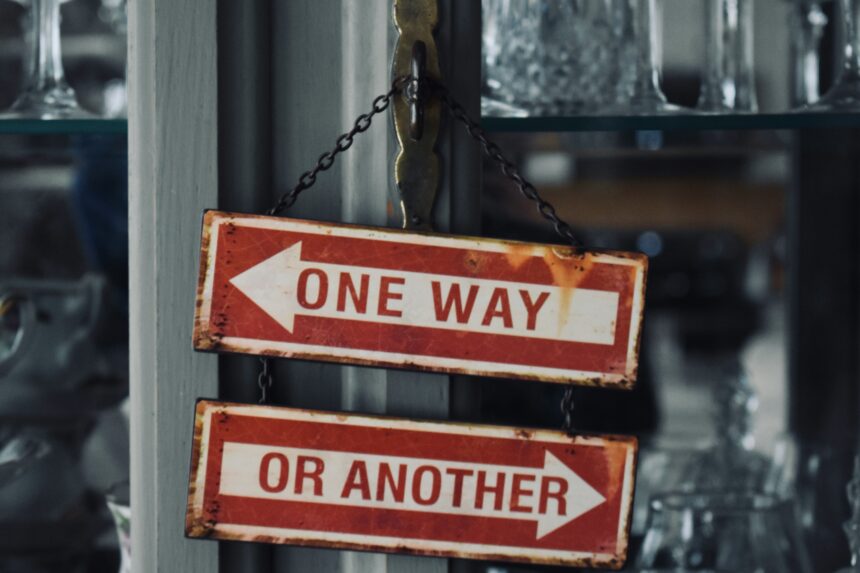
You stand at the precipice, a fork in the road stretching out before you, each path shimmering with a tantalizing, yet equally terrifying, promise. This is the landscape of your internal war, the battleground of decision-making where the paralyzing fear of making the wrong choice reigns supreme. It’s a familiar enemy, isn’t it? That cold dread that creeps in, whispering doubts and conjuring specters of regret. You’ve felt it when choosing a career path, a partner, even something as seemingly small as what to order at a restaurant. This fear isn’t a fleeting inconvenience; it’s a powerful force that can hold you captive, preventing you from moving forward, from living fully.
The Silent Architect of Inertia
You might not always recognize it for what it is, but this fear is often the silent architect of your inertia. It’s the reason you procrastinate, the reason you seek endless advice, the reason you sometimes feel stuck, unable to take that crucial next step. It’s the fear that the path not taken will lead to a life of missed opportunities, that the choice you make will irrevocably steer you away from your true potential, or worse, towards a future you desperately want to avoid. This isn’t just about the tangible consequences; it’s about the intangible weight of self-judgment, the internal narrative that will replay your decision, dissect it, and likely find fault.
Many individuals experience a profound fear of making the wrong decision, which can lead to anxiety and indecision in various aspects of life. This phenomenon is often explored in psychological literature, highlighting the impact of decision-making on mental well-being. For further insights into this topic, you can read a related article on the subject at Unplugged Psychology, where the complexities of decision-making and strategies to overcome fear are discussed in detail.
Why We Fear the Wrong Turn
Let’s delve into the roots of this pervasive apprehension. Why does the prospect of a suboptimal choice send shivers down your spine? It’s a complex interplay of evolutionary programming, societal conditioning, and deeply personal experiences.
Evolutionary Roots of Risk Aversion
Your ancient ancestors faced life-or-death decisions daily. A wrong turn in the wilderness could mean starvation or a predator’s dinner. A misjudgment in social alliances could lead to ostracism and vulnerability. Survival was paramount, and with it came an inherent bias towards caution, a deep-seated instinct to avoid what could lead to harm. This primal fear, honed over millennia, still whispers in your ear, even when the stakes are far less immediate. Your brain, hardwired for survival, interprets any significant decision as a potential threat, a deviation from a known, safe path.
Societal Conditioning and the Pursuit of Perfection
You’ve grown up in a world that often glorifies success and stigmatizes failure. From the curated highlights of social media to the competitive drive ingrained in education and career ladders, you’re bombarded with messages that suggest there’s a single, perfect outcome for every situation. This creates an unrealistic expectation: that you should always know the “right” answer, that indecision is a sign of weakness, and that mistakes are inherently bad. You’re taught to strive for perfection, and the fear of not achieving it fuels the dread of making a choice that falls short.
Personal Experiences and Past Regrets
Your personal history plays a significant role. Have you experienced a decision that led to significant negative consequences? Perhaps a career change that didn’t pan out, a relationship that ended painfully, or an investment that went south. These experiences, etched into your memory, can create a powerful association between decision-making and pain. You learn to brace yourself for the worst, anticipating a similar outcome with every new crossroads. The specter of past regrets looms large, casting a shadow over your present choices.
The Cognitive Traps That Ensnare You
Beyond the fundamental reasons, your own thought processes can become elaborate traps, further solidifying the fear of making the wrong decision. These cognitive biases are insidious, leading you down paths of rumination and doubt.
The Illusion of Certainty
You desperately crave certainty. You want to know, with absolute conviction, that your chosen path is the right one, the one that guarantees happiness, success, and fulfillment. But the truth is, life is inherently uncertain. There are too many variables, too many unknowns, to ever achieve complete certainty. This illusion of certainty is a mirage, and chasing it will only leave you dehydrated and disillusioned. You often overestimate your ability to predict future outcomes, leading to paralysis when faced with the inevitable ambiguity of life.
The Magnification of Negative Outcomes
When you’re caught in the grip of this fear, your mind has a peculiar talent for magnifying the potential negative outcomes. You envision the worst-case scenario with vivid detail, while the positive possibilities remain blurry and abstract. A job offer might be met with thoughts of layoff and financial ruin, rather than the potential for growth and satisfaction. This lopsided perception fuels your anxiety, making the risk seem far greater than it actually is. You’re not just considering the possibility of a wrong decision; you’re experiencing the emotional weight of that imagined failure as if it were already happening.
The “What If” Vortex
You get caught in the endless loop of “what if.” What if I choose A and it’s a disaster? What if I choose B and miss out on something even better? This rumination is a mental black hole, sucking your energy and focus. You endlessly rehash hypothetical scenarios, trying to play out every possible permutation, but invariably reaching no definitive conclusion. This constant churn of “what if” prevents you from engaging with the present reality of your choices.
The Cost of Indecision: More Than Just Lost Time
You might think that not deciding is a safe bet, a way to avoid making a mistake. But the cost of indecision is far greater than you realize. It’s a silent thief, stealing your present and jeopardizing your future.
Stagnation and Missed Opportunities
The most immediate consequence of this paralyzing fear is stagnation. You remain stuck, unable to move forward. This means missed opportunities, not just the ones you’re actively afraid of losing by making the wrong choice, but also the entirely new avenues that open up when you take action. By hesitating, you allow life to pass you by, and the chances you once had may never return. You become an observer of life rather than an active participant.
Erosion of Confidence and Self-Esteem
With each indecisive moment, a little piece of your confidence chips away. You begin to doubt your own judgment, your own capabilities. This erosion of self-esteem can become a self-fulfilling prophecy. If you don’t believe you can make good decisions, you’re less likely to take the risks that lead to them. Your internal narrative shifts from one of competence to one of inadequacy.
Increased Anxiety and Stress
Living with constant apprehension takes a toll on your mental and emotional well-being. The weight of unfinished decisions and the anticipation of potential negative outcomes can lead to chronic anxiety, stress, and even physical symptoms. Your nervous system is constantly on high alert, never finding a moment of peace. This can manifest as sleep disturbances, digestive issues, and a general feeling of unease.
The Regret of Inaction
Ironically, the very fear of regretting a wrong decision can lead to the deepest regret of all: the regret of inaction. Looking back, you might find yourself wishing you had at least tried, even if the outcome wasn’t perfect. The sting of missed chances and unfulfilled potential can be far more painful than the sting of a mistake that you learned from. You’ll wonder, “What if I had just taken the leap?”
Many individuals experience a profound fear of making the wrong decision, which can lead to anxiety and paralysis in their daily lives. This fear often stems from the pressure to choose the best possible outcome in various situations, whether in personal relationships or career choices. To explore this topic further, you might find it helpful to read an insightful article that discusses strategies for overcoming decision-making anxiety. You can check it out here for practical tips and guidance on how to navigate this common challenge.
Strategies for Breaking Free from the Grip
The good news is that this fear, while powerful, is not insurmountable. You have the capacity to break free from its paralyzing grip and reclaim your agency. It requires a shift in perspective and the implementation of practical strategies.
Embrace Imperfection and the Learning Process
Your first step is to dismantle the myth of perfection. Understand that mistakes are not failures; they are learning opportunities. Every decision, whether it leads to immediate success or a setback, provides valuable information. Shift your focus from the outcome to the process. What can you learn from this experience? What insights can you gain? This reframing allows you to view decisions not as final judgments, but as steps in a continuous journey of growth.
Develop a Decision-Making Framework
You don’t need a rigid, complex system, but having a general framework can provide structure and reduce overwhelm. Consider these elements:
Gathering Information (Wisely)
- Set Boundaries for Research: You can easily fall into an information overload trap. Decide beforehand how much time and what types of sources you will consult. Avoid endlessly scrolling through forums or seeking dozens of opinions.
- Prioritize Reliable Sources: Not all information is created equal. Distinguish between factual data, personal opinions, and expert advice.
- Listen to Your Gut (with Caution): While information is crucial, don’t ignore your intuition. However, also analyze if your intuition is driven by fear or genuine insight.
Defining Your Values and Goals
- What Truly Matters to You? Before making any significant decision, take time to connect with your core values and long-term goals. Does this decision align with who you are and where you want to go?
- What are Your Non-Negotiables? Identify the aspects that are absolutely essential for your well-being and happiness.
Weighing Pros and Cons (Realistically)
- Beyond a Simple List: Don’t just list pros and cons. Assign a weight or importance to each factor. Some pros are more significant than others.
- Consider Probabilities: Instead of just listing “good” or “bad,” try to estimate the likelihood of each outcome.
Setting a Deadline
- Impose a Time Limit: For less critical decisions, set a firm deadline for making your choice. This prevents endless deliberation.
- The “Good Enough” Principle: Recognize that perfect may be the enemy of good. Sometimes, a decision that is “good enough” and allows you to move forward is better than waiting indefinitely for the mythical “perfect” choice.
Practice Making Smaller Decisions
You can build your decision-making muscle by practicing with smaller, less consequential choices.
- Everyday Choices: From what to eat for breakfast to which route to take to work, consciously make these decisions. Acknowledge your choice and observe the outcome, no matter how minor. This builds a sense of agency.
- Low-Stakes Experiments: Try a new hobby, a different type of exercise, or a new restaurant. These low-stakes “experiments” allow you to practice making choices and experiencing different outcomes without significant personal risk.
Visualize Both Positive and Negative Outcomes (with Balance)
While your mind tends to amplify the negative, you can use visualization to create a more balanced perspective.
- Visualize the Best-Case Scenario: Allow yourself to imagine the positive outcomes of your chosen path with as much detail and enthusiasm as you do the negative.
- Visualize Handling Challenges: Instead of just envisioning the worst-case scenario, visualize yourself effectively navigating and overcoming potential challenges. This builds resilience.
Accept that You Can’t Control Everything
Ultimately, you have to accept that you cannot control every variable or guarantee every outcome. Life is inherently unpredictable. Focus on what you can control: your effort, your attitude, and your response to circumstances. This acceptance frees you from the burden of impossible expectations.
Moving Forward with Courage
The paralyzing fear of making the wrong decision is a formidable foe, but it is a foe you can learn to outsmart and ultimately overcome. It begins with understanding its roots, recognizing its traps, and acknowledging its costs. But more importantly, it involves actively choosing to step into the arena of decision-making with a renewed sense of courage and self-compassion.
You are not your past mistakes, nor are you solely defined by your future choices. You are a continuous work in progress, a being capable of learning, adapting, and growing. So, the next time you find yourself at a crossroads, feeling the familiar knot of fear tighten in your stomach, remember this: every path taken, even the ones that lead to unexpected detours, offers its own unique lessons and opportunities. It’s time to trust yourself, embrace the uncertainty, and step forward. The journey, and the wisdom it brings, awaits.
Why Tiny Decisions Feel So Serious
FAQs

What is the fear of making the wrong decision?
The fear of making the wrong decision, also known as decidophobia, is the anxiety or apprehension about making choices and the potential consequences of those choices. It can manifest in various aspects of life, such as relationships, career, and personal goals.
What are the common causes of the fear of making the wrong decision?
The fear of making the wrong decision can stem from various factors, including past experiences of negative outcomes, perfectionism, fear of failure, lack of confidence, and societal or familial pressure to make the “right” choice.
How does the fear of making the wrong decision impact individuals?
The fear of making the wrong decision can lead to indecisiveness, procrastination, anxiety, stress, and a sense of being stuck or paralyzed. It can also hinder personal and professional growth, as individuals may avoid taking risks or making necessary changes.
What are some strategies for overcoming the fear of making the wrong decision?
Strategies for overcoming the fear of making the wrong decision include practicing self-compassion, reframing failure as a learning opportunity, seeking support from trusted individuals, setting realistic expectations, and developing decision-making skills through small, low-stakes choices.
When should someone seek professional help for the fear of making the wrong decision?
Individuals should consider seeking professional help for the fear of making the wrong decision if it significantly impacts their daily functioning, relationships, or mental well-being. This may include therapy, counseling, or coaching to address underlying fears and develop healthier decision-making patterns.