The story of “Little Albert” is one of the most infamous and ethically controversial experiments in the history of psychology. Conducted in the early 1920s by John B. Watson and his graduate student Rosalie Rayner at Johns Hopkins University, the experiment aimed to demonstrate that phobias could be learned through classical conditioning. While the methodology and findings of the experiment are well-documented, the true identity of the child subjected to this ordeal has remained shrouded in mystery, a subject of persistent speculation and investigation. This enduring enigma fuels the fascination surrounding the Little Albert study, prompting psychologists, historians, and ethicists to delve into the shadows of the past in search of answers.
Laying the Groundwork: Watson’s Behaviorist Vision
John B. Watson, the father of behaviorism, envisioned a radical departure from the introspective methods prevalent in psychology at the time. He argued that psychology should be an objective science, focused solely on observable behavior, rather than on internal mental states that could not be directly measured. Watson believed that all human behavior, including emotions and personality, was learned through environmental conditioning. This belief formed the bedrock of his experimental approach, seeking to prove that complex psychological responses could be systematically instilled.
The Quest for Evidence: Conditioning Fear
Watson’s ambition was to demonstrate that fear itself, a powerful emotional response, could be conditioned in a human subject. He theorized that if a neutral stimulus could be repeatedly paired with an unconditioned stimulus that naturally elicits fear, the neutral stimulus would eventually evoke the fear response on its own. This principle of classical conditioning, first elucidated by Ivan Pavlov with his experiments on dogs, was what Watson sought to replicate in a human infant.
Ethical Considerations: A Shadow of Doubt
Even within the context of the early 20th century, the proposed experiment raised ethical questions. The idea of intentionally causing distress and fear in a young child, especially one who was purportedly removed from his mother and placed in a hospital setting, presented a moral quandary. However, the prevailing scientific ethos, coupled with Watson’s unwavering conviction in the potential of behaviorism, overshadowed these concerns for the researchers at the time. The potential for groundbreaking scientific discovery seemed to outweigh the ethical considerations, a reflection of a different era in scientific practice.
Little Albert was a famous case in psychology, known for the experiments conducted by John B. Watson and Rosalie Rayner in the early 20th century, which demonstrated the principles of classical conditioning. This controversial study involved a young child who was conditioned to fear a white rat, leading to significant discussions about ethics in psychological research. For more insights into the implications of this study and its relevance to modern psychology, you can read a related article at Unplugged Psych.
Unveiling the “Little Albert” Study
The Experimental Setup: White Rats and Loud Noises
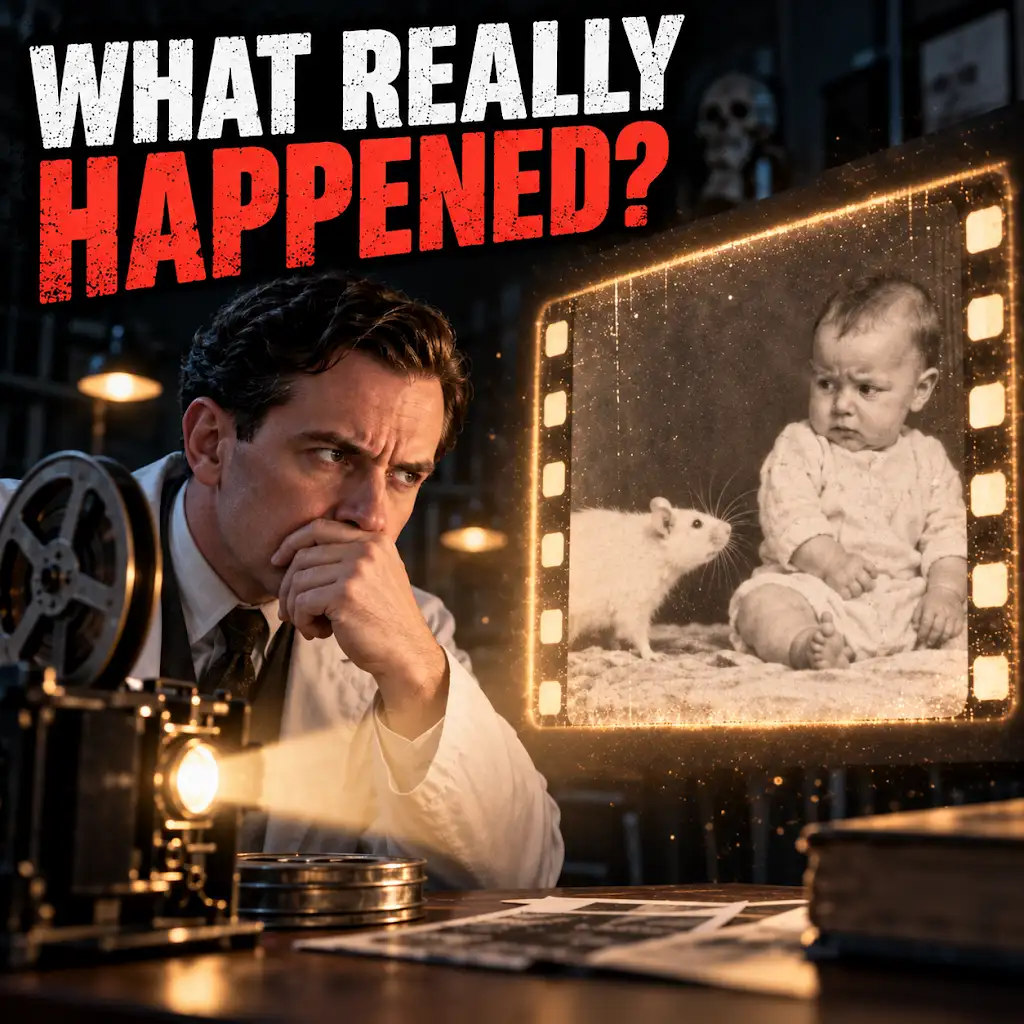
The experiment involved a baby, identified as “Albert B.” or “Little Albert,” approximately nine months old at the commencement of the study. Initially, Albert showed no fear of a white rat, a common laboratory animal, nor of a burning light bulb or a mask. The researchers then introduced a neutral stimulus: the white rat. This was consistently paired with an unconditioned stimulus designed to evoke fear: a loud, startling noise produced by striking a steel bar with a hammer behind Albert’s head. This pairing was repeated multiple times.
The Conditioning Process: A Rapid and Alarming Transformation
The results were swift and dramatic. After only a few pairings of the white rat and the loud noise, Albert began to show signs of fear in the presence of the rat alone. His initial neutral response transformed into crying, whimpering, and attempts to crawl away. This demonstrated that the rat, the previously neutral stimulus, had become a conditioned stimulus, eliciting a conditioned fear response.
Generalization and Persistence: The Lingering Effects
Watson and Rayner further observed that Albert’s fear response generalized to other furry objects. He became fearful of a rabbit, a dog, a sealskin coat, cotton wool, and even a Santa Claus mask. This generalization indicated that the conditioned fear was not specific to the white rat but had been associated with similar stimuli. The study concluded that fear, like other behaviors, could be learned through association, a cornerstone of behaviorist theory. However, the study also noted that the fear responses had not been extinguished by the end of the observation period, raising further questions about the long-term impact on the child.
The Search for Albert’s True Identity
The Enigma Begins: Limited Information in Original Papers
The original papers published by Watson and Rayner provided very little identifying information about Little Albert. They stated that he was an infant in the Harriet Lane Home for the Invalid Feeble-minded at the Johns Hopkins Hospital. This vague description, combined with the pseudonym “Albert B.,” immediately ignited a quest for his true identity among researchers interested in the history of psychology and ethics. The lack of concrete details made the child’s story feel almost like a parable, detached from a specific human life, which, in itself, contributed to the mystery.
Early Speculations: Glimmers of Possibility
Over the decades, various individuals were proposed as potential candidates for Little Albert. These speculations were often based on circumstantial evidence, anecdotal accounts, and comparisons of available photographs or descriptions. However, none of these early theories could be definitively proven, and the mystery persisted, fueling ongoing research and debate. Each proposed candidate brought with them their own narratives and connections to the Johns Hopkins institution, but none offered irrefutable proof.
The Breakthrough: Dual Investigators, Singular Focus
The most significant breakthroughs in identifying Little Albert came in the early 2000s, driven by the persistent work of two independent researchers: psychologist Russ Powell and historian of psychology Ben Harris. Both were captivated by the ethical implications of the study and felt a profound responsibility to uncover the identity of the child at its center. Their individual efforts, driven by a shared passion for historical accuracy and ethical rectitude, would eventually converge to shed light on this long-standing enigma.
Unmasking the Candidates: Pondering the Possibilities

“Douglas Merritte”: A Promising Lead
One of the most compelling candidates to emerge was Douglas Merritte, a child who was hospitalized at Johns Hopkins during the period of the experiments. Researchers noted similarities between photographs of Douglas and the images of Little Albert, and his medical records indicated developmental issues that might have led to his institutionalization. Powell and Harris meticulously examined Merritte’s case, attempting to correlate his life events with the timeline and circumstances of the Little Albert study.
“William Barger”: Another Contender
Another individual who was considered a strong possibility was William Barger. His family had connections to the Johns Hopkins hospital, and some accounts suggested he might have been the child in the experiment. Barger’s life story was also scrutinized, with researchers looking for any corroborating evidence that could link him to Watson and Rayner’s work. The examination of Barger’s life involved extensive genealogical research and interviews with surviving family members.
“Albert Moneys”: A Compelling Narrative
Perhaps the most thoroughly investigated candidate is Albert Moneys. His mother, who was a wet nurse at the Harriet Lane Home, brought her son there and he was allegedly left in the hospital for extended periods. Moneys’ story, meticulously pieced together by Powell, offered a compelling narrative that seemed to align with many aspects of the Little Albert study, including his upbringing in the hospital environment and his subsequent departure from the institution.
Little Albert was a famous subject in a psychological experiment conducted by John B. Watson and Rosalie Rayner in 1920, which aimed to demonstrate classical conditioning in humans. The study involved a young child who was conditioned to fear a white rat, showcasing how emotions could be learned through association. For those interested in exploring more about the implications and ethical considerations of this experiment, you can read a related article that delves deeper into the topic. This article provides valuable insights into the lasting impact of the Little Albert study on psychology and behavioral research. You can find it here: related article.
The Verdict and Lingering Questions
| Aspect | Details |
|---|---|
| Who was Little Albert? | A pseudonym for an infant subject in a famous psychology experiment conducted by John B. Watson and Rosalie Rayner in 1920. |
| Purpose of Experiment | To demonstrate classical conditioning in humans by conditioning a fear response to a white rat. |
| Age of Little Albert | Approximately 9 months old at the start of the experiment. |
| Conditioned Stimulus | White rat initially neutral stimulus. |
| Unconditioned Stimulus | Loud noise (striking a metal bar behind Albert’s head). |
| Conditioned Response | Fear and distress when presented with the white rat. |
| Significance | Provided evidence that emotional responses could be conditioned in humans. |
| Ethical Concerns | Experiment lacked informed consent and did not attempt to decondition the fear response. |
| Identity | Believed to be Douglas Merritte, though some debate exists. |
The Strongest Evidence: Albert Moneys and his Mother
After extensive research, including the examination of previously inaccessible hospital records, the identification of Albert Moneys as Little Albert gained significant traction. Powell’s research, in particular, presented a compelling case based on the convergence of documentary evidence and anecdotal accounts from Moneys’ family. The narrative of his mother, a wet nurse at the hospital, and his own upbringing within its walls provided a plausible explanation for his availability for the experiment.
The Ethical Aftermath: A Stain on Psychological History
Regardless of Albert’s true identity, the Little Albert experiment remains a stark reminder of the ethical challenges that can arise in scientific inquiry. The lack of informed consent, the intentional infliction of distress, and the failure to decondition the child’s fear have been widely condemned. The study serves as a pivotal example in the development of ethical guidelines in psychological research, emphasizing the paramount importance of protecting vulnerable subjects. The very fact that the child’s identity remained unknown for so long further underscored the lack of accountability and transparency in such research practices.
The Legacy of a Name: A Cautionary Tale
The story of Little Albert, though shrouded in mystery for much of its existence, has left an indelible mark on the field of psychology. It stands as a powerful, albeit disturbing, testament to the principles of classical conditioning. However, it also serves as a potent cautionary tale, urging researchers to approach their work with the utmost ethical consideration and to prioritize the well-being of their participants. The persistent questions surrounding Little Albert’s identity ultimately serve to amplify the ethical discussions that the study continues to provoke, ensuring that its lessons are not forgotten. The enduring enigma surrounding “Little Albert” compels a continued reflection on the responsibility of science and the enduring human need for knowledge, balanced against the absolute imperative of safeguarding human dignity.
The Little Albert Experiment May Not Have Worked
FAQs
Who was Little Albert?
Little Albert was the pseudonym given to a young boy who was the subject of a famous psychology experiment conducted by John B. Watson and Rosalie Rayner in 1920.
What was the purpose of the Little Albert experiment?
The purpose of the Little Albert experiment was to demonstrate how classical conditioning could be used to condition a fear response in a young child.
What was the outcome of the Little Albert experiment?
The outcome of the Little Albert experiment was that the young boy developed a fear of a white rat after associating it with a loud noise, demonstrating the principles of classical conditioning.
What ethical concerns have been raised about the Little Albert experiment?
Ethical concerns have been raised about the Little Albert experiment due to the emotional distress caused to the child, the lack of informed consent, and the potential long-term effects of the conditioning.
What impact did the Little Albert experiment have on the field of psychology?
The Little Albert experiment is considered a landmark study in psychology as it provided valuable insights into the principles of classical conditioning and the influence of early experiences on behavior.