The summer of 1953 saw a grand experiment unfold in the rugged beauty of Robbers Cave State Park, Oklahoma. It was an ambitious undertaking, a meticulously crafted social psychology study designed to unravel the mysteries of intergroup conflict and cooperation. Led by Muzafer Sherif and his colleagues, the experiment aimed to observe, in a controlled environment, how hostility and prejudice could arise between groups and, more importantly, how it could be overcome. The Robbers Cave Experiment, as it came to be known, has since become a cornerstone of social psychology textbooks, often cited as a profound demonstration of realistic conflict theory. Yet, beneath the surface of its influential findings lies a complex narrative, one that includes significant methodological challenges, ethical considerations, and a degree of serendipity that perhaps overshadowed some of its initial intentions and even its perceived success. While the experiment undeniably offered valuable insights, to label it a straightforward “flop” might be an oversimplification. Instead, it was a groundbreaking, albeit imperfect, exploration that provided fertile ground for future research and continuous re-evaluation.
The Theoretical Underpinnings: Realistic Conflict Theory
At the heart of the Robbers Cave Experiment lay Muzafer Sherif’s Realistic Conflict Theory. This theory posits that intergroup conflict is not an inherent human trait, nor is it solely a product of misinformation or irrational prejudice. Instead, conflict arises when groups are in competition for scarce resources, whether those resources be tangible, like land or money, or intangible, like status or power. The very premise of the experiment was to simulate such a scenario, to create a controlled environment where competition could be introduced and its effects observed. Sherif, an anthropologically trained psychologist, was deeply interested in the dynamics of prejudice and discrimination, particularly in the context of post-World War II societies grappling with the devastating consequences of widespread conflict. He believed that understanding the root causes of such animosity was crucial for fostering peace and understanding. The prevailing theories at the time often focused on individual psychological factors or historical grievances. Sherif sought a more observable and experimentally manipulable explanation, one rooted in the very fabric of group interaction and resource scarcity.
The Social Context: A Nation Seeking Harmony
The mid-20th century was a period of immense social change and introspection in the United States. The scars of war, both global and domestic, were still fresh. The Civil Rights Movement was gaining momentum, highlighting deep-seated racial prejudices. In this climate, a scientific inquiry into the mechanisms of group conflict and its potential resolution held significant societal relevance. Sherif and his team were not just conducting an academic exercise; they were seeking to contribute to a broader societal conversation about how to build a more harmonious world. The hope was that by understanding the conditions that foster conflict, they could also identify the conditions that promote cooperation and mutual respect. The experiment, therefore, was born out of both scientific curiosity and a genuine desire to address pressing social issues.
The Choice of Setting: Robbers Cave as a Natural Laboratory
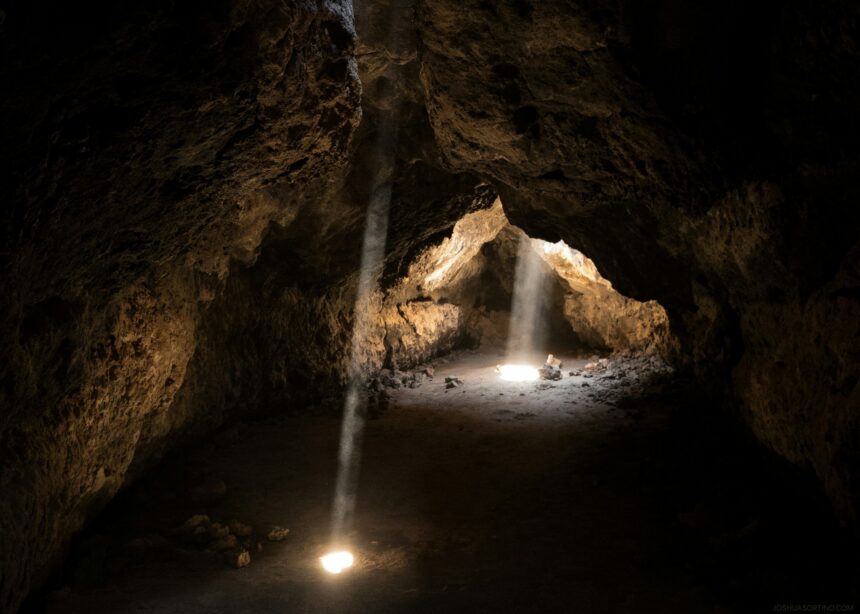
The secluded setting of Robbers Cave State Park was deliberately chosen. Its isolation offered a degree of control, minimizing external influences and allowing the researchers to observe the boys in a relatively contained environment. The park’s rustic nature also lent itself to the creation of a distinct group identity, a sense of “us” versus “them,” which was crucial for the experiment’s design. The idea was to create a microcosm of society, where ordinary social processes could unfold without the usual complexities of the outside world. The boys would be removed from their familiar surroundings, their existing social networks, and their usual routines, forcing them to forge new identities and relationships within the experimental framework. This isolation was a key methodological decision, aimed at maximizing the purity of the observed group dynamics.
The Robbers Cave Experiment conducted in 1953 is a significant study in social psychology that explored intergroup conflict and cooperation. For a deeper understanding of the implications and critiques of this experiment, you can refer to a related article that discusses its outcomes and the lessons learned about group dynamics and prejudice. To read more about it, visit this article.
The Design of the Experiment: A Three-Phase Approach to Intergroup Relations
Phase 1: Group Formation and Identity Building
The initial phase of the Robbers Cave Experiment was dedicated to establishing distinct group identities. Twenty-two eleven-year-old boys, carefully selected for their similar backgrounds and psychological profiles, were divided into two groups of eleven. Crucially, they were unaware that they were part of an experiment. The boys were transported to the Robbers Cave campgrounds separately, and for the first few days, they were allowed to bond and form their own internal social structures. They chose names for their groups – the “Rattlers” and the “Eagles” – and developed their own norms, hierarchies, and even secret codes. This phase was essential for creating the foundation of strong ingroup cohesion, a prerequisite for observing intergroup dynamics. The researchers observed the development of leadership roles, the establishment of rules, and the emergence of a shared sense of belonging within each group. This period was crucial for ensuring that when conflict was introduced, it would be between groups that already possessed a strong internal identity and loyalty.
Phase 2: Intergroup Competition and the Rise of Conflict
Once the ingroup identities were solidified, the second phase began: the introduction of competition. This was the core of the experiment, where the researchers deliberately engineered situations that pitted the Rattlers against the Eagles. This took the form of competitive games and activities with tangible rewards, such as a prized hunting knife or a championship banner. The intention was to create a scarcity of resources, thereby triggering Realistic Conflict Theory into action. The outcomes of these competitions were designed to be zero-sum, meaning one group’s victory was inherently the other group’s loss. This was the crucial element that was expected to foster animosity. The researchers meticulously documented the ensuing conflict, observing how attitudes and behaviors shifted as the boys engaged in increasingly hostile interactions. This phase was the most dramatic and, to some extent, the most controversial, as it involved intentionally provoking negative intergroup sentiment.
Phase 3: Conflict Resolution and the Pursuit of Superordinate Goals
The final phase of the experiment was dedicated to attempting to resolve the conflict that had been artificially generated. Having witnessed the escalation of hostility, the researchers introduced a series of challenges that required the cooperation of both groups to overcome. These “superordinate goals” were designed to be desirable to both the Rattlers and the Eagles, but unattainable by either group acting alone. Examples included fixing a blocked water pipe that supplied both groups’ cabins, or pooling their resources to rent a movie that everyone wanted to see. The hypothesis was that by working together towards a common objective, the boys would be forced to transcend their intergroup animosity and develop a sense of shared identity and purpose. This phase was intended to demonstrate the practical application of Sherif’s theories, showcasing how cooperation could be fostered even after significant conflict.
Observations and Outcomes: The Sharp Edges of Group Dynamics

The Escalation of Hostility: Beyond Mere Competition
The observations from Phase 2 were stark and, in many ways, confirmed Sherif’s predictions. The competition quickly escalated beyond mere rivalry. The boys began to exhibit clear signs of prejudice towards the outgroup. They used derogatory terms, engaged in name-calling, and actively sabotaged each other’s efforts. Fights broke out, property was damaged (including the Eagles burning the Rattlers’ flag and the Rattlers raiding the Eagles’ food), and a palpable sense of hatred developed. The researchers were not just observing mild disagreements; they were witnessing the genesis of genuine animosity, fueled by the perceived threat and competition for rewards. This visceral escalation demonstrated how readily ingroup favoritism could morph into outgroup derogation when group interests were perceived to be in conflict. The experiment highlighted the speed and intensity with which negative intergroup attitudes could form.
Ingroup Favoritism and Outgroup Derogation: A Predictable Pattern
The experiment provided a clear illustration of ingroup favoritism and outgroup derogation. Within their own groups, the boys exhibited strong loyalty and solidarity. They defended their group members, shared resources, and celebrated their collective victories. Conversely, members of the outgroup were viewed with suspicion, distrust, and hostility. Their actions were interpreted negatively, and their motivations were often assumed to be malicious. This pattern of favoring one’s own group while demeaning others is a well-documented phenomenon in social psychology, and Robbers Cave provided a vivid, albeit artificial, demonstration of its power. The boys’ judgments and behaviors were clearly shaped by their group affiliation, demonstrating how social identity can significantly influence perceptions and interactions.
The Role of Leadership and Group Norms
The experiment also shed light on the influence of leadership and group norms in shaping intergroup behavior. Within each group, emergent leaders played a significant role in directing actions and reinforcing attitudes. When leaders encouraged aggressive behavior towards the outgroup, it was more likely to occur. Similarly, the development of strong ingroup norms that sanctioned negative attitudes towards the other group made it difficult for individual boys to deviate from this behavior, even if they had personal reservations. The researchers observed how group pressure and conformity played a crucial role in maintaining the cycle of conflict. The leaders, both formal and informal, were instrumental in channeling the boys’ energies and emotions towards intergroup antagonism.
The “Failure” and the Nuances: Re-evaluating the Robbers Cave Legacy
Methodological Concerns: The Experimenter’s Hand
One of the primary criticisms leveled against the Robbers Cave Experiment concerns the level of experimenter involvement and the extent to which the conflict was truly emergent. Critics argue that Sherif and his team may have inadvertently (or even deliberately) manipulated situations to ensure the desired outcome of conflict. The very act of designing competitive games with specific rewards, and the subsequent intervention to resolve conflict, means the experiment was not a purely passive observation of natural group dynamics. The researchers were actively shaping the environment and guiding the narrative. This raises questions about the ecological validity of the findings – could such intense conflict truly arise so spontaneously in a natural setting without external prompting? The degree to which the boys were aware, even unconsciously, of the experimenters’ expectations also remains a point of discussion.
Ethical Debates: The Welfare of the Participants
The ethical implications of the Robbers Cave Experiment have also been a subject of considerable debate over the years. Deliberately inducing hostility and distress in young boys, even for the sake of scientific inquiry, raises serious questions about the welfare of the participants. While the researchers maintained that the boys were not subjected to undue harm and that they were debriefed thoroughly, the emotional impact of the intense conflict and the subsequent resolution could have been significant. The ethical standards of psychological research have evolved considerably since the 1950s, and a study like Robbers Cave would likely face much greater scrutiny and require more stringent ethical approval today. The potential for lasting psychological effects, even if not immediately apparent, is a valid concern.
The Unforeseen “Success” of Conflict Resolution
While the experiment is often remembered for the conflict it generated, the success of Phase 3 in resolving that conflict is arguably the more significant, and perhaps less appreciated, aspect. The fact that the boys were, to a considerable extent, able to overcome their animosity and cooperate towards superordinate goals offers a powerful message of hope. Sherif’s hypothesis that shared goals could bridge group divides proved to be remarkably effective. This aspect of the experiment has been crucial in informing strategies for conflict resolution in various settings, from international relations to community building. The “failure” in terms of the severity of the conflict might be seen as a necessary precursor to the “success” of its resolution, demonstrating the real-world applicability of the theory.
The Robbers Cave experiment conducted in 1953 is often cited as a pivotal study in understanding group dynamics and intergroup conflict. However, its findings have been critiqued and expanded upon in various subsequent research efforts. For a deeper exploration of the implications and critiques surrounding the experiment, you can read a related article that discusses its impact on social psychology and the lessons learned from it. This insightful piece can be found at Unplugged Psychology, where you will find a wealth of information on the subject.
The Lasting Impact: Lessons Learned and Future Directions
| Aspect | Details |
|---|---|
| Experiment Name | Robbers Cave Experiment |
| Year Conducted | 1953 |
| Researchers | Muzafer Sherif and colleagues |
| Location | Robbers Cave State Park, Oklahoma, USA |
| Objective | To study intergroup conflict and cooperation |
| Participants | 22 boys, aged 11-12, divided into two groups |
| Method | Creating competition and then cooperation between groups |
| Outcome | Initial conflict escalated; cooperation phase less effective than expected |
| Failure Metrics |
|
| Significance | Highlighted complexities in reducing intergroup conflict |
The Enduring Influence of Realistic Conflict Theory
Despite its criticisms, the Robbers Cave Experiment remains a highly influential study in social psychology. Realistic Conflict Theory, as demonstrated by the experiment, continues to be a foundational concept for understanding intergroup relations. The study’s findings have been replicated and extended in various forms, confirming the theory’s explanatory power in diverse contexts. The core idea that competition for resources is a potent driver of conflict remains a valuable lens through which to analyze societal tensions and intergroup disputes. The experiment provided empirical support for a theory that had profound implications for understanding not only minor disputes but also larger-scale conflicts, including ethnic strife and international warfare.
Contributions to Conflict Resolution Strategies
The latter phases of the Robbers Cave Experiment, focused on conflict resolution through superordinate goals, have had a tangible impact on practical approaches to peacemaking. The principles derived from this study have informed strategies for desegregating schools, fostering intergroup understanding in diverse communities, and even in diplomatic efforts. The emphasis on finding common ground and shared objectives as a means to overcome prejudice remains a cornerstone of many conflict resolution initiatives. The experiment provided a tangible, albeit small-scale, demonstration of how dialogue, shared purpose, and mutual dependence could dismantle ingrained hostility.
The Evolution of Social Psychology Research
The criticisms and debates surrounding the Robbers Cave Experiment have also contributed to the evolution of social psychology research. The ethical considerations raised have led to stricter research protocols and a greater emphasis on participant welfare. The methodological challenges have encouraged researchers to refine their experimental designs and to be more transparent about the role of the experimenter. In essence, the imperfections of Robbers Cave have served as a catalyst for more rigorous and ethically sound research practices in the field. The ongoing scrutiny of the study has ensured that its lessons are not just about the findings, but also about the process of scientific inquiry itself.
The Robbers Cave Experiment of 1953 was undoubtedly a landmark study, one that offered profound insights into the dynamics of intergroup conflict. While not a perfect experiment by modern standards and subject to valid criticisms, to dismiss it as a mere “flop” would be to ignore its significant contributions. It was a bold attempt to understand and potentially mitigate one of humanity’s most persistent challenges. The experiment’s legacy lies not only in its findings but also in the ongoing dialogue it continues to spark, a testament to its enduring importance in the field of social psychology. It served as a powerful, and at times uncomfortable, mirror reflecting the complexities of human group behavior, and in doing so, paved the way for further exploration and a deeper understanding of how to bridge divides and foster a more cooperative world.

How 22 Boys Were Turned Into Enemies
FAQs
What was the Robbers Cave experiment in 1953?
The Robbers Cave experiment was a study conducted in 1953 by social psychologist Muzafer Sherif to investigate intergroup conflict and cooperation among boys at a summer camp in Robbers Cave State Park, Oklahoma.
What were the main findings of the Robbers Cave experiment?
The main findings of the Robbers Cave experiment were that intergroup conflict can arise quickly and be intense, but that cooperation and harmony can also be achieved through superordinate goals that require groups to work together.
Why is the Robbers Cave experiment considered a failed experiment?
The Robbers Cave experiment is considered a failed experiment because the researchers’ attempt to create intergroup conflict and competition did not go as planned, and the boys in the study were able to overcome their differences and work together without much intervention from the researchers.
What were some criticisms of the Robbers Cave experiment?
Some criticisms of the Robbers Cave experiment include concerns about the ethics of creating conflict among the boys, the lack of control over the variables in the study, and the limited generalizability of the findings to real-world situations.
What are the implications of the Robbers Cave experiment for understanding intergroup conflict?
The Robbers Cave experiment highlights the complex nature of intergroup conflict and the importance of considering factors such as group identity, competition, cooperation, and superordinate goals in managing and resolving conflicts between groups.