The Little Albert Experiment: A Chilling Documentary
The annals of psychological research are peppered with studies that have both illuminated and horrified. Among the most notorious, and certainly one of the most ethically questionable, is the Little Albert experiment conducted by John B. Watson and Rosalie Rayner. A chilling documentary delving into this controversial study promises to revisit the event, exploring its historical context, scientific ambitions, and the lasting ethical disquiet it continues to evoke. This documentary, by its very nature, will likely cast a stark light on the unchecked enthusiasm of early behavioral psychology and the profound implications of its methodologies.
The early 20th century marked a paradigm shift in the field of psychology. Before the rise of behaviorism, the dominant approach, introspection, relied on individuals reporting their own conscious experiences. This subjective method was viewed by many as unscientific and unreliable. Into this intellectual vacuum stepped John B. Watson, a young and ambitious psychologist who championed a radical new perspective. Watson, influenced by the work of Ivan Pavlov and his experiments with conditioned reflexes in dogs, argued that psychology should shed its philosophical trappings and become an objective, empirical science.
Watson’s Vision: Psychology as a Predictive and Controlling Science
Watson’s vision for psychology was revolutionary. He believed that the mind, with its internal states and subjective feelings, was largely inaccessible to scientific inquiry. Instead, he proposed that psychologists should focus solely on observable behavior. Behavior, in Watson’s view, was the sum total of all that an organism does or says. This included everything from breathing and blinking to speaking and writing. He famously declared that psychology had failed to make any substantial progress and that its theoretical foundations were too speculative. His aim was to transform psychology into a science that could predict and control behavior with the same certainty as physics predicted and controlled physical phenomena.
The Influence of Pavlov: Conditioning as the Cornerstone
The work of Russian physiologist Ivan Pavlov provided a crucial empirical foundation for Watson’s behaviorist theories. Pavlov’s experiments with salivating dogs demonstrated the power of classical conditioning. He showed that a neutral stimulus, such as a bell, could be repeatedly paired with an unconditioned stimulus, like food, which naturally elicits a response (salivation). After repeated pairings, the neutral stimulus alone would evoke the salivation response, becoming a conditioned stimulus. Watson saw in this a powerful mechanism that could explain how humans learned to associate stimuli and develop a wide range of behaviors, from emotional responses to complex actions. He believed that all behavior, including emotions and personality, could be explained through the principles of conditioning.
The Little Albert experiment, a pivotal study in the field of psychology, has sparked numerous discussions and analyses regarding ethical considerations in research. For those interested in exploring this topic further, a related article can be found on Unplugged Psych, which delves into the implications of the experiment and its impact on modern psychological practices. You can read more about it here: Unplugged Psych.
The Little Albert Experiment: A Study in Conditioned Fear
It is within this context of behaviorism’s ascendant star and the allure of conditioning that the Little Albert experiment was conceived and executed. The documentary will undoubtedly dissect the rationale behind this particular study, highlighting its intended contribution to the burgeoning field of behavioral psychology. Watson and Rayner sought to demonstrate that complex emotional responses, specifically fear, could be conditioned in humans. Their hypothesis was that if a fear response could be elicited by a previously neutral stimulus, it would provide compelling evidence for the power of associative learning in shaping human behavior.
The Subject: Who Was Little Albert?
The identity of Little Albert remains one of the most persistent ethical questions surrounding the experiment. The documentary will likely explore the limited information available about him. He was an infant, around nine months old at the time of the initial experimentation, brought to the Harriet Lane Home for Invalid Children in Baltimore. While Watson and Rayner claimed he was an orphan, later research has suggested he may have been the son of a wet nurse employed by the hospital, raising further ethical concerns about informed consent and the exploitation of vulnerable individuals. The lack of definitive identification and the presumed inability of the infant to consent to such a study continue to cast a long shadow over the experiment’s ethical standing.
The Methodology: A Calculated Approach to Fear
The experimental procedure, as documented in Watson and Rayner’s original paper, will be meticulously re-enacted or analyzed in the documentary. The initial phase involved presenting Albert with a series of stimuli that were not known to evoke fear. These included a white rat, a rabbit, a dog, a monkey, masks with and without hair, and cotton wool. Albert showed no fear towards these objects; in fact, he displayed curiosity and reached out to touch them. This established a baseline of his emotional responses to neutral stimuli.
The Conditioning Process: The Hammer and the Rat
The core of the experiment involved the conditioning of a fear response to the white rat. When Albert reached for the rat, a loud, startling noise was produced by striking a steel bar with a hammer behind his head. This created an aversive experience, leading Albert to cry and exhibit signs of fear. This pairing of the neutral stimulus (the white rat) with the unconditioned stimulus (the loud noise) was repeated seven times over two sessions. The intent was clear: to associate the sight of the white rat with the unpleasant experience of the loud noise, thereby conditioning a fear response.
The Results: A Fearful Future for Little Albert
The immediate aftermath of the conditioning process yielded the results Watson and Rayner had predicted. Following the repeated pairings, Albert began to show signs of fear even when presented with the white rat alone. He would cry, whimper, and try to crawl away. The documentary will likely emphasize this observable shift in Albert’s behavior, presenting it as a triumph of behavioral conditioning, albeit at a significant emotional cost to the infant.
Generalization of Fear: A Wider Impact of Conditioning
The study did not stop at conditioning fear to the white rat. Watson and Rayner then tested whether this conditioned fear would generalize to other similar stimuli. They presented Albert with a rabbit, a dog, a sealskin coat, his own hair, and a Santa Claus mask. To their “delight,” Albert displayed similar fear responses to these objects as he did to the white rat. This generalization of fear was seen as further validation of their theory, suggesting that learned emotional responses could extend beyond the specific stimulus with which they were initially conditioned. This aspect of the experiment, in particular, highlights the broad implications of conditioning and the potential for unintended emotional consequences.
Lasting Impact: The Ethical Shadow of the Experiment
Despite the purported success of the experiment in demonstrating conditioned fear, its ethical implications have remained a subject of intense debate and criticism. The documentary will undoubtedly dedicate significant time to dissecting these ethical failings, exploring why such an experiment would be deemed acceptable by today’s standards and what lessons can be learned from its execution. The lack of informed consent, the potential for long-term psychological harm, and the questionable nature of the subject’s well-being are all central to this discussion.
Ethical Repercussions: The Unanswered Questions
The Little Albert experiment stands as a stark reminder of a time when scientific curiosity often outpaced ethical considerations. The documentary will likely grapple with the profound ethical questions that this study raises, questions that continue to resonate within the scientific and public spheres. The absence of robust ethical guidelines in early psychological research allowed for methodologies that would be considered abhorrent today, and the Little Albert experiment serves as a potent case study in this historical oversight.
The Absence of Deconditioning: A Cruel Oversight
Perhaps the most damning ethical critique of the Little Albert experiment is the fact that the conditioned fears were never deconditioned. After the study concluded, Albert was removed from the hospital by his mother, and no attempts were made to reverse the fears that had been instilled in him. This omission is seen by many as a cruel and irresponsible act. The documentary will likely explore the potential long-term psychological consequences for Albert, as he may have carried these learned fears throughout his life. The lack of closure for the subject of the experiment amplifies the sense of unease and ethical violation.
The Quest for Albert’s Identity: A Continuing Mystery
The lingering mystery surrounding Little Albert’s true identity and fate only adds to the chilling nature of the documentary. Despite decades of investigation, definitive proof of his identity remains elusive. Several individuals have been proposed as the real “Albert,” each with varying degrees of supporting evidence. The documentary might present these investigative efforts, highlighting the persistent desire to understand the full story and perhaps offer some measure of closure to the unresolved narrative. The lack of definitive answers about Albert’s life after the experiment contributes to the enduring enigma and the unsettling aura surrounding the study.
Modern Ethical Standards: A Stark Contrast
The documentary will undoubtedly draw a sharp contrast between the methodologies employed in the Little Albert experiment and the rigorous ethical standards that govern psychological research today. Institutional Review Boards (IRBs), informed consent procedures, the right to withdraw from a study, and the minimization of harm are all fundamental principles that were either absent or underdeveloped at the time of Watson and Rayner’s work. The film will serve as a powerful educational tool, illustrating the evolution of ethical thought in science and underscoring the importance of protecting the well-being of research participants.
The Little Albert experiment documentary provides a fascinating insight into the early days of behavioral psychology and the controversial methods used by researchers like John B. Watson. For those interested in exploring more about the implications of such experiments on modern psychology, a related article can be found at this link, which delves into the ethical considerations and lasting impact of classical conditioning studies.
The Legacy of Little Albert: A Complex and Controversial Contribution
| Aspect | Details |
|---|---|
| Experiment Name | Little Albert Experiment |
| Researcher | John B. Watson and Rosalie Rayner |
| Year Conducted | 1920 |
| Subject | Infant known as “Little Albert” |
| Objective | To demonstrate classical conditioning in humans |
| Method | Conditioned fear response to a white rat by pairing it with a loud noise |
| Outcome | Albert developed fear of white rat and other similar objects |
| Ethical Concerns | No informed consent, psychological harm, no follow-up care |
| Documentary Focus | Historical context, ethical implications, and impact on psychology |
| Duration of Experiment | Approximately 2 months |
| Significance | First demonstration of conditioned emotional response in humans |
The Little Albert experiment, despite its profound ethical shortcomings, cannot be entirely dismissed as a mere historical anomaly. It played a significant role in the development of behaviorism and contributed to our understanding of learning and conditioning. The documentary will likely explore this complex legacy, acknowledging its scientific impact while never shying away from its ethical transgressions. The study’s influence can be seen in various fields, from educational psychology to the development of therapies for phobias and anxieties.
Behaviorism’s Enduring Influence: Beyond the Ethical Minefield
While strict Watsonian behaviorism has largely been superseded by more nuanced approaches that incorporate cognitive processes, its core principles continue to inform much of our understanding of behavior. Classical and operant conditioning remain fundamental concepts taught in introductory psychology courses. The documentary will likely trace how these principles, first championed by Watson, have been refined and applied in various contexts, even as the ethical boundaries have been redrawn. The film might offer examples of modern applications of conditioning principles that are both effective and ethically sound, showcasing the evolution of the field.
The Reinterpretation of the Experiment: Nuance and Debate
In recent years, there have been attempts to re-examine and reinterpret the Little Albert experiment, seeking to understand the motivations and potential limitations of Watson and Rayner’s work. Some scholars have argued that the experiment was not as straightforward or as definitively conclusive as Watson presented it. The documentary might delve into these scholarly debates, presenting different perspectives on the experiment’s scientific merit and its historical context. This exploration of nuance will likely highlight the complexities of scientific progress and the ongoing process of re-evaluation.
A Cautionary Tale for Scientific Advancement
Ultimately, the documentary on the Little Albert experiment will likely serve as a profound cautionary tale. It underscores the responsibility that comes with scientific inquiry, the imperative to prioritize human welfare, and the need for constant ethical reflection. The film will likely leave viewers with a sense of disquiet, prompting them to consider the potential for scientific ambition to blind researchers to the ethical implications of their work. The story of Little Albert, a child whose vulnerability was exploited in the name of scientific discovery, remains a potent and unsettling chapter in the history of psychology.
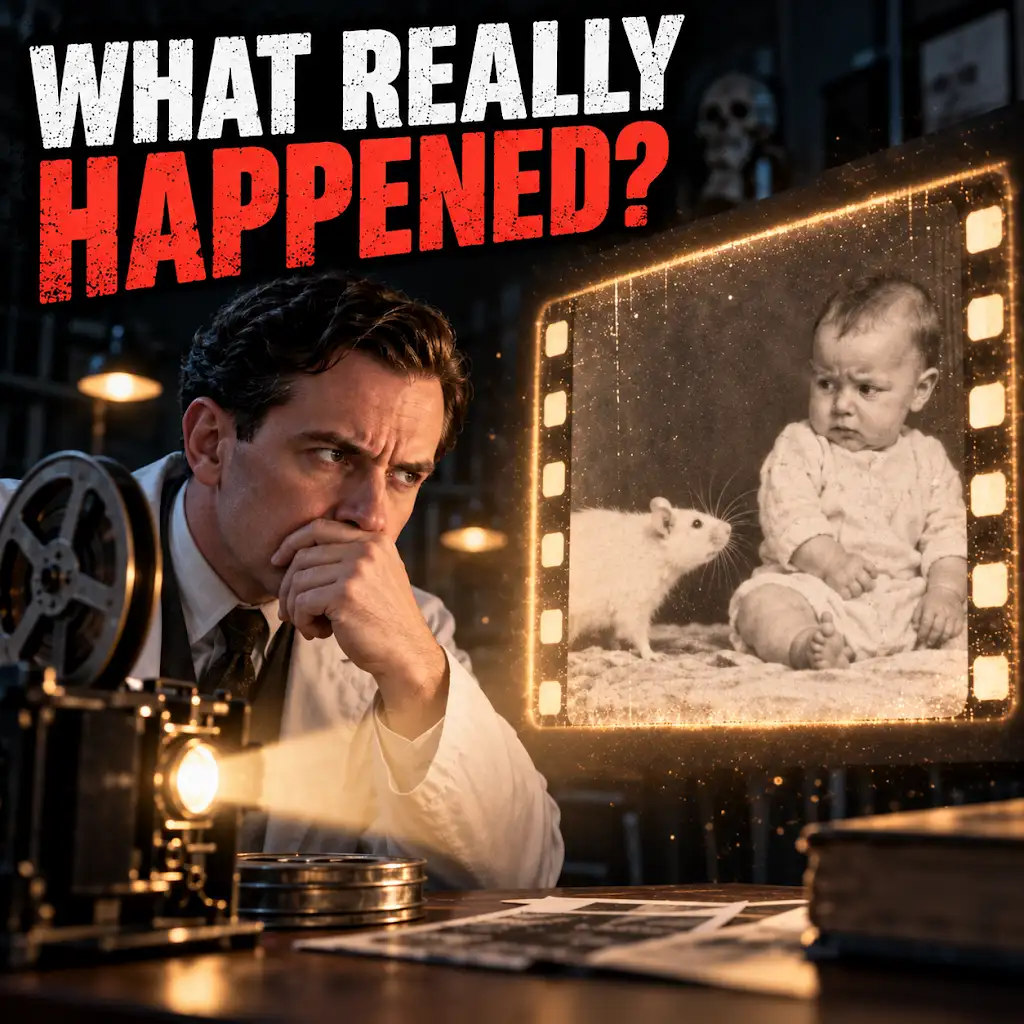
The Little Albert Experiment May Not Have Worked
FAQs
What was the Little Albert experiment?
The Little Albert experiment was a controversial psychology experiment conducted by John B. Watson and Rosalie Rayner in 1920. It involved conditioning a young boy named Albert to fear a white rat by pairing its presence with a loud, startling noise.
Who was Little Albert?
Little Albert was the pseudonym given to the infant participant in the experiment. His real identity was later revealed to be Douglas Merritte.
What were the ethical concerns surrounding the Little Albert experiment?
The Little Albert experiment raised ethical concerns due to the lack of informed consent from the child’s parents, the potential for psychological harm inflicted on the child, and the lack of debriefing following the experiment.
What were the results of the Little Albert experiment?
The results of the Little Albert experiment showed that through classical conditioning, Albert developed a fear of not only the white rat but also other similar stimuli, demonstrating the generalization of fear responses.
What impact did the Little Albert experiment have on the field of psychology?
The Little Albert experiment is considered a landmark study in the field of psychology as it demonstrated the principles of classical conditioning and the potential for fear to be learned through environmental stimuli. It also highlighted the importance of ethical considerations in research involving human subjects.