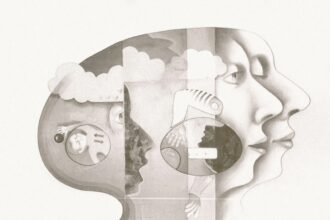
You’re standing at a crossroads, a dizzying fork in the road where the path ahead is shrouded in mist. This is uncertainty, a pervasive human experience that can feel as unnerving as it is inevitable. Whether it’s the amorphous dread of a looming global crisis, the personal trepidation of a new career or relationship, or the quiet hum of not knowing what tomorrow will bring, uncertainty is a constant companion for you. But what if you could reframe this feeling, not as a void to be feared, but as fertile ground for your brain’s remarkable capacity to adapt? Your brain, this intricate biological marvel, is not a static entity; it’s a dynamic, ever-evolving system designed to navigate the unpredictable currents of existence. Understanding how it achieves this resilience can be your most powerful tool for embracing, rather than being crippled by, the unknown.
Your brain is an obsessive predictor. From the moment you wake, it’s a finely tuned scanner, constantly taking in information from your senses and comparing it to its vast internal library of experiences and expectations. This isn’t just passive observation; it’s an active, ceaseless process of hypothesis testing. Your brain posits, “Given what I know, what is most likely to happen next?” and then waits for evidence to confirm or deny that prediction. This is the essence of predictive coding, a powerful theory that explains how your brain constructs your reality.
The Symphony of Sensory Input and Internal Models
Imagine you’re walking through a dimly lit room. Your eyes are taking in fragmented visual data, your ears are picking up the faint sounds of the house settling, and your skin is registering the temperature. Your brain doesn’t just receive these raw signals; it actively integrates them. It uses your existing mental models of what a typical room looks like, sounds like, and feels like to fill in the gaps. If you hear a creak, your brain doesn’t just register a noise; it immediately accesses its knowledge about floorboards, old houses, and the potential for movement. This predictive engine is working overtime, not out of paranoia, but out of efficiency. It’s trying to create a coherent and predictable world for you, even when the information is incomplete.
The Role of Expectations in Perception
Your expectations are not merely passive passengers; they actively shape what you perceive. If you’re expecting a surprise party, you might be more attuned to hushed conversations and furtive glances. Conversely, if you’re bracing yourself for bad news, you might interpret neutral tones as ominous. This is because your brain prioritizes information that aligns with its predictions. When something doesn’t fit, it’s flagged as a prediction error, a signal that demands attention and learning. This is your brain’s way of saying, “Something is different, pay attention!”
Prediction Errors: The Architects of Learning and Adaptation
These prediction errors are the fertile ground where learning flourishes. When your brain’s prediction is wrong, it’s not a failure; it’s an opportunity. A prediction error signals that your internal model needs updating. Imagine you’re expecting to see a familiar face in the crowd, but you see someone entirely different. This discrepancy, this prediction error, triggers a cascade of neural activity. Your brain then adjusts its internal model to incorporate this new information, becoming better equipped to recognize that face in the future. In the context of uncertainty, prediction errors are particularly frequent. The less predictable an environment, the more often your brain will encounter these discrepancies, and therefore, the more it will learn and adapt.
The Dopaminergic Reward System and Novelty
The brain’s reward system, particularly the release of dopamine, plays a crucial role in this process. Novelty, especially when it leads to a positive outcome or a reduction in uncertainty, is often associated with a dopamine surge. This makes you want to explore, to understand, and to adapt. Even when faced with the discomfort of the unknown, the potential for a positive resolution – or simply the satisfaction of a solved puzzle – can drive your brain’s learning mechanisms.
Understanding how the brain handles uncertainty is a fascinating area of research that sheds light on decision-making processes and cognitive functions. A related article that delves deeper into this topic can be found at Unplugged Psychology, where various aspects of psychological resilience and adaptability in the face of uncertainty are explored. This resource provides valuable insights into how our brains process ambiguous information and the implications for mental health and well-being.
The Brain’s Elasticity: Neuroplasticity and the Rewiring of Uncertainty
The notion that your brain is fixed after childhood is a myth. Your brain is remarkably plastic, capable of reorganizing itself throughout your life, forming new neural connections and strengthening existing ones. This ability, known as neuroplasticity, is your inherent superpower for navigating uncertainty. It means that the very act of confronting and engaging with the unknown can fundamentally change your brain’s structure and function, making you more resilient.
Building New Neural Pathways for Novel Situations
When you encounter a new situation, especially one filled with uncertainty, your brain doesn’t have pre-existing, well-worn pathways to guide you. Instead, it begins to forge new connections. Imagine you’re learning a new skill, like playing a musical instrument or speaking a foreign language. Every practice session, every attempt, every mistake is a building block. Your neurons are firing in new patterns, creating new highways of information flow. The more you engage with the uncertain, the more you are actively exercising and strengthening these new pathways, making them more efficient and robust.
The Role of Experience in Shaping Brain Architecture
Your life experiences are the architects of your brain’s architecture. The more diverse and challenging your experiences, the more intricate and adaptable your neural network becomes. When you step outside your comfort zone, you’re not just having an adventure; you’re actively sculpting your brain. The challenges you overcome, the lessons you learn, and the new skills you acquire all leave their indelible mark, providing you with a richer toolkit for future encounters with uncertainty.
Habit Formation and Automaticity in the Face of Ambiguity
While new pathways are being forged, your brain is also working to make navigation more automatic. This is the development of habits and automaticity. When you repeatedly face a specific type of uncertainty and develop effective coping strategies, these responses can become ingrained. You might develop a ritual for preparing for presentations, a calm demeanor when facing unexpected delays, or a systematic approach to problem-solving. These automatic responses free up your cognitive resources, allowing you to tackle more complex aspects of the uncertain situation without being overwhelmed.
The Trade-off Between Flexibility and Efficiency
The development of automaticity is a fascinating trade-off between flexibility and efficiency. While habits make certain responses quick and effortless, they can sometimes be less adaptable to entirely novel situations. However, in the context of frequently encountered uncertainties, this efficiency is invaluable. Your brain learns to recognize the patterns, even within ambiguity, and deploy pre-programmed, effective solutions.
The Emotional Compass: Fear, Anxiety, and the Adaptive Purpose of Discomfort

Uncertainty often triggers a cocktail of emotions, most notably fear and anxiety. These are not simply negative experiences to be eradicated; they are ancient, adaptive responses designed to signal potential danger and motivate protective action. Understanding their role can help you manage their intensity and leverage them as guides.
The Amygdala’s Alarm System
At the core of your brain’s fear response is the amygdala, an almond-shaped structure that acts as your internal smoke detector. When faced with perceived threats – and uncertainty can certainly feel threatening – the amygdala releases stress hormones like cortisol and adrenaline. This triggers the “fight or flight” response, preparing your body for immediate action. While this can be helpful in acute emergencies, in the context of prolonged or abstract uncertainty, this alarm system can become overactive, leading to chronic anxiety.
The Evolutionary Advantage of Fear
From an evolutionary perspective, a healthy dose of fear was crucial for survival. Those who were more attuned to potential dangers, who were more likely to hesitate at the edge of a cliff or flee from a predator, were more likely to live to reproduce. Your brain evolved to be sensitive to the unknown because the unknown often held real, life-threatening risks.
Anxiety: The “What If” Generator and Its Potential Benefits
Anxiety, in many ways, is the cognitive extension of fear. It’s your brain’s relentless exploration of “what if” scenarios. While excessive rumination can be debilitating, a moderate level of anxiety can actually be beneficial. It keeps you alert, prompting you to consider potential negative outcomes and to prepare for them. In the face of uncertainty, anxiety can be a signal to gather more information, to assess risks more thoroughly, and to develop contingency plans.
The Role of the Prefrontal Cortex in Regulating Emotional Responses
Your prefrontal cortex, the executive control center of your brain, plays a vital role in moderating the amygdala’s output. Through conscious effort and practiced techniques, you can learn to engage your prefrontal cortex to calm your amygdala, re-evaluate the perceived threat, and engage in more rational thought. This is why mindfulness, cognitive reframing, and other stress-management techniques are so effective: they empower your prefrontal cortex to gain a more balanced perspective.
Embracing the Ambiguity: Strategies for Navigating the Uncharted

Given that your brain is wired to adapt to uncertainty, the key lies in how you engage with it. Instead of resisting it, you can actively cultivate strategies to foster resilience and leverage your brain’s natural adaptive capabilities.
Cultivating Mindfulness and Present Moment Awareness
Mindfulness is the practice of paying attention to the present moment without judgment. In the context of uncertainty, this means consciously bringing your awareness to what is happening now, rather than getting lost in hypothetical future scenarios. By grounding yourself in the present, you can reduce the overwhelming nature of unknown future events.
Your Breath as an Anchor
Your breath is a powerful anchor to the present. When you feel overwhelmed by uncertainty, focus on the sensation of your breath entering and leaving your body. This simple act can interrupt the cycle of anxious thoughts and bring you back to the here and now.
Observing Thoughts Without Attachment
Mindfulness also involves observing your thoughts – including your anxious thoughts about the uncertain future – without getting caught up in them. Imagine them as clouds drifting across the sky; acknowledge their presence without clinging to them.
Developing a Growth Mindset Towards Uncertainty
A growth mindset, as opposed to a fixed mindset, is the belief that your abilities and intelligence can be developed through dedication and hard work. Applied to uncertainty, this means viewing challenging and unpredictable situations as opportunities for learning and growth rather than insurmountable obstacles.
Reframing Challenges as Learning Opportunities
When faced with the unknown, consciously ask yourself: “What can I learn from this?” This simple shift in perspective can transform a daunting situation into a valuable experience that strengthens your adaptive capabilities.
The Power of Persistence in the Face of Setbacks
Embracing a growth mindset also involves understanding that setbacks are a natural part of the learning process. In the face of uncertainty, you are bound to encounter unexpected challenges. Persistence, fueled by the belief that you can overcome these obstacles, is key.
Building a Toolkit of Coping Mechanisms
Just as you have a toolbox for physical tasks, you need a repertoire of emotional and cognitive coping mechanisms for navigating uncertainty. These are the strategies you deploy when the going gets tough.
Problem-Solving and Active Information Gathering
When faced with a specific aspect of uncertainty that is amenable to action, engage in active problem-solving. Break down the unknown into smaller, manageable parts and seek out information. This sense of agency can significantly reduce feelings of helplessness.
Seeking Social Support and Connection
Connecting with others who are also navigating uncertainty can provide immense comfort and support. Sharing your experiences, listening to others’ coping strategies, and simply feeling understood can be incredibly therapeutic.
Engaging in Self-Care Practices
Prioritizing self-care – whether through exercise, healthy eating, sufficient sleep, or enjoyable hobbies – is not a luxury; it’s a necessity when facing stress. A well-nourished and rested body and mind are far more capable of handling the demands of uncertainty.
Recent research has shed light on how the brain manages uncertainty, revealing fascinating insights into decision-making processes. For those interested in exploring this topic further, a related article discusses the intricate mechanisms our brains employ to navigate ambiguous situations. This exploration can enhance our understanding of cognitive functions and emotional responses. You can read more about it in this insightful piece on the subject here.
The Future Unwritten: Your Brain’s Ongoing Odyssey
| Aspect | Explanation |
|---|---|
| Neural Circuits | The brain uses neural circuits to process and interpret uncertain information, often involving the prefrontal cortex and amygdala. |
| Decision Making | Uncertainty can impact decision making, leading to risk aversion or impulsivity depending on individual differences and context. |
| Emotional Response | Uncertainty can trigger emotional responses such as anxiety or curiosity, which are regulated by the limbic system. |
| Adaptation | The brain can adapt to uncertainty through learning and experience, adjusting its responses based on feedback and outcomes. |
Your brain is not designed to exist in a state of perfect predictability. Its very architecture is a testament to its capacity for adaptation, for learning, and for growth in the face of the unknown. The mist that shrouds the path ahead is not an impassable barrier, but an invitation for your brain to engage its remarkable abilities.
The Continuous Cycle of Prediction, Error, and Learning
The journey of navigating uncertainty is a continuous cycle: you make predictions, you encounter prediction errors, and you learn from those errors to refine your internal models. This ongoing process of refinement is what makes you resilient. Your brain is an active participant in shaping its own future, constantly updating its understanding of the world based on new experiences.
Becoming a Master of Your Own Adaptation
By understanding the science behind your brain’s adaptability, you can move from being a passive recipient of uncertainty to an active architect of your response. You gain the power to choose how you perceive challenges, how you manage your emotions, and what strategies you employ.
The Thrill of the Unfolding Landscape
Ultimately, embracing uncertainty isn’t about eliminating it; it’s about recognizing its inherent role in a dynamic and ever-evolving existence. It’s about appreciating the thrill of an unfolding landscape, the opportunities for discovery, and the profound satisfaction that comes from knowing your brain is equipped to navigate whatever lies ahead. Your brain’s journey through uncertainty is an ongoing odyssey, a testament to its incredible capacity to adapt, and your ultimate advantage in an unpredictable world.

Why Waiting Feels Worse Than Bad News
FAQs
What is uncertainty and how does the brain handle it?
Uncertainty refers to the lack of knowledge about a future event or outcome. The brain handles uncertainty by using various cognitive processes such as prediction, risk assessment, and decision-making to navigate uncertain situations.
What parts of the brain are involved in processing uncertainty?
The prefrontal cortex, anterior cingulate cortex, and amygdala are key brain regions involved in processing uncertainty. These areas are responsible for decision-making, emotional responses, and risk assessment.
How does the brain’s response to uncertainty impact behavior?
The brain’s response to uncertainty can impact behavior in various ways. It can lead to increased stress and anxiety, influence decision-making processes, and affect risk-taking behavior.
Can the brain adapt to handling uncertainty more effectively?
Yes, the brain can adapt to handling uncertainty more effectively through processes such as learning, exposure to new experiences, and cognitive-behavioral therapy. These methods can help individuals develop better coping strategies for dealing with uncertainty.
What are the potential implications of understanding how the brain handles uncertainty?
Understanding how the brain handles uncertainty can have implications for various fields such as psychology, neuroscience, economics, and decision-making. It can also inform the development of interventions to help individuals better cope with uncertainty-related stress and anxiety.