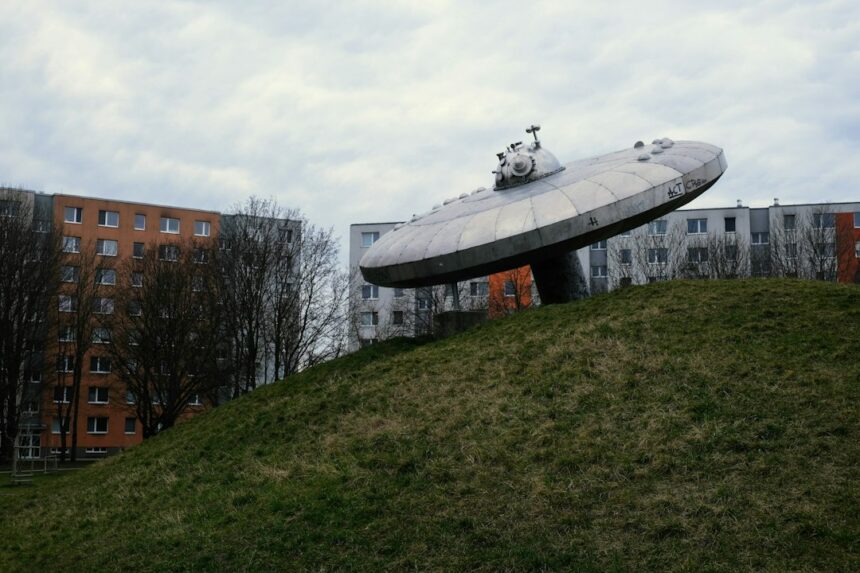
The mid-20th century was a period of profound societal change, marked by rapid technological advancements, geopolitical tensions, and a burgeoning fascination with the unknown. In this fertile ground of scientific curiosity and Cold War anxieties, the subject of Unidentified Flying Objects (UFOs), or “flying saucers” as they were often called, captured the public imagination and, importantly, the attention of government entities. The 1950s, in particular, stands out as a crucial decade for official investigations into these anomalous aerial phenomena. This era witnessed the establishment of formal studies, the collation of vast amounts of observational data, and the nascent development of governmental frameworks to address a phenomenon that defied easy explanation.
The Dawn of Official Inquiry and the Robertson Panel
The initial surge of UFO sightings in the late 1940s, most notably Kenneth Arnold’s sighting in June 1947 and the alleged Roswell incident shortly thereafter, ignited a public fervor that could not be entirely ignored by the nascent United States Air Force (USAF). While initial responses were often dismissive or explained away by conventional means, the sheer volume and persistence of reports necessitated a more systematic approach. This led to the establishment of Project Sign in 1947, the first formal USAF study into UFOs. Project Sign was followed by Project Grudge in 1949, which continued the investigation but with a more skeptical outlook. It was the persistent reporting and the growing concern that these phenomena might represent a genuine technological or intelligence threat that ultimately led to a more significant, high-level government reassessment in the early 1950s.
The Genesis of Project Blue Book
Project Blue Book, the most enduring and well-known of the USAF’s UFO investigation projects, officially began in March 1952, absorbing the work and personnel of its predecessors. Headed by Captain Edward J. Ruppelt, a seasoned officer with a background in engineering, Project Blue Book was tasked with investigating UFO reports, determining if they posed a threat to national security, and analyzing them to see if they could be explained by conventional means. Ruppelt, in particular, aimed to bring a more scientific and less dismissive approach to the investigations, acknowledging that some reports genuinely defied easy categorization. The project established a standardized reporting system, encouraging military personnel and civilians alike to submit detailed accounts of their observations. This systematic collection of data was intended to provide a robust database for analysis, moving beyond anecdotal evidence and isolated incidents.
The Condon Committee and the Turning Tide
While Project Blue Book continued its work, the scientific and intelligence communities remained divided on the nature and significance of UFOs. The sheer volume of reports, many of which were still unexplained, prompted a further, more independent review. This culminated in the establishment of the University of Colorado’s “Scientific Study of Unidentified Flying Objects,” commonly known as the Condon Committee, in 1966. While its official charter was signed in the 1960s, the intellectual groundwork and the concerns that led to its formation were deeply rooted in the findings and perceived limitations of the earlier 1950s studies. The Condon Committee, led by physicist Dr. Edward U. Condon, was intended to provide an objective, scientific assessment of the UFO phenomenon, free from the operational constraints of the Air Force. The committee’s work, however, would ultimately prove to be a turning point, with its final report concluding that further extensive study of UFOs was not warranted. This conclusion, though controversial, significantly influenced future government policy and public perception regarding UFOs in the subsequent decades.
In the realm of UFO studies, the 1950s marked a significant period of government interest and investigation into unidentified flying objects. A related article that delves into this intriguing topic is available at this link. It explores the various government programs initiated during that era, including Project Blue Book, and examines the cultural impact of UFO sightings on society at the time.
Cold War Context and National Security Concerns

The 1950s were defined by the pervasive shadow of the Cold War. The ideological and military standoff between the United States and the Soviet Union fostered an atmosphere of suspicion, secrecy, and a constant search for strategic advantage. In this environment, any unexplained aerial phenomenon, regardless of its origin, was immediately viewed through the lens of national security. The possibility that UFOs could be advanced Soviet aircraft, reconnaissance devices, or even a novel weapon system was a genuine and pressing concern for military and intelligence agencies. This concern permeated the government’s approach to UFO studies, shaping the objectives, methodologies, and the ultimate interpretation of the data collected.
The Specter of Soviet Technology
The rapid advancements in aviation technology during the Cold War fueled fears of a technological gap. The Soviets had demonstrated remarkable ingenuity, from their early development of jet aircraft to their successful launch of Sputnik. When UFOs were reported, especially those exhibiting characteristics beyond the known capabilities of contemporary aircraft, the immediate assumption was often that they represented a clandestine Soviet technological breakthrough. This meant that UFO reports were not just curiosities; they were potential indicators of an adversary’s capabilities, demanding thorough investigation to assess the threat to American airspace and defense systems. The perceived sophistication of some UFO sightings, such as extreme speed, maneuverability, and silent operation, lent credence to the idea that they could be instruments of Soviet espionage or aerial dominance.
Deception and Disinformation
Conversely, the possibility of Soviet deception also factored into the government’s deliberations. If the Soviets were aware of the US government’s interest in UFOs, they might deliberately sow confusion or disinformation by introducing fabricated sightings or misleading information. This dual concern – that UFOs could be real Soviet threats or cleverly crafted illusions – complicated the analysis process and reinforced the need for rigorous investigation and intelligence gathering. The classification of many UFO reports and the classified nature of military research further contributed to an environment where speculation and conspiracy theories could easily flourish, both within and outside of government circles. The secrecy surrounding military activities, while necessary for national security, inadvertently created a fertile ground for misunderstanding and mistrust.
Methodologies and Data Collection in the 1950s

The government’s approach to UFO studies in the 1950s, while nascent in its scientific rigor by modern standards, involved a systematic effort to collect and analyze reports. The primary objective was to distinguish between misidentifications of conventional aircraft or natural phenomena and genuine unexplained events. This required the development of specific procedures for receiving, cataloging, and investigating sightings. The methods employed, though often limited by the technology and understanding of the time, aimed to bring a degree of order to a chaotic and often sensationalized subject.
Establishing Reporting Channels
The USAF, as the primary investigating body, established formal channels for receiving UFO reports. These reports typically came from military personnel – pilots, radar operators, ground observers – as well as civilian sources. Reports from military personnel were generally given more weight due to their presumed training and observational skills, as well as the potential implications for flight safety and national security. Standardized forms were developed to ensure that crucial details were captured, including the date, time, location, duration of the sighting, the appearance and behavior of the object, weather conditions, and the number of witnesses. The goal was to gather as much objective data as possible to facilitate analysis. The establishment of these channels, however imperfect, represented a significant step towards professionalizing the investigation of the phenomenon.
The Challenge of Analysis and Classification
Analyzing the collected data presented a significant challenge. Reports often varied in quality, detail, and the reliability of the witnesses. The investigators had to sift through a vast number of reports, attempting to identify patterns and commonalities. Common explanations for sightings included misidentification of aircraft (conventional and experimental), balloons (weather balloons, Project Mogul balloons), celestial bodies (Venus, meteors), atmospheric phenomena (lenticular clouds, ball lightning), and psychological factors (hallucinations, mass hysteria). The Air Force’s official stance was that the vast majority of UFO reports could be explained by these mundane causes. However, a small percentage of reports remained stubbornly unexplained, falling into a category designated as “Unidentified.” It was these unexplained cases that continued to fuel public and official interest, as they represented phenomena that eluded easy categorization and potentially hinted at something more. The process of classification was iterative, with many reports initially deemed “unexplained” later being reclassified as conventional phenomena as more information became available or as analysis techniques improved.
Notable Cases and Emerging Theories
The 1950s were a period rich with notable UFO sightings that captured public attention and fueled ongoing governmental investigations. These cases, often involving multiple witnesses and sometimes corroborated by radar data, pushed the boundaries of conventional explanations and contributed to the development of various theories about the nature of UFOs. While the official position often leaned towards conventional explanations, these compelling incidents kept the mystery alive.
The Washington D.C. Incident of 1952
One of the most significant and widely publicized UFO events of the 1950s was the series of sightings over Washington D.C. in the summer of 1952. For several nights, commercial airline pilots, radar operators at the National Airport, and military personnel on the ground observed multiple unidentified objects moving erratically in the sky above the nation’s capital. These objects were tracked on radar, appeared to exhibit unusual speed and maneuverability, and defied attempts by military fighter jets to intercept them. The incident generated considerable public alarm and media attention, prompting President Truman to order a high-level review. The USAF held a press conference to address the sightings, attributing them to atmospheric conditions and misidentification of aircraft, though the official explanation did little to quell public unease or the persistent questions about the unexplained radar contacts and visual sightings. The event underscored the perceived vulnerability of even the most secure airspace.
The “Foo Fighters” Legacy and Early Interpretations
While the term “flying saucers” gained prominence in the late 1940s, earlier reports from World War II of mysterious aerial lights, often dubbed “foo fighters” by Allied pilots, also contributed to the ongoing discourse. These early accounts of unexplained phenomena in the skies played a role in shaping perceptions and expectations about potential aerial anomalies. During the 1950s, as official studies commenced, the data collected from these earlier reports was sometimes integrated into the broader analysis. Interpretations of UFO phenomena during this period ranged from meteorological or atmospheric anomalies to secret military projects (both American and Soviet). However, a growing segment of the public and some researchers began to entertain more extraordinary explanations, including the possibility of extraterrestrial visitation, a theory that gained traction as the number of unexplained sightings continued to be reported.
In the 1950s, the U.S. government became increasingly interested in unidentified flying objects, leading to a series of investigations and reports that have since fueled public fascination and conspiracy theories. A related article discusses the implications of these government studies and their impact on our understanding of extraterrestrial life. For more insights into this intriguing topic, you can read the full article here.
The Legacy and Limitations of 1950s UFO Studies
| Year | Government Agency | Project/Program | Number of UFO Reports Investigated | Key Findings | Public Impact |
|---|---|---|---|---|---|
| 1950 | US Air Force | Project Blue Book (initiated 1952) | Approximately 200 reports | Most sightings explained as natural phenomena or aircraft | Increased public interest and media coverage |
| 1952 | US Air Force | Project Blue Book | Over 800 reports | Some cases remained unexplained; no evidence of extraterrestrial origin | Heightened public concern and government secrecy rumors |
| 1953 | US Air Force | Project Blue Book | Approximately 600 reports | Majority identified as weather balloons, aircraft, or hoaxes | Government issued statements to calm public fears |
| 1956 | US Air Force | Project Blue Book | About 400 reports | Continued inconclusive cases; no confirmed threats | Ongoing public fascination with UFOs |
| 1957 | US Air Force | Project Blue Book | Approximately 350 reports | Most sightings explained; some remain unexplained | Media coverage declines slightly |
The government’s UFO studies of the 1950s, while falling short of definitively solving the mystery of Unidentified Flying Objects, left a significant legacy. They established a framework for official investigation, collected a substantial body of data, and influenced public discourse on the subject. However, these studies were also characterized by inherent limitations, shaped by the scientific understanding, technological capabilities, and sociopolitical context of the era.
The Enduring Influence on Public Perception
The investigations, particularly Project Blue Book, played a crucial role in shaping public perception of UFOs. While the USAF consistently maintained that most sightings had conventional explanations, the very act of conducting extensive studies lent an air of legitimacy to the subject. The acknowledged existence of a small percentage of “unexplained” cases, even if attributed to insufficient data, fueled public curiosity and contributed to the persistent belief that there was more to the phenomenon than was being officially disclosed. The media’s coverage of these investigations, often focusing on the unexplained aspects, further amplified public interest and speculation, making UFOs a recurring theme in popular culture.
Constraints and Criticisms of the Early Investigations
Despite the efforts made, the government’s UFO studies in the 1950s faced significant criticism. One of the most persistent critiques was the accusation of a “cover-up” or deliberate downplaying of evidence. Critics argued that the studies were often predisposed to finding conventional explanations, sometimes forcing data to fit preconceived conclusions. The scientific methodologies employed were also questioned; critics pointed to a lack of independent scientific oversight and a reliance on eyewitness testimony, which can be prone to error. Furthermore, the Cold War environment fostered a culture of secrecy, which meant that much of the information gathered was classified, limiting transparency and hindering independent scientific analysis. The inherent limitations in radar technology, photographic analysis, and understanding of atmospheric phenomena at the time also meant that definitive conclusions were often elusive, leaving room for doubt and alternative interpretations. The closure of Project Blue Book in 1969, following the Condon Committee report, signaled a significant shift in official government policy, but the questions and the legacy of the 1950s investigations continued to resonate.

The Pentagon’s 1952 UFO Film Cuts to a Sewing Machine
FAQs
What was the significance of UFO studies by the government in the 1950s?
In the 1950s, the government conducted UFO studies to investigate unidentified flying objects that were being reported by the public and military personnel. These studies aimed to determine if these sightings posed any threat to national security.
Which government agency was primarily responsible for UFO studies in the 1950s?
The United States Air Force was primarily responsible for conducting UFO studies in the 1950s. They established Project Blue Book in 1952 to investigate and analyze UFO sightings.
What was Project Blue Book and how did it operate?
Project Blue Book was a systematic study of UFO sightings conducted by the United States Air Force from 1952 to 1969. It collected and analyzed reports of UFO sightings to determine if they were a threat to national security and to scientifically evaluate the phenomena.
Did the government publicly acknowledge the existence of UFOs during the 1950s?
While the government conducted UFO studies in the 1950s, it did not publicly acknowledge the existence of extraterrestrial spacecraft or aliens. The official stance was that most UFO sightings could be explained by natural or man-made phenomena.
What were some of the conclusions reached by the government’s UFO studies in the 1950s?
Many of the UFO sightings investigated by the government in the 1950s were ultimately explained as misidentifications of known objects, hoaxes, or natural phenomena. However, a small percentage of cases remained unexplained, leading to ongoing speculation and debate about the existence of extraterrestrial life.