
Fear conditioning is a fundamental learning process that plays a significant role in how humans and animals develop and maintain fears. This psychological phenomenon, where a neutral stimulus becomes associated with a negative experience, explains the origins of many phobias, anxieties, and post-traumatic stress responses. Understanding fear conditioning offers a window into the intricate workings of the brain, revealing how it learns to predict and react to danger, and how these learned responses can sometimes become maladaptive.
Fear conditioning is a specific type of associative learning. It is based on the principle of classical conditioning, first systematically studied by Ivan Pavlov. In classical conditioning, a neutral stimulus (conditioned stimulus or CS) is repeatedly paired with an unconditioned stimulus (US) that naturally elicits a response (unconditioned response or UR). Over time, the neutral stimulus alone comes to elicit a response similar to the original one, now termed the conditioned response (CR). In the context of fear, the US is typically something inherently aversive or dangerous, such as an electric shock or a loud noise, which naturally triggers a fear response (UR). The CS, on the other hand, is initially neutral, like a light, a tone, or a specific environment.
Pavlov’s Legacy and the Elaboration of Fear Conditioning
Ivan Pavlov’s experiments with dogs provided the foundational understanding of associative learning. He observed that dogs, when presented with food (US), would salivate (UR). By pairing the sound of a bell (CS) with the presentation of food, Pavlov found that eventually, the dogs would salivate (CR) at the mere sound of the bell, even without the food. While Pavlov’s original work didn’t specifically focus on fear, the principles of pairing stimuli and observing conditioned responses laid the groundwork for researchers to explore how fear itself could be learned through similar mechanisms.
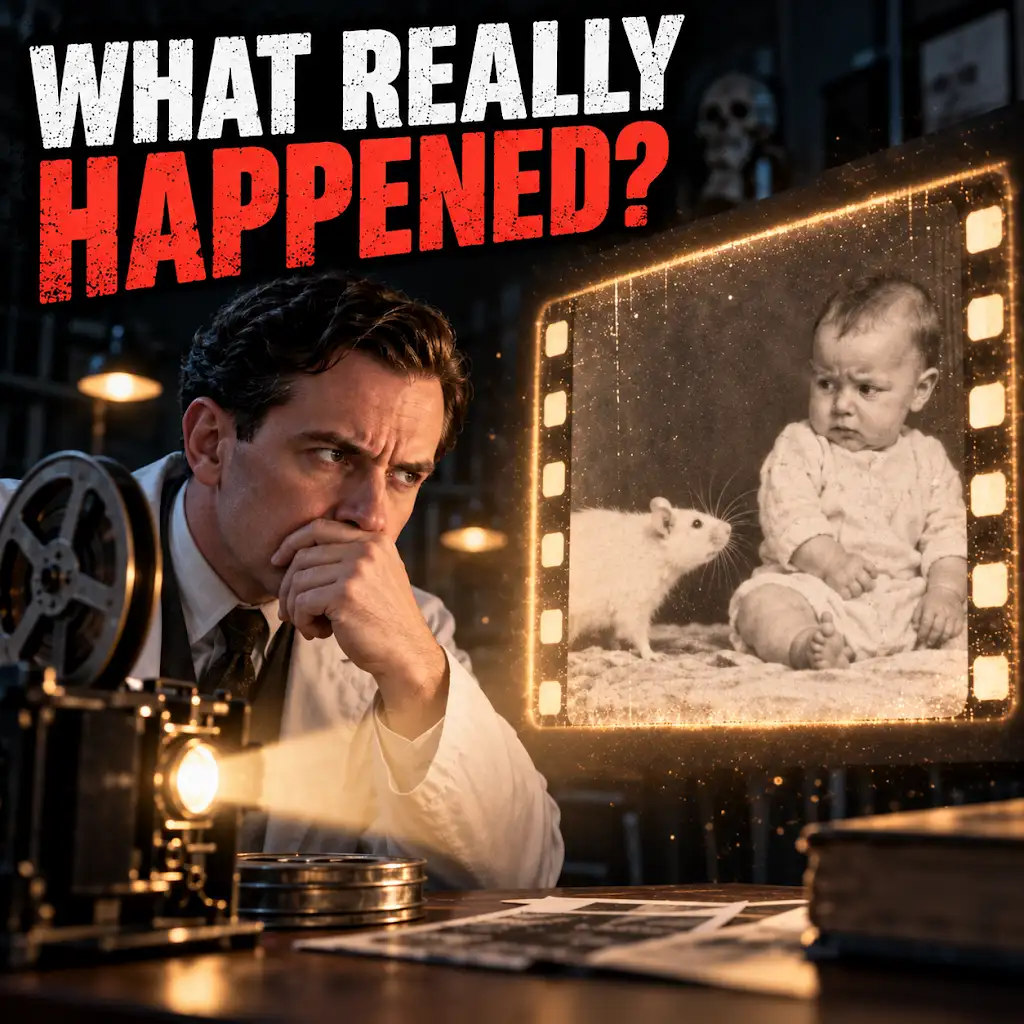
Early research into fear conditioning, often conducted with animal models, solidified these principles. Studies by John B. Watson and Rosalie Rayner, most famously the “Little Albert” experiment, demonstrated the power of fear conditioning in humans. In this study, a young boy was exposed to a white rat (CS) and simultaneously a loud, startling noise (US), which elicited fear (UR). After several pairings, Little Albert exhibited fear (CR) towards the white rat even in the absence of the loud noise. This experiment, while ethically questionable by modern standards, was a groundbreaking demonstration of how fear could be acquired through associative learning and how it could generalize to similar stimuli.
Key Components of Fear Conditioning
The process of fear conditioning involves several crucial elements that work in concert to establish and maintain a learned fear response:
The Unconditioned Stimulus (US): The Natural Aversive Agent
The unconditioned stimulus is the cornerstone of fear conditioning. It is a stimulus that naturally and automatically elicits a fear response without any prior learning. Examples include:
- Physical Pain: A sharp jab, a burn, or an electric shock.
- Threatening Stimuli: A predator, a venomous snake, or a falling object.
- Overwhelming Sensory Input: A sudden, deafening noise or an intensely bright flash of light.
The inherent aversiveness of the US is what drives the learning process. The organism’s biological imperative is to avoid such stimuli, and the brain quickly learns to associate any cues present during the encounter with the US as potential danger signals.
The Conditioned Stimulus (CS): The Neutral Signal of Impending Danger
The conditioned stimulus begins as a neutral stimulus, meaning it does not initially evoke a fear response. However, through repeated pairings with the US, it acquires the ability to elicit a fear response. The CS can be a wide variety of sensory modalities:
- Auditory Cues: A specific tone, a certain sound, or a particular voice.
- Visual Cues: A color, a pattern, an object, or a particular environment.
- Olfactory Cues: A specific smell.
- Contextual Cues: The specific location or situation where the aversive experience occurred.
The effectiveness of a CS often depends on its distinctiveness and its temporal relationship with the US. A more salient and easily detectable CS is more likely to become a strong predictor of danger.
The Unconditioned Response (UR): The Innate Fear Reaction
The unconditioned response is the natural, automatic, and unlearned reaction to the unconditioned stimulus. This response is deeply ingrained in the organism’s biology and serves a protective function. Examples of UR in the context of fear include:
- Physiological Changes: Increased heart rate, blood pressure, and respiration; pupil dilation; sweating; muscle tension; release of stress hormones like cortisol and adrenaline.
- Behavioral Responses: Freezing, startle reflex, avoidance, escape behaviors, vocalizations of distress.
- Emotional Experience: The subjective feeling of fear or terror.
The Conditioned Response (CR): The Learned Fear Reaction
The conditioned response is the learned reaction to the conditioned stimulus after it has been paired with the unconditioned stimulus. The CR often closely resembles the UR, but it is now elicited by the CS alone. This means that the organism has learned to anticipate the aversive event and exhibit a fear response in its presence. The CR can include the same physiological, behavioral, and emotional components as the UR.
In the realm of fear conditioning psychology experiments, a fascinating article that delves into the mechanisms and implications of this phenomenon can be found on Unplugged Psychology. This resource explores various studies that illustrate how fear responses are learned and unlearned, shedding light on the underlying processes that contribute to anxiety disorders. For more in-depth insights, you can read the article here: Unplugged Psychology.
The Neurobiological Underpinnings of Fear Conditioning
The brain regions involved in fear conditioning are primarily within the limbic system, a network of structures crucial for emotion, motivation, and memory. The amygdala, a small, almond-shaped structure deep within the temporal lobe, is considered the central hub for fear learning and expression.
The Amygdala: The Fear Center
The amygdala plays a pivotal role in processing and storing fear memories. It receives sensory information from various parts of the brain, including the thalamus and the sensory cortex. During fear conditioning, the amygdala forms associations between the CS and the US. Specifically:
- Lateral Amygdala: This region acts as the primary input station, receiving information about both the CS and the US. It is here that the convergence of these two stimuli leads to synaptic plasticity, strengthening the connections between neurons that represent the CS and those that represent the US.
- Basolateral Amygdala: This area is involved in storing the association between the CS and the US. It relays this information to other brain regions.
- Central Amygdala: This region is the main output pathway of the amygdala, coordinating the expression of the conditioned fear response. It projects to various brainstem and hypothalamic areas that control physiological and behavioral responses such as freezing, increased heart rate, and hormonal release.
When a previously neutral stimulus (CS) is presented after conditioning, it activates neurons in the lateral amygdala that have been strengthened by association with the US. This activation then triggers a cascade of signals through the central amygdala, leading to the conditioned fear response.
The Hippocampus: Contextualizing Fear
While the amygdala is crucial for learning the association between a specific cue and fear, the hippocampus plays a vital role in associating fear with specific contexts or environments. The hippocampus is known for its role in spatial and episodic memory. In fear conditioning, it helps the organism learn that a particular location or situation is dangerous.
- Contextual Fear Conditioning: In this form of conditioning, a subject is exposed to an aversive stimulus in a specific environment. Later, when placed back into that environment, even without the direct threat, the subject exhibits fear. The hippocampus is essential for forming this contextual fear memory, allowing the organism to associate the entire setting with danger.
- Interaction with the Amygdala: The hippocampus works in conjunction with the amygdala. It provides contextual information to the amygdala, helping to refine fear responses. For instance, if a specific tone is paired with a shock, the amygdala learns the tone-shock association. However, if this pairing occurs in a particular room, the hippocampus helps to link the fear of the tone with that specific room, creating a more nuanced and context-dependent fear memory.
The Prefrontal Cortex: Regulating and Inhibiting Fear
The prefrontal cortex (PFC), particularly the medial prefrontal cortex (mPFC), plays a crucial role in the regulation and inhibition of learned fear. It acts as a top-down control center, modulating the activity of the amygdala and reducing the expression of conditioned fear.
- Fear Extinction: The PFC is critical for the process of fear extinction, where the conditioned fear response gradually diminishes when the CS is repeatedly presented without the US. This is not forgetting the fear, but rather learning a new association that the CS is no longer predictive of danger. The mPFC projects to the amygdala, inhibiting its fear-generating output.
- Executive Control: The PFC also contributes to the cognitive appraisal of threat and the planning of coping strategies, helping to override automatic fear responses when they are no longer adaptive.
Factors Influencing Fear Conditioning

Several factors can influence the strength and persistence of fear conditioning, impacting how readily a fear is acquired and how difficult it is to extinguish.
The Intensity and Salience of the US
The more intense or salient the unconditioned stimulus, the stronger and more rapid the fear conditioning will be. A severe electric shock will lead to faster and more robust fear conditioning than a mild one. Similarly, a loud, sudden, and unexpected noise will be a more potent US than a soft, gradual sound. This is because intense aversive stimuli provide a clearer and more compelling signal of danger, making it easier for the brain to form a strong association.
The Timing and Contingency Between CS and US
The temporal relationship between the conditioned stimulus and the unconditioned stimulus is critical for effective conditioning.
- Contingency: The CS must reliably predict the US. If the US occurs independently of the CS, conditioning will be weak or absent. This is known as the contingency principle.
- Timing: The ideal timing for fear conditioning is when the CS precedes the US by a short interval (typically milliseconds to a few seconds). This is known as forward conditioning.
- Simultaneous Conditioning: When the CS and US are presented at the same time, conditioning is less effective.
- Backward Conditioning: When the US precedes the CS, conditioning is very weak or non-existent. The brain is less likely to associate a stimulus that follows danger with the danger itself.
The Nature of the CS
The type of conditioned stimulus can also influence the ease of fear acquisition.
- Preparedness: Some stimuli are more readily associated with fear than others due to evolutionary pressures. For example, humans and primates are more easily conditioned to fear snakes and spiders than to fear flowers or mushrooms, even if the latter have been paired with a shock. This concept, known as preparedness, suggests that certain associations are biologically predisposed.
- Distinctiveness: A highly distinctive and novel CS is more likely to become associated with fear than a common or familiar one. If a tone is very unique, it will be a better CS than a tone that is frequently heard in everyday life.
Individual Differences
Individuals vary in their susceptibility to fear conditioning. Factors such as genetics, early life experiences, and current psychological state can play a role.
- Genetics: Some individuals may have a genetic predisposition to anxiety disorders, which can manifest as heightened fear conditioning.
- Early Life Adversity: Traumatic experiences in childhood can sensitize the fear system, making individuals more prone to developing fear responses and disorders later in life.
- Stress and Anxiety Levels: Individuals who are already experiencing high levels of stress or anxiety may be more easily conditioned to fear stimuli.
Extinction and the Unlearning of Fear
Once a fear has been conditioned, it can be extinguished. Fear extinction is the process by which the conditioned fear response diminishes when the CS is repeatedly presented in the absence of the US. This is a crucial mechanism for adapting to changing environments and for overcoming learned fears.
Mechanisms of Fear Extinction
Fear extinction is not simply forgetting the fear association; rather, it is a new form of learning that competes with the original fear memory.
- Inhibitory Learning: The brain learns a new association: that the CS now predicts safety, not danger. This inhibitory learning is mediated by the prefrontal cortex, which exerts inhibitory control over the amygdala.
- Neural Changes: Extinction involves changes in the neural circuitry of the fear system. Specifically, neurons in the medial prefrontal cortex become more active and exert inhibitory influence on the amygdala.
- Context Dependence: Extinction is often context-dependent. A fear may be extinguished in one setting but reappear in another if the original context of the fear is reintroduced.
Therapeutic Applications of Extinction
The principles of fear extinction are central to many successful psychotherapies for anxiety disorders and phobias.
- Exposure Therapy: This is a form of cognitive-behavioral therapy where individuals are gradually exposed to the feared stimulus (CS) in a safe and controlled environment, without the presence of the aversive US. This repeated exposure allows for the extinction of the learned fear response.
- In Vivo Exposure: Direct exposure to the feared object or situation (e.g., a person with a phobia of heights being taken to a high place).
- Imaginal Exposure: Imagining the feared object or situation.
- Virtual Reality Exposure: Using virtual reality technology to simulate feared situations.
- Systematic Desensitization: This technique combines relaxation techniques with gradual exposure to feared stimuli, aiming to desensitize the individual to the fear-inducing cues.
- Virtual Reality Therapy: This has become increasingly popular as it allows for highly controlled and immersive exposure experiences that can be tailored to the individual’s needs.
In the realm of fear conditioning psychology experiments, researchers have made significant strides in understanding how fear responses are learned and unlearned. A fascinating article that delves deeper into this topic can be found at Unplugged Psychology, where various studies are discussed that illustrate the mechanisms behind conditioned fear responses. These insights not only enhance our comprehension of anxiety disorders but also pave the way for developing effective therapeutic interventions.
Fear Conditioning in Everyday Life and Clinical Disorders
| Metric | Description | Typical Values | Measurement Method |
|---|---|---|---|
| Conditioned Stimulus (CS) | Neutral stimulus paired with an aversive unconditioned stimulus | Tone, light, or context | Presentation of tone/light in experimental chamber |
| Unconditioned Stimulus (US) | Aversive stimulus that naturally elicits fear response | Foot shock (0.5-1.0 mA, 1-2 sec) | Electric shock delivered through floor grid |
| Conditioned Response (CR) | Learned fear response to the CS after pairing with US | Freezing behavior (percentage of time) | Behavioral observation or automated scoring |
| Baseline Freezing | Freezing behavior before conditioning | 0-5% | Observation during pre-CS period |
| Post-Conditioning Freezing | Freezing behavior during CS presentation after conditioning | 40-80% | Observation during CS presentation |
| Acquisition Trials | Number of CS-US pairings during conditioning | 3-5 trials | Experimental protocol |
| Inter-Trial Interval (ITI) | Time between conditioning trials | 1-5 minutes | Experimental protocol |
| Extinction Trials | Number of CS presentations without US to reduce fear response | 10-20 trials | Experimental protocol |
| Contextual Fear Conditioning | Fear response to the environment where conditioning occurred | 30-70% freezing | Observation in conditioning chamber without CS |
| Physiological Measures | Heart rate, skin conductance as indicators of fear | Variable depending on species and setup | Telemetry, sensors |
Fear conditioning is not just a laboratory phenomenon; it is a pervasive influence on our daily lives and a key mechanism underlying many psychological disorders.
Everyday Manifestations of Fear Conditioning
Many of our everyday fears and aversions are shaped by fear conditioning.
- Phobias: Specific phobias, such as arachnophobia (fear of spiders) or claustrophobia (fear of enclosed spaces), are often believed to originate from a single traumatic or aversive experience where the feared object or situation was paired with intense fear.
- Anxiety Disorders: Generalized anxiety disorder (GAD) can involve a heightened sensitivity to potential threats, leading to a generalized state of apprehension. Panic disorder can involve the conditioning of panic attacks to specific cues or contexts.
- Food Aversions: If someone experiences nausea or illness after eating a particular food, they may develop a strong aversion to that food, even if the food was not the actual cause of the illness (e.g., in the case of food poisoning where the illness onset is delayed). This is an example of taste aversion conditioning.
- Social Anxiety: Negative social experiences, such as public embarrassment or criticism, can lead to the conditioning of fear responses to social situations, resulting in social anxiety.
Fear Conditioning and Mental Health Disorders
The dysregulation of fear conditioning processes is a hallmark of many mental health disorders.
- Post-Traumatic Stress Disorder (PTSD): In PTSD, individuals experience extreme fear and distress in response to stimuli that are reminiscent of the traumatic event (CS), even if these stimuli are not inherently dangerous. This is due to intense fear conditioning during the trauma. The amygdala remains hyperactive, and the prefrontal cortex’s ability to inhibit fear is often impaired.
- Obsessive-Compulsive Disorder (OCD): While OCD is complex, some OCD symptoms can be understood through the lens of fear conditioning. For example, an individual might develop a fear of contamination (CS) after experiencing or witnessing a disease outbreak (US), leading to compulsive washing behaviors.
- Depression: While depression is characterized by low mood and anhedonia, it can also involve an altered fear response. Individuals with depression may show enhanced fear conditioning or difficulties with fear extinction, contributing to rumination and negative thought patterns.
- Addiction: Fear conditioning can also play a role in addiction. Cues associated with drug use (e.g., specific locations, people, or paraphernalia) can become conditioned stimuli that trigger cravings and relapse, even after long periods of abstinence.
Understanding the intricate mechanisms of fear conditioning provides invaluable insights into the development, maintenance, and treatment of a wide range of human experiences, from everyday anxieties to debilitating psychological disorders. By dissecting how our brains learn to fear, we pave the way for more effective interventions and a deeper appreciation of the resilience and adaptability of the human psyche.
The Little Albert Experiment May Not Have Worked
FAQs
What is fear conditioning in psychology?
Fear conditioning is a type of learning process in which an individual associates a neutral stimulus with a fearful experience, leading to the development of a fear response to that stimulus.
How is fear conditioning typically studied in psychology experiments?
Fear conditioning is often studied in psychology experiments using classical conditioning paradigms, where participants are exposed to a neutral stimulus (such as a tone) paired with an aversive stimulus (such as a mild electric shock) to elicit a fear response.
What are the ethical considerations involved in fear conditioning experiments?
Ethical considerations in fear conditioning experiments include ensuring the well-being of participants, obtaining informed consent, minimizing distress, and debriefing participants about the nature of the study and any potential risks involved.
What are some real-world applications of fear conditioning research?
Fear conditioning research has real-world applications in understanding and treating anxiety disorders, phobias, and post-traumatic stress disorder (PTSD). It can also be used to develop interventions to reduce fear responses in individuals.
How does fear extinction relate to fear conditioning experiments?
Fear extinction is a process in which a previously conditioned fear response is reduced or eliminated through repeated exposure to the conditioned stimulus without the aversive stimulus. Fear extinction is often studied in relation to fear conditioning experiments to understand how fears can be unlearned.