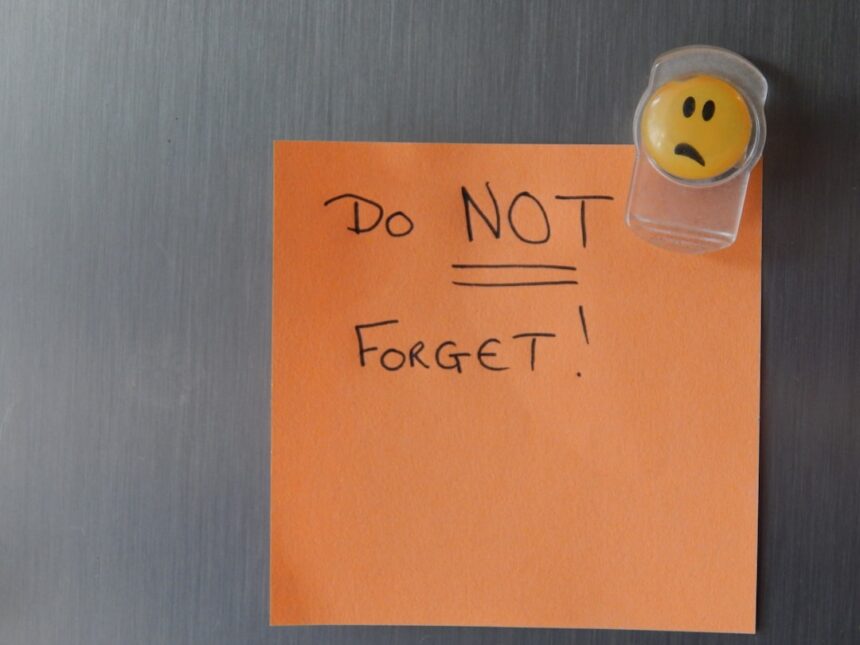
You wake up, the first rays of sunlight just beginning to paint your eyelids. A quiet morning, a familiar routine. You reach for your phone, scroll through notifications, brew your coffee. Yet, beneath the surface of this calm, a tiny tremor runs through you. A feeling, subtle but persistent, that you’ve forgotten something. It’s not a panic, not yet. It’s a gentle nudge, a nagging whisper in the back of your mind. What is it? You replay the last few hours, the day before, the week. Nothing stands out. No urgent appointment, no forgotten errand, no crucial task left undone. Still, the feeling lingers, a phantom limb of your mental to-do list.
The Phantom Ache of the Unremembered
This sensation, this pervasive feeling of having overlooked something vital, is more common than you might think. It’s a peculiarly human experience, a byproduct of our complex brains constantly trying to manage an ever-growing mountain of information. It’s like a phantom limb for your memory, an ache where something should be, but you can’t quite pinpoint what. You might check your pockets, scan your surroundings, mentally run through your calendar with a fine-tooth comb, but the elusive ‘something’ remains just out of reach.
The Neurological Hum of Awareness
At its core, this feeling likely stems from the intricate workings of your brain’s memory systems. Your hippocampus, the maestro of memory formation, is always filing, sorting, and retrieving. Even when you’re not consciously aware of it, your brain is constantly processing potential threats, obligations, and important details. Sometimes, this process flags a potential issue, a gap, or an incomplete thread, even if the actual ‘something’ is too minor to register consciously. It’s like a background hum of awareness, a low-level alert system that whispers, “Are you sure you’ve got everything?”
Many people experience the sensation of always feeling like they forgot something, which can be attributed to various psychological factors such as anxiety, stress, or even the demands of modern life. If you’re interested in exploring this phenomenon further, you might find the article on Unplugged Psych insightful. It delves into the reasons behind this common feeling and offers strategies to help manage it. You can read more about it here: Unplugged Psych.
The Silent Symphony of Daily Obligations
Your day is a meticulously orchestrated symphony of obligations, both big and small. You have work deadlines, social commitments, household chores, personal goals, and the quiet hum of your own well-being to consider. The persistent feeling of forgetting something is often a testament to the sheer volume of these responsibilities. Your brain, in its infinite wisdom, is trying to keep all these plates spinning, and sometimes, one of them wobbles just enough to make you uneasy.
The “Did I Lock the Door?” Dilemma
This feeling often manifests in specific, almost ritualistic, behaviors. The classic “Did I lock the door?” moment, for instance. You’ve already locked it, you’re sure you did, but a nagging doubt creeps in, prompting you to go back and check. This isn’t just about security; it’s about the internal conflict between your perceived memory and the subtle anxiety that something might have slipped through the cracks. The same applies to turning off the stove, unplugging the iron, or sending that important email. Your mind is hedging its bets, wanting to ensure you haven’t inadvertently created a problem.
The Cognitive Load and the “Out of Sight, Out of Mind” Trap
The sheer cognitive load of modern life can be overwhelming. We juggle work, family, social lives, and a constant stream of digital information. This mental multitasking can lead to what psychologists call “attentional lapses.” You might be performing a task on autopilot while your conscious mind is preoccupied with something else. This is where the “out of sight, out of mind” trap can ensnare you. You might have completed a task, but if it wasn’t imbued with significant emotional weight or immediate consequence, your brain might file it away with less emphasis, making it harder to retrieve later when that nagging feeling arises.
The Ghost of Past Omissions
Sometimes, this feeling isn’t about the present at all, but a ghostly echo of past omissions. Perhaps you did forget something significant once, and the memory of that oversight, the resulting stress or inconvenience, has imprinted itself on your psyche. Now, every time you experience even a hint of uncertainty, that past event resurfaces, amplifying the feeling of forgetfulness. It’s a form of learned anxiety, a conditioned response to a perceived threat of failure.
The “What If” Whispers of Anxiety
Anxiety, with its insidious whispers of “what if,” is a major contributor to this phenomenon. The feeling of forgetting something can be a manifestation of underlying anxiety, a generalized worry that you’re not in control, that something is amiss. This anxiety can latch onto even the most mundane of situations, transforming a minor uncertainty into a full-blown mental interrogation. You might not be forgetting anything concrete; rather, your anxious mind is creating a void to fill with its worries.
The Unconscious Mind’s Warning Signals
Your unconscious mind is a powerful entity, constantly processing information and sending subtle signals. The feeling of forgetting something could be your unconscious mind trying to alert you to something it deems important, even if your conscious mind hasn’t registered it yet. This might be a subtle environmental cue, a subconscious recognition of a pattern, or a premonition of a future need. It’s as if your intuition is trying to nudge you in a particular direction, but the message is too vague to be immediately understood.
The Social Mirror and External Cues
Our social interactions and the environment around us can also play a role in this persistent feeling. We are social creatures, and our sense of what’s expected or required is often shaped by our interactions with others and the cues we receive from our surroundings.
The Unspoken Expectations of Others
There are often unspoken expectations from colleagues, friends, and family that we intuitively try to meet. You might feel a pang of unease because you sense a subtle shift in someone’s demeanor, a hint that you’ve missed a social cue or a minor obligation within a shared context. This isn’t necessarily about a forgotten appointment; it could be about a forgotten pleasantry, a missed opportunity to offer support, or a failure to acknowledge a shared experience.
The Environmental Reminders and Their Absence
Your environment is replete with potential reminders. A sticky note on the fridge, a calendar on the wall, the placement of your keys by the door. When these environmental cues are absent or when you deviate from your usual routine, your brain might struggle to anchor your memories, leading to that feeling of something being lost. Think about traveling to a new place – the unfamiliar surroundings can disrupt your usual mental filing system, making you more susceptible to feeling like you’ve forgotten something.
Have you ever experienced that nagging feeling that you’ve forgotten something important? This sensation can often stem from a busy lifestyle or an overload of responsibilities, leading to mental clutter. A related article on the topic can be found on Unplugged Psych, where it explores the psychological aspects of forgetfulness and offers practical tips to help manage these feelings. You can read more about it here. Understanding the reasons behind this feeling may help you find strategies to alleviate the anxiety associated with it.
Strategies for Calming the Inner Detective
While the feeling of forgetting something can be unsettling, it’s important to remember that it’s often a sign of a diligent mind, not a failing one. There are, however, strategies you can employ to manage this persistent sensation and bring a sense of calm.
The Power of the Mindful Moment
When that feeling strikes, resist the urge to immediately spiral into panic. Instead, take a mindful moment. Close your eyes, take a few deep breaths, and try to ground yourself in the present. Focus on your breath, the sensation of your feet on the floor, the sounds around you. This simple act can help to interrupt the anxious thought loop and create space for clearer thinking.
The Gentle Art of Mental Review
Instead of frantically replaying every single moment, engage in a gentle mental review. Start with the most recent past and work backward. Ask yourself specific, targeted questions. “What was the last thing I needed to do before I left the house?” “Did I check my bag before leaving?” “Was there anything I was waiting on someone else to confirm?” This structured approach can be more effective than a chaotic scramble.
The Practical Pillars of Organization
Sometimes, the most effective solutions are the most practical. Establishing strong organizational habits can significantly reduce the frequency and intensity of this feeling.
The Digital and Analog Allies: Calendars and Lists
Embrace the power of your calendar, both digital and analog. Schedule appointments, deadlines, and even personal reminders. Create to-do lists, and when you complete a task, physically cross it off. The act of writing something down and then marking it as done provides a tangible sense of accomplishment and reinforces the memory.
The “Just in Case” Checks: A Balanced Approach
While it’s important not to let anxiety dictate your actions, a few strategic “just in case” checks can be beneficial. Before leaving home, a quick scan of your pockets and a glance around the room can offer reassurance without devolving into obsessive behavior. The key is balance – performing these checks efficiently and moving on, rather than dwelling on the possibility of a forgotten item.
The Importance of Sleep and Self-Care
Underlying the feeling of forgetting something can often be a deficit in fundamental self-care. When you’re overtired, stressed, or run down, your cognitive functions, including memory, are compromised.
The Restorative Power of Sleep
Prioritize sleep. Aim for seven to nine hours of quality sleep each night. During sleep, your brain consolidates memories and clears out waste products, both crucial for optimal cognitive function. When you’re well-rested, you’re simply better equipped to remember things.
Nourishing Your Brain: Diet and Hydration
What you eat and drink directly impacts your brain health. Ensure you’re consuming a balanced diet rich in nutrients that support cognitive function, such as omega-3 fatty acids, antioxidants, and B vitamins. Stay hydrated, as even mild dehydration can impair your focus and memory.
In conclusion, the persistent feeling of forgetting something is a complex interplay of neurological processes, cognitive load, emotional states, and environmental factors. It’s a testament to the incredible demands we place on our minds and the subtle ways our brains attempt to keep everything in order. By understanding the potential causes and implementing mindful strategies and practical organizational tools, you can learn to navigate this common human experience with greater ease and a more confident sense of your own memory. You can acknowledge that whisper of doubt, perform a gentle review, and then release it, allowing yourself to move forward with clarity and peace of mind, knowing that for the most part, you’ve got this.

Your Life Is Safe. So Why Are You Still on Alert?
FAQs

1. Why do I always feel like I forgot something?
Feeling like you forgot something is a common experience and can be attributed to a variety of factors such as stress, anxiety, multitasking, or simply being preoccupied with other thoughts.
2. Is it normal to frequently feel like I forgot something?
Yes, it is normal to occasionally feel like you forgot something. However, if this feeling becomes persistent and interferes with your daily life, it may be a sign of underlying anxiety or stress that should be addressed.
3. How can I prevent feeling like I forgot something?
To prevent feeling like you forgot something, you can try techniques such as making lists, setting reminders, practicing mindfulness, and organizing your tasks and responsibilities.
4. What are some strategies for coping with the feeling of forgetting something?
Coping strategies for dealing with the feeling of forgetting something include taking deep breaths, checking your surroundings, retracing your steps, and asking for help or reassurance from others.
5. When should I seek professional help for feeling like I forgot something?
If the feeling of forgetting something significantly impacts your daily functioning, causes distress, or is accompanied by other symptoms such as memory loss, difficulty concentrating, or persistent anxiety, it may be beneficial to seek professional help from a mental health professional.