You’ve seen it in movies, you’ve read about it in news reports, and perhaps, if you’re truly honest with yourself, you’ve even experienced it. That moment. The one where chaos erupts, where danger is palpable, and where immediate action seems like the only logical response. Yet, instead of a swift, decisive move, there’s a pause. A hesitation. A fraction of a second, or sometimes much longer, where your mind races, your body freezes, and the crucial window for optimal action slams shut. This isn’t a sign of cowardice or inherent foolishness. It’s a complex interplay of psychological, physiological, and situational factors that collectively contribute to the phenomenon of emergency hesitation. Understanding this pause is not about judging those who experience it, but about acknowledging the intricate workings of the human brain under duress and the surprising reasons why you, too, might find yourself momentarily paralyzed in a crisis.
The Cognitive Crossroads: When Brain Overrides Instinct
The moment an emergency strikes, your brain is instantly flooded with sensory information. This isn’t a calm, orderly input process; it’s a deluge. Sight, sound, smell, even touch – all are screaming for your attention, demanding interpretation and a subsequent response. Your brain, designed for survival, immediately kicks into high gear. But this high gear isn’t always a smooth, immediate translation into action. Instead, it often leads you to a cognitive crossroads, a place where multiple, often conflicting, processes are vying for dominance.
Information Overload and Sensory Gating
Imagine trying to drink from a firehose. That’s essentially what your senses experience in an emergency. The sheer volume of stimuli can be overwhelming. Your brain, in an attempt to manage this onslaught, employs a mechanism known as sensory gating. This is a filtering process that prioritizes certain information while suppressing others. However, in highly stressful situations, this gating can become dysregulated. You might become fixated on one overwhelming detail, like the deafening roar of an explosion, to the exclusion of other crucial cues, such as the safest escape route. Alternatively, the gating mechanism might be too efficient, inadvertently filtering out vital information that could guide your actions. This can leave you feeling disoriented, unsure of what to focus on, and ultimately, hesitant to act because you don’t have a clear understanding of the situation. Your brain is trying to make sense of a storm of data, and the inability to quickly and accurately process it leads to that unnerving pause.
The Role of Threat Assessment and Uncertainty
At the core of any emergency is a perceived threat. Your brain is hardwired to assess this threat. Is it immediate? How severe is it? What are the potential consequences of inaction versus action? This threat assessment process is not always instantaneous. It involves comparing the current situation to past experiences, predicting future outcomes, and evaluating your own capabilities. In a novel or ambiguous emergency, this assessment becomes incredibly difficult. You might not have a reference point. You might be unsure if the situation is truly as dire as it seems, or if there’s a more mundane explanation. This uncertainty breeds hesitation. You don’t want to overreact and cause unnecessary panic or take a drastic action that could have unintended negative consequences. The desire to be correct in your assessment, to avoid making a mistake, can lead you to freeze while your brain tries to gather more information or reduce the ambiguity. This is particularly true if the threat is novel or doesn’t fit neatly into your pre-existing schemas for danger.
Cognitive Load and Decision Paralysis
The mental effort required to process information, assess threats, and formulate a plan in an emergency is immense. This is known as cognitive load. When cognitive load is too high, your brain can experience decision paralysis. Think of it like your computer freezing when you try to run too many demanding programs simultaneously. Your brain, faced with an overwhelming number of variables and a need for rapid decision-making, can shut down. You might find yourself mentally replaying scenarios, weighing options endlessly, and ultimately failing to commit to any one course of action. This paralysis isn’t a failure of willpower; it’s a consequence of exceeding your cognitive processing capacity. The more complex and uncertain the emergency, the higher the cognitive load, and the greater the likelihood of experiencing this debilitating hesitation. The sheer number of “what ifs” can become so overwhelming that it prevents you from doing anything at all.
In emergencies, many individuals often hesitate to take action due to a variety of psychological factors, including fear, confusion, and the bystander effect. This phenomenon can lead to critical delays in response times, potentially exacerbating the situation. For a deeper understanding of why people may hesitate in such high-pressure scenarios, you can explore the article available at this link, which delves into the psychological underpinnings of decision-making in emergencies.
The Physiological Freeze: When the Body Reacts Before the Mind

While we often think of emergencies as requiring swift physical action, the body’s initial response is often a complex physiological cascade that can, paradoxically, lead to a physical freeze. This isn’t a conscious choice to stop moving; it’s an involuntary reaction designed to conserve energy and prepare for a perceived threat.
The Amygdala’s Alarm and the Fight-or-Flight Response
When your brain perceives a threat, the amygdala, the part of your brain responsible for processing emotions like fear, sounds the alarm. This triggers the release of stress hormones like adrenaline and cortisol. This initiates the well-known fight-or-flight response. However, what’s often overlooked is the “freeze” component of this response. In some situations, the most advantageous survival strategy is not to fight or flee, but to become still and assess the situation. This “freeze” response can manifest as a physical immobility, a temporary inability to move or speak. Your muscles might tense up, your breathing might become shallow, and your senses might become hyper-focused or dulled. This is your body’s primal instinct to go unnoticed or to buy time to strategize. It’s a deep-seated evolutionary mechanism that, while helpful in certain contexts, can be detrimental when immediate action is required.
Shock and Dissociation: Disconnecting from Reality
In extremely traumatic or overwhelming emergencies, you might experience shock or dissociation. Shock is a state of physiological and psychological unresponsiveness to the event. You might appear dazed, confused, or even emotionally numb. Dissociation is a more profound disconnection from your immediate reality. You might feel as though you are observing the events from outside your body, or that time is moving unusually slowly or quickly. These are protective mechanisms designed to buffer you from the full impact of a terrifying experience. While they can prevent overwhelming psychological trauma in the short term, they also significantly impair your ability to react and make decisions in the moment. The sensation of unreality can make it difficult to grasp the urgency of the situation or to feel motivated to act.
The Impact of Adrenaline: Hyperfocus and Tunnel Vision
Adrenaline, while preparing your body for action, can also have unintended consequences. It can lead to hyperfocus and tunnel vision. This means your attention becomes intensely concentrated on a narrow range of stimuli, often at the expense of peripheral awareness. In an emergency, this can be a double-edged sword. You might become incredibly focused on a specific task that needs immediate attention, but you could also miss crucial escape routes or the actions of others around you. This hyperfocus can feel like being in a trance, where the outside world fades away, and you’re locked onto a single point. This can contribute to hesitation because you might not be aware of the broader context or the most effective overall strategy. Your body is primed to act, but your perception is narrowed, making it difficult to choose the right action.
The Situational Conundrum: External Factors Influencing Your Response
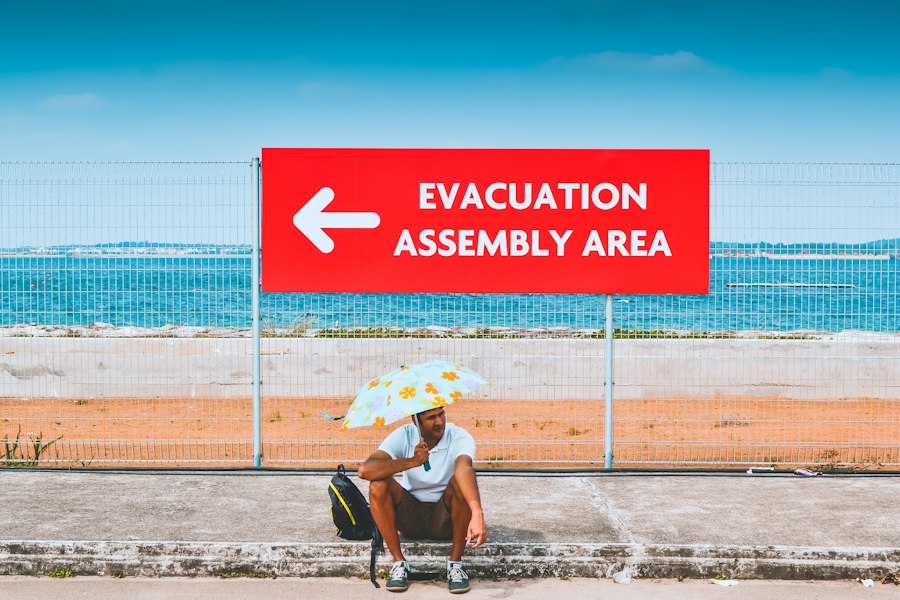
It’s not just your internal mental and physiological states that dictate your reaction to an emergency. The external environment, the nature of the crisis itself, and the people around you all play significant roles in whether you freeze or act.
Ambiguity and Novelty of the Threat
As mentioned earlier, the novelty and ambiguity of a threat are significant contributors to hesitation. If you’ve never encountered a particular type of emergency before, your brain lacks a pre-programmed response. You don’t have a mental script to follow. Imagine encountering a completely unknown chemical spill versus a fire. You have a general understanding of how to deal with a fire – evacuate, call emergency services. But a chemical spill presents a myriad of unknowns: what is the chemical? What are its dangers? How do I contain it? This lack of prior experience breeds uncertainty and a natural inclination to pause and observe, to try and gather more information before committing to an action. The more unprecedented the situation, the longer that pause is likely to be.
Perceived Control and Self-Efficacy
Your belief in your ability to influence the outcome of a situation – your self-efficacy – is a powerful determinant of your response. If you feel you have the skills, knowledge, or resources to effectively deal with an emergency, you are far more likely to act decisively. Conversely, if you perceive the situation as being beyond your control, or if you doubt your own capabilities, you are more prone to hesitation. This feeling of helplessness can be debilitating. You might believe that whatever you do will be futile, leading to a passive response or a complete freeze. This is why training and preparedness are so crucial. They build your self-efficacy, giving you the confidence to act when faced with adversity. Knowing what to do, and believing you can do it, significantly reduces the likelihood of hesitation.
Bystander Effect and Social Cues
The presence of other people can have a profound and often counterintuitive effect on your willingness to act in an emergency. This is where the bystander effect comes into play. When others are present, there’s a diffusion of responsibility. You might assume that someone else will take action, or that the situation isn’t as serious if no one else is reacting. You look to others for cues. If everyone else seems calm, or if no one is immediately intervening, you are more likely to hesitate, interpreting their inaction as a signal that it’s not a true emergency. This social mirroring can create a dangerous feedback loop, where everyone waits for someone else to act, leading to collective inaction. Conversely, if one person bravely takes the initiative, it can often galvanize others to follow suit.
Overcoming the Pause: Strategies for Action in the Face of Fear
Understanding why you might hesitate in an emergency is the first step. The next, and arguably more important, is to develop strategies to overcome that hesitation and foster decisive action when it matters most. This isn’t about eliminating fear, but about learning to act despite it.
Proactive Preparation and Training
The most effective way to combat emergency hesitation is through proactive preparation and training. When you are familiar with potential emergency scenarios and have practiced your responses, your brain has pre-existing mental scripts to draw upon. This reduces the cognitive load and the uncertainty associated with a novel threat. Whether it’s attending first aid courses, participating in workplace fire drills, or simply having a well-rehearsed family emergency plan, these activities build your confidence and muscle memory for critical moments. When you’ve practiced a response, your brain can access it more rapidly, bypassing the prolonged deliberation that leads to hesitation. This also builds self-efficacy, reinforcing the belief that you are capable of making a difference.
Mental Rehearsal and Scenario Planning
Beyond formal training, engaging in mental rehearsal and scenario planning can be incredibly beneficial. Take time to visualize yourself in various emergency situations and imagine yourself taking effective action. Think through the steps you would take, the decisions you would make, and the potential challenges you might face. This mental practice helps to desensitize you to the fear associated with such events and creates a mental blueprint for your response. By imagining the worst-case scenarios and planning your actions, you are essentially “pre-solving” the problem, making it easier to access those solutions when a real emergency occurs. This can also help you identify potential “breaking points” where hesitation might occur and to mentally prepare strategies to overcome them.
Focusing on a Single, Actionable Step
When faced with overwhelming complexity, it’s easy to become paralyzed by the sheer number of things that could be done. A powerful strategy to overcome this is to focus on a single, actionable step. Instead of trying to solve the entire emergency at once, identify the most immediate and critical task that you can perform. This might be as simple as calling emergency services, clearing a path for others, or administering basic first aid. By breaking down the overwhelming task into smaller, manageable components, you reduce the cognitive load and create a sense of progress. Accomplishing that single step can build momentum and provide the confidence to move on to the next. It’s about taking that first, small leap that can unlock subsequent actions.
In times of crisis, many individuals often find themselves paralyzed by hesitation, a phenomenon explored in depth in a related article on the psychology of emergency responses. This article delves into the various factors that contribute to this indecision, including fear, social influence, and the overwhelming nature of the situation. Understanding these elements can shed light on why people may struggle to act when it matters most. For more insights, you can read the full article here.
The Long-Term Impact: Learning and Resilience
| Reason for Hesitation | Description | Percentage of People Affected | Impact on Emergency Response |
|---|---|---|---|
| Fear of Making Mistakes | Concern about doing something wrong or causing harm. | 45% | Delays in taking action, reducing effectiveness of response. |
| Lack of Knowledge or Training | Uncertainty about what to do or how to help. | 38% | Increased hesitation and reliance on others to act first. |
| Shock and Panic | Emotional overwhelm that impairs decision-making. | 30% | Slower reaction times and possible inaction. |
| Fear of Legal Consequences | Worry about being sued or held responsible. | 25% | Reluctance to intervene, even when help is needed. |
| Social Influence / Bystander Effect | Assuming others will act or that intervention is not needed. | 40% | Reduced likelihood of any individual stepping forward. |
| Unclear Emergency Situation | Difficulty assessing the severity or nature of the emergency. | 35% | Hesitation due to uncertainty, delaying response. |
The experience of emergency hesitation, while potentially frustrating or even dangerous in the moment, can also be a catalyst for significant personal growth and resilience. How you process and learn from these experiences can shape your future responses and your overall capacity to handle adversity.
Post-Event Reflection and Analysis
After an emergency, regardless of whether you hesitated or acted decisively, taking time for post-event reflection and analysis is crucial. Think back on what happened, what you felt, and what you did (or didn’t do). What were the contributing factors to your hesitation? What could you have done differently? This introspective process, when approached with self-compassion rather than self-criticism, can provide invaluable insights. It allows you to identify specific triggers for your hesitation and to develop targeted strategies for future situations. This is not about dwelling on past mistakes, but about extracting lessons that will empower you in the future.
Building Psychological Resilience
Overcoming hesitation, or even learning from it, is a key component of building psychological resilience. Resilience is the ability to bounce back from adversity, to adapt to challenging circumstances, and to emerge stronger. Each time you face a stressful situation and manage to act, or even to reflect and learn from your hesitation, you are strengthening your psychological fortitude. This doesn’t mean you’ll never hesitate again, but you will become more adept at recognizing the signs of hesitation within yourself and more equipped to push through it. It’s a continuous process of learning, adapting, and growing your capacity to respond effectively when tested.
The Empowering Nature of Action
Ultimately, while hesitation is a natural human response, the power of taking action, even imperfect action, is profoundly empowering. In the aftermath of an emergency, knowing that you did something, that you contributed in some way, can be incredibly validating. It shifts your perspective from one of victimhood to one of agency. This feeling of empowerment can ripple outwards, increasing your confidence in other areas of your life and making you more likely to step up and help others in future crises. Understanding the pause in crisis is not about excusing inaction, but about equipping yourself with the knowledge and strategies to move beyond it, to become a more confident and capable responder when the unexpected strikes.

The Kitty Genovese Story That Changed Psychology—But Was It True?
FAQs
Why do people hesitate in emergencies?
People may hesitate in emergencies due to shock, fear, uncertainty, lack of knowledge on how to respond, or a belief that someone else will take charge.
What is the bystander effect and how does it contribute to hesitation in emergencies?
The bystander effect is a phenomenon where individuals are less likely to help in an emergency situation when others are present. This diffusion of responsibility can lead to hesitation as people assume someone else will take action.
How can past experiences influence hesitation in emergencies?
Past negative experiences, such as feeling judged or criticized for trying to help in the past, can lead to hesitation in emergencies. People may be hesitant to act due to fear of making a mistake or facing negative consequences.
What role does uncertainty play in causing hesitation during emergencies?
Uncertainty about the situation, the appropriate course of action, or the potential risks involved can lead to hesitation in emergencies. People may pause to assess the situation and determine the best course of action before taking any steps.
Are there ways to overcome hesitation in emergencies?
Training in first aid, emergency response protocols, and practicing how to react in different scenarios can help individuals overcome hesitation in emergencies. Building confidence in one’s abilities and being prepared can reduce the likelihood of hesitation when quick action is needed.