You’ve seen it, haven’t you? That moment when something happens – a fender bender, someone stumbling, a heated argument – and you, along with a dozen other people, are standing there, watching. Yet, strangely, no one seems to be stepping forward to help. It’s a common, almost unnerving, human phenomenon. You might even feel a pang of guilt, a fleeting thought of “I should do something,” but then you see others around you, seemingly unconcerned, and that impulse fades. Why is it that the more people are present, the less likely any single individual is to offer assistance? This is the essence of the bystander effect, a psychological concept that reveals a counter-intuitive truth about human behavior in groups.
The Curious Case of Collective Inaction
Imagine you’re walking down a busy street, and you witness a person drop a bag of groceries, scattering oranges and apples everywhere. Your initial reaction might be to rush over and help. But then you notice a few other people are also witnessing the scene. Perhaps they’re also hesitating, just like you. Suddenly, the urgency you felt diminishes. You might think, “Someone else will get it,” or “There are plenty of people here to help.” This is where the bystander effect begins to weave its invisible web. It’s not that people are inherently uncaring or apathetic; rather, the presence of others can dilute individual responsibility, creating a diffusion of accountability that leads to inaction. It’s a phenomenon that has been extensively studied and documented, offering profound insights into the complexities of social psychology and our collective responses to emergencies.
The Kitty Genovese Tragedy: A Catalyst for Understanding
The most infamous real-world illustration of the bystander effect, and one that profoundly shaped its study, is the murder of Kitty Genovese in 1964. The widely reported (though later nuanced) story stated that dozens of witnesses saw or heard the attack unfold over a prolonged period, yet minimal intervention occurred. While the exact number of witnesses and the extent of their awareness have been debated, the initial media portrayal ignited a public and academic debate about why so many people could seemingly stand by while a person was being attacked. This event spurred psychologists Bibb Latané and John Darley to embark on their groundbreaking research into the bystander effect, seeking to understand the social and psychological mechanisms that could lead to such a disturbing outcome. Their work would go on to identify key factors that contribute to this diffusion of responsibility.
Defining the Bystander Effect: More Than Just Indifference
At its core, the bystander effect is a social psychological phenomenon where individuals are less likely to offer help to a victim when other people are present. The greater the number of bystanders, the less likely it is that any one of them will help. This is not due to inherent malice or a lack of empathy, but rather a complex interplay of cognitive and social processes that occur in group settings. It’s a situation where the very presence of others, meant to provide safety and support, can paradoxically lead to a collective failure to act. Understanding this effect requires delving into the internal decision-making processes that individuals undergo when faced with a potential need for intervention.
The Science Behind the Silence: Early Experiments
Latané and Darley’s early experiments were crucial in demonstrating the bystander effect in controlled settings. One seminal study involved participants filling out a questionnaire in a room, with either no one else present, or with two other confederates (actors who were part of the experiment). Suddenly, smoke began to pour into the room through a vent. When participants were alone, they tended to report the smoke within a few minutes. However, when the confederates were present and calmly ignored the smoke, the participants were much slower to react, often waiting for the confederates to acknowledge the situation or even continuing to fill out their questionnaires as the room filled with smoke. This highlighted how the behavior of others can significantly influence an individual’s perception of an event’s severity and their own responsibility to act. Another experiment involved simulated emergencies, like a person falling and calling for help, and consistently showed that individuals were more likely to intervene when they believed they were the only ones aware of the situation. These controlled observations provided empirical evidence for a phenomenon that seemed counter-intuitive to many.
Research has shown that the likelihood of individuals offering help decreases as the size of a crowd increases, a phenomenon known as the bystander effect. This concept is explored in greater detail in an insightful article on the Unplugged Psych website, which discusses the psychological mechanisms behind this behavior and offers strategies for encouraging pro-social actions in group settings. For more information, you can read the article here: Unplugged Psych.
The Diffusion of Responsibility: Spreading the Burden, Losing the Action

Perhaps the most significant driver of the bystander effect is the diffusion of responsibility. When you are the sole witness to an emergency, the burden of deciding whether to help and what to do rests entirely on your shoulders. You are the one who must assess the situation, weigh the risks, and initiate action. However, in a group, this responsibility becomes fragmented. You look around and see other people who could potentially help. This leads to an internal calculation: “Since there are others here, it’s not solely my job. Someone else will probably take the initiative.” This mental shift, however subconscious, effectively diminishes your personal sense of obligation.
When Everyone is Responsible, No One is Responsible
The concept is simple yet profound: the more people present, the less each individual feels personally accountable. Imagine you see a lost child. If you’re alone, you feel a direct responsibility to help find their parents or contact authorities. But if you’re in a crowd of fifty people, and you see the lost child, you might think, “Fifty people are here. Surely, at least five of them will do something.” This diffusion means that the collective responsibility for acting is spread so thinly that it effectively disappears for any single individual. It’s as if the responsibility is a pie, and the more people there are, the smaller each slice of pie becomes, until each slice is too small to be significant. This psychological phenomenon is not about a lack of moral compass but a consequence of how our brains process social cues and distribute perceived duties in group dynamics.
The Illusion of Others’ Competence: “They Know Better”
Another facet of diffusion is the tendency to assume that others in the group are more knowledgeable or capable of handling the situation. If you see a medical emergency and there are people around who appear to be older or more authoritative, you might defer to them, believing they possess the expertise you lack. This can lead to a passive waiting game, where everyone is hoping someone else will step in because they assume that person is better equipped. It’s a form of social inertia, where individuals are hesitant to act because they perceive a lack of their own competence relative to the perceived competence of the group. This can be especially true in situations requiring specialized knowledge or quick, decisive action.
The Cost of Intervention: Weighing Personal Risk
In addition to diffusion of responsibility, individuals also weigh the potential costs of intervening. This can include physical danger (e.g., confronting an aggressive individual), social embarrassment (e.g., misinterpreting the situation and intervening unnecessarily), or legal ramifications. When you are alone, you assess these risks directly. However, in a group, the perceived risk can feel amplified, or conversely, it can feel diminished if you believe the group offers protection. But the diffusion of responsibility often plays a role here too; if others are not acting, it might signal to you that the situation isn’t as dangerous as it appears, or that the risk of intervention is too high for anyone to take. The collective inaction can create an environment where the perceived negative consequences of helping outweigh the perceived benefits, especially when the personal responsibility is unclear.
Pluralistic Ignorance: When Everyone Thinks Everyone Else is Fine
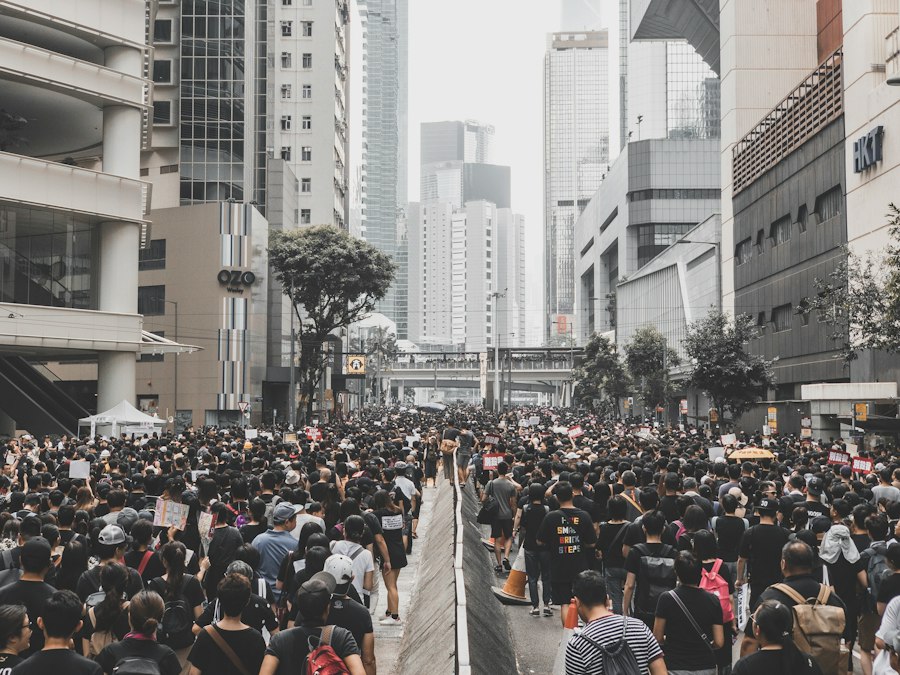
Beyond the diffusion of responsibility, another powerful psychological mechanism at play is pluralistic ignorance. This occurs when individuals privately disagree with or are concerned about a situation, but they assume, based on the inaction of others, that everyone else is okay with it or doesn’t see a problem. Essentially, everyone is looking to everyone else for cues, and seeing no outward signs of concern, they conclude that their own unease is unfounded or that they are the only one experiencing it.
Interpreting Ambiguity: What’s Really Happening?
Emergencies are often ambiguous. Was that scream a genuine cry for help, or just someone playing around? Is that person slumped on the bench ill, or just taking a nap? When you are alone, you have to make the best judgment you can. But in a group, you look to others for clarification. If everyone else is acting nonchalant, you’re likely to interpret the situation as less serious, even if you privately feel a sense of unease. You might think, “If it were really a problem, someone else would be reacting.” This shared misinterpretation, where everyone is waiting for someone else to define the situation as an emergency, can lead to collective inaction. The outward appearance of calm from others can override your own internal assessment of risk.
The Social Signal of Normalcy
The behavior of others serves as a powerful social signal, dictating what is considered normal or acceptable. In a crowd, if no one is exhibiting signs of alarm or distress, you might conclude that there is no cause for alarm. This can lead to a feedback loop of inaction: your hesitation reinforces the perceived normalcy for others, and their hesitation reinforces yours. This can be particularly dangerous in situations where an immediate response is critical. The absence of overt concern from others can effectively normalize a potentially dangerous situation, making it harder for any individual to break the spell and intervene. This is a key component of how social influence operates, shaping our perceptions and subsequent actions.
The Fear of Social Embarrassment: “What If I’m Wrong?”
Pluralistic ignorance is deeply intertwined with the fear of social embarrassment. If you are the only one to react to a perceived emergency, and it turns out to be a false alarm, you can feel foolish or embarrassed. This fear is amplified in a group. If you act and others don’t, you stand out as being overly sensitive or perhaps even incompetent. Therefore, you are more likely to suppress your own concerns and wait for others to confirm that an intervention is necessary. The presence of a crowd can make the potential for embarrassment feel more significant, as you are not just risking your own dignity but also potentially appearing foolish in front of many others. This fear of misjudging the situation, coupled with the assumption that others are accurately assessing it, creates a powerful deterrent to helping.
The Role of the Target: Characteristics That Influence Intervention
While the size of the crowd is a significant factor, it’s not the only element that influences whether help is offered. The nature of the victim and the perceived severity of their need also play a crucial role. Certain characteristics of the person in distress can either increase or decrease the likelihood that bystanders will intervene, even in a crowded situation.
Victim Desirability: Likability and Similarity
Research suggests that people are more likely to help those they perceive as likable or similar to themselves. If a victim appears to be of a similar age, background, or demeanor, bystanders might feel a greater sense of empathy and connection, making them more inclined to help. Conversely, if a victim is perceived as being “different” or somehow deserving of their predicament (a notion often fueled by societal biases), bystanders may be less motivated to intervene. This highlights how our pre-existing judgments and social categorizations can subtly influence our willingness to offer assistance.
Perceived Vulnerability: Signaling Need for Help
The more clearly a victim signals their need for help, the more likely it is that someone will intervene. A person who is clearly injured, crying out for assistance, or otherwise visibly distressed is more likely to elicit a response than someone who is quietly suffering or whose distress is ambiguous. This is because clear signals of need override some of the effects of pluralistic ignorance and diffusion of responsibility. When the need is undeniable, the excuses for inaction diminish. However, even in such cases, the bystander effect can still be at play if the group is large enough and the cues are not strong enough to overcome the collective inertia.
The Impact of the Situation: Urgency and Clarity
The perceived urgency and clarity of the situation are also critical. A situation that appears to be a clear and present danger, such as a fire or an accident with visible injuries, is more likely to prompt intervention than a situation that is ambiguous or appears to be a minor inconvenience. When the emergency is unmistakable and immediate, the psychological barriers to helping are lowered. However, even in urgent situations, the bystander effect can still manifest. If the urgency is high but the responsibility is diffused among many, the likelihood of any single person acting can still be reduced compared to if they were the sole witness. The key is the interplay between the perceived need for help and the perceived responsibility to provide it.
Research has shown that the likelihood of individuals offering help diminishes as the size of a crowd increases, a phenomenon known as the bystander effect. This intriguing concept is explored in greater detail in a related article that discusses the psychological mechanisms behind this behavior. For those interested in understanding why people may hesitate to intervene in emergencies when others are present, you can read more about it in this article. The insights provided can shed light on the complexities of human behavior in social situations.
Overcoming the Bystander Effect: Becoming an Active Agent
| Crowd Size | Percentage of Individuals Helping | Average Response Time (seconds) | Likelihood of Intervention (%) |
|---|---|---|---|
| 1-2 people | 85% | 5 | 90% |
| 3-5 people | 60% | 12 | 65% |
| 6-10 people | 40% | 20 | 40% |
| 11-20 people | 25% | 30 | 25% |
| 21+ people | 10% | 45 | 10% |
Recognizing the bystander effect is the first step towards combating it. Understanding the psychological forces that can lead to inaction empowers you to consciously override them and become an active agent in situations where help is needed. It’s about breaking the chain of diffusion and pluralistic ignorance, and choosing to act, regardless of the crowd.
Recognizing the Emergency: Trusting Your Gut
The most crucial step is to trust your instincts. If something feels wrong, it probably is. Don’t dismiss your gut feeling just because others aren’t reacting. Remember Kitty Genovese; her attackers were not discreet. The key is to consciously decide that an emergency is occurring, even if others seem indifferent. This requires a deliberate effort to override the tendency to look for cues of normalcy from the crowd. Train yourself to believe that your initial assessment of a situation’s severity is valid, and that it’s worth investigating further.
Taking Responsibility: The Power of One
Once you’ve identified a potential emergency, the next step is to consciously assume responsibility. Remind yourself that even in a crowd, your action can make a difference. Instead of thinking, “Someone else will do it,” think, “I can do something.” This doesn’t necessarily mean you have to single-handedly resolve the entire situation. It could mean calling for help, alerting authorities, or offering a simple gesture of support. The act of taking ownership of the situation is a powerful antidote to diffusion of responsibility. You are no longer a passive observer but an active participant.
Directing Your Efforts: Specific Actions for Specific Needs
If you decide to intervene, it’s often most effective to take direct action or to clearly delegate tasks. Instead of generally looking around for someone to help, you can point to a specific person and say, “You, in the blue shirt, call 911!” or “Can you help me lift this?” This direct address cuts through the diffusion of responsibility and assigns a clear task. If you are the one in need of help, actively seeking out an individual and making direct eye contact can also be more effective than passively hoping someone will notice. In essence, you are counteracting the impersonal nature of the crowd by creating a direct connection and clear assignment of duty. It’s about making the abstract responsibility concrete and actionable.
The Ripple Effect of Intervention: Inspiring Others
Your decision to help can have a significant ripple effect. When one person breaks the bystander effect and intervenes, it often encourages others to do the same. Your courage and initiative can legitimize the situation as an emergency and provide the social permission for others to act. What started as a single act of bravery can cascade into a collective effort to assist. This demonstrates that even a single individual can overcome the inertia of the group and inspire positive change. By choosing to be the one who acts, you not only help the immediate victim but also contribute to a more responsive and compassionate society.
Conclusion: Embracing Our Collective Responsibility
The bystander effect is a testament to the complex ways social dynamics can influence individual behavior. It reveals that in certain circumstances, the presence of others, rather than increasing the likelihood of help, can paradoxically decrease it. This phenomenon, driven by diffusion of responsibility and pluralistic ignorance, is not a reflection of inherent apathy but a consequence of social psychological processes. However, by understanding these mechanisms, you can become more aware of your own responses in group settings. You can consciously choose to trust your instincts, assume responsibility, and take direct action when needed. By actively working to overcome the bystander effect, you contribute to a society where individuals are more likely to step forward, not because they are alone, but because they recognize their interconnectedness and their shared capacity to make a difference. The power to help lies not just in being the only one, but in being the one who chooses to act, inspiring others to do the same.

The Kitty Genovese Story That Changed Psychology—But Was It True?
FAQs
Why does individual helping decrease as the crowd grows?
Individuals may feel less responsible to help when they are part of a larger group, assuming that someone else will step in to assist.
What is the bystander effect?
The bystander effect is a social phenomenon where individuals are less likely to help in an emergency situation when others are present. This diffusion of responsibility can lead to decreased individual helping as the crowd grows.
How can the bystander effect be overcome?
Overcoming the bystander effect often involves increasing awareness of the phenomenon and encouraging individuals to take personal responsibility for helping others in need, regardless of the size of the crowd.
What role does diffusion of responsibility play in decreasing individual helping?
Diffusion of responsibility occurs when individuals in a group feel less accountable for taking action because they believe others will do so instead. This can lead to a decrease in individual helping as the number of people present increases.
Are there strategies that can be implemented to encourage individual helping in large crowds?
Yes, strategies such as promoting a sense of personal responsibility, providing clear instructions on how to help, and fostering a supportive and empathetic environment can help counteract the decrease in individual helping as the crowd grows.