
You find yourself walking on eggshells, your internal monologue a constant, buzzing worry. Did you say the wrong thing? Did that casual glance from a colleague carry a hidden judgment? Is your friend’s short text message a sign they’re secretly furious with you? You’re not alone. This pervasive feeling that everyone is just waiting for you to mess up, that their every expression is a veiled accusation, is a hallmark of social anxiety. It’s a deeply uncomfortable and exhausting place to inhabit, but understanding its roots is the first, crucial step towards reclaiming your peace.
You’re likely here because you’re grappling with that persistent, nagging feeling that people are angry with you, even when there’s no concrete evidence. This isn’t simply about being a little shy or introverted. Social anxiety, also known as social phobia, is a much more profound and debilitating condition. It’s an intense, persistent fear of being watched, judged, and negatively evaluated by others. This fear can be so overwhelming that it interferes with your daily life, your relationships, and your ability to pursue your goals.
The Core of the Fear: Performance and Scrutiny
At its heart, social anxiety is about a deep-seated fear of social situations. You anticipate being embarrassed, humiliated, or rejected. This fear often stems from the belief that you are inadequate, flawed, or somehow fundamentally unlikable. You may believe that others are constantly scrutinizing your every move, analyzing your words, and finding fault. This constant internal spotlight creates a tremendous amount of pressure, making even mundane social interactions feel like high-stakes performances. You become hyper-vigilant, picking up on any perceived negative cue and interpreting it as confirmation of your worst fears.
More Than Just Shyness: Differentiating Social Anxiety
It’s important to distinguish social anxiety from simple shyness. Shyness is a personality trait characterized by discomfort in social situations, but it doesn’t typically lead to the same level of distress or avoidance. Someone who is shy might feel a bit awkward at a party, but they can usually push through it. You, on the other hand, might experience a knot in your stomach at the mere thought of attending that same party. The anticipation of negative judgment is so strong that it can lead to significant avoidance of social situations altogether. This avoidance, while offering temporary relief, ultimately reinforces the anxiety in the long run.
The Spectrum of Social Anxiety: From Mild to Severe
Social anxiety isn’t a monolithic experience. It exists on a spectrum, and its manifestations can vary greatly from person to person. For some, it might be a mild unease in specific situations, like public speaking or meeting new people. For others, it can be a pervasive and debilitating fear that impacts almost every social interaction, from ordering coffee to having a conversation with a family member. You might find yourself experiencing physical symptoms like blushing, sweating, trembling, or nausea when you’re anxious in social settings. The intensity of these symptoms can vary, but they all signal your body’s alarm system being triggered by perceived threats.
Many individuals often grapple with the feeling that others are upset with them, a phenomenon that can stem from various psychological factors such as anxiety or low self-esteem. If you’re interested in exploring this topic further, you might find the article on understanding interpersonal perceptions insightful. It delves into the reasons behind these feelings and offers strategies for overcoming them. You can read more about it here: Understanding Interpersonal Perceptions.
The Roots of the Mistrust: Where Does This Fear Come From?
Understanding why you constantly believe people are mad at you requires digging into the potential origins of your social anxiety. These roots are often complex and multifaceted, involving a combination of genetic predispositions, learned behaviors, and life experiences.
Nature’s Blueprint: Genetic and Biological Factors
Research suggests that there’s a genetic component to anxiety disorders, including social anxiety. If you have family members who have struggled with anxiety, you might be predisposed to developing it yourself. Certain brain structures and neurotransmitter systems, like those involving serotonin, are also thought to play a role. For instance, some individuals may have a more sensitive amygdala, the part of the brain responsible for processing fear and threat. This heightened sensitivity can lead to a more readily triggered fight-or-flight response in social situations, even when there’s no actual danger.
The Echoes of Childhood: Early Life Experiences
Your formative years can significantly shape your social development and your perception of yourself in relation to others. Negative experiences during childhood can leave lasting scars.
Parenting Styles and Their Impact
The way you were parented can play a crucial role. Overly critical or controlling parents can instill a fear of making mistakes and a belief that you are never good enough. Conversely, parents who are overly anxious themselves might model anxious behavior, leading you to believe that social interactions are inherently dangerous. If your parents were highly protective, you might have had fewer opportunities to develop independent social skills, leading to a feeling of inadequacy when you do encounter social challenges.
Bullying and Social Rejection
Experiencing bullying or significant social rejection during your school years can be incredibly damaging. These experiences can create a deep-seated belief that you are unlikeable and that others will inevitably ostracize you. The memory of these painful interactions can linger, making you hyper-vigilant for any signs of similar rejection in the future. You might internalize the idea that there’s something fundamentally wrong with you that causes others to treat you poorly.
Traumatic Events
While not all social anxiety is linked to trauma, significant negative events, such as witnessing or experiencing abuse, can contribute to its development. These experiences can shatter your sense of safety and trust in others, making you perceive the world, and particularly social interactions, as inherently unsafe.
The Power of Learning: Social Learning and Conditioning
You learn a great deal by observing and imitating others, and this applies to social behavior as well.
Observing Anxious Role Models
If you grew up with parents or other significant figures who were themselves socially anxious, you might have learned to view social situations with apprehension. You may have unconsciously absorbed their fears and their coping mechanisms, which often involve avoidance. Seeing them flinch at social invitations or express worry about what others think can teach you that this is the “normal” way to approach social interactions.
Negative Social Experiences and Conditioning
Even without direct modeling, negative social experiences can condition you to associate social interactions with unpleasant outcomes. If you’ve had a few instances where you felt embarrassed or misunderstood, your brain can start to generalize that feeling to all social situations. This is a form of classical conditioning: social interaction (neutral stimulus) becomes paired with negative feelings (unconditioned stimulus), leading to an anxious response (conditioned response) even without the original negative event.
The Inner Critic: The Voice That Says They’re Mad

Your internal monologue is a powerful force, and for those with social anxiety, it often acts as a relentless inner critic, constantly fueling the belief that others are angry with you.
The Distorted Lens: Cognitive Distortions at Play
Your thinking patterns are often skewed, leading you to misinterpret neutral or even positive social cues as negative. These are known as cognitive distortions, and they are a cornerstone of social anxiety.
Mind Reading: Assuming You Know What Others Think
This is perhaps the most common distortion. You’re convinced you can read minds, and you’re always reading them negatively. You see a frown and immediately assume they’re upset with you, without considering they might have a headache or be lost in thought. You hear a sigh and interpret it as impatience with your presence. You’re not actually reading their minds; you’re projecting your own fears and insecurities onto them.
Catastrophizing: Imagining the Worst-Case Scenario
For every social interaction, you tend to imagine the absolute worst-case scenario. You believe that if you make a mistake, it will be a monumental disaster, leading to universal scorn and rejection. A minor faux pas isn’t just an awkward moment; it’s the beginning of your social downfall. This anticipation of disaster makes it incredibly difficult to engage authentically.
Personalization: Taking Everything Personally
You tend to believe that everything people do or say is a direct reflection of you and your behavior. If someone is having a bad day and snaps at you, you’re quick to assume it’s because of something you did. You fail to consider that their behavior might be entirely unrelated to you. This constant personalization makes you feel responsible for the emotional states of everyone around you.
All-or-Nothing Thinking: The Black and White World
Your thinking is often rigid and unforgiving. You see things in black and white, with no room for nuance. If a social interaction isn’t perfect, it’s a complete failure. If someone doesn’t immediately like you, you assume they dislike you entirely. There’s no middle ground, no possibility of gradual connection or developing rapport over time.
The Constant Rehearsal: Preparing for the Worst
Because you anticipate negative reactions, you often spend a great deal of time rehearsing conversations in your head. You meticulously plan what you’ll say, anticipating every possible objection or negative response. This constant mental preparation, while intended to make you feel more in control, actually heightens your anxiety and can make you appear stiff and unnatural in real interactions. You’re so focused on delivering your rehearsed lines that you miss out on the spontaneity and genuine connection that makes social interactions enjoyable.
The Vicious Cycle of Avoidance
The belief that people are mad at you often leads to avoidance. You steer clear of social situations that trigger your anxiety, which might include parties, meetings, or even casual conversations.
Temporary Relief, Long-Term Reinforcement
While avoiding these situations offers immediate relief from your discomfort, it reinforces the underlying belief that social situations are inherently dangerous and that you are incapable of handling them. Each avoided interaction is a missed opportunity to learn that your fears are often unfounded and to build genuine social confidence. This creates a vicious cycle: you believe people are mad at you, so you avoid them, which prevents you from discovering they aren’t, thus confirming your initial belief.
The Erosion of Social Skills
When you consistently avoid social situations, your social skills can atrophy. You might become less adept at reading social cues, engaging in small talk, or expressing yourself effectively. This can further fuel your anxiety, as you feel less equipped to handle future interactions, perpetuating the cycle of avoidance and fear.
The Physical Manifestations: When Anxiety Takes Over Your Body

Social anxiety isn’t just a mental battle; it often manifests physically, adding another layer of distress to your experience. Your body’s natural alarm system, the fight-or-flight response, is triggered by perceived social threats, leading to a range of uncomfortable symptoms.
The Blushing Phenomenon: A Visible Sign of Distress
For many, blushing is a hallmark of social anxiety. This reddening of the face is an involuntary physiological response that you might feel is an uncontrollable advertisement of your nervousness.
The Vicious Cycle of Blushing Anxiety
The fear of blushing can itself trigger blushing. You start to worry about blushing, which makes you more likely to blush, which then confirms your fear, leading to even more blushing. This is a classic example of a self-fulfilling prophecy. You become so preoccupied with whether your face is turning red that you struggle to focus on the conversation itself, which can inadvertently make you seem distant or uninterested.
Shaking and Trembling: A Physical Betrayal
You might experience trembling in your hands, legs, or even your voice. This involuntary shaking can feel like your body is betraying you, making you feel even more exposed and vulnerable. You worry that others will notice your trembling and interpret it as a sign of extreme nervousness or even incompetence, further validating your belief that they are judging you negatively.
Sweating and Chills: The Body’s Overreaction
Excessive sweating, particularly in your palms or underarms, can be a common symptom. Conversely, you might also experience chills or a cold sweat. These physical responses are your body’s attempt to regulate temperature during a perceived crisis, but in a social context, they can be incredibly embarrassing and fuel your anxiety.
Nausea and Upset Stomach: The Gut-Brain Connection
The connection between your gut and your brain is powerful, and for those with social anxiety, this can manifest as digestive distress. You might experience nausea, stomach cramps, or an upset stomach before or during social interactions. This physical discomfort can make it difficult to concentrate and can contribute to a desire to escape the situation as quickly as possible.
Racing Heart and Shortness of Breath: The Fight-or-Flight Response
Your heart might pound in your chest, and you may feel short of breath or as though you can’t get enough air. These are classic signs of the fight-or-flight response kicking into high gear. Your body is preparing you to either confront a threat or flee from it, even though the perceived threat is social rather than physical. This physiological arousal can be terrifying and can further convince you that something is seriously wrong.
Many individuals often grapple with the feeling that others are upset with them, which can stem from various psychological factors such as anxiety or past experiences. This phenomenon is explored in depth in a related article that discusses the underlying reasons for such perceptions and offers strategies for overcoming these feelings. If you’re interested in understanding this better, you can read more about it in this insightful piece on psychological perspectives. Recognizing these patterns can be the first step toward improving your self-esteem and interpersonal relationships.
Breaking Free: Strategies for Understanding and Overcoming the Fear
| Reasons | Metrics |
|---|---|
| Overthinking | Number of times I replay conversations in my head |
| Anxiety | Frequency of feeling uneasy in social situations |
| Low self-esteem | Instances of doubting my worth in interactions |
| Past experiences | Memories of feeling rejected or misunderstood |
The good news is that you don’t have to live with this constant fear. While it can feel overwhelming, there are effective strategies that can help you understand, manage, and ultimately overcome the belief that people are always mad at you.
Facing Your Fears: The Power of Exposure Therapy
One of the most effective ways to combat social anxiety is through exposure therapy. This involves gradually and systematically exposing yourself to the situations that trigger your anxiety in a safe and controlled manner.
Gradual Exposure: Starting Small and Building Up
The key here is gradual. You wouldn’t jump into giving a TED Talk if your fear is public speaking. Instead, you might start by practicing your presentation in front of a mirror, then in front of a trusted friend, then in a small group, and so on. Each successful step builds confidence and helps you realize that the feared outcome often doesn’t materialize. The goal is to desensitize yourself to the anxiety-provoking stimuli.
Challenging Your Thoughts During Exposure
As you expose yourself to feared situations, it’s crucial to actively challenge the negative thoughts that arise. When you notice yourself thinking, “Everyone thinks I’m stupid,” ask yourself, “What is the evidence for this? What is the evidence against it?” This mindful questioning helps you to identify and dismantle your cognitive distortions.
Rewiring Your Thinking: Cognitive Behavioral Therapy (CBT)
Cognitive Behavioral Therapy (CBT) is a highly effective therapeutic approach that focuses on identifying and changing negative thought patterns and behaviors.
Identifying and Challenging Cognitive Distortions
CBT helps you to become aware of your thought distortions, such as mind-reading and catastrophizing. Once identified, you learn techniques to challenge these thoughts, to reframe them in a more balanced and realistic way, and to replace them with more adaptive thinking patterns. You learn to recognize that your thoughts are not necessarily facts.
Behavioral Experiments: Testing Your Assumptions
CBT also involves conducting “behavioral experiments.” These are planned activities designed to test your anxious predictions. For example, if you believe that if you ask a question in a meeting, everyone will think you’re ignorant, a behavioral experiment might involve deliberately asking a question and then observing what actually happens. The results of these experiments often contradict your anxious expectations, providing valuable evidence that your fears are unfounded.
Building Your Social Toolkit: Developing Social Skills
Sometimes, social anxiety can be exacerbated by a genuine lack of confidence in your social skills. Working on these skills can make you feel more prepared and less anxious.
Practicing Active Listening
Learning to truly listen to others, rather than just waiting for your turn to speak or worrying about what you’ll say next, is a vital social skill. Active listening involves paying attention, showing you’re engaged through nods and eye contact, and asking clarifying questions. This not only improves your interactions but also takes the focus off your own internal worries.
Initiating Conversations and Small Talk
Learning to initiate conversations, even about mundane topics, can be incredibly empowering. Practice asking open-ended questions, finding common ground, and sharing relevant, but not overwhelming, information about yourself. The more you practice, the more natural it will feel.
The Role of Self-Compassion: Being Kind to Yourself
In your journey with social anxiety, self-compassion is not a luxury; it’s a necessity. You’ve likely been incredibly hard on yourself for a long time.
Understanding That Mistakes Are Human
Recognize that everyone makes mistakes, says awkward things, and experiences moments of social fumbling. This is part of being human. Instead of beating yourself up about these moments, try to approach them with understanding and kindness, just as you would a friend who made a similar slip-up.
Forgiving Yourself for Past Anxieties
You might replay past social interactions in your mind, cringing at your perceived failures. Practice forgiving yourself for these past anxieties. You were doing the best you could with the tools and understanding you had at the time. Every day is an opportunity to learn and grow.
Seeking Professional Support: When to Reach Out
If your social anxiety is significantly impacting your life, preventing you from achieving your goals, or causing you considerable distress, seeking professional help is a sign of strength, not weakness.
Therapy as a Guide
A therapist, particularly one specializing in anxiety disorders, can provide you with tailored strategies and support. They can help you delve deeper into the roots of your anxiety, guide you through exposure exercises, and teach you effective coping mechanisms.
Medication as a Potential Aid
In some cases, medication may be recommended by a psychiatrist to help manage the symptoms of social anxiety. This can include antidepressants or anti-anxiety medications, which can provide relief and make it easier to engage in therapy and practice new coping strategies. It’s important to have an open and honest conversation with your doctor to determine if medication is the right option for you.
You’re not destined to forever feel like everyone is perpetually upset with you. The belief that people are mad at you is a powerful and persistent one, but it’s not an immutable truth. By understanding the intricate web of thoughts, feelings, and experiences that contribute to social anxiety, and by actively engaging in strategies to challenge those beliefs and build new habits, you can gradually loosen the grip of this fear. It’s a journey, and there will be setbacks, but with patience, self-compassion, and the right tools, you can learn to navigate social situations with greater confidence, less fear, and a growing sense of peace. You deserve to feel at ease in the company of others, and that is an achievable goal.
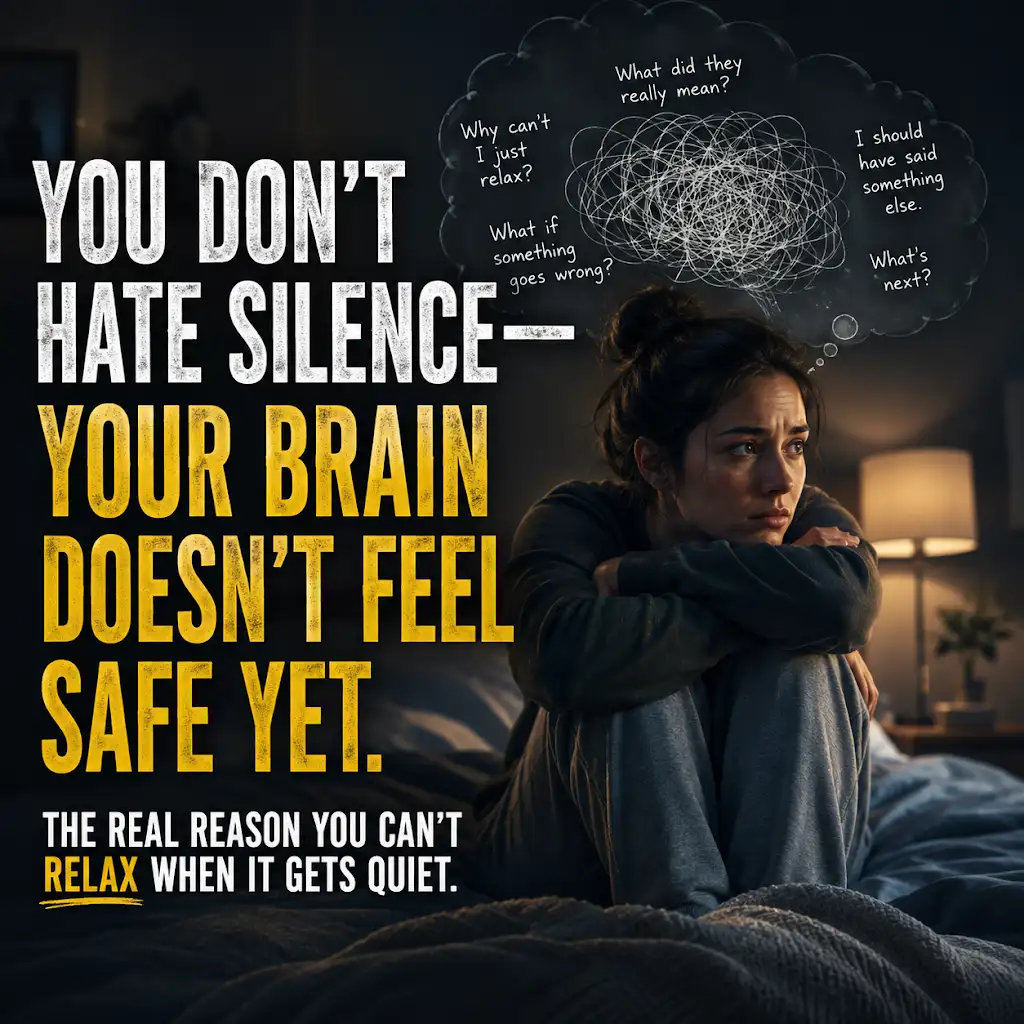
You Don’t Hate Silence—Your Brain Doesn’t Feel Safe Yet
FAQs
What are common signs that someone may think people are mad at them?
Some common signs that someone may think people are mad at them include overanalyzing social interactions, feeling anxious or paranoid in social situations, and constantly seeking reassurance from others.
What are some potential causes for always thinking people are mad at you?
Some potential causes for always thinking people are mad at you may include past experiences of rejection or criticism, low self-esteem, anxiety disorders, and a tendency to personalize others’ behaviors.
How can always thinking people are mad at you impact your mental health?
Always thinking people are mad at you can impact your mental health by causing increased stress, anxiety, and feelings of isolation. It can also lead to difficulties in forming and maintaining relationships.
What are some strategies for managing the belief that people are mad at you?
Some strategies for managing the belief that people are mad at you include challenging negative thoughts, seeking therapy or counseling, practicing self-care and self-compassion, and improving communication skills.
When should someone seek professional help for always thinking people are mad at them?
Someone should seek professional help for always thinking people are mad at them if it significantly impacts their daily functioning, relationships, or mental well-being. If the belief is causing distress or interfering with their ability to lead a fulfilling life, seeking professional help is recommended.