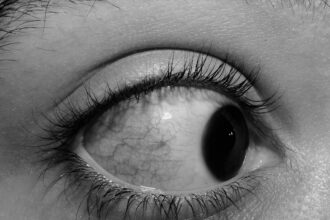
You’re in a crowded room, the air buzzing with conversation, laughter, and the clinking of glasses. Everyone seems engaged, animated, their faces a kaleidoscope of expressiveness. Then you see it – a blank face. And something inside you tightens. It’s not just a fleeting observation; it’s a feeling, a visceral reaction that can unravel your carefully constructed composure. You find yourself wondering, “Why do blank faces make me so nervous?”
It’s a common human inclination to seek connection, to understand and be understood. We rely on facial cues, the subtle twitches of an eyebrow, the curve of a lip, the twinkle in an eye, to navigate social interactions. These are the invisible threads that weave the fabric of our relationships, allowing us to gauge emotions, project empathy, and build rapport. When these threads are absent, when you’re met with a face devoid of discernible emotion, it’s like encountering a wall. You’re left with no data, no way to process, no point of entry.
The Absence of Connection: A Communication Void
You’re trying to engage, to build a bridge. You’ve offered a smile, a question, a story. You’re looking for a reflection, a sign that your words are landing, that your presence is acknowledged. But the face before you remains impassive. It’s as if you’re speaking into a void, your efforts dissipating into nothingness. This lack of feedback is unsettling because it disrupts the natural flow of human interaction. You’re accustomed to a dance of give and take, where expressions signal understanding, agreement, amusement, or even polite disagreement. When that dance partner stands still, frozen, it creates a disquieting imbalance. You begin to question your own ability to communicate effectively. Are you saying something wrong? Is your energy off? The uncertainty breeds anxiety.
The Mirroring Instinct: Why We Need to See Ourselves Reflected
Humans possess a remarkable instinct to mirror. We unconsciously mimic the expressions and body language of those around us. This mirroring isn’t just about imitation; it’s a fundamental mechanism for building empathy and understanding. When you see someone smile, you’re more likely to feel a hint of happiness yourself. When you see a worried frown, you might feel a prickle of concern. This shared emotional landscape fosters a sense of unity and connection. A blank face breaks this mirroring circuit. It denies you the opportunity to feel that resonance, to see a reflection of your own efforts or emotions. This absence can leave you feeling isolated, even in a crowd.
The Information Vacuum: What Are They Thinking?
Every social interaction is, at its core, an information exchange. We constantly scan for clues to understand the other person’s thoughts, feelings, and intentions. A blank face presents an information vacuum. You have no way to glean their perspective. Are they interested? Bored? Disagreeable? Hostile? The possibilities are endless, and the lack of concrete data forces your mind to race, conjuring scenarios, often negative ones, to fill the void. This lack of definitive information can feel like navigating a minefield with your eyes closed.
The Perceived Judgment: Are They Silently Evaluating Me?
Perhaps the most unnerving aspect of a blank face is the potential for unspoken judgment. Because you can’t read their emotions, your mind defaults to worst-case scenarios. You might interpret their impassivity as disapproval, as a silent condemnation of your words, your appearance, or your very being. This is particularly true in social situations where you’re already feeling vulnerable. The blank stare can feel like an indictment, a silent verdict that leaves you feeling exposed and inadequate. You might find yourself overthinking every word you speak, every gesture you make, desperately trying to decipher if you’ve crossed some invisible line.
The Shadow of Suspicion: Projecting Our Own Insecurities
Often, the nervousness you feel when faced with a blank face stems from your own insecurities. You project your fears onto the impassive expression. If you’re feeling self-conscious about a particular aspect of yourself, you might interpret their blankness as confirmation that your fear is justified. Their lack of outward reaction becomes evidence of your perceived flaws. It’s a self-fulfilling prophecy where your own anxiety creates the judgment you fear.
The Unspoken Threat: A Lack of Predictability
Human beings crave predictability. We like to know what to expect, to understand the social landscape. A blank face injects an element of unpredictability into the interaction. You don’t know how they might react to something you say or do. This uncertainty can trigger your primal fight-or-flight response. If you can’t gauge the potential threat, your brain goes into overdrive, searching for danger signals. The impassive face, devoid of those signals, becomes a source of unease because its potential reactions are entirely unknown.
The Unfamiliar Terrain: Navigating Social Discomfort
Encountering a blank face can be like stepping onto unfamiliar terrain. You’re used to the well-trodden paths of emotional expression, but here, the ground is barren, offering no clear direction. This can leave you feeling lost, disoriented, and unsure of how to proceed. The natural inclination to adapt and connect is thwarted, leading to a sense of awkwardness and unease.
The Social Script Interruption: When the Conversation Stalls
Every conversation follows a kind of social script, a series of expected responses and reactions. You say something, they respond, you build on that response. It’s a back-and-forth that keeps the momentum going. A blank face can abruptly interrupt this flow. You deliver your line, and instead of the expected reaction – a nod, a smile, a counter-argument – you get nothing. The conversation stalls. You’re left holding the conversational ball, unsure of how to pass it back when the other player is standing motionless. This can lead to awkward silences, which, for many, are deeply uncomfortable.
The Pressure to Fill the Void: The Dread of Silence
The discomfort caused by a stalled conversation often leads to a desperate need to fill the ensuing silence. You might find yourself babbling, offering up irrelevant anecdotes or asking more questions than are necessary, all in an effort to avoid the awkward void. This pressure to fill the silence can be exhausting and can further amplify your nervousness, as you feel you’re not measuring up to the social expectation of a fluid interaction.
The Rehearsal Loop: Overthinking Your Next Move
When a conversation falters, your mind can enter a rehearsal loop. You replay what you just said, analyzing every syllable, trying to identify what might have gone wrong. Then, you start mentally rehearsing your next potential contribution, anticipating every possible outcome. This internal chatter is exhausting and distracts you from being present in the moment, ironically making your anxiety worse.
The Cultural Conundrum: Diverse Expressions, Diverse Interpretations
It’s crucial to acknowledge that facial expressions are not universally interpreted. What might be considered a blank face in one culture could be a sign of deep thought or respect in another. Your nervousness might be rooted in misinterpreting signals that are simply different from what you’re accustomed to. This highlights the complexity of human interaction and the importance of cultural awareness.
The Nuances of Non-Verbal Communication: Beyond the Obvious
You might be so focused on the absence of obvious emotional cues that you’re missing other, more subtle forms of non-verbal communication. Are their eyes darting away? Are they shifting their weight? Are their hands clasped tightly? These smaller gestures, when strung together, can offer clues that you might be overlooking because you’re fixated on the lack of a smile or a frown.
The Assumption of Disinterest: A Misguided Conclusion
When faced with a blank face, it’s easy to jump to the conclusion that the person is uninterested in you or the conversation. However, this is often a misguided leap. They might be tired, preoccupied with other thoughts, or simply have a naturally stoic demeanor. Your assumption of disinterest can lead to a self-fulfilling prophecy, where your own withdrawal or awkwardness then confirms their perceived disinterest, creating a downward spiral.
The Shadow of the Unknown: Fears That Lurk Beneath the Surface
The blank face is a canvas onto which you project your deepest fears and anxieties. Because you cannot read the person, your mind fills in the blanks with worst-case scenarios, tapping into a primal fear of the unknown. This fear can be deeply unsettling, leaving you feeling vulnerable and exposed.
The Fear of Rejection: A Universal Human Concern
At its core, the nervousness associated with a blank face is often linked to the fear of rejection. You’re putting yourself out there, seeking connection, and the lack of an affirmative response feels like a subtle form of rejection. You interpret their impassivity as a sign that you are not likable, not interesting, or not worthy of their emotional investment. This fear of being found wanting is a powerful motivator for social anxiety.
The Validation Craving: The Need for External Approval
You might have a deep-seated need for external validation. You look to others’ reactions to confirm your own sense of worth. When those reactions are absent, it leaves you feeling adrift, questioning your own value. The blank face denies you the affirmation you crave, exacerbating your insecurities.
The Social Ostracism Anxiety: The Fear of Being Left Out
The evolutionary roots of human beings are deeply tied to group belonging. The fear of being ostracized, of being cast out from the safety of the group, is a potent source of anxiety. A blank face can trigger this fear by making you feel like an outsider, someone who doesn’t fit in, someone who is not an integral part of the social fabric.
The Fear of Malice: The Unseen Adversary
In more extreme cases, a blank face can evoke a fear of malice. Because you cannot gauge their intentions, your mind might conjure up scenarios of hidden hostility or ill will. The impassive expression becomes a mask for something sinister, a threat lurking beneath the surface. This is particularly true if you have past experiences that have led you to be wary of others.
The Paranoid Tendency: Seeing Danger Where None Exists
If you have a tendency towards paranoia, even mild, a blank face can be a potent trigger. Your mind may interpret the lack of emotion as a deliberate attempt to deceive or manipulate, leading to suspicion and anxiety. You might start looking for hidden meanings or ulterior motives where none exist.
The Instinctive Defense Mechanism: Preparing for the Worst
Your brain is wired for survival. If it perceives a potential threat, it will activate defense mechanisms. A blank face, by its very inscrutability, can be perceived as a potential threat. Your mind may then enter a state of heightened alert, ready to defend itself against an unknown adversary. This can manifest as physical symptoms of anxiety, such as a racing heart or sweaty palms.
The Personal History: How Past Experiences Shape Your Reactions
Your individual history plays a significant role in how you perceive and react to blank faces. Past experiences, particularly those involving social rejection, bullying, or difficult relationships, can leave lasting imprints that influence your present-day interactions.
The Ghost of Past Judgments: When Old Wounds Are Pricked
If you have experienced significant social rejection or judgment in your past, a blank face can inadvertently trigger those old wounds. The impassive expression might remind you of times when you felt overlooked, dismissed, or unfairly criticized. Your current reaction is not solely about the present interaction, but about the echoes of past pain.
The Childhood Blues: Early Social Learning
Your early experiences with caregivers and peers shape your understanding of social cues. If you grew up in an environment where emotional expression was suppressed, or where you were frequently met with indifference, you might develop a heightened sensitivity to the absence of emotional feedback. You learned early on to be unsettled by the lack of outward connection.
The Trauma Tapestry: The Lingering Effects of Negative Experiences
Traumatic experiences, particularly those involving betrayal or abuse, can leave you with a deep-seated distrust of others. A blank face can be perceived as a sign of insincerity or hidden intentions, making you feel unsafe and vulnerable. Your nervous reaction is a manifestation of your protective instincts kicking in, trying to shield you from further harm.
The Communication Style Mismatch: Different Strokes for Different Folks
Your own communication style and expectations can also contribute to your nervousness. If you are naturally expressive and communicative, you might find it particularly challenging to interact with someone who is more reserved or stoic. The mismatch in styles can lead to frustration and anxiety as you try to bridge the gap.
The Empathetic Divergence: The Struggle to Connect with Reserved Personalities
You might be a highly empathetic individual who naturally seeks emotional connection. When you encounter someone who is less verbally or emotionally expressive, it can feel like you’re unable to connect on your usual level. This dissonance can be unsettling and leave you feeling frustrated.
The Social Awkwardness Inheritance: Learning from Observation
You might have also learned to be nervous around blank faces by observing others. If you grew up or spent time with people who exhibited anxiety in similar situations, you may have internalized those reactions as your own. This learned behavior can be difficult to unlearn.
Strategies for Subduing the Nervousness: Reclaiming Your Composure
Fortunately, the nervousness you feel around blank faces is not an immutable trait. With awareness and practice, you can learn to manage and even overcome these reactions. The key lies in shifting your perspective and developing new coping mechanisms.
Reframing the Blank Face: From Threat to Neutrality
The most powerful tool you have is to consciously reframe your interpretation of a blank face. Instead of seeing it as a sign of disapproval or threat, try to see it as a neutral expression. Understand that there can be many reasons for a lack of outward emotion that have nothing to do with you.
The Benefit of the Doubt: Giving Others the Grace You’d Want
Practice giving others the benefit of the doubt. Assume they have their own reasons for their demeanor, and that those reasons are likely not personal. This simple shift in perspective can alleviate a significant amount of perceived pressure.
The Focus on Facts, Not Feelings: Anchoring Yourself in Reality
When you find yourself spiraling into anxious thoughts, try to anchor yourself in observable facts. What is actually happening in the interaction? Are they being rude? Are they ignoring you outright? Or are they simply not displaying overt positive emotions? Stick to what you can see and hear, rather than what you are projecting.
Developing New Communication Habits: Expanding Your Social Toolkit
Learn to adapt your communication style when faced with less expressive individuals. This doesn’t mean changing who you are, but rather adding new tools to your social repertoire.
The Power of Open-Ended Questions: Eliciting Information Gently
Instead of relying solely on facial cues, focus on asking open-ended questions that encourage a more detailed response. This invites them to share more, giving you the information you need without putting them on the spot.
The Active Listening Mastery: Focusing on Their Words, Not Their Expressions
Become a master of active listening. Pay close attention to what they are saying, the nuances in their voice, and the content of their message. This will help you glean information that might be missed if you’re solely focused on their facial expression.
Self-Compassion and Self-Awareness: Understanding Your Own Reactions
Ultimately, addressing your nervousness around blank faces is an act of self-compassion. Recognize that these reactions are understandable given your experiences and your innate human drives. By developing self-awareness, you can begin to untangle the roots of your anxiety and work towards a more balanced and confident approach to social interaction. You are not alone in this feeling, and with practice and understanding, you can navigate these situations with greater ease and a stronger sense of self.