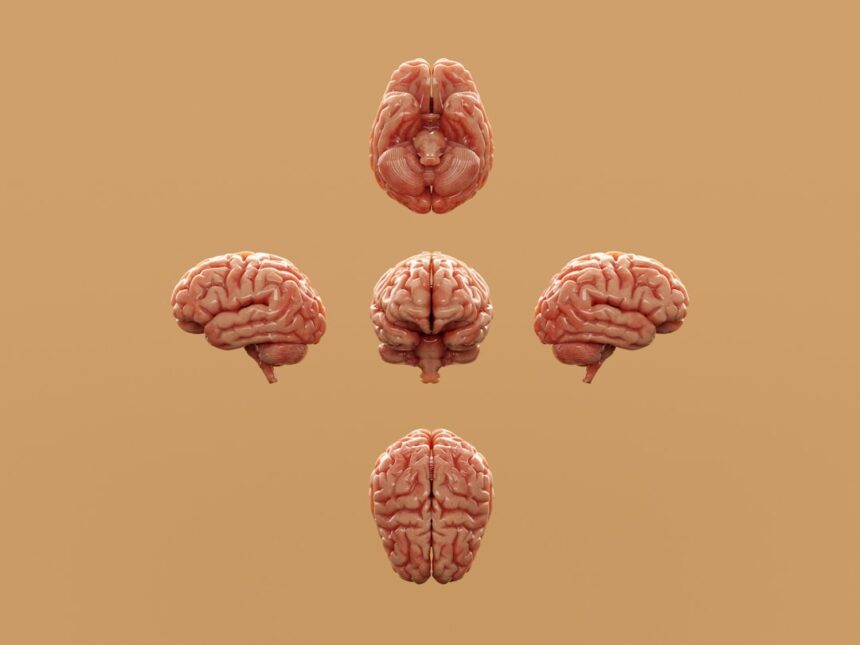
Ever stopped to marvel at how you remember your grandmother’s scent, or how you can effortlessly navigate a familiar street? Have you ever pondered the intricate dance of thoughts that lead you to make a decision, or the silent engine that powers your ability to learn a new skill? These are not mere everyday occurrences; they are the very fabric of what cognitive psychology seeks to understand. You, with your wonderfully complex mind, are the ultimate subject, and this journey will illuminate the fascinating landscape within. Prepare to delve into the inner workings of your own consciousness, to unravel the mysteries that make you, you.
Understanding Your Mental Blueprint: The Foundations of Cognitive Psychology
Consider cognitive psychology as your personal instruction manual, a detailed exploration of the software and hardware that makes your consciousness run. It’s not about peering into your brain with a scalpel, but rather observing how your mind processes information, how it solves problems, and how it creates the reality you experience. It’s about understanding the invisible forces that shape your perceptions, memories, and decisions.
What Exactly Is Cognitive Psychology?
At its core, cognitive psychology is the scientific study of the mind and its processes. Think of it as the investigation into how you acquire, process, store, and retrieve information. It’s a field that’s constantly evolving, drawing from linguistics, neuroscience, computer science, and philosophy to piece together the intricate puzzle of human cognition. Instead of just saying “you remember something,” cognitive psychology asks how you remember, what makes some memories stick while others fade, and what biases might influence your recollection.
The Information-Processing Analogy: A Useful Framework
One of the most influential models in cognitive psychology is the information-processing approach. Imagine your mind as a sophisticated computer. Sensory input – what you see, hear, smell, taste, and touch – is like data entering the system. This data is then processed, analyzed, and transformed through various mental operations. Some of this information is then stored (memory), and some is retrieved when needed. While a useful analogy, it’s important to remember that the human mind is far more dynamic and nuanced than any current computer. Your emotions, past experiences, and social context all play a role in how you process information, something even the most advanced AI struggles to replicate.
The Scientific Method in Action: Observing the Unobservable
How do psychologists study something as internal and abstract as thought? They employ rigorous scientific methods, carefully designing experiments and observations to infer mental processes. This might involve measuring reaction times to see how quickly you can categorize objects, or using neuroimaging techniques to observe brain activity when you’re performing a specific cognitive task. The goal is to move beyond introspection and subjective belief to objective, repeatable findings that shed light on the underlying mechanisms of your mind.
Cognitive psychology is a fascinating field that explores the intricacies of mental processes such as perception, memory, and problem-solving. For those interested in delving deeper into this subject, a related article that offers valuable insights is available at Unplugged Psychology. This resource provides a comprehensive overview of cognitive theories and their applications, making it an excellent starting point for anyone looking to understand how our minds work.
The Architects of Thought: Perception and Attention as Your Gatekeepers
Before you can think, you must first perceive. Your senses are the initial point of contact with the world, but it’s your brain’s interpretation of that sensory input that truly constructs your reality. And to make sense of the overwhelming barrage of information, your attention acts as a crucial filter.
How You See, Hear, and Feel the World: The Wonders of Perception
Perception is the process by which you organize and interpret sensory information. It’s not simply a passive reception of stimuli, but an active construction. When you see a red apple, it’s not just a collection of photons hitting your retina; your brain interprets those signals, integrates them with your past knowledge of apples, and conjures the experience of “redness” and “appleness.” This process is influenced by your expectations, your prior experiences, and even your current emotional state.
Top-Down vs. Bottom-Up Processing: Two Sides of the Same Coin
Consider how you read. Bottom-up processing refers to the way your sensory receptors gather information from the environment and send it up to your brain. You see the individual letters, the lines, the curves. Top-down processing, on the other hand, uses your existing knowledge, expectations, and context to make sense of that incoming information. If you see the letters “c-a-t,” your brain doesn’t just process those individual shapes; it accesses your knowledge of animals and immediately recognizes the word “cat.” Cognitive psychology explores how these two modes of processing interact, sometimes leading to phenomena like illusions, where our expectations can override the sensory evidence.
Gestalt Principles: Finding Order in Chaos
Have you ever looked at a series of dots and seen a shape, or perceived a melody from individual notes? This is the work of Gestalt principles, a set of rules that describe how your brain organizes visual information into meaningful wholes. Principles like proximity (objects close together are perceived as a group) and similarity (objects that look alike are perceived as a group) demonstrate your innate tendency to find order and structure in the world around you.
The Spotlight of Your Mind: The Power and Limitations of Attention
Imagine your awareness as a spotlight. You can’t illuminate everything at once, so you selectively focus your attention on what’s most important. Attention is your cognitive system’s way of managing limited processing resources. It’s what allows you to concentrate on a conversation in a noisy room or to focus on a specific task without being distracted by everything else happening around you.
Selective Attention: Tuning Out the Noise
This is the ability to focus on one stimulus while ignoring others. Think about the “cocktail party effect” – how you can pick out and follow a single conversation in a crowded, noisy room. Your brain is actively filtering out irrelevant auditory information to focus on the more salient stimulus. This selective process is crucial for navigating a complex world, but it also means that important information can be missed if it doesn’t capture your attention.
Divided Attention: Multitasking and Its True Cost
While we often feel like we’re adept at multitasking, cognitive psychology suggests that true parallel processing on complex tasks is rare. Instead, divided attention often involves rapid switching between tasks. This switching comes with a cognitive cost, leading to decreased performance on each individual task. Ever found yourself rereading a sentence because your mind wandered? That’s the trade-off of divided attention.
Inattentional Blindness: What You Don’t See Can Surprise You
This fascinating phenomenon demonstrates the limits of your attention. If you are intensely focused on one task, you can literally fail to see things that are clearly in your field of vision. The classic example is the “invisible gorilla” experiment, where participants focused on counting basketball passes often miss a person in a gorilla suit walking through the scene. This highlights how your attention actively shapes what you perceive.
The Memory Maze: How You Store and Recall Your Life
Your memories are the bedrock of your identity, the tapestry of your experiences that shapes your understanding of yourself and the world. Cognitive psychology unravels the intricate mechanisms by which you encode, store, and retrieve these precious fragments of your past.
The Stages of Memory: From Fleeting Impressions to Enduring Records
Memory isn’t a monolithic entity; it’s a multi-stage process.
Sensory Memory: The Ultra-Brief Holding Pen
This is the very first stage, a fleeting register of sensory information that lasts only for a fraction of a second. It’s the brief echo of a sound you just heard or the lingering image of something you just saw. Think of it as a buffer, holding onto raw sensory input before it’s passed on for further processing.
Short-Term Memory (Working Memory): Your Mental Workspace
When you actively pay attention to sensory information, it enters your short-term memory, also known as working memory. This is your mental workspace, where you can hold and manipulate information for a short period, typically around 20-30 seconds, unless you actively rehearse it. It’s where you hold a phone number in your head while you dial it or mentally calculate a tip. Its capacity is limited, usually around 7 items, give or take a few.
Long-Term Memory: The Vast Warehouse of Your Experiences
This is where memories are stored for extended periods, potentially a lifetime. It’s a vast and complex system, capable of holding an enormous amount of information. From your childhood memories to the knowledge you’ve acquired in school, all reside in your long-term memory.
Types of Long-Term Memory: Different Flavors of Recollection
Long-term memory isn’t uniform. It can be further broken down into different types, each supporting different kinds of knowledge and experiences.
Explicit (Declarative) Memory: The Memories You Can Consciously Recall
These are the memories you can consciously access and declare. This category includes:
- Episodic Memory: Memories of specific personal experiences, including the time and place they occurred. Think of your last birthday party, your first day at school, or a memorable vacation. These are like personal movies stored in your mind.
- Semantic Memory: Memories of facts, concepts, and general knowledge about the world. This is your understanding of gravity, the capital of France, or the meaning of words. It’s your internal encyclopedia.
Implicit (Non-Declarative) Memory: The Unconscious Masters of Skill and Habit
These are memories that you don’t consciously recall but that influence your behavior.
- Procedural Memory: Memories of how to do things, like riding a bike, typing, or playing a musical instrument. You “know how” to do these things without consciously thinking through each step.
- Priming: The phenomenon where exposure to one stimulus influences your response to a subsequent stimulus. For example, if you see the word “doctor,” you’re likely to recognize the word “nurse” more quickly afterwards.
Forgetting: The Natural Erosion and Active Erasure of Memories
Forgetting isn’t a failure of your memory; it’s often a natural and even adaptive process. Cognitive psychology explores various theories for why we forget.
Interference: When Memories Clash
This occurs when new information disrupts the recall of old information, or vice versa. Proactive interference happens when old memories interfere with learning new ones, while retroactive interference occurs when new memories interfere with recalling old ones. Imagine trying to learn a new password that’s similar to an old one; you might unconsciously type the old password.
Encoding Failure: Never Even Made It In
Sometimes, you don’t forget something; you never truly encoded it in the first place. If you weren’t paying attention to a name tag or a piece of information, it never made it into your memory system for storage.
Retrieval Failure: The Tip-of-the-Tongue Phenomenon
This is the frustrating experience of knowing you know something but being unable to retrieve it. The information is in your long-term memory, but you can’t access it at that particular moment. It’s like the information is just out of reach.
The Problem Solvers: How You Navigate Challenges and Make Decisions
Life is a continuous stream of problems, big and small, and cognitive psychology is fascinated by the strategies and processes you employ to find solutions and make choices.
The Labyrinth of Problem Solving: Finding Your Way Through Obstacles
Problem-solving is the process of overcoming obstacles to reach a goal. It involves identifying the problem, devising a strategy, implementing it, and evaluating the outcome.
Algorithms and Heuristics: Your Problem-Solving Toolkit
When faced with a problem, you often employ different strategies.
- Algorithms: These are step-by-step procedures that guarantee a solution if one exists. Think of a mathematical formula or a recipe. They are reliable but can be time-consuming and may not always be the most efficient approach for every problem.
- Heuristics: These are mental shortcuts or rules of thumb that allow for quicker solutions, but they don’t guarantee success. They are often used for complex problems where algorithms are impractical. Examples include trial and error, or working backward from the goal.
Obstacles to Effective Problem Solving: Mental Roadblocks
While you possess powerful problem-solving abilities, certain mental roadblocks can hinder your progress.
- Functional Fixedness: This is the tendency to perceive an object only in terms of its most common use. For example, if you’re given a hammer and nails and a problem to solve, you might only think of using the hammer to hammer nails, instead of considering other potential uses.
- Mental Set: This is the tendency to approach a problem in a particular way, often based on past experience, even when a different approach might be more effective. You get stuck in a rut of thinking.
The Art of Decision Making: Weighing Options and Committing
Every day, you make countless decisions, from the mundane choice of what to wear to the significant decisions that shape your future. Cognitive psychology investigates the often unconscious processes that guide these choices.
Deductive and Inductive Reasoning: Drawing Conclusions
- Deductive Reasoning: This involves starting with general principles and moving to specific conclusions. If all men are mortal, and Socrates is a man, then Socrates must be mortal. It’s about logical certainty.
- Inductive Reasoning: This involves starting with specific observations and forming general conclusions. You might observe that every swan you’ve seen is white, and therefore conclude that all swans are white (a conclusion later proven false by the discovery of black swans). This type of reasoning is probabilistic and can lead to errors.
Biases and Heuristics in Decision Making: The Shortcuts That Can Lead You Astray
Just as in problem-solving, heuristics play a significant role in decision-making, but they can also lead to systematic errors called cognitive biases.
- Availability Heuristic: This is the tendency to overestimate the likelihood of events that are easily recalled in memory, often because they are vivid or recent. You might overestimate the risk of flying after seeing news reports about plane crashes, even though statistically, it’s safer than driving.
- Representativeness Heuristic: This is the tendency to judge the probability of an event by comparing it to our prototype or stereotype of that event. You might assume someone who is quiet and reads a lot is more likely to be a librarian than a salesperson, even if there are far more salespeople than librarians.
- Framing Effects: This refers to how the way information is presented can influence your decisions, even if the underlying options are identical. For example, you’re more likely to choose a treatment that has a “90% survival rate” than one that has a “10% mortality rate.” It’s the same outcome, but the framing changes your perception.
Cognitive psychology explores the intricate processes of the mind, focusing on how we think, learn, and remember. For a deeper understanding of this fascinating field, you can read an insightful article that delves into various cognitive processes and their implications for everyday life. This article provides valuable information on topics such as memory, perception, and problem-solving, making it a great resource for anyone interested in the workings of the human mind. To learn more, check out this comprehensive guide on cognitive psychology.
Language and Thought: The Intertwined Dance of Words and Meaning
Language is more than just a tool for communication; it’s a fundamental component of your thought processes, shaping how you perceive, organize, and understand the world. Cognitive psychology delves into the intricate relationship between the words you use and the ideas you form.
The Building Blocks of Language: Phonemes, Morphemes, and Syntax
Language is a complex system built from smaller units.
- Phonemes: These are the basic sounds of a language, the smallest units of speech that can distinguish one word from another (e.g., the “p” sound in “pat” and “bat”).
- Morphemes: These are the smallest meaningful units of language. They can be whole words (like “cat”) or parts of words that carry meaning, like prefixes or suffixes (e.g., the “-ing” in “running”).
- Syntax: This refers to the rules that govern how words are combined to form grammatically correct sentences. It’s the structure of language that allows for complex ideas to be expressed.
Understanding and Producing Language: The Cognitive Machinery
The processes involved in understanding and producing language are remarkably complex and occur at incredible speed.
Comprehension: Decoding the Meaning
When you hear or read language, your brain works to decode the sounds or symbols, identify the words, understand their meanings, and then process the grammatical structure to grasp the overall message. This involves accessing your semantic memory and applying your knowledge of syntax.
Production: From Thought to Speech
When you want to communicate, your brain translates your thoughts into a sequence of words, applying the rules of grammar and phonology to produce spoken or written language. This is an active and generative process.
The Sapir-Whorf Hypothesis: Does Language Shape Thought?
This influential hypothesis, also known as linguistic relativity, suggests that the structure of your language influences the way you think and perceive the world. For example, if a language has many words for different types of snow, speakers of that language might be more attuned to subtle variations in snow. While extreme versions of the hypothesis have been debated, it’s clear that language plays a significant role in how you frame your thoughts and categorize your experiences.
The Ever-Evolving Mind: Learning and Development Through a Cognitive Lens
You are not born with a fully formed cognitive system; it is a dynamic entity that develops and changes throughout your life. Cognitive psychology explores the remarkable processes of learning and how your mental abilities mature.
How You Learn: Adapting and Acquiring New Knowledge
Learning is the process by which you acquire new knowledge, skills, and behaviors. Cognitive psychology investigates various mechanisms of learning.
Classical and Operant Conditioning: Learning Through Association and Consequences
These are fundamental learning processes. Classical conditioning (Pavlovian conditioning) involves learning through association, where a neutral stimulus becomes associated with a naturally occurring stimulus, leading to a learned response (e.g., salivating to a bell after it’s repeatedly paired with food). Operant conditioning (Skinnerian conditioning) involves learning through consequences, where behaviors are strengthened or weakened by rewards or punishments.
Observational Learning: Learning by Watching
This is a powerful form of learning where you acquire new behaviors by observing others and imitating their actions. Think of how children learn from their parents or how you might learn a new dance move by watching a video. This involves attention, retention, reproduction, and motivation.
Cognitive Development: The Maturation of Your Mental Abilities
As you grow from infancy to adulthood, your cognitive abilities undergo significant transformations. Pioneers like Jean Piaget have proposed stages of cognitive development, highlighting shifts in how you think, reason, and understand the world. From the sensorimotor stage of infants, grasping the world through senses and actions, to the formal operational stage of adolescents and adults, capable of abstract thought and hypothetical reasoning, your cognitive landscape is constantly being sculpted.
The Continuing Exploration: The Future of Cognitive Psychology
The journey into the mysteries of cognitive psychology is far from over. As technology advances and our understanding deepens, new frontiers are constantly being explored.
The Intersection of Cognition and Emotion: A Deeper Integration
Increasingly, cognitive psychology is acknowledging the inseparable link between thought and emotion. How do your feelings influence your memories, your decisions, and your problem-solving abilities? This area of research is revealing the profound impact of affect on cognition.
The Role of Social Cognition: How We Think About Others and Ourselves
Understanding how you perceive, interpret, and interact with others is a crucial aspect of cognitive psychology. This includes areas like social perception, attribution, and the formation of attitudes.
The Promise of Cognitive Neuroscience: Bridging the Gap Between Mind and Brain
With advancements in neuroimaging techniques like fMRI and EEG, cognitive neuroscience is allowing us to observe the brain in action as you perform cognitive tasks. This is providing invaluable insights into the neural underpinnings of thought, memory, and emotion.
Artificial Intelligence and Cognitive Modeling: Building Intelligent Systems
The quest to create artificial intelligence is deeply intertwined with cognitive psychology. By modeling human cognitive processes, researchers are developing more sophisticated AI systems and, in turn, gaining a deeper understanding of their own minds.
Your cognitive world is a dynamic and endlessly fascinating realm. By understanding the principles of cognitive psychology, you gain a clearer picture of your own mental architecture, the incredible mechanisms that allow you to perceive, remember, decide, and learn. Embrace this journey of self-discovery, for in unraveling the mysteries of the mind, you unlock a deeper appreciation for the remarkable human being that you are.

Why You Can’t Stop Replaying That Conversation 🧠
FAQs

What is cognitive psychology?
Cognitive psychology is the study of mental processes such as “attention, language use, perception, problem solving, memory, and thinking.” It is concerned with how people acquire, process, and store information.
What are the main areas of study in cognitive psychology?
The main areas of study in cognitive psychology include perception, attention, memory, language, problem-solving, and decision-making. Researchers in this field seek to understand how these mental processes work and how they can be improved.
How does cognitive psychology differ from other branches of psychology?
Cognitive psychology differs from other branches of psychology in that it focuses on internal mental processes, such as thinking, memory, and problem-solving, rather than on behavior or emotions. It seeks to understand how people perceive, think, and remember, and how these processes influence behavior.
What are some real-world applications of cognitive psychology?
Cognitive psychology has many real-world applications, including improving learning and memory, designing user-friendly technology, treating mental health disorders, and enhancing decision-making in various fields such as business and sports.
What are some key theories and findings in cognitive psychology?
Some key theories and findings in cognitive psychology include the information processing model, which compares the mind to a computer, and the concept of cognitive biases, which are systematic patterns of deviation from norm or rationality in judgment. Other important findings include research on memory, attention, and problem-solving.