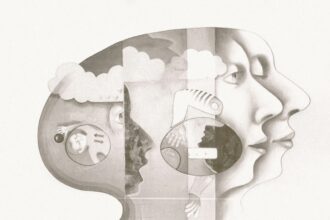
The Little Albert experiment, a landmark study in the history of psychology, continues to spark debate and contemplation decades after its execution. Conducted in 1920 by John B. Watson and his graduate student Rosalie Rayner at Johns Hopkins University, this experiment aimed to demonstrate the principles of classical conditioning in humans, specifically the acquisition of phobias through learned associations. While groundbreaking in its findings, it remains a controversial topic due to its ethical implications and the methodologies employed. Understanding the nuances of this experiment requires delving into its historical context, its procedural execution, the psychological theories it sought to validate, and the lasting impact it has had on our understanding of human behavior and ethics in research.
The early 20th century was a pivotal time for psychology. The field was largely dominated by introspection, a method where individuals reported their own conscious experiences. However, this approach was criticized for its subjectivity and lack of scientific rigor. In this intellectual climate, John B. Watson emerged as a leading figure advocating for a more objective and scientific approach to psychology.
The Rise of Behaviorism
Watson’s radical behaviorism posited that psychology should focus solely on observable behavior, dismissing the study of internal mental states as unscientific. He believed that all behavior, including emotions and thoughts, could be explained through the principles of stimulus and response. This meant that an organism’s environment played a crucial role in shaping its behavior through conditioning.
Key Tenets of Behaviorism
- Observable Behavior: Behaviorism emphasizes the study of actions that can be directly seen and measured, rather than subjective internal experiences.
- Environmental Determinism: Behavior is seen as a product of environmental influences and learning experiences.
- Conditioning: The core mechanism by which learning occurs is through conditioning, specifically classical and operant conditioning.
- Rejection of Innate Ideas: Behaviorists generally reject the notion of innate ideas or predispositions, arguing that all behaviors are learned.
The Need for Empirical Evidence
Watson was not content with theoretical propositions alone. He sought to provide empirical evidence that supported his behaviorist claims, particularly regarding the emotional responses of humans. He believed that complex emotional reactions, such as fears and anxieties, could be explained by simple associative learning processes. The Little Albert experiment was designed to be a definitive demonstration of this principle, aiming to show how a neutral stimulus could evoke an emotional response through conditioning.
The Little Albert experiment, conducted by John B. Watson and Rosalie Rayner in the early 20th century, is a foundational study in the field of psychology that demonstrated how emotional responses can be conditioned. For those interested in exploring this topic further, a related article that delves into the implications and ethical considerations of the experiment can be found at Unplugged Psychology. This resource provides a comprehensive overview of the experiment’s methodology and its significance in understanding behaviorism.
The Experiment’s Design and Procedure
The Little Albert experiment, as it is commonly known, involved a young infant, “Albert B.”, who was brought to the laboratory for the study. The researchers aimed to condition Albert to fear a previously neutral stimulus by pairing it with an aversive one.
Participant Selection and Baseline Observations
Albert was an approximately nine-month-old infant, described as healthy and generally fearless. Before the conditioning began, Watson and Rayner conducted baseline observations to assess Albert’s reactions to various stimuli. They presented him with a range of objects that were typically associated with fear in infants, such as a white rat, a rabbit, a dog, a monkey, masks with and without hair, burning newspapers, and a black cloth. Crucially, Albert showed no fear towards any of these objects individually. He would reach out and touch them with apparent curiosity and pleasure. This baseline assessment was critical to establishing that Albert did not possess a pre-existing fear of the target stimulus.
The Unconditioned Stimulus and Response
The unconditioned stimulus (UCS) was a loud, sharp noise, created by striking a steel bar with a hammer behind Albert. This noise was known to elicit a fear response in infants. The unconditioned response (UCR) was Albert’s reaction to this noise: crying, fear, and attempts to escape. This was a naturally occurring, unlearned response.
The Neutral Stimulus
The neutral stimulus (NS) selected for the experiment was a white rat. As previously observed, Albert showed no fear of the white rat; he would readily interact with it. This made it an ideal candidate for conditioning.
The Conditioning Process
The conditioning phase involved presenting the white rat (NS) to Albert simultaneously with the loud noise (UCS). This pairing was repeated multiple times. The intention was that Albert would learn to associate the white rat with the unpleasant experience of the loud noise.
The Pairing of Stimuli
- Presentation of the Rat: The white rat was placed in front of Albert.
- Simultaneous Noise: Immediately upon presenting the rat, Watson would strike the steel bar to produce the loud noise.
- Albert’s Reaction: Albert’s reaction to this combined stimulus was a fearful response, characterized by crying and distress.
- Repetition: This procedure was repeated several times over a period of days.
The researchers hypothesized that after repeated pairings, the white rat would become a conditioned stimulus (CS), capable of eliciting a fear response on its own, even in the absence of the loud noise.
The Results: Conditioning Fear in a Human Infant

The conditioning phase of the Little Albert experiment yielded results that were, to Watson and Rayner, highly significant. They claimed to have successfully conditioned a fear response in Albert towards the white rat.
Emergence of the Conditioned Response
After several pairings of the white rat and the loud noise, Albert began to exhibit fear when the white rat was presented alone. He would recoil, cry, and attempt to crawl away from the rat. This was the conditioned response (CR) – a learned emotional reaction to a previously neutral stimulus.
Generalization of Fear
A particularly striking finding was the generalization of Albert’s conditioned fear. Watson and Rayner observed that Albert not only feared the white rat but also displayed fear towards other furry objects that shared similar characteristics with the rat.
The Spread of Fear
- Rabbit: Albert showed fear towards a rabbit, recoiling and crying when it was presented.
- Dog: He also exhibited signs of fear when presented with a dog.
- Fur Coat: A fur coat was another object that elicited a fearful reaction.
- Watson’s Hair: Even Watson’s hair, when he stood in front of Albert, appeared to make the infant fearful.
This phenomenon of generalization suggested that the conditioned fear was not specific to the white rat but had spread to other stimuli that were perceived as similar to the conditioned stimulus. This demonstrated that learning could extend beyond the exact stimulus that was conditioned.
Destruction of the Conditioned Response (Extinction)
In classical conditioning, the conditioned response can be weakened and eventually eliminated through a process called extinction. This occurs when the conditioned stimulus is repeatedly presented without the unconditioned stimulus. While the original report by Watson and Rayner doesn’t fully detail the extinction process for Albert, it is implied that this is the typical next step in classical conditioning studies.
The Process of Extinction
- Repeated Presentation of CS: Presenting the white rat without the loud noise.
- Deterioration of CR: Over time, the fear response to the rat would gradually decrease.
- Complete Elimination: Eventually, the rat would become a neutral stimulus again.
However, the practical application of extinction was complicated by Albert’s removal from the study.
Theoretical Implications and Behaviorist Explanations

The Little Albert experiment was hailed by behaviorists as a powerful validation of their theories. It provided a concrete example of how complex emotional behaviors could be explained through simple associative learning.
Classical Conditioning in Action
The experiment perfectly illustrated the core principles of classical conditioning, a concept first proposed by Ivan Pavlov.
The Pavlovian Model
- Unconditioned Stimulus (UCS): A stimulus that naturally elicits a response (e.g., loud noise).
- Unconditioned Response (UCR): The natural, unlearned response to the UCS (e.g., fear, crying).
- Neutral Stimulus (NS): A stimulus that initially elicits no response (e.g., white rat).
- Conditioned Stimulus (CS): The previously neutral stimulus that, after being paired with the UCS, elicits a learned response (e.g., white rat after conditioning).
- Conditioned Response (CR): The learned response to the CS (e.g., fear, crying at the sight of the rat).
Watson and Rayner argued that Albert’s fear of furry objects was a direct result of this associative learning process.
Explaining Phobias
Watson famously suggested that fears, or phobias, in adults could be explained by similar conditioning processes occurring in childhood. He proposed that if a child had a frightening experience with an object or situation, and that object or situation was paired with an unconditioned stimulus that elicited fear, then the child could develop a phobia.
The Behaviorist View of Phobias
- Learned Associations: Phobias are not innate but are learned through conditioning.
- Traumatic Experiences: A specific traumatic experience, even a seemingly minor one, can be the trigger for developing a phobia.
- Generalization: The fear can generalize to similar stimuli, leading to a broader phobia.
- Therapeutic Implications: If fears are learned, they can also be unlearned through therapeutic interventions, such as extinction or counter-conditioning.
This idea was revolutionary at the time and provided a scientific basis for understanding and treating psychological disorders.
The Little Albert experiment, conducted by John B. Watson and Rosalie Rayner in the early 20th century, is a fascinating study that explores the principles of classical conditioning and emotional responses. For those interested in delving deeper into the implications and ethical considerations of this experiment, you might find a related article on the topic at Unplugged Psych, which provides valuable insights into how such studies have shaped our understanding of behaviorism and psychology today.
Ethical Concerns and Methodological Criticisms
| Aspect | Details |
|---|---|
| Experiment Name | Little Albert Experiment |
| Researcher | John B. Watson and Rosalie Rayner |
| Year Conducted | 1920 |
| Subject | Infant known as “Little Albert” |
| Objective | To demonstrate classical conditioning in humans |
| Unconditioned Stimulus (UCS) | Loud noise (striking a metal bar) |
| Unconditioned Response (UCR) | Fear response (crying, distress) |
| Conditioned Stimulus (CS) | White rat and other furry objects |
| Conditioned Response (CR) | Fear response to white rat and similar objects |
| Key Findings | Fear can be conditioned through association in humans |
| Ethical Concerns | Lack of informed consent, no deconditioning, potential harm to subject |
| Significance | Provided evidence for behaviorism and classical conditioning in humans |
Despite its impact, the Little Albert experiment is one of the most ethically questionable studies in psychology. The ethical standards and research guidelines that are commonplace today were either non-existent or poorly enforced in the early 20th century.
Lack of Informed Consent
One of the most significant ethical breaches was the absence of informed consent. Albert was a young infant, and his mother’s consent, if it was even truly informed and voluntary, was not obtained in the way we would expect today. The researchers did not fully explain the potential risks or long-term consequences of the experiment to his mother.
Potential for Lasting Harm
The experiment involved intentionally inducing fear and distress in an infant. There is a significant concern that Albert may have suffered lasting psychological harm as a result of this conditioning. The generalization of his fear to other objects also suggests that he was left with anxieties that were not resolved before he was removed from the study.
Unresolved Questions about Albert’s Well-being
- Deconditioning Efforts: There is no clear record of whether any attempts were made to decondition Albert’s fears before he was removed from the hospital.
- Long-Term Impact: The long-term psychological impact of the experiment on Albert remains unknown, as he disappeared from the historical record after leaving the hospital.
- Emotional Distress: The experiment undoubtedly caused significant emotional distress to a vulnerable infant.
Methodological Weaknesses
Beyond the ethical issues, the experiment has also faced methodological criticisms.
Critiques of the Methodology
- Lack of Control Group: The experiment lacked a proper control group, making it difficult to definitively attribute Albert’s fear solely to the conditioning process.
- Subjectivity of Observations: While Watson aimed for objectivity, some of the observations regarding Albert’s fear could be interpreted as subjective.
- Limited Sample Size: The experiment involved only one participant, making it difficult to generalize the findings to other infants.
- Questionable Stimulus Control: The exact nature and intensity of the “loud noise” as an unconditioned stimulus were not rigorously controlled or standardized.
The Search for Little Albert
The identity of Little Albert has been a subject of much speculation and investigation over the years. Researchers have attempted to identify the child and trace his history to understand the long-term effects of the experiment. While several individuals have been proposed, definitive proof remains elusive, adding another layer of mystery to this controversial study.
The Legacy and Impact of the Little Albert Experiment
Despite its ethical and methodological shortcomings, the Little Albert experiment has left an indelible mark on the field of psychology. Its findings, however controversial, contributed significantly to our understanding of learning and behavior.
Influence on Behavior Therapy
The experiment provided a crucial empirical foundation for behavior therapy, particularly for treating phobias and anxiety disorders. The principles of classical conditioning, as demonstrated by Watson and Rayner, became central to therapeutic techniques like systematic desensitization and exposure therapy. These therapies aim to extinguish learned fears and associations by gradually exposing individuals to feared stimuli in a controlled and safe environment, often paired with relaxation techniques.
Modern Therapeutic Approaches
- Systematic Desensitization: Gradually exposing individuals to their fears while teaching them relaxation techniques.
- Exposure Therapy: Directly confronting feared situations or objects to learn that they are not as dangerous as perceived.
- Counter-conditioning: Pairing a feared stimulus with a positive stimulus to create a new, positive association.
Shaping Research Ethics
The ethical controversies surrounding the Little Albert experiment played a significant role in the development of modern research ethics. The outcry over the treatment of Albert led to the establishment of stricter guidelines and ethical review boards for psychological research involving human participants, especially vulnerable populations like children. These guidelines emphasize informed consent, minimizing harm, confidentiality, and the right to withdraw.
Evolution of Ethical Guidelines
- Institutional Review Boards (IRBs): Committees that review and approve research proposals to ensure ethical conduct.
- Informed Consent: Requiring participants to be fully informed about a study’s nature, risks, and benefits before agreeing to participate.
- Beneficence and Non-Maleficence: The obligation to maximize benefits and minimize harm to participants.
- Justice: Ensuring fair selection of participants and equitable distribution of research burdens and benefits.
Continued Debate and Reinterpretation
The Little Albert experiment continues to be a subject of ongoing debate and reinterpretation. While its core contribution to understanding classical conditioning is acknowledged, the ethical implications and the reliability of the findings remain points of contention. Contemporary discussions often focus on alternative explanations for Albert’s behavior, the potential biases of the researchers, and the enduring lessons it offers regarding the responsibilities of scientists. It serves as a stark reminder that scientific progress, while valuable, must always be pursued with a deep respect for human dignity and well-being. The story of Little Albert is not just a historical account of a psychological experiment; it is a testament to the evolving understanding of scientific responsibility and the profound impact that research can have on both individuals and society.

The Little Albert Experiment May Not Have Worked
FAQs
What was the Little Albert experiment?
The Little Albert experiment was a study conducted by psychologist John B. Watson and his assistant Rosalie Rayner in 1920. It aimed to demonstrate how classical conditioning could be used to condition a fear response in a young child.
Who was Little Albert?
Little Albert was the pseudonym given to an 11-month-old infant who participated in the experiment. His real identity was never revealed to the public.
How was the experiment conducted?
In the experiment, Little Albert was exposed to a white rat, a rabbit, a monkey, masks, and various other stimuli. Whenever Little Albert reached out to touch the white rat, a loud noise was made behind him, causing him to startle and cry. This pairing of the rat with the loud noise was intended to condition a fear response in Little Albert.
What were the results of the Little Albert experiment?
As a result of the conditioning, Little Albert developed a fear of the white rat and other similar stimuli. This fear response generalized to other furry objects and animals, demonstrating the power of classical conditioning in shaping behavior.
What ethical concerns were raised by the Little Albert experiment?
The Little Albert experiment raised ethical concerns regarding the treatment of the infant subject. Critics argued that the experiment caused undue stress and fear in Little Albert without his consent or understanding. Additionally, the lack of informed consent from Little Albert’s mother and the potential long-term psychological effects on the child were also points of contention.