
Understanding a child’s IQ score can feel like deciphering a complex code. Parents and educators often encounter these scores in reports, assessments, and discussions about a child’s cognitive abilities. However, the true meaning behind these numbers can be elusive, leading to confusion, anxiety, or even misinterpretations of a child’s potential. This article aims to demystify IQ scores, providing a comprehensive understanding of what they represent, how they are derived, and their implications for a child’s development and educational journey. It will explore the nuances of IQ testing, the limitations of these scores, and the importance of a holistic view of a child’s capabilities.
The Genesis of Intelligence Measurement
The concept of measuring intelligence is not new. For centuries, philosophers and scientists have pondered the nature of human intellect. However, the formalization of intelligence testing largely began in the early 20th century. Alfred Binet, a French psychologist, is widely credited with developing the first practical intelligence test in 1905. His goal was to identify children in need of special educational support. Binet’s test, and subsequent revisions, introduced the concept of a “mental age,” comparing a child’s performance to the average performance of children of different chronological ages. This foundational work laid the groundwork for modern IQ testing.
Early Pioneers and the Stanford-Binet Scale
Alfred Binet and his collaborator, Théodore Simon, developed the Binet-Simon scale. Their initial objective was to create a tool that could differentiate between children who were naturally struggling in school and those who might benefit from specialized instruction. They believed that intelligence was a complex construct that could not be reduced to a single measure, but rather to a collection of abilities. Their scale assessed various cognitive functions, including reasoning, problem-solving, vocabulary, and attention.
The work of Binet and Simon gained significant traction, particularly in the United States. Lewis Terman, a psychologist at Stanford University, adapted and standardized the Binet-Simon scale for use with American children. This revised test, known as the Stanford-Binet Intelligence Scales, was first published in 1916. Terman also introduced the concept of the Intelligence Quotient, or IQ, calculated as the ratio of mental age to chronological age, multiplied by 100. This formula provided a standardized way to express an individual’s intelligence relative to their peers. The Stanford-Binet scales have undergone numerous revisions over the years, with the latest version incorporating a more modern understanding of intelligence and employing more sophisticated statistical methods.
The Wechsler Scales and Modern Assessment
While the Stanford-Binet scales remain influential, the Wechsler scales, developed by David Wechsler, have become the most widely used intelligence tests in clinical and educational settings today. The Wechsler Intelligence Scale for Children (WISC) is designed for children aged 6 to 16 years, and the Wechsler Preschool and Primary Scale of Intelligence (WPPSI) is used for younger children. Wechsler moved away from the mental age concept, instead developing a system where an IQ score is derived by comparing an individual’s performance to a standardized norming sample.
The Wechsler scales are structured into various subtests that measure different cognitive abilities, such as verbal comprehension, perceptual reasoning, working memory, and processing speed. This multi-faceted approach provides a more detailed profile of a child’s cognitive strengths and weaknesses. The scores from these subtests are then combined to produce a Full Scale IQ score, as well as index scores that represent broader cognitive domains. The Wechsler scales are also subject to regular revisions to ensure their validity, reliability, and relevance to contemporary populations.
Understanding IQ scores in children can be a complex task, as it involves interpreting various factors that contribute to a child’s cognitive abilities. For a deeper insight into this topic, you can refer to a related article that discusses the nuances of IQ testing and its implications for child development. This article provides valuable information on how to interpret IQ scores effectively and what they mean for a child’s educational journey. To read more, visit this article.
Deconstructing the IQ Score: What the Numbers Signify

An IQ score is not a direct measure of a child’s innate potential or a definitive prediction of their future success. Instead, it is a standardized score that reflects how a child performs on a specific intelligence test compared to other children of the same age. These scores are typically presented on a bell curve, with the average IQ score set at 100. The distribution of scores is standardized so that approximately 68% of the population falls between an IQ of 85 and 115, and about 95% falls between 70 and 130. Understanding this distribution is crucial for interpreting an individual score.
The Bell Curve and Standard Deviations
The bell curve, also known as the normal distribution, is a fundamental statistical concept used in IQ testing. It illustrates how scores are spread out in a population. The peak of the curve represents the average score, which is standardized to 100. The spread of the curve is determined by the standard deviation, which for most IQ tests is 15 points. This means that one standard deviation above the mean is 115, and one standard deviation below the mean is 85. Two standard deviations above the mean is 130, and two standard deviations below is 70.
Scores within the average range (typically 85-115) indicate that the child’s cognitive abilities are similar to the majority of their peers. Scores above 115 suggest above-average cognitive abilities, while scores below 85 suggest below-average cognitive abilities, relative to their age group. It is important to remember that these are statistical classifications and do not represent absolute thresholds of intelligence or capability. A child with an IQ of 110 is not necessarily “smarter” than a child with an IQ of 105; the difference is statistically small and within the normal range of variation.
Categories and Classifications of IQ Scores
IQ scores are often grouped into general categories for easier understanding, though these are broad generalizations.
- Intellectual Giftedness: Scores of 130 and above are often considered indicative of intellectual giftedness, suggesting a significantly higher level of cognitive functioning than the general population.
- Above Average: Scores between 115 and 129 are typically classified as above average. These children may demonstrate advanced learning abilities and a capacity for complex reasoning.
- Average: Scores between 85 and 114 are considered average. This encompasses the majority of the population and indicates cognitive abilities that are typical for their age group.
- Below Average: Scores between 70 and 84 are generally considered below average. Children in this range may require additional support to keep pace with academic demands.
- Intellectual Disability: Scores of 70 or below, when accompanied by deficits in adaptive functioning, are typically used to diagnose intellectual disability. This is a clinical diagnosis, not solely based on an IQ score.
It is crucial to reiterate that these are descriptive categories, not rigid boxes. A child’s score within a particular category does not define their entire being or potential. Furthermore, the context in which a score is obtained – the specific test used, the child’s emotional state during the test, and environmental factors – can influence the result.
The Nuances of IQ Testing: Beyond the Number
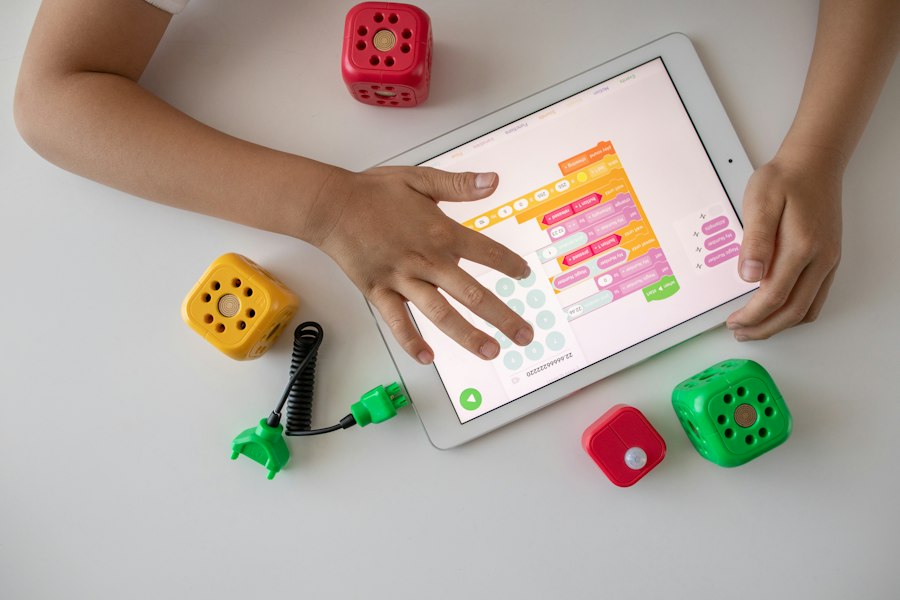
While IQ scores provide a snapshot of certain cognitive abilities, they do not capture the full spectrum of a child’s intelligence or potential. Intelligence is a multifaceted construct that encompasses a wide range of skills, talents, and aptitudes that are not always measured by traditional IQ tests. Focusing solely on an IQ score can lead to a narrow and potentially inaccurate understanding of a child’s capabilities.
Multifaceted Nature of Intelligence
Modern understanding of intelligence acknowledges its complexity and diversity. Howard Gardner’s theory of multiple intelligences, for instance, proposes that individuals possess different types of intelligence, such as linguistic, logical-mathematical, spatial, bodily-kinesthetic, musical, interpersonal, intrapersonal, and naturalistic intelligence. A child might not score exceptionally high on a traditional IQ test but could excel in areas like music, art, or social interaction, demonstrating significant intelligence in those domains.
Similarly, emotional intelligence, coined by Daniel Goleman, refers to a person’s ability to understand and manage their own emotions, as well as recognize and influence the emotions of others. High emotional intelligence is crucial for success in relationships, career, and overall well-being, and it is largely independent of scores on traditional IQ tests. Creativity, critical thinking, problem-solving in real-world contexts, and practical skills are all vital components of a well-rounded individual that IQ tests may not fully assess.
Factors Influencing Test Performance
Several factors can influence a child’s performance on an IQ test, independent of their underlying cognitive abilities. These can include:
- Test Anxiety: Many children experience anxiety when faced with formal assessments, which can hinder their ability to perform at their best. Fear of failure, pressure to perform, or even unfamiliarity with the testing environment can all contribute to test anxiety.
- Fatigue and Health: A child who is tired, unwell, or experiencing hunger is unlikely to perform optimally on any cognitive task, including an IQ test. Adequate rest, nutrition, and overall health are essential for accurate assessment.
- Cultural and Linguistic Background: IQ tests are often developed within specific cultural contexts and may contain items that are more familiar or accessible to children from those backgrounds. Children from different cultural or linguistic backgrounds may be at a disadvantage if the test is not culturally sensitive or if they are tested in a language that is not their first.
- Testing Environment and Examiner Rapport: The comfort level of the child in the testing environment and the rapport they have with the examiner can significantly impact their engagement and performance. A supportive and familiar setting can lead to more accurate results.
- Motivation and Effort: A child’s motivation to perform well and the effort they put into the test are also crucial. If a child is unmotivated or does not understand the purpose of the test, their scores may not reflect their true capabilities.
The Role of IQ Scores in Education and Development
IQ scores can serve as one piece of information among many when considering a child’s educational needs and developmental trajectory. They can be helpful in identifying children who might benefit from specific academic interventions, whether they are struggling or exceptionally gifted. However, it is essential to view these scores within a broader context of a child’s overall profile.
Identifying Learning Needs and Strengths
For children who are struggling academically, a low IQ score, particularly when combined with observed difficulties in learning, can indicate a need for specialized educational support. This might include remedial instruction, individualized education programs (IEPs), or placement in smaller, more supportive learning environments. Conversely, a high IQ score can signal that a child is capable of advanced learning and may benefit from enriched programs, accelerated learning opportunities, or gifted education services.
However, it is crucial to remember that a high IQ does not automatically translate to academic success. Factors like motivation, study habits, and executive functioning skills (such as organization and time management) play a significant role. Similarly, a child with an average IQ can achieve academic success through hard work, effective teaching, and appropriate support. The IQ score should be used as a starting point for deeper investigation, not as a definitive label.
Limitations and Ethical Considerations
It is paramount to acknowledge the limitations of IQ testing and to approach the interpretation of scores with caution and ethical awareness. IQ scores should never be used to pigeonhole a child, limit their opportunities, or create self-fulfilling prophecies. Overemphasis on IQ can lead to stereotyping and can overshadow a child’s other valuable qualities and potential contributions.
Professionals administering IQ tests have an ethical responsibility to interpret scores within the full context of a child’s life, considering their background, environmental factors, and other assessments of their abilities. Parents should be encouraged to seek comprehensive evaluations that go beyond a single score, focusing on a child’s holistic development, interests, and learning style. The goal of any assessment should be to support the child’s growth and well-being, not to simply categorize them.
Understanding how to interpret IQ scores in children is crucial for parents and educators alike. It can provide insights into a child’s cognitive abilities and potential learning challenges. For a deeper exploration of this topic, you may find the article on IQ score interpretation particularly helpful. It offers valuable information and practical advice for navigating the complexities of assessing children’s intelligence. To read more, visit this article for further insights.
Moving Beyond the Score: A Holistic Perspective
| IQ Score Range | Interpretation | Description |
|---|---|---|
| 130 and above | Very Superior | Exceptionally gifted; often considered highly intelligent |
| 120 – 129 | Superior | Above average intelligence; often excels academically |
| 110 – 119 | High Average | Above average cognitive abilities |
| 90 – 109 | Average | Typical intellectual functioning for age |
| 80 – 89 | Low Average | Below average but still within normal limits |
| 70 – 79 | Borderline | May indicate some learning difficulties |
| 69 and below | Extremely Low | Possible intellectual disability; may require special support |
Ultimately, understanding children’s IQ scores requires looking beyond the numerical value. These scores are tools, and like any tool, their effectiveness and interpretation depend on how they are used. A child’s potential is not defined by a single number; it is a dynamic and evolving entity shaped by a multitude of factors, including their environment, experiences, relationships, and personal drive.
The Importance of Context and Individual Differences
When discussing a child’s IQ score, it is crucial to emphasize the individual. Every child is unique, with their own set of strengths, challenges, learning styles, and aspirations. An IQ score, if it is even relevant, is just one facet of this complex picture. A child with a high IQ who lacks motivation or resilience may struggle more than a child with an average IQ who possesses strong study habits and a growth mindset.
Educators and parents should strive to understand the child as a whole person. This involves observing their engagement in learning, their social interactions, their problem-solving approaches in various situations, and their overall well-being. This holistic approach allows for the creation of supportive environments that nurture each child’s unique talents and address their individual needs effectively.
Fostering Potential: Nurturing Growth and Resilience
The most effective way to support a child’s development is to focus on nurturing their potential rather than solely on their IQ score. This involves providing a rich learning environment that encourages curiosity, critical thinking, and a love of learning. It means fostering resilience by teaching children how to cope with challenges, learn from mistakes, and persevere in the face of adversity.
Encouraging a growth mindset, where children believe their abilities can be developed through dedication and hard work, is far more impactful than fixating on an innate “intelligence level.” Providing opportunities for children to explore their interests, develop their talents, and build strong social-emotional skills will ultimately contribute more to their long-term success and happiness than any IQ score. The true measure of a child’s intelligence and potential lies not just in their cognitive abilities, but in their capacity to learn, adapt, grow, and contribute to the world around them.

The Famous IQ Study That Fooled the World
FAQs
What is an IQ score?
An IQ score is a measure of a person’s intelligence quotient, which is determined through standardized tests designed to assess cognitive abilities such as reasoning, problem-solving, and memory.
How is an IQ score interpreted for children?
IQ scores for children are typically interpreted based on a scale that compares their score to the average IQ score for their age group. A score of 100 is considered average, with scores above 100 indicating above-average intelligence and scores below 100 indicating below-average intelligence.
What factors can influence a child’s IQ score?
Various factors can influence a child’s IQ score, including genetics, environment, education, nutrition, and opportunities for cognitive stimulation. It’s important to consider these factors when interpreting an IQ score for a child.
Can an IQ score change over time for children?
While IQ scores are generally stable over time, they can be influenced by factors such as educational interventions, cognitive stimulation, and life experiences. It is possible for a child’s IQ score to change, especially during periods of significant cognitive development.
How should parents and educators use IQ scores to support children’s development?
IQ scores can provide valuable insights into a child’s cognitive strengths and weaknesses, which can help parents and educators tailor educational strategies and interventions to support the child’s development. It’s important to use IQ scores as one of many tools for understanding a child’s abilities and needs.