
The human experience, a complex tapestry woven with emotions, memories, and learned behaviors, often harbors hidden mechanisms that shape our reactions to the world around us. Among these, the fear response stands as a particularly potent and fundamental aspect of our psychology. It is a survival instinct, designed to protect us from danger, but its origins and the ways in which it can be modulated are not always obvious. This article delves into the profound and often underestimated power of classical conditioning in shaping and maintaining our fear responses. Through an exploration of its principles, historical context, and real-world manifestations, readers will gain a deeper understanding of how seemingly innocuous associations can blossom into deeply ingrained phobias and how this knowledge can be harnessed for therapeutic intervention.
Classical conditioning, a cornerstone of behavioral psychology, offers a powerful framework for understanding how organisms learn to associate stimuli and develop predictable responses. Its elegant simplicity belies its profound impact on a vast array of behaviors, none more so than the fear response. At its core, classical conditioning involves the pairing of a neutral stimulus with a stimulus that naturally elicits a response. Over time, the neutral stimulus comes to elicit a similar response on its own. This process, first rigorously investigated by Ivan Pavlov, provides a biological and psychological blueprint for how we acquire a significant portion of our emotional repertoire.
Pavlov’s Pivotal Experiments: The Salivating Dogs
The genesis of our understanding of classical conditioning lies with the pioneering work of Russian physiologist Ivan Pavlov. His observations of dogs, initially studying their digestive systems, led him to an unexpected but revolutionary discovery. Pavlov noticed that his canine subjects would begin to salivate not only when presented with food but also at the mere sight of the lab assistant who typically brought them their meals, or even at the sound of the assistant’s footsteps. This observation sparked a series of meticulously designed experiments.
The Unconditioned Stimulus (US) and Unconditioned Response (UR)
Pavlov identified key components within this learned association. The unconditioned stimulus (US) is something that naturally and automatically triggers a response without any prior learning. In the case of Pavlov’s dogs, the food was the US – it inherently caused them to salivate. The unconditioned response (UR) is the natural, unlearned reaction to the unconditioned stimulus. The salivation that occurred in response to the food was the UR. This connection between US and UR is innate, a biological reflex.
Introducing the Conditioned Stimulus (CS) and Conditioned Response (CR)
The crucial element in classical conditioning is the introduction of a conditioned stimulus (CS). This is a stimulus that is initially neutral and does not elicit the target response. Pavlov used a bell as his CS. He would ring the bell just before presenting the food to the dogs. This pairing was repeated numerous times. After sufficient pairings, the dogs began to associate the sound of the bell with the impending arrival of food. Consequently, the bell, once a neutral stimulus, became a conditioned stimulus. The conditioned response (CR) is the learned response to the conditioned stimulus. In Pavlov’s experiments, the dogs began to salivate at the sound of the bell alone, even in the absence of food. This learned salivation to the bell was the CR. The CR is often similar, though not always identical, to the UR.
The Acquisition Phase: Building the Association
The process by which the neutral stimulus becomes conditioned is known as the acquisition phase. During acquisition, the CS is repeatedly presented in close temporal proximity to the US. The strength of the conditioned response gradually increases as the association between the CS and US is reinforced. The effectiveness of this acquisition is influenced by several factors, including the contiguity (the closeness in time) and contingency (the predictability) of the CS and US. If the bell consistently signals the arrival of food, the association will be stronger than if the bell sometimes precedes food and sometimes does not.
Timing is Everything: Interstimulus Interval (ISI)
The interstimulus interval (ISI), the time between the presentation of the CS and the US, plays a critical role in the strength of conditioning. Generally, shorter ISIs lead to more rapid and robust conditioning. An ideal ISI allows the organism to process the CS before the US occurs, creating a clear association. Too long an interval can weaken the connection, as the organism might not perceive the CS as a reliable predictor of the US.
Predictability and Association Strength: Contingency
Beyond mere proximity, the contingency between the CS and US is paramount. Contingency refers to how reliably the CS predicts the US. If the CS always precedes the US, and the US never occurs without the CS, the contingency is high, and conditioning will be strong. Conversely, if the US sometimes occurs without the CS, or the CS appears on its own frequently without the US, the contingency is low, and conditioning will be weaker or may not occur at all.
Classical conditioning plays a significant role in the development of fear responses, as demonstrated in various psychological studies. A related article that delves deeper into this topic is available at Unplugged Psychology, where you can explore the mechanisms behind how fear can be conditioned and unconditioned. For more information, visit this article to gain insights into the fascinating world of classical conditioning and its impact on behavior.
Classical Conditioning in the Realm of Fear
The principles of classical conditioning extend far beyond salivation. They are particularly adept at explaining the development and maintenance of fear responses. Our innate capacity to fear is crucial for survival, but this fear can become maladaptive when it is triggered by stimuli that pose no actual threat. Classical conditioning provides a clear pathway through which such learned fears emerge.
The Case of Little Albert: A Landmark Study
One of the most infamous and ethically questionable studies illustrating classical conditioning and fear was conducted by John B. Watson and his assistant Rosalie Rayner in 1920 with a nine-month-old infant they called “Little Albert.” This experiment demonstrated how a fear response could be deliberately conditioned.
The Fearful Beginning: No Prior Aversion
Initially, Little Albert exhibited no fear of a white rat. He would play with it, and even try to reach for it. He also showed no fear of loud noises, which were common occurrences in his environment.
The Conditioning Process: Pairing Rat and Noise
Watson and Rayner began the conditioning process by presenting the white rat (the CS) to Albert. As Albert reached for the rat, they simultaneously struck a steel bar with a hammer behind his head, creating a loud, sudden noise (the US). This loud noise naturally elicited a fear response in Albert, characterized by crying and attempts to escape. This pairing of the rat and the loud noise was repeated several times.
The Resulting Phobia: Generalization of Fear
Following these conditioning sessions, the white rat alone was presented to Little Albert. To the researchers’ dismay and to the profound ethical concern of modern psychology, Albert now exhibited significant fear at the sight of the rat, crying and attempting to crawl away. This demonstrated that the rat, once a neutral stimulus, had become a conditioned stimulus for fear. Crucially, Albert’s fear also generalized to other objects that shared similar characteristics with the white rat, such as a rabbit, a dog, a fur coat, and even Watson’s hair. This generalization of fear is a common and significant aspect of many phobias.
Extinction: The Fading of Learned Fear
While classical conditioning can create fears, the process of extinction offers a potential pathway to their reduction and elimination. Extinction occurs when the conditioned stimulus is repeatedly presented without the unconditioned stimulus. In the context of fear, this means exposing the individual to the feared stimulus (CS) without the presence of the feared outcome or consequence (US).
The Bell Rings No More: Reducing the Conditioned Response
Returning to Pavlov’s dogs, if the bell (CS) were rung repeatedly without the presentation of food (US), the dogs would eventually cease to salivate at the sound of the bell. The conditioned response (salivation) would diminish and eventually disappear. Similarly, if an individual with a conditioned fear of dogs (CS) were repeatedly exposed to dogs (CS) in a safe and controlled environment without any negative experience (US), their conditioned fear response would likely decrease.
The Importance of Complete Absence of the US
It is crucial that during extinction, the US must be entirely absent. If even a single instance of the US occurs during the extinction trials, it can re-establish or strengthen the association, hindering the extinction process. This is why therapeutic interventions for phobias require careful planning and execution.
Spontaneous Recovery: The Ghost of Fears Past
Despite successful extinction, learned fear responses can sometimes reappear unexpectedly. This phenomenon is known as spontaneous recovery. After a period of rest following extinction, the conditioned stimulus may, on its own, elicit a weakened conditioned response. This suggests that extinction does not necessarily erase the learned association entirely but rather inhibits it. The memory of the association may remain dormant, ready to resurface under certain conditions.
A Glimmer of the Past: Re-emergence of Fear
For example, an individual who has undergone successful therapy for a spider phobia might encounter a spider in an unexpected situation after a period of no contact. They might experience a fleeting surge of the old fear response, even though they have not had a negative encounter with a spider for a long time. This spontaneous recovery highlights the persistent nature of learned associations and underscores the need for continued vigilance or occasional reinforcement of therapeutic gains.
Real-World Manifestations of Conditioned Fear

The principles of classical conditioning are not confined to laboratory settings; they are demonstrably at play in our everyday lives, shaping our reactions to a vast array of situations and stimuli. From everyday anxieties to debilitating phobias, conditioned fear plays a significant role in our emotional landscape.
Phobias: The Extreme End of Conditioned Fear
Phobias represent an extreme and often debilitating form of conditioned fear. They are characterized by an intense, irrational, and persistent fear of specific objects, situations, or activities. The development of many phobias can be directly traced back to a past traumatic or frightening experience that acted as the unconditioned stimulus, leading to the conditioning of fear onto a previously neutral stimulus.
Arachnophobia and the Unseen Bite
Consider arachnophobia, the fear of spiders. For many individuals, this phobia stems from a single, frightening encounter with a spider in childhood, perhaps a spider that crawled on them unexpectedly or one that their parent reacted to with extreme fear. The shock and terror of that moment (US) become associated with the sight of the spider (CS), leading to a conditioned fear response that can manifest as panic attacks, avoidance behaviors, and significant distress when confronted with even the most harmless of spiders.
Claustrophobia and the Trapped Sensation
Similarly, claustrophobia, the fear of enclosed spaces, can develop after an experience of being trapped, such as being stuck in an elevator or a small room for an extended period. The feeling of helplessness and suffocation (US) becomes linked with the enclosed space (CS), resulting in a conditioned fear response that can be triggered by even the thought of being in a confined area.
Post-Traumatic Stress Disorder (PTSD): The Echoes of Trauma
Post-traumatic stress disorder (PTSD) is a complex mental health condition that can arise after exposure to a terrifying event. Classical conditioning plays a crucial role in the development and maintenance of PTSD. The traumatic event itself acts as the unconditioned stimulus (US), eliciting intense fear and distress.
Triggers and Re-experiencing: The Constant Threat
Subsequently, a wide range of stimuli associated with the traumatic event – sights, sounds, smells, or even thoughts – can become conditioned stimuli (CS). These conditioned stimuli can trigger flashbacks, nightmares, and intense emotional and physiological reactions that mimic the original trauma, even when the individual is in a safe environment. For instance, a soldier who experienced combat may develop PTSD. The sound of fireworks (CS) might trigger a fear response similar to the original combat experience (US), leading to hypervigilance, anxiety, and avoidance of situations that involve loud noises.
Generalization in PTSD: A Broader Spectrum of Fear
Similar to the Little Albert study, the fear responses in PTSD can generalize to a broad range of stimuli that are not directly related to the original trauma but share some common characteristics. This can lead to individuals with PTSD being hypersensitive to their environment and experiencing fear in situations that objectively pose no threat.
Everyday Avoidance Behaviors: The Subtle Influence
Beyond overt phobias and PTSD, classical conditioning subtly influences our everyday avoidance behaviors. We learn to associate certain situations or objects with negative experiences, and this learning leads us to avoid them in the future.
The Bad Meal and the Restaurant
Imagine a person who has a very unpleasant experience with food poisoning after eating at a particular restaurant. The nausea and discomfort of food poisoning (US) become associated with the restaurant and perhaps even certain types of food (CS). Consequently, that individual may develop an aversion to that restaurant and those foods, choosing to avoid them in the future, even if they have no reason to believe the food quality has not improved. This learned aversion is a direct result of classical conditioning.
The Unpleasant Encounter and Social Settings
Similarly, a negative social encounter, such as being publicly embarrassed or rejected, can lead to a conditioned fear of similar social situations. The distress and humiliation (US) become associated with the social setting (CS), leading to social anxiety and avoidance.
Harnessing Classical Conditioning for Therapeutic Intervention

The understanding of classical conditioning has provided invaluable tools for the development of effective therapeutic interventions aimed at alleviating fear and anxiety. By leveraging the principles of extinction and counterconditioning, therapists can help individuals unlearn maladaptive fear responses and develop more adaptive ones.
Exposure Therapy: Facing the Fears
Exposure therapy is a cornerstone of treatment for phobias and anxiety disorders, directly applying the principle of extinction. In exposure therapy, individuals are gradually and systematically exposed to their feared stimuli (CS) in a safe and controlled environment. The goal is to help them learn that the feared stimulus no longer predicts the dreaded outcome (US).
Gradual Desensitization: A Step-by-Step Approach
Therapists often employ a hierarchical approach, starting with less intense exposures and gradually progressing to more challenging ones. For someone with a fear of heights, this might begin with looking at pictures of tall buildings, then progressing to standing on a low balcony, and eventually to ascending to higher floors. With each exposure, the individual’s anxiety is monitored, and they are encouraged to remain in the situation until their anxiety naturally subsides. This process allows for the extinction of the conditioned fear response.
In Vivo vs. Imaginal Exposure: Real vs. Imagined Encounters
Exposure can be conducted in vivo, meaning in real life, or imaginally, through vivid mental imagery. In vivo exposure is generally considered more effective when possible, as it involves direct confrontation with the feared stimulus. Imaginal exposure is often used when in vivo exposure is not feasible or as a preparatory step.
Counterconditioning: Replacing Fear with Calm
Counterconditioning is another powerful therapeutic technique that builds upon the principles of classical conditioning. Instead of simply extinguishing the fear response, counterconditioning aims to replace it with a new, incompatible response. This is achieved by pairing the conditioned stimulus (CS) with a stimulus that elicits a pleasant or relaxing response (US).
Pairing Relaxation with Phobic Stimuli: Creating New Associations
A common form of counterconditioning is systematic desensitization, which combines relaxation techniques with gradual exposure. An individual is first taught deep relaxation techniques. Then, while in a deeply relaxed state, they are exposed to their feared stimulus at a low level of intensity. The pairing of relaxation (US) with the feared stimulus (CS) gradually weakens the fear association and strengthens a new, positive association. For example, someone with a fear of public speaking might be guided through relaxation exercises while imagining themselves giving a speech.
Aversion Therapy: A More Controversial Application
While counterconditioning typically aims to create positive associations, a more controversial application is aversion therapy. In aversion therapy, an undesirable behavior or stimulus is paired with an unpleasant unconditioned stimulus (US) to create an aversion to it. For example, a therapist might pair the sight of cigarettes (CS) with a nauseating drug (US) in the hope of creating an aversion to smoking. However, due to ethical concerns and limited long-term effectiveness, aversion therapy is used sparingly today.
Virtual Reality Exposure Therapy (VRET): The Digital Frontier
In recent years, virtual reality exposure therapy (VRET) has emerged as a highly effective and innovative therapeutic tool. VRET utilizes immersive virtual reality environments to simulate feared situations. This allows for highly controlled and repeatable exposures to a wide range of stimuli, offering a safe and engaging way for individuals to confront their fears.
Immersive Environments for Safe Exploration
For individuals with PTSD, VRET can recreate combat scenarios or other traumatic environments in a controlled setting, allowing them to process their trauma without real-world danger. For those with acrophobia, VRET can simulate standing on a high bridge or looking down from a skyscraper, providing a powerful and realistic exposure experience. The ability to precisely control the parameters of the virtual environment makes VRET a powerful and adaptable therapeutic modality.
Classical conditioning plays a significant role in understanding fear responses, as illustrated in various psychological studies. For a deeper exploration of this concept, you can refer to an insightful article that discusses how conditioned stimuli can evoke fear reactions in individuals. This phenomenon is crucial in both therapeutic settings and understanding phobias. To learn more about this topic, visit the article on classical conditioning and fear responses.
The Enduring Influence of Classical Conditioning
| Metric | Description | Typical Values/Range | Measurement Method |
|---|---|---|---|
| Conditioned Stimulus (CS) | Neutral stimulus paired with an aversive unconditioned stimulus to elicit fear response | e.g., tone, light | Experimental design specification |
| Unconditioned Stimulus (US) | Aversive stimulus that naturally elicits fear (e.g., shock) | Intensity varies (e.g., 0.5-1.0 mA shock) | Stimulus delivery device calibration |
| Conditioned Response (CR) | Learned fear response to the CS after conditioning | Freezing behavior: 20-80% time freezing | Behavioral observation/scoring |
| Latency to CR | Time from CS onset to initiation of fear response | Typically 1-5 seconds | Video analysis/timing software |
| Extinction Rate | Rate at which CR decreases when CS is presented without US | Varies; often 50% reduction over 5-10 trials | Repeated CS presentations without US |
| Heart Rate Increase | Physiological measure of fear response | Increase of 10-30 bpm during CS | ECG or pulse monitoring |
| Skin Conductance Response (SCR) | Measure of autonomic arousal during fear conditioning | Amplitude increase of 0.05-0.5 microsiemens | Electrodermal activity sensors |
The exploration of classical conditioning and its role in shaping the fear response reveals a fundamental truth about human psychology: much of what we feel and how we react is learned. The elegant simplicity of Pavlovian conditioning, demonstrated through salivating dogs and a fearful infant, has opened a window into the intricate mechanisms that govern our emotional lives.
Beyond Fear: The Broad Reach of Conditioning
While this article has focused on fear, it is crucial to acknowledge that classical conditioning influences a far broader spectrum of human behavior and emotion. It plays a role in the development of preferences, aversions, attitudes, and even physiological responses like nausea and arousal. The advertising industry, for instance, heavily relies on classical conditioning principles, pairing products with attractive stimuli to create positive associations and encourage consumer behavior.
The Double-Edged Sword: Understanding and Intervention
Understanding classical conditioning is a double-edged sword. On one hand, it illuminates how we can inadvertently develop debilitating fears and anxieties. On the other hand, it provides us with the powerful tools to address and overcome them. The therapeutic interventions derived from these principles offer hope and tangible solutions for individuals struggling with fear-based disorders.
A Call for Continued Exploration
The study of classical conditioning continues to evolve, with ongoing research exploring its nuances and applications in various fields, from neuroscience to education. As we deepen our understanding of this fundamental learning process, we unlock new possibilities for improving mental health, fostering well-being, and navigating the complex landscape of human emotion with greater insight and effectiveness. The power of association, once a mysterious force, is now a well-understood mechanism that we can harness for the betterment of ourselves and others.
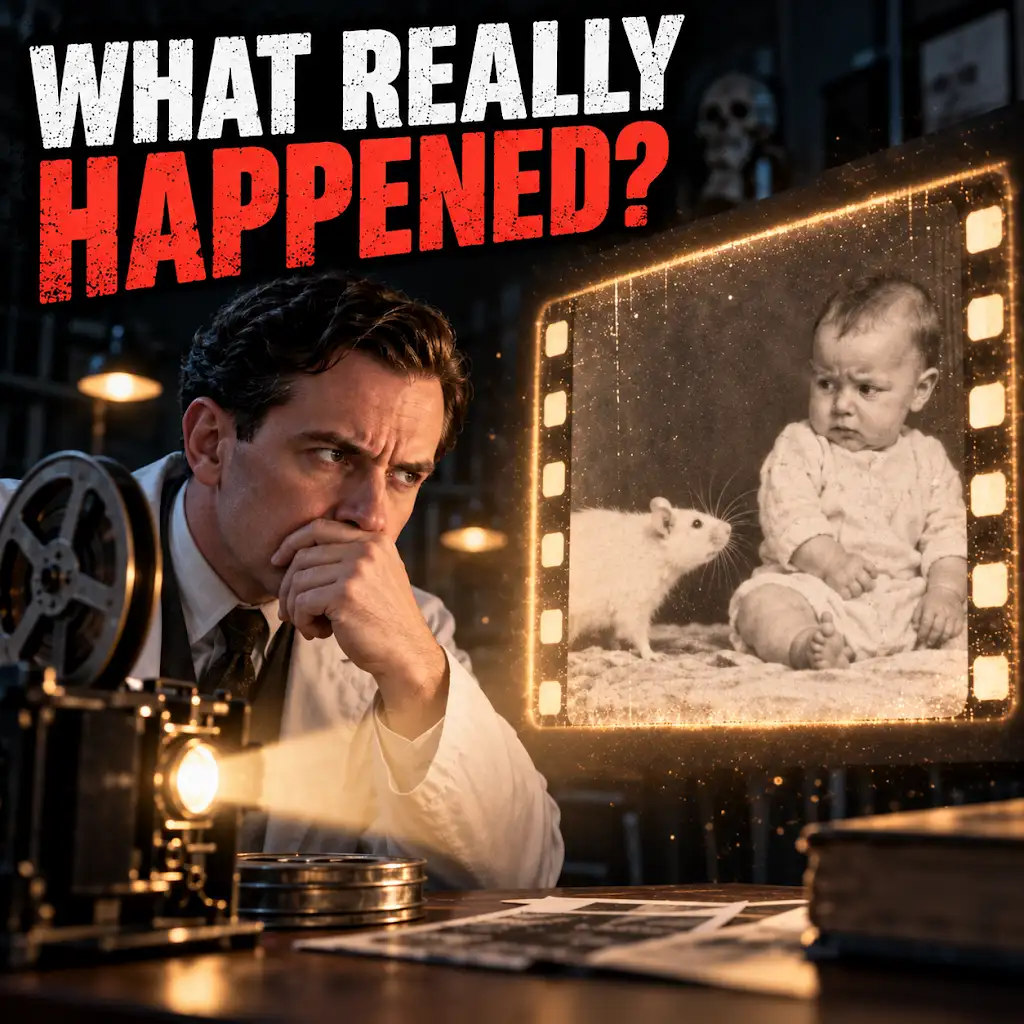
The Little Albert Experiment May Not Have Worked
FAQs
What is classical conditioning?
Classical conditioning is a type of learning in which a neutral stimulus becomes associated with a meaningful stimulus and acquires the capacity to elicit a similar response.
How does classical conditioning contribute to fear responses?
Classical conditioning plays a significant role in the development of fear responses by pairing a neutral stimulus with a negative or threatening stimulus, leading to the association of fear with the previously neutral stimulus.
What are some real-life examples of classical conditioning fear responses?
Examples of classical conditioning fear responses include associating a loud noise with a specific location, such as a thunderstorm with a particular room in a house, or associating a specific smell with a traumatic event.
Can classical conditioning fear responses be unlearned?
Yes, classical conditioning fear responses can be unlearned through a process known as extinction, where the conditioned stimulus is repeatedly presented without the unconditioned stimulus, leading to a decrease in the fear response.
How can classical conditioning fear responses impact behavior and mental health?
Classical conditioning fear responses can lead to the development of phobias, anxiety disorders, and other mental health issues if not addressed. These responses can also influence behavior, causing individuals to avoid certain situations or stimuli associated with fear.