The Little Albert experiment, a cornerstone of early behavioral psychology, has captivated and repulsed for decades. Conducted by John B. Watson and his graduate student Rosalie Rayner in 1920, the study aimed to demonstrate that fear could be conditioned in humans. While it undeniably provided significant insights into the principles of classical conditioning, the experiment is now widely viewed through a lens of ethical concern and scientific scrutiny. This article delves into the controversy surrounding the Little Albert experiment, exploring its methods, ethical implications, and the enduring questions it raises about psychological research.
John B. Watson, a fervent proponent of behaviorism, sought to establish psychology as an objective science, grounded in observable behavior rather than subjective introspection. He believed that all human behavior, including emotions, could be understood as learned responses to environmental stimuli. The Little Albert experiment was designed to be a definitive demonstration of this principle, specifically targeting the complex emotion of fear. At the time, Watson was looking for a way to challenge prevailing psychoanalytic theories, which emphasized unconscious drives and early childhood experiences in shaping personality. He proposed that fear, rather than being an innate response, could be deliberately instilled and manipulated.
The Core Tenets of Behaviorism and Classical Conditioning
Behaviorism, as championed by Watson, posits that the mind is a “black box” and that scientific inquiry should focus solely on what can be directly observed and measured – namely, behavior. Watson was heavily influenced by the work of Ivan Pavlov and his experiments with dogs, which demonstrated how a neutral stimulus could become associated with an unconditioned stimulus to elicit a conditioned response. Pavlov’s discovery of classical conditioning, where learning occurs through association, became the theoretical bedrock for Watson’s ambitions. He believed that applying these principles to humans would unlock the secrets of how phobias and other learned behaviors develop.
The Search for an Ideal Subject
Watson and Rayner sought an infant who was deemed to be emotionally stable and unafraid of novel stimuli. They identified an infant, whom they nicknamed “Albert B.,” who was reportedly an orphan from the same hospital where the experiments took place. Albert was approximately nine months old at the commencement of the study. The researchers observed Albert’s baseline reactions to a variety of stimuli, including a white rat, a rabbit, a dog, masks, and burning newspapers. According to their reports, Albert showed no fear responses to these objects initially. This observation was crucial for their hypothesis: if Albert was fearless, then any subsequent fear response could be directly attributed to the conditioning process they were about to implement.
The Little Albert experiment, conducted by John B. Watson and Rosalie Rayner in the early 20th century, has sparked significant controversy regarding ethical standards in psychological research. Critics argue that the experiment’s methods and the lack of informed consent raise serious moral questions. For a deeper exploration of the ethical implications surrounding the Little Albert experiment and its impact on modern psychology, you can read a related article at Unplugged Psych.
The Experimental Procedure: Conditioning Fear in a Nine-Month-Old
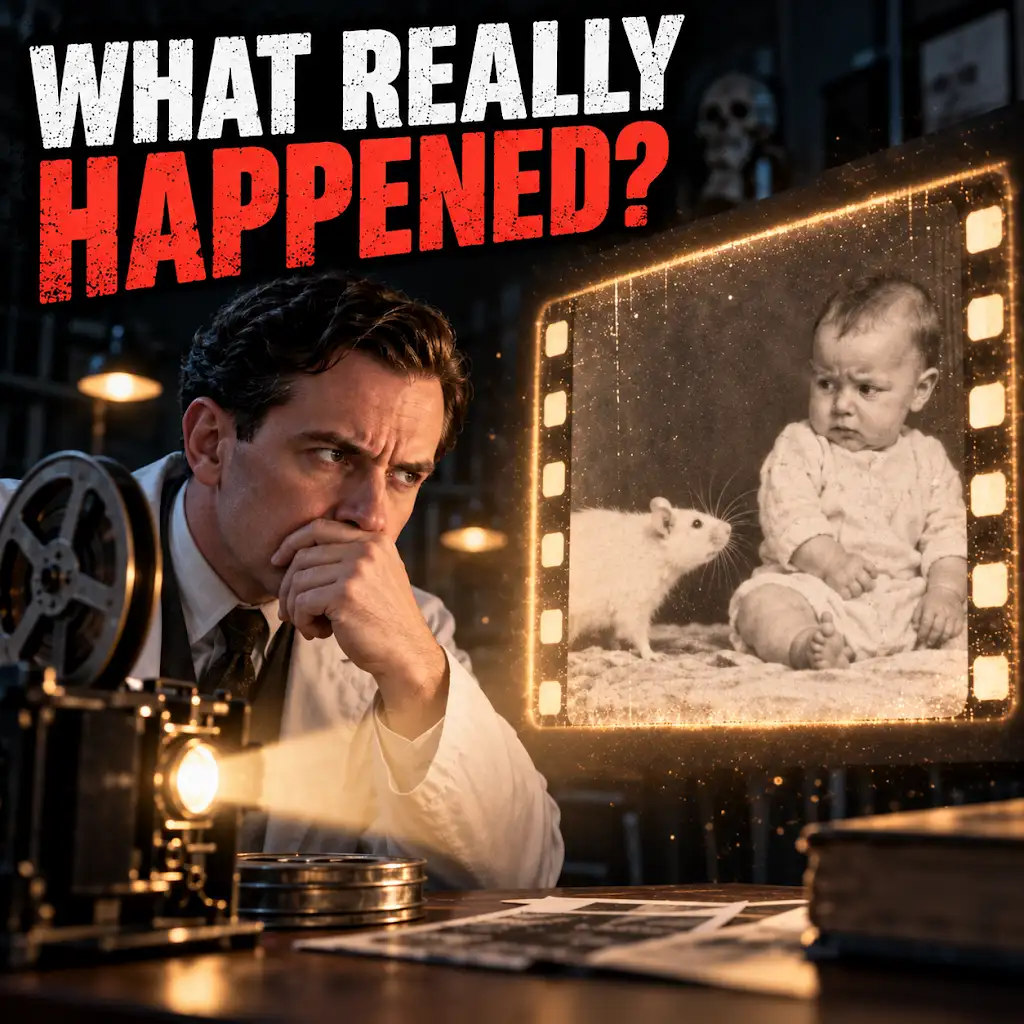
The Little Albert experiment is notorious for its methodology, which involved deliberately inducing fear in an infant. The researchers presented Albert with a white rat, a neutral stimulus that he initially showed no fear of. They then paired the presentation of the rat with a loud, startling noise – the striking of a steel bar with a hammer behind Albert’s head. This unconditioned stimulus (the loud noise) naturally evoked a fear response (crying, thrashing) in Albert. After several pairings of the rat and the noise, Albert began to exhibit fear at the mere sight of the rat, even when the noise was absent. This demonstrated that the white rat, once a neutral stimulus, had become a conditioned stimulus, eliciting a conditioned fear response.
The Unconditioned Stimulus and Response
The unconditioned stimulus (UCS) in the Little Albert experiment was the loud, sudden noise produced by striking a steel bar. This noise was inherently frightening and capable of eliciting a fear response in most infants, irrespective of prior learning. The unconditioned response (UCR) was Albert’s natural reaction to this loud noise: crying, recoiling, and other signs of distress. The researchers ensured that this UCS consistently produced a strong UCR, establishing the foundation for their conditioning paradigm. The effectiveness of the UCS in eliciting a strong UCR was a critical component for the successful establishment of a conditioned response.
The Neutral Stimulus and its Transformation
The white rat served as the neutral stimulus (NS) in the early stages of the experiment. Albert showed no initial fear or distress when presented with the rat. However, through repeated associations with the UCS (the loud noise), the NS began to elicit a fear response. This transformation from a neutral stimulus to a conditioned stimulus (CS) is the essence of classical conditioning. The researchers meticulously documented Albert’s reactions to the rat, noting how his initial curiosity and playfulness quickly gave way to apprehension and eventually outright fear as the conditioning progressed.
Generalization of Fear: Beyond the Rat
Following the successful conditioning of fear towards the white rat, Watson and Rayner proceeded to test for stimulus generalization. They presented Albert with other furry objects and white, fluffy stimuli, including a rabbit, a dog, a sealskin coat, and even a Santa Claus mask with white fur. To their apparent satisfaction, Albert exhibited fear responses to these similar stimuli, suggesting that his conditioned fear had generalized beyond the original white rat. This finding was significant as it implied that the learned fear was not specific to the exact object but extended to anything sharing similar characteristics, a phenomenon of considerable interest in understanding the development of phobias.
Ethical Lapses: The Unanswered Questions of Consent and Harm
The Little Albert experiment is one of the most frequently cited examples of unethical research in psychology. The most glaring ethical violation was the absence of informed consent. As Albert was an infant, his parents or guardians were not consulted about the experiment or given the opportunity to refuse participation. The researchers assumed responsibility for Albert’s care and education, which they used as justification for their experimental interventions. Furthermore, the experiment caused demonstrable distress and potential long-term psychological harm to the child, who was subjected to fear conditioning without any attempt to decondition the fear.
The Absence of Informed Consent
In contemporary research ethics, informed consent is a non-negotiable prerequisite. Participants must be fully informed about the nature of the study, potential risks and benefits, and their right to withdraw at any time. Little Albert, being an infant, could not provide consent. The researchers’ custodianship over him did not grant them the ethical prerogative to subject him to potentially harmful procedures. This lack of consent remains a central tenet of the ethical critique of the experiment, highlighting a stark contrast with modern research standards and the emphasis on participant autonomy.
The Deliberate Induction of Distress and Potential Harm
The very purpose of the experiment was to induce fear, a negative emotional state. Watson and Rayner intentionally created situations designed to frighten Albert, leading to crying, screaming, and physical distress. There is no evidence in the published reports that they took any steps to alleviate Albert’s fear or to reverse the conditioning. This deliberate infliction of psychological suffering, without any mitigating measures or consideration for the long-term well-being of the child, is a profound ethical breach. The potential for lasting phobias and anxiety disorders in Albert due to this conditioning remains a deeply troubling aspect of the study.
The Mystery of Deconditioning: A Missed Ethical Obligation
A significant ethical failing of the Little Albert experiment is the lack of any follow-up or attempt at deconditioning. After the experiments concluded, Albert was reportedly removed from the hospital by his mother, and his whereabouts became unknown. This means that the researchers left Albert with a conditioned fear response that could have negatively impacted his life. Ideally, ethical research involving the induction of negative emotional states should include a plan for reversal or deconditioning. The failure to do so in this case represents a significant abandonment of responsibility towards the participant.
Scrutiny and Re-evaluation: Questioning the Methodology and Findings

Over the years, the Little Albert experiment has faced increasing scientific scrutiny. Researchers have questioned the validity of the original findings, the reliability of Watson and Rayner’s observations, and the ethical permissibility of the study. Doubts have been raised about whether Albert was truly fearless at the outset, the extent of his fear responses, and the genuine nature of the stimulus generalization. The very identity of Little Albert and the circumstances of his life before and after the experiment remain subjects of ongoing investigation.
The Identity of Little Albert: A Historical Pursuit
For decades, the true identity of “Little Albert” remained a mystery, fueling further debate and ethical concern. In 2009, researchers identified a likely candidate: Albert Barger, who was a child in the Harriet Lane Home for Invalid Children at Johns Hopkins Hospital. Subsequent research has further solidified this identification, suggesting that Albert Barger was indeed the subject of Watson’s experiments. However, the available documentation about his life, including his developmental history and circumstances, has been pieced together from various sources, and some aspects remain unclear, contributing to the ongoing debate about the validity and context of the experiment.
The Reliability of Watson and Rayner’s Accounts
Critics have pointed to inconsistencies and potential biases in Watson and Rayner’s published accounts of the experiment. The subjective nature of observing and interpreting an infant’s emotional responses, combined with the researchers’ strong theoretical agenda, raises questions about the objectivity of their findings. Some historians of psychology suggest that Watson and Rayner may have exaggerated Albert’s fear responses to support their hypothesis. The lack of independent verification and the passage of time make it difficult to definitively assess the accuracy of their observations and conclusions.
The Rigor of Stimulus Generalization Claims
The claims of extensive stimulus generalization have also been challenged. While Albert did show fear to some similar stimuli, the strength and consistency of these responses have been debated. Critics argue that Albert’s reactions might have been more complex than a simple conditioned fear, possibly including responses to the novelty of the objects or other contextual factors. The limited number of trials and the subjective interpretation of Albert’s behavior leave room for doubt regarding the robustness of the generalization findings.
The Little Albert experiment has long been a topic of debate within the field of psychology, particularly regarding the ethical implications of conditioning fear in a young child. This controversial study, conducted by John B. Watson and Rosalie Rayner in the early 20th century, raises important questions about the responsibilities of researchers towards their subjects. For those interested in exploring this topic further, a related article can provide additional insights into the ethical considerations surrounding psychological experiments. You can read more about it in this detailed analysis.
The Enduring Legacy: Lessons for Modern Psychological Research
| Aspect | Details |
|---|---|
| Experiment Name | Little Albert Experiment |
| Researcher | John B. Watson and Rosalie Rayner |
| Year Conducted | 1920 |
| Subject | Infant known as “Little Albert” |
| Purpose | To demonstrate classical conditioning of fear |
| Controversy | Ethical concerns regarding informed consent, psychological harm, and lack of follow-up care |
| Ethical Issues | Inducing fear in a child without parental consent or deconditioning |
| Subject’s Identity | Uncertain; multiple theories but no definitive confirmation |
| Long-term Impact | Raised awareness about ethics in psychological research |
| Modern Ethical Standards Violated | Informed consent, beneficence, and right to withdraw |
Despite its ethical shortcomings and methodological criticisms, the Little Albert experiment has left an indelible mark on psychology. It undeniably contributed to the understanding of classical conditioning and its potential role in shaping human behavior, including the development of phobias. However, the controversy surrounding the experiment serves as a critical lesson for contemporary researchers, underscoring the paramount importance of ethical considerations in all scientific endeavors. The study stands as a stark reminder of the need for rigorous ethical guidelines, informed consent, and a commitment to the well-being of research participants.
The Importance of Classical Conditioning in Understanding Behavior
The Little Albert experiment, for all its flaws, was instrumental in popularizing and solidifying the principles of classical conditioning within the field of psychology. It demonstrated in a visceral way how learned associations could create powerful emotional responses. This understanding has been crucial in developing therapeutic interventions for phobias, anxiety disorders, and other behavioral issues. Techniques like systematic desensitization, which are used to treat phobias, are directly rooted in the principles of counter-conditioning, a concept that emerged from the study of classical conditioning.
The Evolution of Ethical Guidelines in Psychological Research
The controversy surrounding the Little Albert experiment, along with other ethically questionable studies of the past, played a significant role in the development of modern ethical codes for psychological research. The establishment of Institutional Review Boards (IRBs), the emphasis on informed consent, the principle of beneficence (maximizing benefits while minimizing harm), and the right to withdraw are all direct responses to the ethical failures of earlier research. The Little Albert experiment serves as a perpetual cautionary tale, reminding researchers of their profound responsibility to protect the welfare of their participants.
The Ongoing Debate: Balancing Scientific Inquiry with Ethical Responsibility
The Little Albert experiment continues to spark debate about the delicate balance between the pursuit of scientific knowledge and the ethical treatment of research subjects. While it is easy to condemn the experiment from a modern perspective, it is also important to consider the historical context in which it was conducted. However, historical context does not excuse the ethical breaches. The enduring legacy of Little Albert lies in its ability to provoke critical thinking about what constitutes acceptable research practice and the constant need for vigilance in upholding ethical standards in the ever-evolving landscape of psychological inquiry.
The Little Albert Experiment May Not Have Worked
FAQs
What was the Little Albert experiment?
The Little Albert experiment was a controversial psychology experiment conducted by John B. Watson and Rosalie Rayner in 1920. It involved conditioning a young boy, known as “Little Albert,” to fear a white rat by pairing its presentation with a loud, startling noise.
Why is the Little Albert experiment controversial?
The Little Albert experiment is controversial due to ethical concerns surrounding the treatment of the child subject. Critics argue that the experiment caused psychological harm to Little Albert by inducing fear and anxiety without his consent or understanding.
What were the long-term effects of the Little Albert experiment?
The long-term effects of the Little Albert experiment on the child subject are not well-documented. Little Albert’s real identity was never definitively confirmed, making it difficult to assess the lasting impact of the experiment on his psychological well-being.
What ethical considerations were violated in the Little Albert experiment?
The Little Albert experiment violated several ethical considerations, including informed consent, protection from harm, and debriefing. Little Albert’s parents were not fully informed of the nature of the experiment, and the child was subjected to distressing stimuli without proper safeguards.
What is the legacy of the Little Albert experiment in the field of psychology?
The Little Albert experiment has had a lasting impact on the field of psychology, sparking debates about research ethics and the treatment of human subjects. It has influenced the development of ethical guidelines for conducting psychological research and raised awareness about the importance of protecting participants from harm.