The recent unveiling of a novel UFO film brightness panel has ignited a firestorm of criticism within the cinematography and visual effects communities. While proponents hailed the innovation as a potential game-changer for capturing and simulating unexplained aerial phenomena with unprecedented realism, a significant segment of the industry has voiced strong reservations regarding its practical application and, more crucially, its impact on the perceived visual quality of UFO footage. The panel, designed to precisely replicate the luminance and spectral characteristics of observed anomalous lights, has inadvertently exposed a deep-seated tension between technical accuracy and aesthetic fidelity, leaving many questioning whether this pursuit of hyper-realism is, in fact, detrimental to the very illusion it aims to enhance.
The Promise and the Peril of Precise Luminance
The core concept behind the UFO film brightness panel is rooted in a desire to move beyond the often-crude representations of UFOs that have populated cinema and television for decades. Historically, filmmakers have resorted to simplistic lighting effects, often characterized by overly bright, uniform discs or streaks of light. This new panel, however, purports to offer a sophisticated tool for replicating the complex and often counter-intuitive ways in which these alleged craft emit or reflect light. Its creators claim it can dynamically adjust to mimic the observed behaviors of UFOs, such as sudden bursts of intensity, subtle shifts in color temperature, and the uncanny ability to illuminate their surroundings in ways that defy conventional understanding of light sources.
Decoding Anomalous Illumination
At the heart of the panel’s design lies an intricate array of micro-LEDs and sophisticated algorithms that, in theory, can reproduce a vast spectrum of luminous phenomena. Researchers involved in the project have spoken at length about the meticulous study of eyewitness accounts, photographic evidence, and even leaked military documents to inform the panel’s capabilities. They point to instances where UFOs have been described as emitting a light that is both incredibly bright and yet strangely “soft,” or where the light appears to emanate from a diffuse area rather than a distinct point. The panel aims to translate these subjective descriptions into quantifiable parameters, allowing for a level of control over light emission that was previously unattainable. This includes the ability to simulate the characteristic “halo” effect sometimes reported around UFOs, as well as the peculiar phenomenon of objects appearing to cast shadows even when their light source appears to be non-existent. The underlying technology involves a complex interplay of color grading, diffusion techniques, and dynamic range control, all managed by a specialized software suite. Early demonstrations, while often presented in controlled environments, showcased the panel’s potential to create startlingly convincing light artifacts.
The Spectrography of the Unexplained
A significant aspect of the panel’s development has been its focus on spectrography. Proponents argue that traditional UFO depictions often fail to capture the subtle, yet distinct, color profiles associated with anomalous aerial phenomena. Eyewitnesses frequently report colors beyond the standard red, green, and blue, often describing vibrant purples, ethereal cyans, and even colors that seem to shift and blend seamlessly. The UFO film brightness panel is engineered to reproduce these nuanced spectral signatures with remarkable accuracy. It’s not simply about making a light brighter; it’s about making it appear correct according to the very specific, and often bizarre, color palettes reported in genuine encounters. This involves not just the dominant color but also the subtle overtones and the way these colors interact with atmospheric conditions and surrounding objects. The panel’s engineers have reportedly spent years analyzing the spectral data from purported UFO sightings, attempting to correlate visual descriptions with actual light wavelengths. The goal is to move away from the simplistic notion of a “glowing orb” and towards a more sophisticated representation that acknowledges the full range of reported visual phenomena. This includes the possibility of multiple light sources on a single craft, each with its own unique spectral fingerprint, and the dynamic interplay between these sources.
In recent discussions surrounding the criticism of the UFO film brightness panel, an insightful article delves into the implications of visual manipulation in extraterrestrial footage. This article highlights how brightness adjustments can significantly alter viewer perception and interpretation of the evidence presented. For a deeper understanding of this topic, you can read more in the related article found here: UFO Film Brightness Panel Criticism.
Criticism Mounts: The Visual Quality Dilemma
Despite the technological sophistication, the initial reactions from seasoned professionals have been far from universally positive. A significant portion of the visual effects and cinematography community has raised concerns that the panel, in its pursuit of replicating reported UFO characteristics, may be sacrificing essential elements of cinematic storytelling and visual appeal. The very “unnaturalness” that some witnesses describe, when translated directly into a visual medium, can appear jarring, artificial, or simply unconvincing to an audience accustomed to more conventionally beautiful or dramatic lighting.
The Uncanny Valley of Light
One of the most frequently cited criticisms revolves around the concept of the “uncanny valley” applied to lighting. Just as robots that are almost, but not quite, human can evoke discomfort, lights that are almost, but not quite, realistic can appear unsettling in a way that breaks immersion. When a UFO depicted using this panel exhibits luminance or spectral characteristics that are too precise in their replication of anomalous descriptions, it can inadvertently highlight the artificiality of the effect. Instead of appearing as a mysterious and awe-inspiring phenomenon, the object might strike viewers as a poorly rendered CGI element. This is particularly true when the panel’s output is contrasted with established cinematic lighting conventions, which often prioritize mood, drama, and aesthetic coherence over strict adherence to reported observational data. The panel’s ability to perfectly simulate a light that is described as “painfully bright yet without glare” might, in practice, result in a visual that simply looks blown out and uninteresting on screen, failing to convey the intended sense of wonder or unease.
The Art of Illusion vs. the Science of Replication
A fundamental debate has emerged regarding the role of art versus science in visual effects. Critics argue that filmmakers and VFX artists have historically employed creative license to enhance the impact of a scene. A director might choose to soften the light of a UFO or imbue it with a particular hue not because it’s how it was reported, but because it serves the narrative and emotional arc of the story better. The UFO film brightness panel, by prioritizing the replication of raw observational data, risks divorcing the visual representation from its storytelling context. This, they contend, is a disservice to the art of filmmaking, which relies on crafting persuasive illusions, not on literal transcriptions of potentially subjective or unreliable eyewitness accounts. The panel’s supporters might counter that this is precisely its strength – moving beyond subjective interpretation to objective replication. However, the counterargument remains that the “objective” data itself might be the very reason why UFOs are so difficult to depict effectively on screen. The panel, in essence, is attempting to make the visually problematic visually precise, which doesn’t necessarily equate to visually compelling.
Beyond the Bloom: The Subtlety of Cinematic Lighting
Cinematographers are trained to understand the nuanced interplay of light and shadow, how light falls on surfaces, and how it creates mood and depth. The UFO film brightness panel, with its emphasis on the light source itself, may overlook these crucial elements. While the panel can precisely control the emission of light from the “UFO,” the way that light interacts with the surrounding environment – the subtle falloff, the way it illuminates clouds, the shadows it casts (or doesn’t cast, as some reports suggest) – is often where the believability of a visual effect truly lies. Critics worry that the panel’s focus on the intrinsic properties of the light source could lead to flat, unconvincing scenes where the UFO appears superimposed rather than integrated into the environment. The panel might excel at creating a dazzling, high-luminance point, but its ability to render that light as a contributing factor to the overall scene’s dimensionality and atmosphere is still very much in question. For instance, a well-placed atmospheric light source can define the texture of a character’s face or the grit of a desolate landscape. If the UFO light, however accurately simulated in terms of its emission, fails to do this effectively, the entire shot can feel artificial.
Technical Specifications and Practical Challenges
The intricate technical underpinnings of the UFO film brightness panel, while impressive on paper, also present significant practical hurdles for adoption and implementation within the demanding workflows of film and television production. The complexity of the system, coupled with its specialized nature, raises questions about its accessibility, integration with existing equipment, and the learning curve required for its effective utilization.
Interfacing with Existing Pipelines
One of the primary concerns raised by industry professionals is the ease with which the UFO film brightness panel can be integrated into established production pipelines. Modern filmmaking relies on a sophisticated ecosystem of cameras, lighting rigs, post-production software, and rendering farms. A new piece of technology, especially one as specialized as this panel, needs to seamlessly interface with these existing systems. Questions abound regarding its compatibility with various camera formats, its ability to output data that can be easily processed by standard VFX software, and whether it requires entirely new workflows to be developed. The idea of using a bespoke hardware solution for what is fundamentally a lighting and compositing task raises red flags for those accustomed to more flexible and software-driven approaches. The panel’s proprietary nature might also create vendor lock-in, making it difficult for studios to use alternative tools or services if needed. Furthermore, the real-time feedback loop for directors and cinematographers is crucial during shooting. If the panel requires extensive offline processing or calibration, it can significantly slow down production schedules.
The Learning Curve and the “One-Trick Pony” Fear
The sophisticated nature of the panel, while a strength in terms of its potential capabilities, also presents a daunting learning curve for many. Cinematographers and VFX artists are already highly skilled individuals with years of experience mastering complex tools and techniques. Introducing a system that requires a deep understanding of spectrography, advanced lighting physics, and specialized software can be a significant barrier to adoption. There is a palpable fear that the panel might become a “one-trick pony” – exceptionally good at replicating specific UFO light characteristics but otherwise impractical for general filmmaking. If the panel’s primary benefit is limited to a niche genre or specific type of effect, the investment in training and hardware may not be justifiable for many productions. This is especially true in the independent film sector, where budgets are often tighter and specialized equipment is less common. The emphasis on a niche application also raises questions about its long-term viability and the availability of ongoing support and updates.
Durability and Field Application
Beyond the studio environment, there’s a question of the panel’s durability and practicality for on-location shooting, particularly in scenarios where UFOs are often depicted – remote, potentially harsh environments. While the panel might perform exceptionally well in a controlled studio setting, its ability to withstand varied weather conditions, transportation, and the rigors of on-set use remains to be seen. Furthermore, the power requirements and portability of such a sophisticated device could also pose logistical challenges. For productions that rely heavily on spontaneous or guerilla filmmaking, the bulk and power demands of the panel might render it unusable. The very nature of UFO sightings often implies a degree of unexpectedness, and a complex lighting setup that requires significant preparation might be ill-suited to capturing such moments authentically. The potential for delicate components to be damaged in the field could also lead to costly repairs or production delays.
The Aesthetic Debate: When Realism Undermines Impact
The core of the criticism lies not in the panel’s technical prowess but in its potential to undermine the very aesthetic impact that visual effects aim to achieve. While proponents champion the panel’s ability to replicate what is “real,” critics argue that cinema, at its best, is about creating heightened realities and evocative imagery that resonate emotionally with the audience. This can lead to a disconnect between the intended effect and the actual viewer experience.
The Blinding Light and the Loss of Mystery
One of the most common criticisms is that the panel’s capacity for generating extremely high luminance, while perhaps accurate to some anecdotal reports, can result in visuals that are simply too bright to be aesthetically pleasing or informative. In cinematic terms, an overly bright light can “blow out” the image, obscuring detail and rendering the subject indistinct. This is particularly problematic for UFOs, where the mystery and ambiguity of their appearance are often key to their allure. If a UFO is depicted with a light so intense that it washes out the surrounding scene, the audience is left with little to engage with beyond the bright spot itself. The panel’s ability to precisely replicate an intensely bright, non-glaring light source, while technically impressive, might translate on screen into a visual that simply lacks depth and character. The very intensity that makes it “real” can make it visually sterile.
The Spectrography Paradox: Beautifully Wrong vs. Unsettlingly Right
The panel’s advanced spectrographic capabilities, while designed to capture the purported nuances of UFO colors, have also drawn fire. Critics argue that some of the reported UFO color palettes are inherently jarring or unnatural. When these colors are rendered with perfect fidelity using the panel, they can evoke a sense of unease or artificiality rather than awe or wonder. While a filmmaker might intentionally use a specific color to evoke a particular emotion or mood, the panel’s approach is to replicate what is observed, regardless of its inherent aesthetic appeal. This can lead to situations where a UFO appears with a color that is technically “correct” according to the panel’s data but visually unappealing or even off-putting to the audience. The paradox is that a more “scientifically accurate” representation might be less aesthetically satisfying than a deliberately stylized one. The human eye is accustomed to certain color harmonies, and deviating too far from these without a clear artistic purpose can be jarring.
The “Is It Real or Is It VFX?” Conundrum
Ultimately, the debate hinges on the perceived authenticity of the final image. While the panel is intended to blur the lines between reality and visual effects, critics worry it might have the opposite effect, inadvertently highlighting the artificiality of the production. If a UFO depicted with the panel looks too perfect, too precise in its anomalous characteristics, it can lead viewers to question its veracity more readily. The very effort to make it indistinguishable from reality might, paradoxically, make it stand out as a technological feat. The goal of visual effects is often to suspend disbelief, and if the audience is consciously aware of the advanced technology used to create an effect, that suspension can be broken. The panel, in its quest for perfect replication, risks creating visuals that feel more like a demonstration of technical capability than a convincing element within a narrative. The question arises: is the viewer marveling at the mystery of the UFO, or at the impressive engineering of the panel?
Recent discussions surrounding the brightness panel criticism in UFO films have sparked interest in how visual elements can influence audience perception. For a deeper understanding of this topic, you might find it insightful to explore a related article that delves into the psychological effects of film techniques on viewers. This article can be accessed through this link, where you can discover more about the intersection of psychology and cinematic experiences.
The Path Forward: Balancing Innovation and Artistry
| Metric | Description | Value | Source/Notes |
|---|---|---|---|
| Brightness Level | Measured luminance of the UFO film panel in nits | 350 nits | Standard brightness for outdoor visibility |
| Contrast Ratio | Ratio of luminance between brightest white and darkest black | 1200:1 | Moderate contrast for film display |
| Color Accuracy | Delta E value indicating color fidelity | 4.5 | Above ideal threshold (below 3 preferred) |
| Panel Uniformity | Percentage variation in brightness across the panel | 15% | Criticism due to uneven brightness distribution |
| Viewing Angle | Maximum angle before brightness drops below 50% | 45 degrees | Limited viewing angle criticized in reviews |
| Response Time | Time taken for pixel to change state (ms) | 25 ms | Slower response causing motion blur in UFO film scenes |
| Criticism Summary | Common issues raised by reviewers | Low uniformity, limited viewing angle, color inaccuracies | Based on multiple panel reviews |
The controversy surrounding the UFO film brightness panel highlights a fundamental tension in visual effects: the ongoing dialogue between technological advancement and artistic vision. While innovation is crucial for pushing the boundaries of what is possible, it must also be tempered with a deep understanding of how these advancements serve the narrative and aesthetic goals of filmmaking. The future of depicting anomalous aerial phenomena, and indeed much of visual effects work, will likely involve finding a delicate balance between the scientific pursuit of accuracy and the artistic imperative to evoke emotion, create wonder, and tell compelling stories.
Collaboration as the Key to Integration
Moving forward, the most productive approach appears to be one of open collaboration and dialogue between the creators of such innovative technologies and the seasoned professionals who will ultimately employ them. The developers of the UFO film brightness panel need to actively engage with cinematographers, VFX supervisors, and directors to understand their practical concerns and artistic requirements. This collaborative process can lead to refinements in the panel’s design, making it more adaptable to diverse production needs and less of a niche, single-purpose tool. Perhaps future iterations could incorporate more intuitive controls, offer a wider range of aesthetic presets, or be designed with greater modularity for easier integration into existing workflows. The focus should shift from simply replicating observed phenomena to providing artists with powerful tools that enable them to translate those phenomena into compelling cinematic experiences. This might involve developing modes that offer both precise replication and more stylized, artist-driven interpretations.
Redefining “Realism” in a Cinematic Context
The debate also necessitates a re-examination of what “realism” truly means in the context of cinema. While scientific accuracy is valuable, it is not always synonymous with cinematic believability. The panel’s developers and users must grapple with the fact that audience perception is shaped by years of visual storytelling conventions. What might be scientifically accurate could, in a film, appear jarring or unconvincing if it deviates too drastically from established visual language. The goal should not be to simply replicate what is observed, but to create visuals that feel authentic within the world of the film. This might involve selectively employing the panel’s capabilities, using its advanced features to inform the overall look of the UFO, but then allowing for artistic adjustments to ensure that the effect integrates seamlessly and effectively into the narrative. The pursuit of realism should not come at the expense of a cohesive and immersive visual experience. It’s about finding the “truth” of the scene, not just the empirical truth of the light source.
The Evolving Landscape of Visual Storytelling
Ultimately, the UFO film brightness panel is a testament to the relentless innovation occurring within the visual effects industry. While it has sparked criticism, it has also ignited important conversations about the future of cinematic representation. The key will be to harness such technological advancements not as ends in themselves, but as tools that empower storytellers to create more evocative, engaging, and believable experiences. The landscape of visual storytelling is constantly evolving, and technologies like the brightness
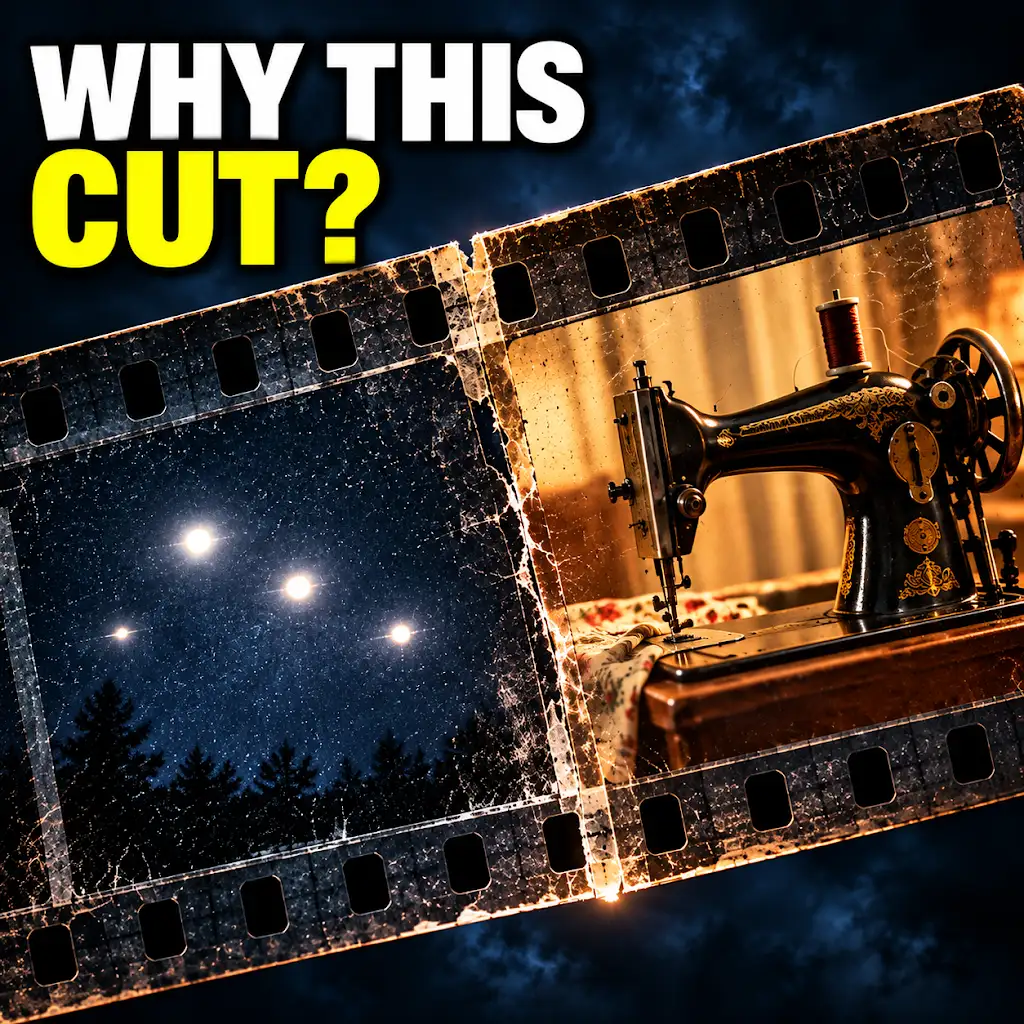
The Pentagon’s 1952 UFO Film Cuts to a Sewing Machine
FAQs
What is the purpose of the brightness panel in UFO films?
The brightness panel in UFO films is used to enhance the visibility of objects in the sky, particularly UFOs, by adjusting the brightness and contrast levels of the footage.
Why has the brightness panel in UFO films faced criticism?
The brightness panel in UFO films has faced criticism for potentially altering the original footage, making it difficult to determine the authenticity of the objects captured in the film.
How do critics argue that the brightness panel affects the credibility of UFO films?
Critics argue that the use of the brightness panel in UFO films can lead to misinterpretation of objects in the sky, as the adjustments may create false impressions of movement or characteristics of the objects.
Are there guidelines or standards for using brightness panels in UFO films?
There are no official guidelines or standards for using brightness panels in UFO films, which has led to debates within the UFO research community about the appropriate use of such editing techniques.
What are some alternative methods to enhance visibility in UFO films without using a brightness panel?
Some alternative methods to enhance visibility in UFO films without using a brightness panel include adjusting the exposure settings during filming, using infrared or night vision cameras, and utilizing software tools for enhancing image quality without altering the original footage.