
You stand in Mr. Jones’s classroom, a nondescript room in a typical American high school. Sunlight, hazy with dust motes, slants through the windows, illuminating rows of desks and a whiteboard covered in the scrawled remnants of a history lesson. But something feels different today. There’s an energy in the air, a subtle shift in the usual hum of adolescent distraction. You’re about to experience something that will forever alter your perception of history, conformity, and the unsettling ease with which humanity can be swayed. You’re about to embark on “The Third Wave.”
You’ve sat through countless history classes, haven’t you? Dates, names, battles – they often blur into a monotonous recitation of the past. You might have learned about World War II, the rise and fall of empires, or the intricacies of the American Revolution. But did you ever truly feel it? Did you understand the forces that propelled those events, the psychological undercurrents that made people act in ways that seem, from the distance of your modern perspective, unfathomable?
The Limitations of Traditional Pedagogy
Mr. Jones, your history teacher, recognized this pedagogical chasm. He saw that simply presenting facts, no matter how compelling, wasn’t enough. History, at its core, is about human behavior, about the choices people made under specific circumstances. And those circumstances, he believed, were not entirely alien to your own.
The “Why” Behind the “What”
You were taught what happened, but rarely why it happened in such a profound and often destructive way. You learned about the Holocaust, for instance, but the sheer scale of its barbarity could leave you feeling a detached horror, a sense that “those people” were somehow fundamentally different from you. Mr. Jones felt that this disconnect was a dangerous oversimplification. He wanted you to grasp the insidious nature of how such events could come to pass, how seemingly ordinary individuals could become complicit or even active participants in atrocity.
Bridging the Generational Divide
The past, you often thought, was a foreign country. The people who lived in it spoke different languages, held different values, and faced different challenges. How could you, a teenager in the late 20th century, truly comprehend their motivations? Mr. Jones saw your skepticism, your natural inclination to distance yourself from the darker chapters of human history. He decided to challenge that distance, to prove that the past wasn’t so distant after all.
The Spark of an Idea: An Unconventional Approach
It was a simple question, posed one Tuesday afternoon, that ignited the experiment. “How could something like Nazi Germany happen?” This wasn’t a new question, of course. It’s a question that has haunted historians and philosophers for decades. But Mr. Jones’s approach to finding the answer was anything but conventional. He wasn’t going to lecture you; he was going to have you experience it.
The Need for Experiential Learning
The abstract nature of historical study often leaves students passive observers. Mr. Jones craved active engagement. He wanted you to move beyond rote memorization and into a space of critical self-reflection. He believed that understanding the mechanisms of historical phenomena required a more visceral, embodied approach.
A Teacher’s Frustration and Inspiration
He was frustrated by your apparent inability to connect with the human element of history. He saw a pattern of detachment, a tendency to judge past actions with the benefit of hindsight, without truly grappling with the pressures and influences that shaped those actions. This frustration, coupled with his deep knowledge of historical events, led him to a bold and ultimately controversial decision. He would create a microcosm of history itself, right there in your classroom.
The experiment conducted by Ron Jones, known as the “Third Wave,” serves as a poignant reminder of how easily individuals can be influenced by authoritarian ideologies. For those interested in exploring the psychological underpinnings of such social experiments, a related article can be found at this link: Unplugged Psychology. This article delves into the dynamics of group behavior and the factors that contribute to conformity, providing valuable insights into the lessons learned from Jones’s provocative teaching method.
The Birth of “The Third Wave”: Discipline, Community, and Power
And then, it began. Mr. Jones, with a glint in his eye that you now recognize as both pedagogical brilliance and a touch of unsettling curiosity, introduced “The Third Wave.” It wasn’t an elaborate setup with costumes and props. It was far more insidious, far more effective. It started with something seemingly innocuous: discipline.
Establishing the Foundation: Rules and Order
The first step was to instill a sense of order. Mr. Jones declared a new classroom structure, a departure from the usual laissez-faire environment.
The “Standing Rule”
You were instructed to stand whenever you answered a question or were called upon by Mr. Jones. This seemingly small act was a powerful symbol. It immediately altered the power dynamic, signifying a shift from casual interaction to a more formal, deferential relationship. It demanded attention and respect, subtly reinforcing a hierarchy.
Specific Seating Arrangements
You were assigned specific seats. No more slouching in your favorite spot or mingling with friends. This enforced proximity and regulated your interactions, fostering a sense of collective identity within the designated space. It was a subtle but effective way of breaking down pre-existing social cliques and creating a new, unified group.
Unique Greetings and Uniformity
You developed a specific hand gesture, a salute, to accompany your standing. This created a visual symbol of your new identity, a shared ritual that further solidified your group cohesion. The idea of a uniform, even if it was just a white armband, was also introduced, further blurring individual identity and promoting a sense of belonging to a larger entity.
The Appeal of Belonging and Purpose
What was it about these seemingly simple rules that so quickly captivated you and your classmates? It wasn’t just about obedience; it was about something deeper, something that tapped into fundamental human needs.
The Void of Adolescent Identity
Adolescence is a time of searching for identity, for a place to belong. You were navigating complex social landscapes, trying to figure out who you were and where you fit in. “The Third Wave” offered a clear, defined role, a ready-made identity that was immediately appealing.
The Thrill of Exclusion and Inclusion
The rules also created a clear distinction between “us” and “them.” Those who adhered to the principles of “The Third Wave” were welcomed, accepted, and celebrated. Those who didn’t, or who expressed doubt, were subtly, and sometimes not so subtly, marginalized. This dynamic of inclusion and exclusion is a powerful motivator, driving people to conform to maintain their membership.
The Promise of Strength in Unity
Mr. Jones emphasized the power of collective action. He spoke of how a united group, bound by shared principles and discipline, could achieve things that individuals alone could not. This message resonated with you, offering a sense of empowerment and purpose that you might have been lacking.
The Escalation: From Classroom Exercise to Ideological Commitment

What began as an experiment in classroom management rapidly evolved. The initial novelty wore off, replaced by something far more potent. You started to see “The Third Wave” not just as a game, but as a genuine movement, a way of life.
The Growing Momentum: Membership and Recruitment
The experiment’s success became its own engine of growth. More students wanted to be a part of this energized, unified group.
Peer Pressure and Social Influence
As “The Third Wave” gained traction, the pressure to join became immense. Those who weren’t members felt increasingly left out, as their friends, classmates, and even peers from other schools began to adopt the new customs. The allure of belonging, combined with the fear of social isolation, proved a potent combination.
The Allure of a Superior Ideology
Mr. Jones’s rhetoric became more persuasive, painting “The Third Wave” as a superior ideology, a way to overcome the perceived weaknesses and divisions of traditional society. He presented it as a solution to problems that you might not have even consciously recognized, but which the movement now seemed to address.
The Shifting Dynamics: From Mr. Jones to Within the Group
As the movement grew, the lines of authority began to blur. Mr. Jones remained the figurehead, but the true power of “The Third Wave” started to emanate from within the group itself.
The Emergence of Leaders and Enforcers
Certain students, those who were most enthusiastic and adept at embodying the movement’s principles, began to emerge as leaders. They took it upon themselves to enforce the rules, to encourage new members, and to silence dissent. Their authority wasn’t bestowed by Mr. Jones, but earned through their dedication and adherence to “The Third Wave” ideology.
The Silencing of Dissent and Critical Thought
Questions became unwelcome. Doubts were seen as betrayals. Any student who dared to question the validity or efficacy of “The Third Wave” was met with ostracism, verbal attacks, and even physical intimidation. The very act of critical thinking was suppressed in favor of unwavering loyalty.
The Unveiling: The Professor’s Revelation and the Bitter Truth
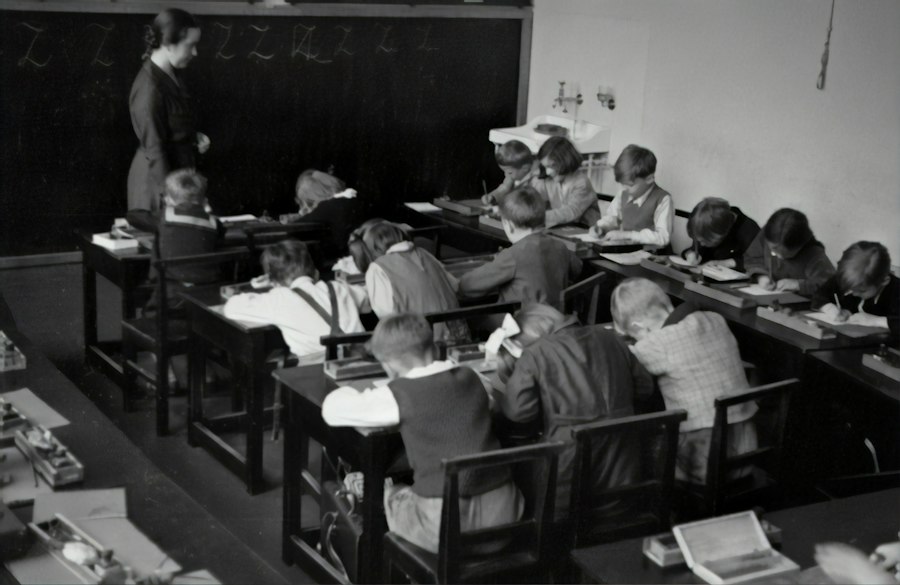
The experiment had been running for five days. Five days of exhilaration, of belonging, of purpose. You had become so immersed, so convinced of “The Third Wave’s” merit, that the unraveling was almost as shocking as the initial embrace.
The Confrontation and the Confession
On the fifth day, Mr. Jones gathered you all together. The usual energetic atmosphere was replaced by a palpable tension. You sensed that something significant was about to happen, but you couldn’t have predicted the magnitude of it.
The Teacher’s Perspective Revealed
Mr. Jones, no longer the charismatic leader of “The Third Wave,” stood before you as your history teacher once more. He spoke with a somber tone, his voice heavy with the weight of what he had witnessed and orchestrated. He explained that the entire movement, the rules, the rituals, the ideology – it had all been an experiment. An experiment designed to demonstrate how easily people, even intelligent and well-meaning individuals like yourselves, could be manipulated into adopting authoritarian practices.
The Stark Reality of Manipulation
He laid bare the psychological mechanisms at play: the appeal of belonging, the fear of exclusion, the power of conformity, the seductive nature of a strong leader, and the ease with which critical thought can be suppressed. He showed you how quickly you had embraced division, how readily you had silenced dissenting voices, and how the lines between right and wrong had blurred when the group’s narrative took precedence.
The Impact of Realization: Shock, Shame, and Disillusionment
The revelation hit you with the force of a physical blow. The elation of the past few days evaporated, replaced by a tidal wave of conflicting emotions.
The Shock of Deception
You felt betrayed. You had invested so much of yourselves into “The Third Wave,” believing it to be genuine. The realization that it was all a carefully constructed illusion, designed to expose your own vulnerabilities, was deeply unsettling.
The Shame of Complicity
As the weight of the experiment’s lessons sank in, shame began to creep in. You looked around at your classmates, seeing not the proud members of “The Third Wave,” but individuals who had, in their eagerness to belong, participated in something that mirrored the very historical atrocities they had previously deemed incomprehensible. You saw how readily you had become complicit in the suppression of individuality and the acceptance of unquestioning obedience.
The Disillusionment with Human Nature
The experiment forced you to confront an uncomfortable truth about human nature. It wasn’t enough to be good or intelligent; these qualities were not inherent shields against manipulation. You saw how easily the desire for belonging and purpose could override rational thought and ethical considerations.
Ron Jones’ history teacher experiment, known as “The Third Wave,” serves as a powerful reminder of the dangers of conformity and authoritarianism in society. For those interested in exploring the psychological underpinnings of such experiments, a related article can be found on Unplugged Psychology, which delves into the implications of group dynamics and social influence. This insightful piece offers a broader context for understanding how easily individuals can be swayed by collective behavior. You can read more about it in this article.
The Echoes of “The Third Wave”: Lessons for a Lifetime
| Aspect | Details |
|---|---|
| Experiment Name | The Third Wave |
| Conducted By | Ron Jones |
| Year | 1967 |
| Location | Cubberley High School, Palo Alto, California |
| Duration | 5 days |
| Purpose | To demonstrate how easily people can be influenced by authoritarian movements |
| Number of Participants | Approximately 30 students in the class |
| Key Features | Discipline, community, action, and pride were emphasized |
| Outcome | Students quickly adopted authoritarian behaviors; experiment was stopped after 5 days |
| Legacy | Inspired books, films, and discussions on group psychology and authoritarianism |
The five days in Mr. Jones’s classroom were a microcosm, a compressed and potent lesson that has lingered with you long after the whiteboards were erased and the armbands were discarded. “The Third Wave” wasn’t just a history lesson; it was a lesson in life.
The Enduring Relevance of the Experiment
The world outside your classroom, the world you returned to, continued to grapple with the same forces that “The Third Wave” so vividly demonstrated.
Recognizing the Signs of Authoritarianism
The experiment gave you a new lens through which to view the world. You became more attuned to the subtle cues of authoritarianism, the rhetoric of division, the silencing of dissent, and the appeal of simplistic, all-encompassing ideologies. You understood that these weren’t abstract concepts confined to history books but real, present dangers.
The Importance of Critical Thinking and Independent Judgment
You learned that questioning is not a sign of weakness but a vital act of intellectual and moral fortitude. You understood the necessity of forming your own opinions, of resisting the urge to blindly follow the crowd, and of holding onto your independent judgment, even when it’s unpopular.
The Ongoing Struggle for Individualism and Freedom
“The Third Wave” underscored the fragility of individual freedoms. It showed you how easily these could be eroded when people prioritize collective identity and obedience over individual rights and freedoms. The experiment instilled in you a deeper appreciation for the ongoing struggle to protect and uphold these fundamental values.
Your Responsibility as a Citizen
The lessons of “The Third Wave” aren’t meant to paralyze you with fear, but to empower you with awareness. You are no longer just a student of history; you are an active participant in shaping the future.
Being Vigilant Against Manipulation
You are now equipped to recognize the tactics of manipulation, both in the personal and public spheres. You can identify when your emotions are being played upon, when your desire for belonging is being exploited, and when your critical faculties are being deliberately dulled.
The Power of One Voice
You understand that even a single dissenting voice, when grounded in reason and courage, can be a powerful force against conformity. You know that speaking up, even when it’s difficult, is crucial for maintaining a healthy and democratic society.
A Lifelong Commitment to Understanding
The most profound lesson of “The Third Wave” is the ongoing need for self-reflection and continuous learning. The experiment was a stark reminder that the capacity for both great good and great harm lies within each of us. Your journey into understanding the past, and by extension, the human condition, is a lifelong one. You walked out of that classroom changed, and the echoes of “The Third Wave” will continue to guide your understanding, your choices, and your commitment to a more informed and critical world.

They Started With Rules. Then Students Began Policing Each Other
FAQs
What was the Ron Jones history teacher experiment?
The Ron Jones history teacher experiment was a social experiment conducted by teacher Ron Jones in 1967 at Cubberley High School in Palo Alto, California.
What was the purpose of the experiment?
The purpose of the experiment was to demonstrate the power of group dynamics and the potential for authoritarianism to arise in a seemingly democratic society.
What did Ron Jones do during the experiment?
During the experiment, Ron Jones implemented strict rules and a sense of discipline in his classroom, gradually transforming it into a fascist-like environment with himself as the leader.
How did the students react to the experiment?
Initially, the students responded positively to the experiment, embracing the sense of unity and purpose that the strict rules provided. However, as the experiment progressed, some students began to question the ethics and morality of the situation.
What were the outcomes of the Ron Jones history teacher experiment?
The experiment was abruptly ended after only five days due to the extreme and concerning behaviors exhibited by the students, highlighting the dangers of unchecked authority and the potential for individuals to conform to harmful ideologies in group settings.