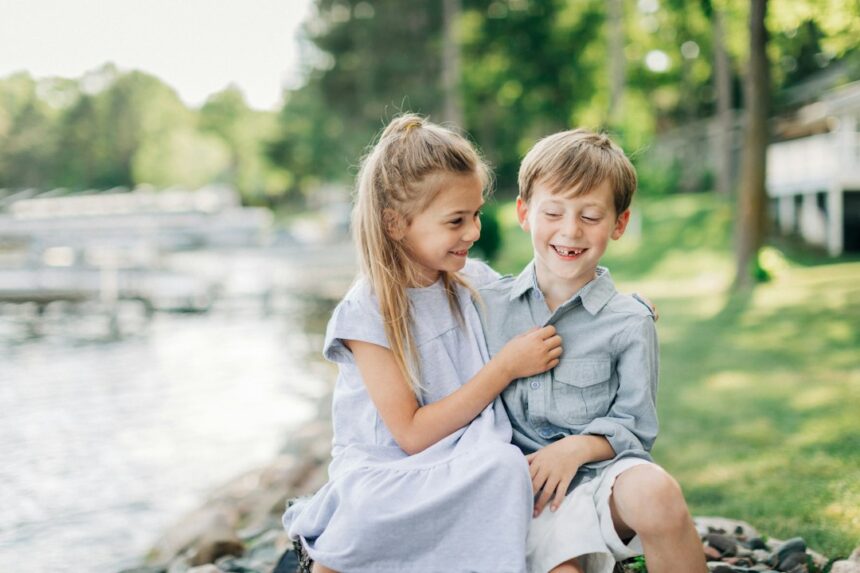
The persistent question of why siblings, often raised under the same roof, can diverge so dramatically in personality, abilities, and life paths has long fascinated psychologists, geneticists, and parents alike. This divergence is not merely anecdotal; it forms the bedrock of a rich scientific inquiry into the interplay of nature and nurture. The science of sibling differences delves into the complex mechanisms by which genetics (nature) and environmental influences (nurture) sculpt individual destinies, even within the confines of a shared familial environment. Understanding this dynamic offers profound insights into human development, the uniqueness of each individual, and the very fabric of family relationships.
Unraveling the Genetic Tapestry
The initial and most fundamental layer of understanding sibling differences lies within their genetic inheritance. Siblings, excluding identical twins, share approximately 50% of their genetic material. This shared heritage, however, is a mosaic of varying contributions, leading to inherent biological predispositions that can manifest in observable traits.
The Role of Heritability and Polygenic Traits
Heritability, a statistical concept, estimates the proportion of variation in a particular trait within a population that can be attributed to genetic differences. For complex human traits such as intelligence, personality, and even susceptibility to certain diseases, heritability is not a simple one-to-one mapping of genes to outcomes. Instead, these traits are polygenic, meaning they are influenced by the cumulative effect of many genes, each with a small contribution. The specific combination of these small genetic influences, inherited by each sibling, can create a unique blueprint, predisposing them to different strengths, weaknesses, and temperaments. For example, one sibling might inherit a genetic predisposition for higher verbal fluency, while another might have a slight advantage in spatial reasoning. These seemingly minor genetic variations can, over time and in conjunction with environmental factors, contribute to significant differences in academic performance or career choices.
Beyond Shared Genes: The Impact of Gene-Environment Interactions
It is crucial to understand that genes do not operate in a vacuum. Gene-environment interactions, or GxE, describe how the effect of a gene can depend on the environment, and vice versa. A genetic predisposition might be amplified or suppressed by specific environmental experiences. For instance, a child with a genetic vulnerability to anxiety might develop a severe anxiety disorder if exposed to a highly stressful or unpredictable home environment, while another sibling with the same genetic predisposition might remain relatively well-adjusted if raised in a stable and supportive setting. Conversely, a favorable environment might allow a latent genetic potential to flourish. A child with a genetic inclination for musical talent might only discover and develop this gift if provided with music lessons and exposure to the arts. The intricate dance between an individual’s genetic makeup and their unique experiences within the family and the wider world is a primary driver of sibling divergence.
Epigenetic Modifications: The Dynamic Layer of Genetic Expression
Adding another layer of complexity to the genetic influence is epigenetics. Epigenetic modifications are changes in gene expression that do not alter the underlying DNA sequence itself but can be passed down through cell divisions and, in some cases, even across generations. Environmental factors, such as diet, stress, and exposure to toxins, can trigger these epigenetic changes. This means that even identical twins, who share 100% of their DNA, can develop differences in gene expression throughout their lives due to differing environmental exposures. These epigenetic marks can influence a wide range of biological processes, from brain development to immune function, contributing to the observable differences between siblings, even those with identical genetic starting points. The cumulative effect of these dynamic genetic adjustments over time can lead to significant divergence in health, behavior, and cognitive abilities.
Sibling differences are a fascinating topic in the realm of psychology and family dynamics, as they can reveal much about individual personality development and social interactions. For those interested in exploring this subject further, a related article can be found at Unplugged Psychology, which delves into the various factors that contribute to the unique traits and behaviors of siblings within the same family. This resource provides valuable insights into how birth order, parental attention, and environmental influences shape sibling relationships and individual identities.
The Shaping Power of the Environment
While genetics lays the foundation, the environment provides the blueprint for how those genetic potentials are realized. The concept of “nurture” encompasses a vast array of influences, from the immediate family environment to broader societal and cultural contexts. The unique experiences each sibling encounters within these environments are critical in shaping their individual identities and trajectories.
Differentiating Parental Treatment and Family Dynamics
Parents, often unconsciously, treat their children differently. This differential treatment can stem from a variety of factors, including birth order, individual child characteristics, and parental expectations. The oldest child might be given more responsibility, the middle child might feel overlooked, and the youngest might be more indulged. These distinct roles and experiences within the family can foster different personality traits and coping mechanisms. Moreover, the overall family atmosphere – whether it is harmonious or conflict-ridden, stimulating or monotonous – profoundly impacts each child. Siblings may interpret and react to the same family dynamics in vastly different ways, leading to divergent psychological outcomes. For example, in a highly competitive family environment, one sibling might thrive and develop a strong sense of achievement, while another might retreat and develop feelings of inadequacy.
The Peer Group and Extracurricular Activities
Beyond the immediate family, peer relationships and engagement in extracurricular activities play a significant role in shaping sibling differences. Each sibling will forge their own social circles, expose themselves to different ideas, and develop interests that may diverge from their siblings. The friends a child chooses, the clubs they join, and the hobbies they pursue all contribute to their developing sense of self and their skill sets. A sibling who joins a debate club might develop strong communication and critical thinking skills, while another who focuses on competitive sports might cultivate discipline, teamwork, and physical prowess. These external influences can provide alternative role models, reinforce specific values, and offer opportunities for growth that may not be available within the home. The distinct social landscapes navigated by each sibling are powerful engines of individual development.
Socioeconomic Status and Cultural Context
The broader socioeconomic status and cultural context in which a family resides also exert a significant influence. Access to resources, educational opportunities, and cultural norms can vary dramatically, even between families living in close proximity. A family’s financial stability can dictate the quality of schooling, the availability of enrichment activities, and the overall stress levels within the home. Cultural values can shape expectations regarding gender roles, academic achievement, and career aspirations, influencing how each sibling is encouraged to develop. For example, in a culture that highly values academic achievement, siblings might feel immense pressure to excel in school, while in a more artistically inclined culture, creative pursuits might be prioritized. These macro-level influences, filtered through the family’s specific circumstances, create a unique environmental backdrop for each sibling’s development.
The Nuances of Personality Development

Personality, that enduring set of characteristics that defines an individual, is a prime area where sibling differences become evident. While genetics provides a predisposition, the environment acts as the sculptor, shaping the raw material into a unique human being.
Temperament and its Trajectory
Temperament refers to an individual’s innate behavioral style and emotional reactivity, observable from infancy. It is considered to have a strong genetic component. However, temperament is not destiny. A naturally shy child might become more outgoing through positive social experiences, while a boisterous child might learn to temper their exuberance through parental guidance. The interaction between a child’s inherent temperament and their environmental experiences is key. Siblings with different temperaments will naturally navigate the world differently, eliciting different responses from their environment and, in turn, further shaping their personalities. For example, a more cautious sibling might avoid risky situations, while a more adventurous sibling might seek them out, leading to a divergence in life experiences and the development of corresponding personality traits.
The Influence of Life Events and Milestones
Significant life events, both positive and negative, can profoundly shape personality. The loss of a parent, a major illness, academic success or failure, or romantic relationships can all act as turning points. Siblings rarely experience these events in precisely the same way, even if they occur within the same family. Their age at the time of the event, their individual coping mechanisms, and the support systems available to them will all influence the impact. A traumatic event might make one sibling more resilient and empathetic, while another might become more withdrawn and fearful. Conversely, a shared positive experience, like a memorable family vacation, can strengthen bonds and foster a shared sense of optimism, but even then, individual memories and interpretations can lead to subtle differences in its lasting impact. The unique tapestry of life events experienced by each sibling is a powerful force in personality development.
The Role of Self-Perception and Identity Formation
As individuals mature, their self-perception and identity formation become increasingly important drivers of personality. Siblings often develop distinct identities relative to each other. One might see themselves as the “smart one,” another as the “artistic one,” and yet another as the “athletic one.” These self-perceptions, often influenced by parental and peer feedback, can become self-fulfilling prophecies, guiding their choices and reinforcing certain behaviors. The ongoing process of defining oneself in relation to others, including siblings, is a continuous negotiation that contributes to their unique personalities. This dynamic of differentiation and individuation is a core aspect of human development and a significant contributor to sibling divergence.
Cognitive and Academic Differences
The disparity in intellectual abilities and academic achievement among siblings is a widely observed phenomenon, often prompting parents to wonder about the underlying causes. This divergence arises from a complex interplay of genetic predispositions, environmental stimulation, and individual learning styles.
Aptitude and Learning Styles
While a general intelligence factor exists, specific aptitudes, such as mathematical, linguistic, or spatial abilities, can vary significantly among siblings. These variations can be influenced by genetic predispositions, as mentioned earlier, but also by the types of cognitive stimulation each child receives. Furthermore, individuals possess different learning styles – some are visual learners, others auditory, and some kinesthetic. If a child’s preferred learning style is not adequately addressed by their educational environment or parental teaching methods, their academic progress can be hindered. Siblings may have different aptitudes and respond best to different teaching approaches, leading to differing levels of academic success even with similar educational opportunities. The personalized approach to learning, or the lack thereof, can amplify these differences.
Educational Opportunities and Parental Involvement
The educational pathways and the level of parental involvement in education can create significant academic disparities. Differences in school quality, access to tutoring or enrichment programs, and parental emphasis on academic pursuits can all contribute. Even within the same school system, siblings might attend different classes or be exposed to different teachers, each with their own teaching styles and expectations. Parental involvement also plays a crucial role. One sibling might receive more focused help with homework, attend more parent-teacher conferences, or have more access to educational resources at home. This differential support can directly impact academic performance. The emphasis placed on education, the resources allocated, and the specific educational experiences each sibling has are powerful environmental shapers of their cognitive and academic development.
Motivation, Interest, and Effort
Ultimately, academic achievement is also driven by individual motivation, interest, and the effort expended. A sibling with a genuine passion for a particular subject is likely to dedicate more time and energy to mastering it, leading to higher achievement. This interest may be sparked by a compelling teacher, a personal experience, or a natural inclination. Conversely, a lack of interest or perceived difficulty can lead to disengagement and lower performance. The intrinsic motivation of each sibling, influenced by a combination of genetic predispositions and environmental reinforcement, is a critical factor in their academic trajectory. The drive to succeed, fueled by passion and nurtured by opportunity, is a potent force in differentiating sibling outcomes.
Research into the science of sibling differences reveals fascinating insights into how birth order, personality, and environmental factors shape individual identities within families. A related article that delves deeper into this topic can be found at Unplugged Psych, where various studies explore how these differences can influence behavior and relationships among siblings. Understanding these dynamics can provide valuable perspectives on family interactions and personal development.
The Enduring Nature of Sibling Relationships
| Metric | Description | Typical Findings | Source/Study |
|---|---|---|---|
| Genetic Relatedness | Percentage of shared genes between siblings | Approximately 50% on average for full siblings | Behavioral Genetics Research |
| Personality Trait Correlation | Correlation coefficient of Big Five traits between siblings | Ranges from 0.2 to 0.4, indicating moderate similarity | Plomin & Daniels (1987) |
| IQ Correlation | Correlation of intelligence quotient scores between siblings | Approximately 0.5 for full siblings | Deary et al. (2009) |
| Shared Environment Influence | Proportion of variance in traits explained by shared family environment | Typically 10-30%, varies by trait | Turkheimer (2000) |
| Non-shared Environment Influence | Proportion of variance in traits explained by unique individual experiences | Often 50% or more, major contributor to sibling differences | Plomin et al. (2001) |
| Birth Order Effects | Impact of birth order on personality and intelligence | Small to negligible effects; some evidence for firstborn IQ advantage | Rodgers et al. (2000) |
| Parental Differential Treatment | Variation in parenting style and attention between siblings | Linked to differences in self-esteem and behavior | Feinberg & Hetherington (2001) |
The science of sibling differences is not solely about dissecting individual development; it also illuminates the complex and evolving dynamics of sibling relationships themselves. The very existence of differences can shape how siblings interact, support, or compete with each other throughout their lives.
Competition and Cooperation
Sibling differences can foster both competition and cooperation. In some families, siblings may engage in intense rivalry, driven by a desire for parental approval, resources, or perceived status. This competition can manifest in academic pursuits, athletic endeavors, or even social achievements. Conversely, siblings can also develop strong bonds of cooperation, relying on each other for emotional support, practical assistance, and shared experiences. The nature of their differences can sometimes facilitate cooperation; for instance, one sibling’s strength in one area might complement another’s weakness in the same area, leading to mutual reliance. The balance between these two forces is often dictated by parental management, individual personalities, and the overall family environment.
Support Systems and Shared Identity
Despite their differences, siblings often form a unique and enduring support system. They are often the longest-lasting relationships in a person’s life, providing a sense of shared history, belonging, and unconditional love. Even when lives diverge significantly, siblings can offer a unique perspective and understanding that no one else can. They share a common origin, a common set of family memories, and often a shared understanding of their family’s dynamics. This shared identity, even amidst individuality, can provide a powerful foundation for mutual support. The recognition of their shared roots, coupled with an appreciation for their individual paths, can forge incredibly strong and resilient bonds.
Individuation and Autonomy
The journey of individuation, where each sibling develops their own sense of self, separate from their family, is a crucial aspect of sibling development and relationship dynamics. As siblings grow and explore their unique interests and talents, they naturally assert their autonomy. This process can sometimes lead to temporary friction, as they navigate their independence. However, successful individuation often leads to a more mature and respectful sibling relationship, characterized by mutual acceptance of their differences. The ability of siblings to support each other’s quests for autonomy, while still maintaining a connection to their shared history, is a testament to the enduring power and complexity of these relationships. The understanding that their differences do not diminish their shared bond, but rather enrich it, is a hallmark of healthy sibling relationships.

100% Same Genes, Different Minds: The Dark Psychology of the Genain Quadruplets
FAQs
1. Why do siblings often have different personalities?
Siblings can have different personalities due to a combination of genetic factors, environmental influences, and unique life experiences that shape their individual characteristics and behaviors.
2. Is it common for siblings to have different interests and talents?
Yes, it is common for siblings to have different interests and talents. Each individual has their own set of strengths and preferences that contribute to their unique abilities and passions.
3. Can sibling differences be attributed to birth order?
Birth order can play a role in shaping sibling differences, as research suggests that firstborns, middle children, and youngest siblings may exhibit distinct personality traits and behaviors based on their position in the family hierarchy.
4. How do parents influence the development of sibling differences?
Parents can influence sibling differences through their parenting styles, expectations, and interactions with each child. The way parents nurture and support their children can impact how siblings perceive themselves and relate to one another.
5. Are there benefits to having siblings with diverse characteristics?
Having siblings with diverse characteristics can offer opportunities for personal growth, learning, and perspective-taking. It can also foster empathy, cooperation, and the development of important social skills through navigating differences and building strong sibling relationships.