You’re standing at the precipice of a decision, a seemingly simple one, perhaps: what to order for dinner. But suddenly, your mind is a whirlwind. The pizza menu taunts you with its cheesy promises, the Thai place beckons with its aromatic spices, and that new Italian bistro keeps whispering of delectable pasta. And then, it hits you. The dread. The overwhelming feeling that no matter what you choose, you’ll miss out on something better. This, my friend, is choice anxiety, and you’re far from alone in experiencing it.
In our modern world, you’re bombarded with options at every turn. From the mundane act of picking a streaming service to monumental life choices like career paths or major purchases, the sheer volume of possibilities can be paralyzing. This article will delve into the psychology behind choice anxiety, exploring why it grips you and, more importantly, how you can navigate this intricate terrain of decision-making with greater confidence and less distress.
You’ve likely heard the phrase “the paradox of choice.” It’s not a new concept, but its relevance has only amplified in our consumer-driven society. The idea, popularized by psychologist Barry Schwartz, suggests that while some choice is good and offers freedom and autonomy, an overabundance of options can actually lead to diminished happiness and increased dissatisfaction.
When Freedom Becomes a Burden
Think back to a time when you had very few options. Perhaps choosing a phone plan in the early days of mobile technology, or selecting a single flavor of ice cream at a small, local shop. While the limitations might seem frustrating now, there was a certain ease that came with it. The decision was relatively straightforward, and the potential for regret was minimal.
Now, contrast that with the present. Walking into a supermarket, you’re confronted with dozens of brands of cereal, each with subtle variations in ingredients and marketing claims. Online, the sheer volume of available products is staggering. This abundance, while theoretically empowering, can actually create a significant mental load. You feel responsible for sifting through every single option, evaluating each one, and ensuring you’re making the “optimal” choice. This responsibility, ironically, can feel like a burden, leading to that familiar knot of anxiety in your stomach.
The Cognitive Overload of Decision-Making
Your brain, a remarkable but finite processing unit, can only handle so much information at once. When faced with an overwhelming number of choices, you can experience cognitive overload. This means your mental resources are stretched thin, making it difficult to think clearly, weigh pros and cons effectively, and ultimately, make a satisfying decision. The sheer effort involved in processing all the available information can be exhausting, and this exhaustion can manifest as anxiety.
The Role of Working Memory
Your working memory, the part of your brain responsible for temporarily holding and manipulating information, plays a crucial role here. When presented with too many options, your working memory becomes saturated. You might find yourself struggling to keep track of all the features, prices, and potential outcomes. This inability to effectively process and retain information fuels the anxiety, as you fear you’re missing crucial details or overlooking better alternatives.
The Impact on Cognitive Resources
Beyond working memory, the entire cognitive system can become fatigued. The constant effort to evaluate, compare, and contrast depletes your mental energy. This leaves you feeling drained and less capable of making future decisions, creating a vicious cycle where one difficult choice can make the next one even more challenging.
The Illusion of Control vs. Actual Control
The abundance of choice often creates an illusion of control. You believe that with so many options, you have complete agency over your satisfaction. However, this can be a double-edged sword. While you have the freedom to choose, you also bear the full responsibility for the outcome. If the chosen option doesn’t meet your expectations, the blame often falls squarely on your shoulders, amplifying feelings of regret and anxiety.
Choice anxiety, a phenomenon where individuals feel overwhelmed by the multitude of options available to them, can significantly impact decision-making processes. For a deeper understanding of this topic, you can explore the article titled “The Psychology of Choice Anxiety” on Unplugged Psych, which delves into the cognitive and emotional factors that contribute to this experience. To read more, visit this article.
Understanding the Roots of Choice Anxiety
Choice anxiety isn’t simply a matter of being indecisive. It often stems from deeper psychological mechanisms and societal pressures that shape how you perceive and approach decisions.
Fear of Missing Out (FOMO) and Its Impact
You’ve probably experienced FOMO. It’s that nagging feeling that others are having more fun, experiencing better things, or making better choices than you are. In the context of decision-making, FOMO can be a powerful driver of anxiety. When faced with multiple appealing options, you worry that by choosing one, you’re inherently missing out on the unique benefits or experiences offered by the others.
The Social Media Amplification of FOMO
Social media platforms often exacerbate FOMO. You see curated highlight reels of other people’s lives, showcasing their perceived successes and exciting experiences. This constant stream of “better” lives can make your own choices feel inadequate and fuel the anxiety that you’re always on the wrong side of the hedonic curve.
The “Grass is Greener” Syndrome
FOMO is closely linked to the “grass is greener” syndrome, where you constantly believe that happiness and satisfaction lie just beyond your current circumstances or choices. This can lead to a perpetual state of dissatisfaction, as you’re always yearning for something else, something more.
Perfectionism and the Quest for the “Perfect” Choice
If you identify as a perfectionist, you’re particularly susceptible to choice anxiety. The desire to make the absolutely best, most optimal decision can be overwhelming. This pursuit of perfection means scrutinizing every detail, weighing every possible outcome, and fearing any deviation from the ideal.
The Tyranny of the “Best”
The concept of a “perfect” choice is often an illusion. In reality, most decisions involve trade-offs. Perfectionism, however, can blind you to this reality, leading to paralysis as you search for a mythical perfect option that may not even exist.
The High Cost of Regret Aversion
Perfectionists often exhibit a strong aversion to regret. The thought of making a wrong decision and experiencing regret can be so daunting that it prevents them from making any decision at all. This fear of future pain can lead to present-day anxiety.
External Validation and Societal Expectations
You don’t make decisions in a vacuum. Societal expectations, cultural norms, and the opinions of others can significantly influence your decision-making process and contribute to anxiety.
The Pressure to Conform
In many societies, there’s an implicit pressure to make choices that are deemed “successful” or “appropriate” by others. This can be particularly true in areas like career, relationships, and financial investments. You might worry about what others will think of your choices, leading to self-doubt and anxiety.
The Influence of Marketing and Advertising
Marketers are adept at creating a sense of urgency and desirability around their products and services. They often highlight the unique benefits and appeal of their offerings, implicitly suggesting that choosing anything else would be a mistake. This constant barrage of persuasive messaging can add to the pressure you feel to make the “right” choice.
The Psychological Mechanisms at Play

Several psychological mechanisms underpin the experience of choice anxiety, affecting how you process information and your emotional responses to decision-making.
Escalation of Commitment and Sunk Costs
Once you’ve made a decision, especially a significant one, you can fall prey to the escalation of commitment. This is the tendency to continue investing resources (time, money, effort) into a chosen path, even when it’s becoming clear that it might not be the best option. This is often driven by the concept of sunk costs – the resources you’ve already invested that can’t be recovered.
The “Throwing Good Money After Bad” Phenomenon
You might find yourself sticking with a decision, not because it’s still the best path forward, but because you’ve already put so much into it. This can lead to a cycle of continued investment in a suboptimal choice, fueled by the fear of admitting that the initial decision was wrong.
The Need to Justify Past Decisions
Escalation of commitment is also driven by a psychological need to justify your past decisions. Admitting you made a mistake can be difficult for your ego, so you might unconsciously seek out information that supports your initial choice and downplay evidence that suggests otherwise.
Counterfactual Thinking and Regret
Counterfactual thinking is the cognitive process of imagining alternative outcomes or scenarios to those that actually occurred. While this can be a valuable tool for learning, in the context of choice anxiety, it often leads to regret.
The “What If” Scenario Playbook
After making a decision, you might find yourself replaying the situation in your mind, imagining all the other choices you could have made. This constant “what if” thinking can highlight the perceived benefits of the unchosen options, leading to feelings of regret about the path you took.
The Pain of Regret and Its Prevention
The anticipation of regret can be a powerful motivator to avoid making decisions altogether. The fear of experiencing that painful emotion can lead to procrastination and indecisiveness, further fueling anxiety.
Decision Fatigue and Its Consequences
As mentioned earlier, the sheer act of making decisions can be mentally taxing. Decision fatigue refers to the deterioration of the quality of decisions made after a long session of decision-making.
The Impoverishment of Willpower
Decision-making draws upon your willpower, a finite resource. When your willpower is depleted, you become more susceptible to impulsive choices, making choices that require less cognitive effort, or simply avoiding decisions altogether.
The Tendency Towards Status Quo Bias
When fatigued, you’re more likely to fall back on the status quo bias, which is the tendency to stick with whatever is already in place. This means you might avoid making changes or opting for new options, even if they would be beneficial, simply because it requires less mental effort.
Strategies for Navigating Choice Anxiety

The good news is that choice anxiety is not an insurmountable problem. By understanding its roots and employing specific strategies, you can learn to navigate decision-making with greater ease and confidence.
Embrace “Good Enough” Instead of “Perfect”
One of the most effective ways to combat choice anxiety is to shift your mindset from seeking perfection to aiming for “good enough.” Recognize that in most situations, a perfectly optimal choice is an elusive ideal.
The Tyranny of Maximizing
Schwartz coined the term “maximizer” for those who always seek the best possible option. Conversely, “satisficers” are those who are content with an option that meets their minimum criteria. Cultivating a satisficing approach can significantly reduce anxiety. Instead of spending hours agonizing over every minute detail, focus on identifying an option that meets your essential needs and preferences.
The Art of Letting Go
Once you’ve made a decision that is “good enough,” practice letting go of the other options. Remind yourself that you made the best decision you could with the information available at the time. Dwelling on the unchosen paths will only perpetuate anxiety.
Set Clear Criteria and Limits
Before diving into a sea of choices, take some time to define your priorities and set clear criteria for what you’re looking for. This will act as a filter, helping you to narrow down your options more efficiently.
Define Your Non-Negotiables
What are the absolute must-haves in your decision? What are the deal-breakers? Identifying your non-negotiables will immediately eliminate many options and simplify the process. For example, if you’re buying a car, a non-negotiable might be fuel efficiency or a certain safety rating.
Establish Decision Deadlines
Set a reasonable deadline for making your decision. This will create a sense of urgency and prevent you from procrastinating indefinitely. Knowing that you have a set timeframe can help you focus your efforts and avoid getting lost in endless research.
Practice Mindfulness and Self-Compassion
Your mental and emotional state plays a significant role in how you experience choice anxiety. Practicing mindfulness and self-compassion can create a more supportive internal environment for decision-making.
Be Present in the Moment
During the decision-making process, try to be present in the moment. Acknowledge your anxious thoughts and feelings without judgment. Remind yourself that these feelings are temporary and do not define you.
Treat Yourself with Kindness
If you do make a choice that doesn’t turn out as planned, practice self-compassion. Remind yourself that everyone makes mistakes and that learning from them is part of growth. Avoid self-criticism and focus on what you can learn from the experience.
Choice anxiety can significantly impact decision-making, leading individuals to feel overwhelmed by the options available to them. This phenomenon is explored in depth in a related article that discusses the psychological mechanisms behind choice overload and offers strategies to mitigate its effects. For those interested in understanding this topic further, you can read more about it in this insightful piece on Unplugged Psychology. By examining the factors that contribute to choice anxiety, we can better navigate our decisions and enhance our overall well-being.
The Art of Deliberate Indecision
| Factors | Impact on Choice Anxiety |
|---|---|
| Too many options | Increases anxiety as decision-making becomes overwhelming |
| Decision complexity | Higher complexity leads to more anxiety |
| Perceived consequences | Greater perceived consequences lead to higher anxiety |
| Decision-making style | Overthinking or perfectionism can increase anxiety |
| External pressure | Feeling pressured by others can increase anxiety |
Sometimes, the best course of action isn’t to rush into a decision. There’s an art to deliberate indecision, a strategic pause that can lead to better outcomes.
The Power of Information Gathering (with Limits)
While it’s important to gather enough information to make an informed decision, it’s also crucial to know when to stop. Over-researching can lead to paralysis by analysis.
Setting Information Boundaries
Before you begin researching, decide how much time and effort you’re willing to dedicate to information gathering. Once you reach that limit, commit to making a decision based on what you’ve learned.
Trusting Your Gut (Once Informed)
After you’ve gathered sufficient information, don’t underestimate the power of your intuition. Sometimes, your gut feeling can be a valuable guide, especially when faced with seemingly equal options.
Seeking Input Wisely
While you should ultimately own your decisions, seeking input from trusted sources can be beneficial. However, it’s important to be selective about who you ask and how you interpret their advice.
Curating Your “Decision Council”
Choose advisors who understand your values and priorities. Avoid overwhelming yourself with too many opinions, which can lead to further confusion. A small group of trusted individuals is often more helpful than a large, cacophonous crowd.
Processing Advice Objectively
Remember that advice is just that – advice. It’s not a mandate. Listen to what others have to say, but ultimately, filter it through your own needs and judgment. You are the one who will live with the consequences of the decision.
Embracing the Learning Process
Every decision, regardless of its outcome, is an opportunity to learn and grow. View each choice as an experiment, a step in your personal development.
Learning from Both Successes and “Failures”
Celebrate your successful decisions, but also analyze those that didn’t quite work out. What did you learn? What would you do differently next time? These insights are invaluable for future decision-making.
The Long-Term Perspective
Ultimately, the ability to make decisions, even imperfect ones, is more important than finding the single “perfect” choice. By practicing and learning from your experiences, you build confidence and resilience, making you a more effective and less anxious decision-maker over time.
In conclusion, choice anxiety is a pervasive challenge in our modern world, stemming from the paradox of choice, psychological biases, and societal pressures. By understanding the mechanisms at play and implementing proactive strategies, you can reclaim your decision-making power, reduce stress, and navigate the landscape of options with greater confidence and peace of mind. Remember, the goal isn’t to eliminate choice, but to master the art of choosing wisely and with less worry.
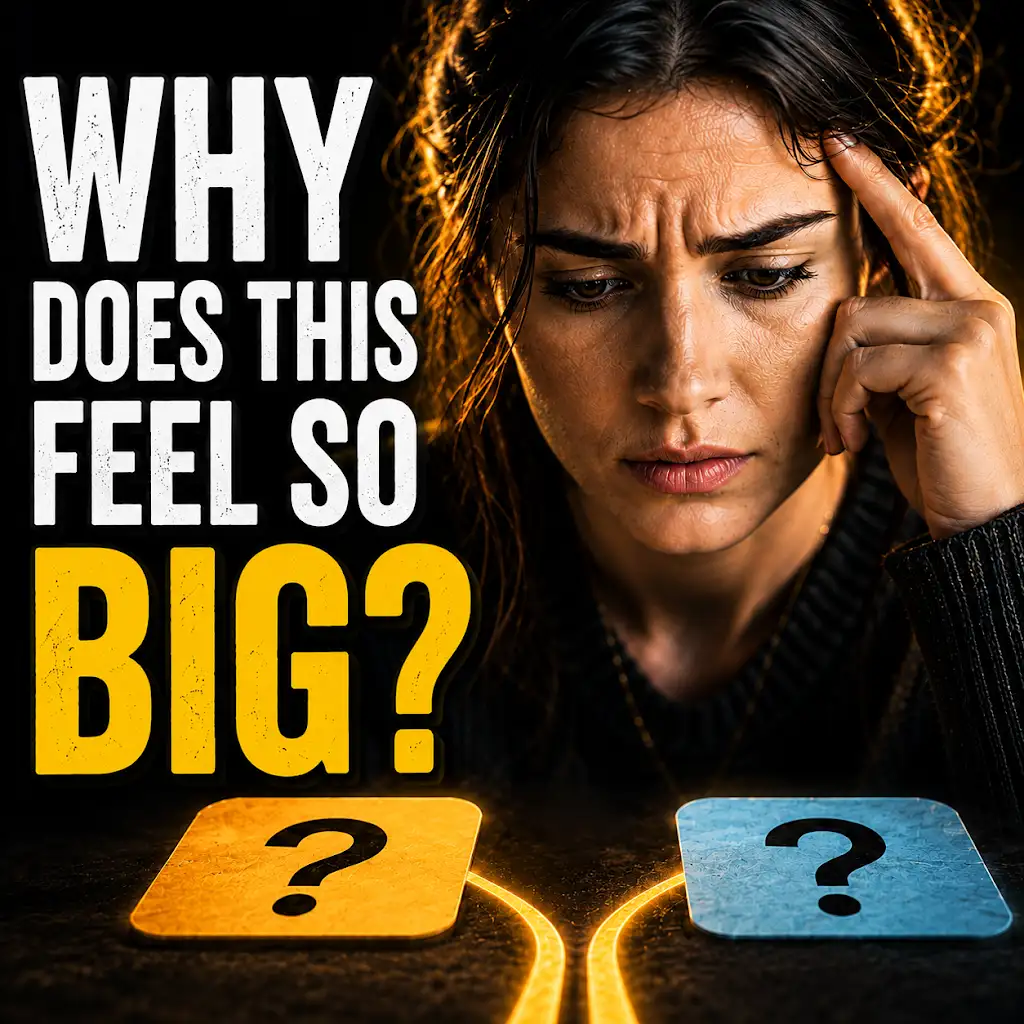
Why Tiny Decisions Feel So Serious
FAQs
What is choice anxiety in psychology?
Choice anxiety, also known as decision anxiety, is a psychological phenomenon where individuals feel overwhelmed and stressed when faced with making a decision, especially when there are multiple options to choose from.
What are the causes of choice anxiety?
Choice anxiety can be caused by various factors such as fear of making the wrong decision, fear of missing out, pressure from external sources, and the cognitive overload of evaluating multiple options.
How does choice anxiety affect individuals?
Choice anxiety can lead to feelings of stress, indecision, and dissatisfaction. It can also impact an individual’s mental well-being, leading to increased levels of anxiety and even depression in some cases.
What are some strategies to cope with choice anxiety?
Some strategies to cope with choice anxiety include setting clear priorities, limiting options, seeking advice from trusted sources, practicing mindfulness and self-reflection, and accepting that no decision is perfect.
Can choice anxiety be managed with professional help?
Yes, individuals experiencing severe choice anxiety may benefit from seeking help from a mental health professional such as a therapist or counselor. Cognitive-behavioral therapy (CBT) and other therapeutic techniques can be effective in managing choice anxiety.