
You’ve probably experienced it. That subtle nudge, that quiet hum in the back of your mind, suggesting you align yourself with the group. It’s not always a loud command or an overt threat; often, it’s a gentle whisper of social expectation. This, my friend, is the power of voluntary conformity, a cornerstone of human psychology that shapes your decisions, your beliefs, and your very perception of reality. You might think of conformity as something forced upon you, a loss of individuality. But the truth is far more nuanced, and often, you’re a willing participant in your own assimilation. This article will delve into the fascinating depths of voluntary conformity, exploring its psychological underpinnings, its pervasive influence, and why, despite your desire for uniqueness, you often choose to blend in.
You might be surprised to learn that the drive to conform isn’t necessarily a sign of weakness or a lack of independent thought. It’s deeply ingrained in your evolutionary past and woven into the fabric of your social existence. Understanding these roots is crucial to grasping why you so readily, and often unconsciously, adjust your behavior and attitudes to match those around you.
Evolutionary Advantages: The Survival of the Socially Aligned
From the earliest days of humankind, belonging to a group was paramount for survival. A lone individual was vulnerable to predators, scarcity of resources, and the harshness of the environment. Your ancestors who could effectively navigate social dynamics, understand group norms, and act in ways that fostered cohesion were more likely to survive and pass on their genes.
The “Safety in Numbers” Principle
Think about it: a group can detect danger more effectively than a single person. A shared understanding of threats and coordinated responses meant better chances of survival. This instinctual understanding that “there’s safety in numbers” translates into a psychological predisposition to stay close to the group’s consensus, even when that consensus might not be perfectly rational. You are wired to seek the comfort and security that group affiliation provides.
Resource Acquisition and Cooperation
Cooperation, facilitated by a degree of conformity, was essential for hunting, gathering, and building shelters. Individuals who could work together, share knowledge, and adhere to agreed-upon strategies had a distinct advantage in securing the resources needed for survival. This historical precedent has left you with a deep-seated inclination to cooperate and, by extension, to conform to the established patterns of behavior within your community.
Social Learning Theory: Learning by Observing and Imitating
Much of what you know about how to navigate the world, you learned by watching others. Social learning theory, pioneered by Albert Bandura, highlights the powerful role of observation and imitation in shaping your behavior. You learn what is acceptable, what is desirable, and what leads to positive outcomes by observing the actions and reactions of those around you.
The Power of Role Models
You are constantly exposed to role models, whether they are family members, friends, celebrities, or even fictional characters. You observe their behavior, their choices, and the consequences they face. If you see someone being rewarded for a particular action or expressing a certain belief, you are more likely to adopt that action or belief yourself. This isn’t always a conscious decision; it’s often a subtle absorption of social cues.
The Reinforcement of Norms
When you see others behaving in a certain way, and that behavior is met with approval or simply goes unchallenged, it reinforces that behavior as a social norm. You then learn that conforming to this norm is the “correct” or “expected” way to act. This feedback loop is a powerful driver of voluntary conformity. You might not be explicitly told to do something, but the widespread adoption and acceptance of that behavior serves as implicit instruction.
The Need for Belonging: The Fundamental Human Desire
Beyond survival and learned behaviors, a core psychological need drives your tendency to conform: the need to belong. Humans are fundamentally social creatures, and being accepted by others is as crucial to your well-being as food and water.
Social Acceptance and Affiliation
You crave acceptance. You want to feel like you are part of something larger than yourself. This desire for social affiliation leads you to align your behaviors and attitudes with those of the groups you wish to be a part of. It’s a powerful motivator, pushing you to modify your outward expression to be seen as a valuable and accepted member.
Fear of Ostracism and Rejection
Conversely, the thought of being ostracized or rejected by your peers can be deeply unsettling. This fear acts as a potent deterrent against behaviors that deviate too drastically from the norm. You might consciously or unconsciously avoid expressing opinions or engaging in actions that you perceive as likely to lead to disapproval or exclusion.
Voluntary conformity in psychology explores how individuals willingly align their behaviors and beliefs with those of a group, often to gain acceptance or avoid conflict. A related article that delves deeper into this topic can be found on Unplugged Psychology, which discusses the nuances of social influence and the factors that drive people to conform. For more insights, you can read the article here: Unplugged Psychology.
The Invisible Threads: Mechanisms of Voluntary Conformity
Voluntary conformity isn’t a monolithic concept; it operates through various subtle yet powerful psychological mechanisms. You might not even realize these forces are at play, guiding your choices and shaping your perceptions.
Informational Social Influence: The Pursuit of Accuracy
One of the primary reasons you conform is because you believe the group possesses more accurate information than you do. In ambiguous or uncertain situations, you look to others for guidance, assuming they have a better understanding of reality. This is known as informational social influence.
Ambiguity and Uncertainty
When you find yourself in a novel or unclear situation, your natural inclination is to seek clarity. If you’re unsure about how to act, what to believe, or what a situation truly means, you turn to the collective wisdom of the group. You assume that if many people are behaving or thinking in a certain way, there must be a good reason for it.
The Expert Effect
This is particularly true when you perceive the group, or individuals within it, as possessing expertise. If a group of doctors is discussing a medical issue, you are more likely to accept their consensus than your own uninformed opinion. This principle extends to everyday social interactions; you defer to the perceived knowledge and experience of others.
Internalization of Beliefs
When you conform due to informational social influence, it often leads to a genuine internalization of the group’s beliefs or attitudes. You don’t just outwardly agree; you come to believe that what the group espouses is actually true. This is a powerful form of conformity because it changes your internal landscape, not just your outward behavior.
Voluntary conformity psychology explores how individuals align their behaviors and beliefs with those of a group, often driven by a desire for acceptance or social harmony. A fascinating article that delves deeper into this topic can be found at Unplugged Psychology, where various aspects of social influence and the psychological mechanisms behind conformity are discussed. Understanding these dynamics can provide valuable insights into human behavior and the factors that motivate people to conform voluntarily.
Normative Social Influence: The Desire for Approval
Another significant driver of conformity is the desire to be liked and accepted by the group. This is known as normative social influence. You conform to fit in, to avoid disapproval, and to gain social rewards.
The “Asch Conformity Experiments” Revisited
Classic experiments, like Solomon Asch’s line-judgment studies, vividly illustrate normative social influence. Participants, when placed in a group where confederates unanimously gave incorrect answers, often conformed to the wrong answer, even though they knew it was incorrect. This wasn’t because they believed the incorrect answer was right, but because they didn’t want to stand out or be judged negatively by the group.
Social Sanctions and Rewards
You are acutely aware of the potential social sanctions (criticism, ridicule, exclusion) for deviating from group norms, and the potential rewards (praise, acceptance, friendship) for adhering to them. This calculus, often performed unconsciously, nudges you towards conformity. You learn to anticipate and avoid behaviors that might incur social penalties.
Maintaining Group Cohesion
Normative social influence plays a crucial role in maintaining group cohesion. When individuals are willing to align their behaviors and opinions, it fosters a sense of unity and shared identity. This can be beneficial for the group’s functioning and survival, but it can also stifle dissent and individual expression.
Social Comparison Theory: Evaluating Yourself Against Others
You have an inherent drive to evaluate your own opinions and abilities. When objective standards are unavailable, you turn to social comparison – comparing yourself to others. This process can significantly influence your voluntary conformity.
Upward and Downward Comparisons
You might compare yourself to those you perceive as better off (upward comparison), which can be motivating but also lead to feelings of inadequacy. Conversely, you might compare yourself to those you perceive as worse off (downward comparison), which can boost your self-esteem. In the context of conformity, you are often looking to align with those you see as successful or well-integrated into the group.
Self-Esteem and Conformity
Your self-esteem can be closely linked to your perceived ability to fit in. If you feel that conforming to the group will enhance your social standing and boost your self-esteem, you are more likely to do so. Conversely, if you believe that conforming will diminish your sense of self or make you appear inauthentic, you might resist.
The Shades of Conformity: Types and Manifestations

Voluntary conformity isn’t a single, uniform phenomenon. It manifests in various ways, from subtle adjustments in your demeanor to more profound shifts in your core beliefs. Understanding these different shades helps you recognize how pervasive its influence is in your daily life.
Compliance: Outward Agreement, Internal Disagreement
Compliance is the most superficial form of conformity. You outwardly agree with or go along with the group’s request or expectation, but internally, you may disagree or hold different beliefs. This is often done to avoid immediate social consequences.
The “Yes-Man” Phenomenon
This is the classic “yes-man” scenario, where someone agrees with everything their superior says, not because they genuinely agree, but to maintain favor or avoid conflict. You might engage in compliance when the cost of disagreement is too high, or the benefit of agreement is immediate and tangible.
Temporary Alignment
Compliance is often temporary. Once the social pressure is removed, you may revert to your original opinion or behavior. It’s a strategic adaptation to a specific social context, rather than a fundamental shift in your internal state. You are performing conformity, rather than embodying it.
Identification: Adopting Behaviors for Group Membership
Identification occurs when you adopt a certain behavior or attitude because you want to establish or maintain a relationship with a particular person or group. You are influenced by the attractiveness or prestige of the group or its members.
Role-Playing and Social Roles
When you take on a new role, such as starting a new job or joining a club, you often adopt the behaviors and attitudes associated with that role. You might dress like your colleagues, adopt their jargon, or engage in their leisure activities. This is a form of identification to signal your commitment and integration into the new social unit.
Admiration and Aspiration
You might identify with a group whose members you admire or aspire to be like. You emulate their style, their opinions, and their actions, believing that by doing so, you will become more like them. This is a conscious effort to align your identity with that of a desired group.
Internalization: Genuine Acceptance and Belief
Internalization is the deepest form of conformity. You not only outwardly comply but also genuinely accept the group’s beliefs, attitudes, or behaviors as your own. This is because you find them intrinsically valid or congruent with your existing values.
Value Congruence
When the group’s norms or beliefs align with your own personal values, you are more likely to internalize them. You see the group’s perspective as rational, ethical, or beneficial, and therefore adopt it as your own. This is not about fitting in; it’s about finding truth or meaning.
The “True Believer”
Internalized conformity leads to what might be called a “true believer.” These individuals genuinely believe in the cause, the ideology, or the group’s principles. Their conformity is not a performance but a reflection of their deepest convictions. This is often the most stable and enduring form of conformity.
The Double-Edged Sword: Benefits and Drawbacks of Voluntary Conformity
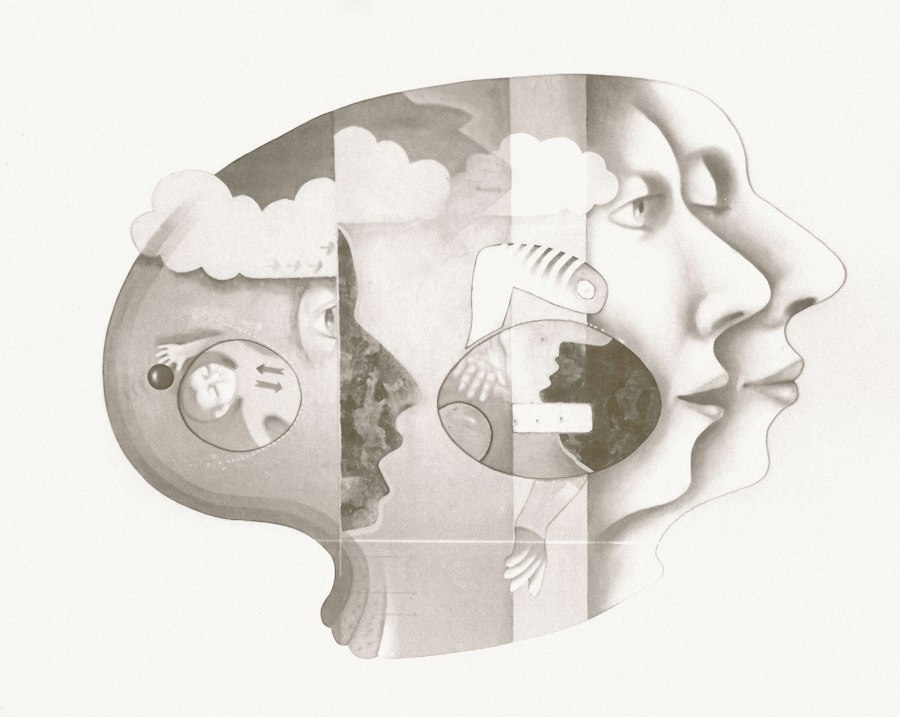
Voluntary conformity, like any powerful psychological force, has its upsides and downsides. While it can foster unity and facilitate social order, it can also stifle innovation and suppress individuality.
The Societal Glue: Benefits of Voluntary Conformity
On a societal level, voluntary conformity plays a vital role in maintaining order and facilitating collective action. It allows for predictable interactions and shared understanding, which are essential for any functioning society.
Social Harmony and Predictability
When people generally adhere to shared norms and expectations, social interactions become more predictable and less chaotic. You know how to behave in most situations, and you can anticipate how others will behave. This reduces social friction and promotes a sense of harmony.
Efficient Decision-Making
In many situations, relying on the collective wisdom of a group can lead to more efficient and effective decision-making. By conforming to established procedures or expert opinions, you can avoid reinventing the wheel and leverage the accumulated knowledge of others.
Group Identity and Cohesion
Conformity is instrumental in forging a strong sense of group identity and cohesion. When individuals share common beliefs, values, and behaviors, it creates a powerful bond that strengthens the group and its ability to achieve common goals.
The Chains of Convention: Drawbacks of Voluntary Conformity
However, the very mechanisms that promote cohesion can also lead to a suppression of dissent, a stifling of creativity, and an embrace of the status quo, even when it is detrimental.
Stifling Creativity and Innovation
When everyone conforms to existing ideas and practices, there is little room for new or different perspectives to emerge. Innovation often arises from challenging conventional wisdom, and excessive conformity can create an environment where such challenges are discouraged.
Groupthink and Poor Decision-Making
In some cases, the desire for unanimity within a group can lead to “groupthink,” where critical evaluation of ideas is suppressed, and members conform to the perceived consensus to avoid conflict. This can result in poor, irrational decision

They Started With Rules. Then Students Began Policing Each Other
FAQs
What is voluntary conformity in psychology?
Voluntary conformity in psychology refers to the act of individuals choosing to conform to a group’s norms or expectations willingly, without any external pressure or coercion.
How does voluntary conformity differ from compliance?
Voluntary conformity is different from compliance in that compliance involves individuals conforming to a group’s norms or expectations due to direct pressure or influence from others, while voluntary conformity is a personal choice made without external pressure.
What are some factors that influence voluntary conformity?
Factors that can influence voluntary conformity include the desire for social acceptance, the need for belongingness, the fear of rejection, and the perception of the group’s norms as valid or desirable.
Can voluntary conformity have positive effects on individuals and groups?
Yes, voluntary conformity can have positive effects on individuals and groups by fostering a sense of unity, cooperation, and social cohesion. It can also lead to the adoption of beneficial behaviors and attitudes within a group.
Are there any potential drawbacks to voluntary conformity?
While voluntary conformity can have positive effects, it can also lead to individuals suppressing their own opinions or values in order to fit in with the group, potentially hindering creativity, critical thinking, and individuality.