
You stand at the precipice of understanding a subtle yet potent force that shapes your decisions, your beliefs, and ultimately, your place within the human tapestry: the power of shadow psychology in conformity. It’s a dance of unspoken influences, of desires you might not even acknowledge, all subtly nudging you towards the familiar, the accepted, the group. Forget the overt pressures of dogma or the loud commands of authority; this is about the quiet hum of the collective, the invisible strings that tie you to the herd, and how your own unconscious mind, your shadow self, plays a crucial, often unwitting, role.
Before delving into conformity, you must first grasp the essence of shadow psychology. It’s a concept deeply rooted in the work of Carl Jung, who posited that the psyche is not a monolithic entity but a complex interplay of conscious and unconscious elements. Your shadow, in this context, represents the disowned and repressed parts of yourself – the traits, desires, emotions, and impulses that you deem unacceptable, undesirable, or simply too frightening to confront. These are the aspects of yourself that you push into the darkness, believing them to be eradicated, but in reality, they lie dormant, exerting a significant influence from the periphery of your awareness.
Understanding Your Hidden Self
You might imagine your shadow as a monstrous entity, a collection of all your worst impulses. While it can certainly encompass these, it’s far more nuanced than that. Your shadow is also the repository of your unexpressed creativity, your unmet needs, your untapped potential. It’s the ambitious streak you suppress for fear of appearing arrogant, the rebellious spirit you quell to maintain social harmony, the vulnerable longing you hide to avoid perceived weakness. These are the aspects of yourself that have been conditioned by societal norms, parental expectations, and personal experiences to be deemed “wrong.”
The Shadow’s Influence on Perception
The mere existence of your shadow doesn’t make you inherently bad. Instead, its power lies in its unconscious nature. Because you are not consciously aware of these disowned parts, they operate on autopilot. This unconscious influence can manifest in various ways. You might project your own insecurities onto others, seeing fault in them that mirrors your own hidden deficiencies. You might react with disproportionate anger or defensiveness to certain situations because they unconsciously trigger your repressed emotions. This hidden influence colors your perception of the world, shaping what you notice, what you value, and what you dismiss, all without your conscious input.
The Birth of the Shadow: Childhood Conditioning
Your shadow doesn’t spontaneously appear; it’s a meticulously crafted entity, molded from your earliest experiences. As a child, you learn what is acceptable and what is not through a complex web of rewards and punishments, spoken and unspoken. If expressing anger leads to parental disapproval, you learn to suppress that emotion. If a display of assertiveness is met with criticism, you may learn to shy away from assertiveness. These learned behaviors, deemed necessary for survival and acceptance, become internalized and pushed into the shadow, forming the foundation of your unconscious self.
Shadow psychology explores the hidden aspects of our personality that influence our behavior, often in ways we are not consciously aware of. One fascinating aspect of this field is its connection to conformity, where individuals may suppress their true selves to fit in with societal norms or group expectations. For a deeper understanding of these concepts, you can read a related article on the topic at Unplugged Psychology, which delves into the dynamics of conformity and the shadow self.
The Allure of the Flock: Why We Conform
Conformity is as natural to humans as breathing. It’s a fundamental survival mechanism, ensuring our integration into social groups and fostering a sense of belonging. From the earliest hunter-gatherer societies to the complex digital communities of today, belonging has always been paramount. The fear of ostracization, of being the solitary outlier, is a deeply ingrained human dread, and this fear is a powerful driver of conformity. Your shadow, however, adds another layer of complexity to this inherent drive.
The Safety of the Majority
There’s an undeniable sense of safety in numbers. When you see a large group of people behaving in a certain way, thinking a certain way, or believing a certain way, it’s natural to assume they possess knowledge or wisdom that you lack. This is the Asch conformity experiments, where individuals were pressured to give incorrect answers simply because the majority of the group did. Your unconscious mind, seeking to avoid the discomfort of being wrong or out of sync, readily latches onto the perceived wisdom of the crowd. Your shadow, always seeking to avoid judgment, finds solace in blending in.
The Desire for Social Acceptance
Beyond mere safety, there’s a profound psychological need for social acceptance. You crave validation, the affirmation that you are liked, valued, and understood by your peers. Conformity is a direct route to achieving this. By mirroring the behaviors and opinions of the group, you signal your alignment, your understanding of the prevailing social contract. Your shadow, deeply invested in avoiding rejection, sees conformity as a shield against the sting of social disapproval.
The Role of Social Proof
Social proof is the psychological phenomenon where people assume the actions of others in an attempt to reflect correct behavior for a given situation. If everyone else is doing it, it must be the right thing to do. This is incredibly powerful, especially in ambiguous situations where you are unsure of how to act. Your shadow, constantly scanning for cues and fearful of missteps, will readily adopt the behavior that is most prevalent, assuming it’s the safest and most correct option.
The Shadow’s Whispers: How Your Shadow Fuels Conformity
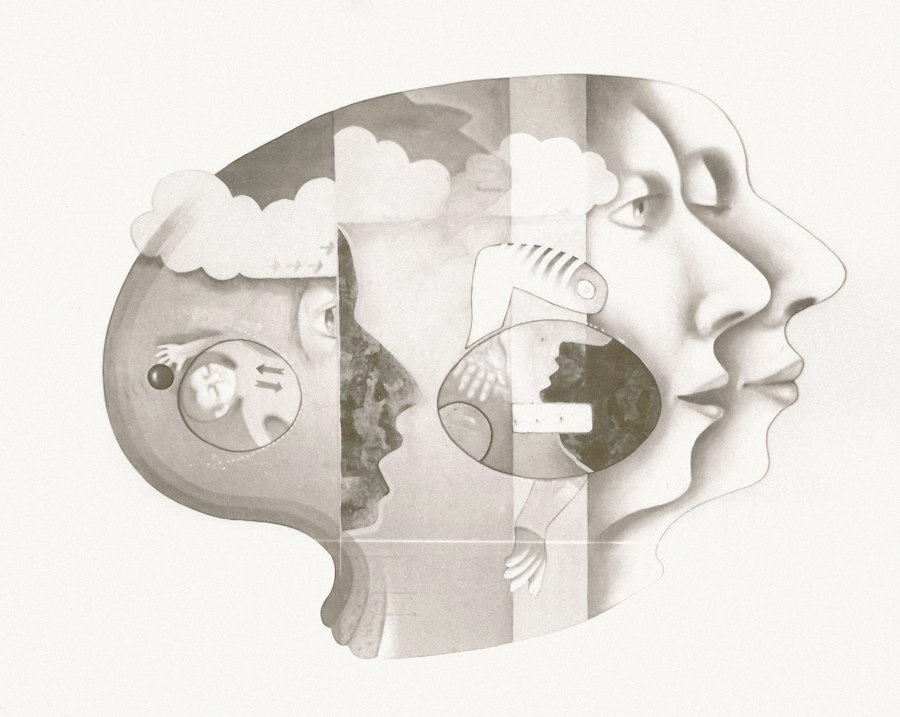
Now, let’s illuminate the intricate connection between your shadow and the drive to conform. Your shadow isn’t just a passive recipient of societal conditioning; it’s an active participant in perpetuating conformity, often in ways that are deeply personal and insidious.
Fear of Exposure: The Shadow’s Greatest Vulnerability
The shadow’s primary directive is to remain hidden. It fears exposure above all else. If your disowned traits or beliefs are brought to light, you fear judgment, ridicule, and ultimately, rejection. Conformity becomes a powerful tool for the shadow to maintain its secrecy. By adopting the dominant behaviors and beliefs of the group, you make yourself less likely to stand out, less likely to attract unwanted attention, and therefore, less likely to have your shadow’s contents revealed.
Projection and the Scapegoat
When you cannot consciously acknowledge a trait within yourself, you are prone to projecting it onto others. Your shadow’s unwanted aspects might be attributed to an individual or a group, allowing you to condemn them and thus indirectly distance yourself from those traits. This is where the shadow can fuel scapegoating and prejudice. By identifying with the “normal” group and projecting negativity onto an “other,” you reinforce your own sense of belonging and conformity. The shadow finds comfort in the collective denouncement, as it solidifies the boundaries of what is considered acceptable.
The Illusion of Authenticity Through Assimilation
Ironically, the shadow can lead you to believe that true authenticity lies in perfect assimilation. If your shadow contains a yearning for creativity that has been suppressed, you might unconsciously believe that by suppressing it further and conforming to practical, mainstream pursuits, you are being the “responsible” or “real” you. This is a twisted form of self-protection where the shadow convinces you that the “real” you is the one who doesn’t cause trouble, the one who fits in seamlessly.
The Comfort of the Known: Escaping Internal Conflict
Your shadow represents internal conflict. It’s the battle between what you are and what you believe you should be. Conformity offers a seductive escape from this internal struggle. By adopting the beliefs and behaviors of the group, you outsource your decision-making and your moral compass. The shadow is relieved of the burden of navigating its own dissonant desires and instead finds peace in the external structure and clarity provided by the collective.
Manifestations of Shadow-Driven Conformity
The power of shadow psychology in conformity isn’t a theoretical construct; it manifests in tangible ways throughout your life. Recognizing these patterns is the first step towards reclaiming your agency.
The Silent Majority: Unspoken Agreement
Have you ever found yourself nodding in agreement with a statement you secretly disagree with, simply because everyone else seems to be on board? This is often shadow-driven conformity. Your shadow, fearing the spotlight of dissent, urges you to remain silent, to merge with the prevailing sentiment. The silence of the majority isn’t always a sign of genuine agreement; it can be a symphony of shadows keeping their disowned selves hidden.
The Pressure to Maintain Appearances
There’s immense pressure to maintain a certain image, a persona that is socially acceptable. This can range from the clothes you wear to the opinions you express about current events. Your shadow, fearful of revealing its imperfections, drives you to meticulously curate your public face. This constant performance can be exhausting and ultimately leads to a disconnect between your inner experience and your outward presentation, a classic sign of shadow integration work needed.
The Reinforcement of Stereotypes
Your shadow plays a significant role in the perpetuation of stereotypes. By projecting your disowned traits onto certain groups, you create mental shortcuts that reinforce those stereotypes. This allows you to categorize and understand the world more easily, a task that your shadow welcomes as it reduces complexity and potential threats to its hidden existence. This can lead to unconscious biases that manifest as discriminatory behavior, all fueled by the shadow’s need to maintain its own perceived superiority by casting others in a negative light.
The Resistance to Novelty and Change
When faced with new ideas or approaches that challenge the status quo, your shadow can react with resistance. These novelties might implicitly highlight the limitations of the current system, which the shadow relies on for its own comfort and invisibility. Your shadow might find comfort in the familiar, even if that familiarity is stifling, because it knows what to expect. Anything that disrupts this predictable landscape can trigger anxiety, leading you to cling to established norms and reject change.
Shadow psychology explores the hidden aspects of our personality that influence our behavior, particularly in social contexts. A fascinating aspect of this field is how it relates to conformity, as individuals often suppress their true selves to fit in with societal norms. For further insights into these dynamics, you can read more about the impact of social influence on behavior in this article on Unplugged Psychology. Understanding these concepts can help individuals navigate their own tendencies toward conformity and the shadows that may drive them.
Breaking Free: Reclaiming Your Agency from the Shadow’s Grip
| Metric | Description | Typical Findings | Source/Study |
|---|---|---|---|
| Conformity Rate | Percentage of participants who conform to group opinion despite personal disagreement | Approximately 37% in Asch’s conformity experiments | Asch (1951) |
| Shadow Self Awareness | Degree to which individuals recognize and accept their unconscious traits | Varies widely; higher awareness linked to reduced conformity | Jungian Psychology Studies |
| Group Pressure Influence | Impact of peer pressure on decision-making and behavior | Strong group pressure increases conformity by up to 50% | Asch (1951), Social Psychology Research |
| Internal vs External Motivation | Ratio of conformity due to internal belief change vs external compliance | Internal motivation accounts for about 25%, external for 75% | Kelman (1958) |
| Shadow Integration Effect | Effect of integrating shadow aspects on resistance to conformity | Increased shadow integration correlates with 30% decrease in conformity | Contemporary Shadow Psychology Research |
The good news is that you are not doomed to be a puppet of your shadow. Awareness is the first and most crucial step towards liberation. By understanding how your shadow operates, you can begin to disentangle its influence from your drive to conform.
Embracing Your Whole Self: Shadow Integration
The ultimate goal is not to eradicate your shadow, which is impossible, but to integrate it. This means acknowledging and accepting the disowned parts of yourself, not as monstrous flaws, but as integral aspects of your whole being. When you bring your shadow into consciousness, its power to manipulate you from the darkness diminishes. This is a process of self-discovery, often facilitated by introspection, therapy, or creative expression.
Cultivating Critical Thinking and Independent Judgment
Your shadow thrives on passive acceptance. To counter its influence, you must actively cultivate critical thinking skills. Question assumptions, challenge prevailing narratives, and develop the capacity for independent judgment. Don’t simply accept what the majority believes; examine it. Your shadow might whisper to you that this is risky, that it’s easier to go with the flow, but the reward of intellectual freedom is far greater.
The Courage to Be Different
Embracing your unique qualities, even those that might be considered unconventional, is a powerful act of defiance against shadow-driven conformity. It requires courage to step outside the comfort zone of the group and to express your authentic self, even if it means facing potential disapproval. This doesn’t mean being deliberately provocative; it means honoring your inner truth.
Building a Support System of Authenticity
Surround yourself with people who encourage authenticity and critical thinking. A supportive community that values genuine expression and open dialogue can provide the strength and validation you need to resist the pressure to conform. These are the individuals who will see beyond your shadow and appreciate the whole, complex you, offering a mirror that reflects your true self, not the projected fears of your unconscious.
The power of shadow psychology in conformity is a subtle yet profound force that shapes your life. By understanding its mechanisms, recognizing its manifestations, and actively working towards integrating your shadow, you can reclaim your agency and navigate the world with greater authenticity and freedom, no longer a passive follower, but a conscious creator of your own path.

They Started With Rules. Then Students Began Policing Each Other
FAQs
What is shadow psychology?
Shadow psychology refers to the study of the unconscious aspects of the human mind, including repressed thoughts, emotions, and desires that influence behavior.
How does shadow psychology relate to conformity?
Shadow psychology can play a role in conformity as individuals may conform to societal norms or expectations in order to suppress or hide their shadow aspects from others.
Can shadow psychology impact individual behavior?
Yes, shadow psychology can impact individual behavior by influencing decision-making, relationships, and overall mental well-being.
Are there any benefits to exploring one’s shadow psychology?
Exploring one’s shadow psychology can lead to greater self-awareness, personal growth, and a deeper understanding of one’s motivations and behaviors.
How can one address shadow psychology and conformity in their own life?
Addressing shadow psychology and conformity may involve therapy, self-reflection, and mindfulness practices to uncover and integrate hidden aspects of the self for a more authentic and fulfilling life.