The chilling realization that some of our deepest anxieties are not innate but meticulously constructed is a profound one. This understanding is largely indebted to the groundbreaking work of psychologists who, through rigorous experimentation, have illuminated the intricate mechanisms by which fear can be learned, shaped, and perpetuated. Among these seminal studies, the “Little Albert” experiment stands as a stark, albeit ethically controversial, testament to the power of learned fear. This exploration delves into the psychology behind this phenomenon, examining the experimental design, the theoretical underpinnings, and the lasting implications of understanding how fear can be acquired.
The early 20th century witnessed a burgeoning interest in understanding the fundamental principles of human behavior. Behaviorism, a dominant psychological school of thought at the time, posited that all behavior, including emotional responses, could be explained through observable stimuli and responses. Within this framework, the concept of learning became central to understanding how individuals interact with their environment.
Classical Conditioning: The Foundation of Association
At the heart of learned fear lies the principle of classical conditioning, a concept popularized by Ivan Pavlov. Pavlov’s research with dogs demonstrated how a neutral stimulus, when repeatedly paired with an unconditioned stimulus that naturally elicits a response, could eventually come to elicit that same response on its own. The dog, initially salivating at the sight of food (unconditioned stimulus), would eventually salivate at the sound of the bell (conditioned stimulus) that had been consistently paired with food. This associative learning provided a crucial theoretical lens through which to examine the acquisition of emotional responses, including fear.
The Tabula Rasa: A Blank Slate of the Mind
Behaviorists often viewed the infant mind as a tabula rasa, a blank slate upon which experiences write their indelible marks. This perspective suggested that individuals are born without pre-existing fears, and that any phobias or anxieties they develop are a direct result of their environmental interactions. While this view has been nuanced by later research acknowledging the role of genetics and innate predispositions, it provided a fertile ground for experiments aiming to demonstrate the malleability of emotional responses. The question became: if fear can be learned, can it also be unlearned?
In exploring the intricacies of learned fear, one can gain deeper insights by examining related studies and articles that delve into the psychological mechanisms behind fear responses. A particularly informative resource is the article available at Unplugged Psychology, which discusses various experiments and theories surrounding fear conditioning and its implications for understanding anxiety disorders. This article provides a comprehensive overview of how learned fears can be developed and potentially unlearned, making it a valuable read for anyone interested in the field of psychology.
The “Little Albert” Experiment: A Landmark Study
The “Little Albert” experiment, conducted by John B. Watson and Rosalie Rayner in 1920 at Johns Hopkins University, remains one of the most famous and ethically debated studies in the history of psychology. Its primary objective was to demonstrate that fear could be conditioned in humans, using the principles of classical conditioning observed in animal studies.
Participants and Setting
The subject of the experiment was an infant, known pseudonymously as “Little Albert,” who was approximately nine months old at the time of the initial sessions. Albert was described as being relatively fearless and healthy, showing no prior aversion to any of the stimuli presented. He was housed in the hospital nursery, providing a controlled environment for the researchers to conduct their observations and interventions.
The Experimental Procedure: Building Fear Through Association
The experiment unfolded in several stages. Initially, researchers presented Albert with a series of neutral stimuli that elicited no fear response. These included a white rat, a rabbit, a dog, a monkey, masks with and without hair, and cotton wool. Albert showed curiosity and interest in these objects.
The crucial phase involved the conditioning process. The researchers selected a white rat as the neutral stimulus. When Albert reached for the rat, a loud, startling noise was produced by striking a steel bar with a hammer behind his head. This noise served as the unconditioned stimulus, designed to evoke a fear response (crying, withdrawal) in the infant. This pairing of the white rat (neutral stimulus) with the loud noise (unconditioned stimulus) was repeated over several sessions.
The Outcome: The Emergence of Conditioned Fear
Following these repeated pairings, the researchers observed a significant change in Albert’s behavior. When presented with the white rat alone, Albert now exhibited signs of fear, including crying, crawling away, and attempts to burrow away from the animal. The once neutral white rat had become a conditioned stimulus, capable of eliciting the fear response that was originally associated with the loud noise.
Theoretical Implications: Behaviorism in Action

The “Little Albert” experiment provided powerful empirical support for the core tenets of behaviorism, particularly the role of associative learning in shaping emotional responses. It suggested that complex psychological phenomena, like fear, could be broken down into simpler, observable stimulus-response mechanisms.
Stimulus Generalization: The Spread of Fear
A significant finding beyond the direct conditioning of fear towards the white rat was the phenomenon of stimulus generalization. After being conditioned to fear the white rat, Albert also displayed fear responses towards other furry objects that shared similar characteristics with the rat. This included a rabbit, a dog, a sealskin coat, and even a Santa Claus mask with white fur. This indicated that the learned fear was not solely confined to the specific conditioned stimulus but could extend to similar stimuli.
The Enduring Impact of Early Experiences
The experiment highlighted the potent influence of early life experiences in shaping an individual’s psychological landscape. It implied that fears acquired during childhood, even if seemingly irrational, could be deeply ingrained and persist into adulthood. This raised important questions about the origins of phobias and the potential for therapeutic interventions.
Ethical Considerations and Criticisms

Despite its scientific significance, the “Little Albert” experiment is widely condemned today for its profound ethical violations. The welfare of the infant participant was clearly compromised, and the experiment inflicted psychological distress.
Lack of Consent and Deprivation of Rights
The most glaring ethical issue was the absence of informed consent from the parents. Albert was essentially used as a subject without their full understanding or agreement. Furthermore, as an infant, Albert could not consent or dissent, leaving him vulnerable to the researchers’ manipulations. The experiment also deprived Albert of his right to be protected from harm and distress.
Unanswered Questions and Unresolved Distress
Crucially, the experiment did not include a deconditioning phase to remove the learned fear from Albert. His fate after the experiment is also unclear, with some accounts suggesting he was removed from the hospital before any attempts could be made to alleviate his conditioned fear. This left Albert with a generalized fear of furry objects, a distress that was never addressed within the experimental context. This aspect of the experiment has been a major point of criticism, highlighting the responsibility of researchers to ensure the well-being of their participants.
The Legacy of Ethical Debates
The ethical shortcomings of the “Little Albert” experiment have served as a critical catalyst for the development of modern ethical guidelines in psychological research. It has underscored the paramount importance of protecting vulnerable populations, obtaining informed consent, and ensuring that research protocols prioritize the welfare of participants above all else. The experiment continues to be a touchstone in discussions about research ethics, reminding researchers of the potential consequences of unchecked scientific ambition.
In exploring the fascinating realm of learned fear, one can gain deeper insights by examining related studies and experiments that highlight the mechanisms behind this psychological phenomenon. A particularly intriguing article discusses how environmental factors and conditioning play crucial roles in shaping our responses to fear. For those interested in delving further into this topic, you can read more about it in this comprehensive piece on psychology at Unplugged Psychology. Understanding these dynamics not only sheds light on individual experiences but also informs therapeutic approaches to overcoming irrational fears.
Replicating and Reinterpreting Learned Fear
| Experiment | Researcher(s) | Year | Subject | Method | Key Findings | Measured Metrics |
|---|---|---|---|---|---|---|
| Little Albert Experiment | John B. Watson & Rosalie Rayner | 1920 | Infant (Albert) | Conditioned fear response by pairing white rat with loud noise | Fear of white rat generalized to other furry objects | Fear response intensity, generalization to stimuli |
| Conditioned Suppression | B.F. Skinner & Estes | 1941 | Rats | Pairing tone with electric shock, measuring suppression of lever pressing | Conditioned fear suppresses ongoing behavior | Suppression ratio, latency to resume behavior |
| Fear Conditioning in Mice | Various (Neuroscience studies) | 2000s-2020s | Mice | Pairing tone or context with foot shock, measuring freezing behavior | Freezing as a reliable measure of learned fear | Freezing duration, latency to freeze, heart rate |
| Human Fear Conditioning | Various | 1990s-2020s | Human participants | Pairing visual/auditory stimuli with mild electric shock, measuring skin conductance | Skin conductance response increases to conditioned stimuli | Skin conductance response amplitude, reaction time |
While the original “Little Albert” experiment remains ethically problematic, subsequent research has sought to replicate and explore the principles of learned fear in more ethically sound ways. These studies have offered further insights into the mechanisms of fear acquisition and extinction.
Modern Ethical Replications
Researchers have designed studies that adhere to strict ethical protocols, often using adult participants who can provide informed consent. These experiments frequently employ virtual reality or controlled laboratory settings to simulate fear-inducing situations. For instance, participants might be exposed to a neutral stimulus paired with a mild, non-harmful aversion, and then assessed for generalized fear responses. These studies aim to confirm the basic principles of classical conditioning of fear without causing undue distress.
The Role of Cognitive Factors
More recent interpretations of learned fear also acknowledge the role of cognitive factors, which were largely overlooked by pure behaviorism. These include the individual’s beliefs, expectations, and interpretations of the stimuli involved. For example, a person might learn to fear spiders not just through direct negative experiences, but also through observing others’ fearful reactions or through negative verbal information about spiders. This cognitive layer adds complexity to the understanding of how fear is acquired and maintained.
Fear Extinction and Therapeutic Applications
Understanding how fear is learned is intrinsically linked to understanding how it can be unlearned. The concept of fear extinction, where a conditioned fear response gradually diminishes when the conditioned stimulus is repeatedly presented without the unconditioned stimulus, is a cornerstone of modern psychotherapies for anxiety disorders.
Exposure Therapy
Exposure therapy, a highly effective treatment for phobias and other anxiety disorders, directly utilizes the principles of fear extinction. In systematic desensitization, for example, individuals are gradually exposed to increasingly anxiety-provoking stimuli while practicing relaxation techniques. This process helps them to re-associate the feared object or situation with safety and calm, rather than with danger.
Cognitive Behavioral Therapy (CBT)
Cognitive Behavioral Therapy (CBT) also plays a crucial role in addressing learned fears. CBT helps individuals identify and challenge the negative and often irrational thought patterns that contribute to their anxieties. By understanding that their fears are learned responses, individuals can begin to reframe their thinking and develop more adaptive coping mechanisms, thereby weakening the learned fear associations.
In conclusion, the power of learned fear, as starkly illustrated by the “Little Albert” experiment, offers a profound insight into the human psyche. While the original study remains a cautionary tale regarding ethical research practices, its findings laid the groundwork for understanding how fear can be acquired through associative learning. Subsequent research, conducted under stringent ethical guidelines, has not only validated these principles but also expanded our understanding to include the influence of cognitive factors and the crucial process of fear extinction. This knowledge has paved the way for effective therapeutic interventions, offering hope and relief to individuals struggling with the debilitating effects of learned anxieties. The journey from a seemingly fearless infant to an individual burdened by conditioned fears underscores the remarkable plasticity of the human mind and the enduring impact of our environmental experiences.
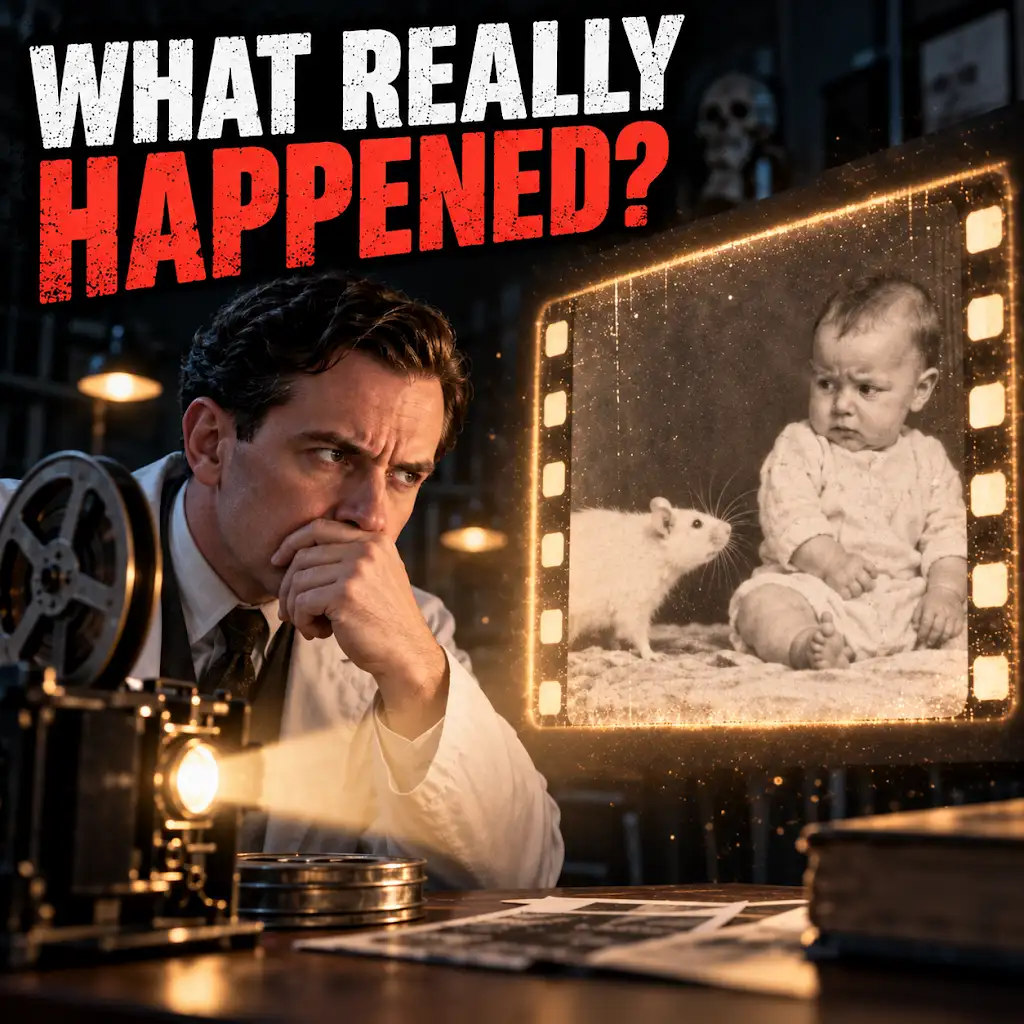
The Little Albert Experiment May Not Have Worked
FAQs
What is a learned fear psychology experiment?
A learned fear psychology experiment is a type of study that investigates how individuals acquire fear responses through conditioning and learning processes.
How are learned fear psychology experiments conducted?
In these experiments, participants are exposed to a neutral stimulus (such as a sound or image) paired with an aversive stimulus (such as a mild electric shock) to create an association between the two stimuli, leading to a fear response.
What are the implications of learned fear psychology experiments?
These experiments help researchers understand how fear is acquired and how it can be extinguished, providing insights into the treatment of anxiety disorders and phobias.
What are some ethical considerations in learned fear psychology experiments?
Ethical considerations in these experiments include ensuring participant safety, obtaining informed consent, minimizing distress, and debriefing participants about the purpose of the study.
What are some real-world applications of findings from learned fear psychology experiments?
Findings from these experiments can inform the development of exposure therapy techniques for treating phobias, post-traumatic stress disorder (PTSD), and other anxiety-related conditions.