
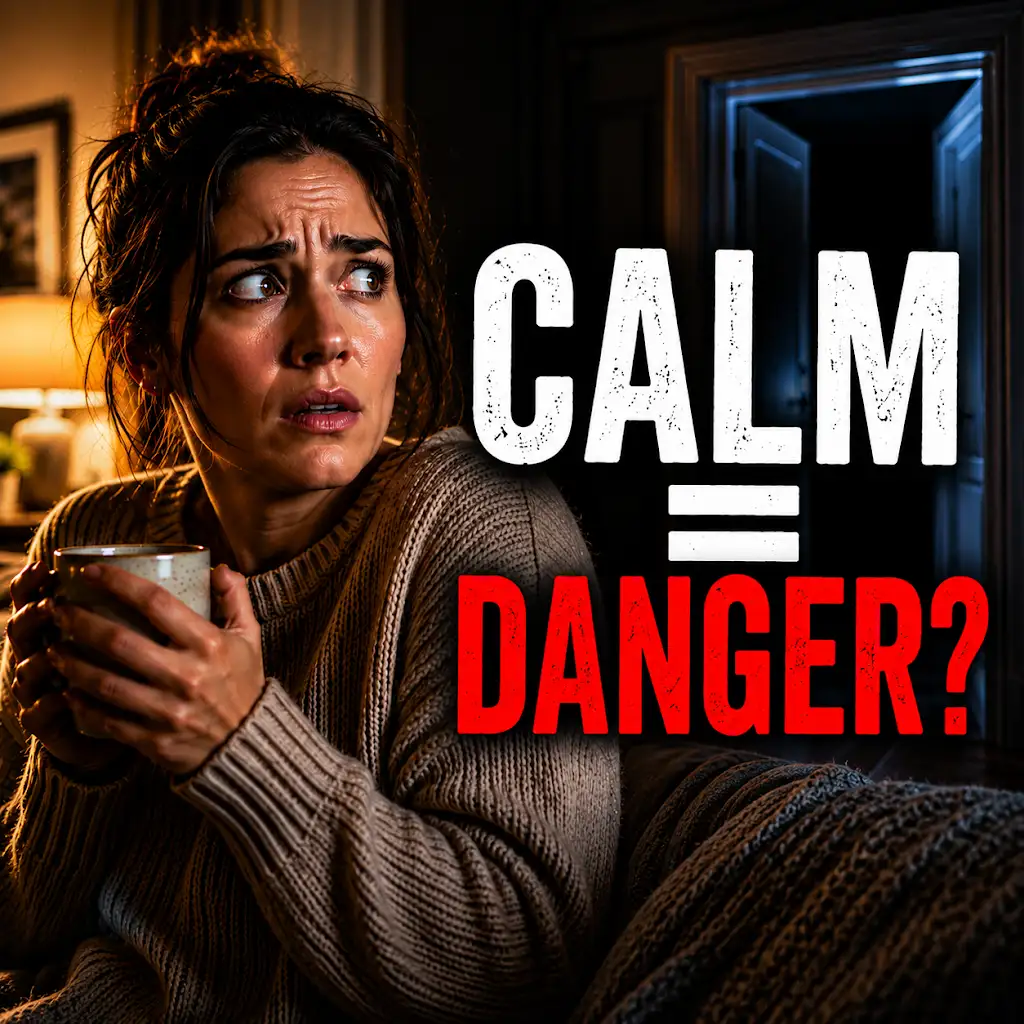
You’ve probably felt it. That prickling sensation on your skin, the tightening in your chest, the gnawing in your gut. It’s a feeling you’re intimately familiar with, a shadow that dogs your steps in the most unexpected moments. You know it as the peril of uncertainty, and you’re right to feel like it’s danger. It’s not just a philosophical concept; it’s a visceral, biological response designed to keep you alive. This article will explore why this inherent feeling of unease in the face of the unknown is so potent, so pervasive, and why it often feels indistinguishable from actual threat.
Your very existence is a testament to the success of your ancestors in navigating a world brimming with hazards. The savanna wasn’t a gentle meadow; it was a place of lurking predators, unpredictable weather, and scarce resources. In such an environment, an individual who hesitated at the rustle of leaves, who questioned the safety of a new water source, or who was wary of unfamiliar terrain, was more likely to survive and reproduce. Your brain, a product of millions of years of this selective pressure, is still carrying the blueprints of those ancient survival mechanisms.
The Amygdala’s Alarm Bell
At the heart of your fear response lies a small, almond-shaped structure in your brain: the amygdala. This ancient part of your limbic system is the primary processing center for emotions, particularly fear. When presented with a potential threat, the amygdala kicks into overdrive, triggering a cascade of physiological and psychological reactions. The catch is, the amygdala doesn’t need concrete evidence of danger to activate. It’s a highly sensitive detector, and uncertainty provides ample fuel for its alarm.
When Ambiguity Triggers the Threat Response
Think about it: a clear, present danger – a charging lion – elicits a specific, direct response. You know what you’re facing, and your fight-or-flight instincts are precisely calibrated. But uncertainty is a shapeshifter. It could be a lion, or it could be the wind. It could be a real threat, or it could be nothing. This ambiguity is precisely what the amygdala struggles with. It’s like a smoke detector that goes off for steam from your morning coffee. While sometimes it’s a false alarm, the potential for a real fire means it’s better to be oversensitive than too complacent. Your brain, in its wisdom, has prioritized avoiding potential catastrophe over the occasional false alarm. This oversensitivity to ambiguity is a key reason why uncertainty feels like danger; your internal alarm system is set to a hair trigger.
The Role of Prediction and Control
Your brain is, at its core, a prediction machine. It constantly tries to make sense of the world by predicting what will happen next. This ability to predict allows you to plan, to anticipate, and to exert a sense of control over your environment. When that predictive ability is thwarted by uncertainty, it creates a fundamental imbalance. The lack of predictable outcomes leaves you feeling exposed and vulnerable, like a ship without a rudder.
The Illusion of Control and Its Disruption
You crave control. It’s a deep-seated psychological need. The ability to influence your circumstances, to make choices that lead to desired outcomes, is profoundly comforting. Uncertainty strips away this illusion of control. When you don’t know what’s coming, you feel powerless. This feeling of powerlessness is a direct pathway to anxiety and fear. It’s the feeling of being a passenger in your own life, with no say in the destination. Your brain, accustomed to driving, feels a profound sense of unease when forced into the passenger seat. This loss of perceived agency is a significant contributor to the sensation of danger associated with uncertainty.
Uncertainty often triggers a primal response in humans, making it feel akin to danger. This reaction can be traced back to our evolutionary history, where the unknown posed significant threats to survival. For a deeper understanding of this phenomenon, you can explore the article titled “The Psychology of Uncertainty” on Unplugged Psych, which delves into how our brains interpret uncertain situations as potential risks. To read more about this topic, visit this article.
The Cognitive Load: Your Brain on Overdrive
When faced with uncertainty, your cognitive resources are stretched thin. Your brain isn’t just passively observing; it’s actively working to interpret, to analyze, and to attempt to resolve the unknown. This mental exertion, while intended to be helpful, can become a burden, amplifying the feeling of unease.
The Search for Meaning and the Agony of Not Finding It
Humans are meaning-making creatures. You crave narratives, explanations, and understanding. When faced with an uncertain situation, your mind immediately begins a relentless search for meaning. You’ll replay scenarios, seek out patterns, and try to construct a coherent explanation for the ambiguity. This mental “rumination” can be exhausting, and the inability to find a satisfactory answer only intensifies the anxiety. It’s like being stuck in a loop, constantly trying to solve a puzzle with missing pieces. The mental effort involved in this futile search contributes to the feeling of distress, making the uncertainty feel more like a persistent threat you can’t escape.
Rumination and the Amplification of Worries
This relentless mental processing, often termed rumination, can become a self-perpetuating cycle. You think about the uncertainty, which makes you feel anxious, which in turn leads you to think more about the uncertainty, further increasing your anxiety. It’s a feedback loop where negative thoughts fuel negative emotions, and negative emotions fuel more negative thoughts. Your brain, instead of finding solutions, becomes trapped in a quagmire of worries, each one magnified by the lack of concrete information. This cognitive overload makes the uncertainty feel all-consuming, blurring the lines between potential threats and present dangers.
The Overestimation of Negative Outcomes
When information is scarce, your mind tends to fill in the blanks with the worst-case scenarios. This is a cognitive bias known as “catastrophizing.” Instead of considering a range of possibilities, you default to the most extreme and negative outcomes. This is a survival mechanism gone awry; in a truly dangerous situation, focusing on the worst might have spurred action. However, in the face of uncertainty, this tendency can lead you to perceive danger where none may exist.
The “What Ifs” as Present Dangers
The “what if” questions become your constant companions. “What if I lose my job?” “What if this relationship fails?” “What if this medical test comes back positive?” These hypothetical scenarios, when amplified by the lack of certainty, can feel as real and as threatening as immediate dangers. Your brain, lacking factual data, treats these imagined threats as if they were present realities, triggering the same stress responses as if you were actually facing them. This cognitive distortion makes uncertainty feel like a tangible, immediate danger.
The Social Mirror: How Others Influence Your Fear

You are a social creature, and your perception of the world is heavily influenced by the people around you. When faced with uncertainty, you often look to others for cues, and their reactions can either alleviate or amplify your own feelings of danger.
The Contagion of Anxiety
Anxiety, like many emotions, can be contagious. If you are in a group of people who are visibly worried, uncertain, or fearful, their collective unease can easily rub off on you. This is particularly true in situations where there is a shared lack of information. You might not have had a strong personal reaction to a piece of news, but seeing widespread panic can trigger your own alarm bells.
Observing and Internalizing Others’ Distress
You are constantly observing the subtle and not-so-subtle cues of those around you. A furrowed brow, a hushed conversation, a quickened pace – these all signal something is amiss. When you see others exhibiting signs of distress in the face of uncertainty, your brain interprets this as a validation of potential danger. You might not have a concrete reason to be worried, but their fear becomes your fear, a powerful form of social learning that makes the unknown feel more threatening. This shared experience of apprehension creates a collective sense of peril, even if the objective threat is unclear.
The Need for Reassurance and the Void of Silence
You crave reassurance when faced with the unknown. You want to be told that everything will be okay, that there’s a plan, that the situation is under control. When that reassurance is absent, or when the information you receive is vague or contradictory, it creates a void that your mind will inevitably fill with anxieties.
The Unsettling Nature of Inconsistent Information
Inconsistent or contradictory information is a breeding ground for uncertainty and, consequently, for perceived danger. If you’re receiving conflicting advice or hearing different versions of events, your brain struggles to establish a stable reality. This internal conflict creates a sense of unease, as you don’t know what to believe or how to react. This lack of a reliable anchor makes the situation feel unstable and potentially dangerous. It’s like trying to navigate a storm with a broken compass; you’re adrift and vulnerable.
The Physiological Impact: Your Body’s Unwilling Participation

Your mind and body are inextricably linked. The psychological distress caused by uncertainty has profound physical manifestations, further reinforcing the feeling of danger.
The Stress Response: A Constant State of Alert
When you experience uncertainty, your body mobilishes its stress response system. Your adrenal glands release hormones like cortisol and adrenaline, preparing you for “fight or flight.” While this is beneficial in acute situations, prolonged exposure to uncertainty can keep your body in a constant state of heightened alert.
The Symptoms of Chronic Stress: Mimicking Danger Signals
This chronic activation of the stress response can manifest in a variety of physical symptoms: increased heart rate, rapid breathing, muscle tension, digestive issues, and sleep disturbances. These physical sensations are remarkably similar to those experienced during genuine danger. Your body is essentially sending you danger signals, even when the threat is only perceived. This visceral, bodily feedback loop solidifies the feeling that you are indeed in peril. You feel the physical effects of danger, making the uncertainty feel undeniably real.
The Gut-Brain Connection: Your Second Brain in Overdrive
Your gut, often referred to as your “second brain,” plays a significant role in your emotional well-being. The gut-brain axis is a complex communication network, and when you experience stress and anxiety due to uncertainty, your gut can react accordingly.
The Butterflies and the Vague Unease
That feeling of “butterflies” in your stomach, or a general sense of unease in your digestive system, is a direct manifestation of the gut-brain connection. The stress hormones released in response to uncertainty can disrupt your digestive processes, leading to discomfort and a heightened awareness of your physical state. This physical discomfort can then be interpreted by your brain as a further indication of danger, creating a feedback loop between your psychological distress and your physical sensations. Your gut’s discomfort amplifies the feeling of peril.
Uncertainty often triggers a primal response in humans, making us perceive it as a form of danger. This instinctual reaction can be traced back to our ancestors, who faced life-threatening situations without the luxury of predictability. The psychological implications of this phenomenon are explored in detail in a related article that delves into how our brains are wired to respond to uncertainty. For a deeper understanding of this topic, you can read more about it in this insightful piece on psychology and uncertainty. By examining the roots of our fear, we can better navigate the complexities of modern life.
The Existential Undertow: Confronting the Meaning of Life
| Reasons Why Uncertainty Feels Like Danger |
|---|
| 1. Lack of control |
| 2. Fear of the unknown |
| 3. Potential for negative outcomes |
| 4. Disruption of routine |
| 5. Anxiety about the future |
At its most profound, the peril of uncertainty touches upon existential questions about your life, your purpose, and your place in the universe. The lack of definitive answers can be deeply unsettling, contributing to a pervasive sense of unease.
The Fear of the Unknown Future
The future is, by its very nature, uncertain. You can plan, you can prepare, but you can never truly know what lies ahead. This inherent unpredictability of life can be a source of significant anxiety. The fear of what might happen, of missed opportunities, of unexpected losses, is a fundamental human concern.
The Illusion of a Fixed Path and the Discomfort of Fluidity
You often crave the illusion of a fixed, predictable path in life. The idea of a clear trajectory, with well-defined milestones, offers a sense of security. Uncertainty disrupts this illusion, revealing the fluid and often unpredictable nature of existence. This realization can be profoundly disquieting, as it highlights your vulnerability and the lack of absolute control you have over your life’s unfolding narrative. The discomfort arising from this realization can be interpreted as a sense of existential danger, as it challenges your fundamental understanding of how life is supposed to work.
The Search for Purpose and the Void of Meaning
Your search for purpose is a driving force in your life. You want to understand why you are here, what your contribution should be, and what meaning your existence holds. When faced with profound uncertainty, this search can become more acute, and the lack of clear answers can lead to feelings of existential dread.
The Unanswered Questions as a Source of Peril
The big, unanswered questions – “What is the meaning of life?” “Is there something beyond this?” – can feel particularly pressing when you are grappling with uncertainty in other areas of your life. The absence of definitive answers can feel like a void, a source of potential peril. This existential unease can color your perception of everyday uncertainties, making them feel more significant and threatening. The feeling of being adrift in a meaningless existence can make any form of uncertainty feel like a direct confrontation with your own vulnerability.
In conclusion, you’re not being overly dramatic when you feel that uncertainty is akin to danger. Your evolutionary history, your brain’s intricate workings, your social connections, your body’s physiological responses, and even your existential musings all conspire to make the unknown feel inherently threatening. Understanding these mechanisms doesn’t make the feeling disappear, but it can provide you with the insight to acknowledge it for what it is: a powerful, deeply ingrained, and often protective instinct that, when unexamined, can significantly impact your well-being. Recognizing the peril of uncertainty is the first step towards navigating it with greater awareness and resilience.
Your Life Is Safe. So Why Are You Still on Alert?
FAQs
What is uncertainty?
Uncertainty refers to a lack of knowledge about future events or outcomes. It can arise from various factors such as incomplete information, unpredictability, or ambiguity.
How does uncertainty affect our brains?
Uncertainty triggers the brain’s threat response, leading to feelings of anxiety and fear. This is because the brain perceives uncertainty as a potential danger and activates the body’s stress response.
What are the psychological effects of uncertainty?
Uncertainty can lead to increased stress, anxiety, and a sense of loss of control. It can also impact decision-making, problem-solving, and overall mental well-being.
Why does uncertainty feel like danger?
The brain’s response to uncertainty is rooted in our evolutionary history, where the ability to anticipate and respond to potential threats was crucial for survival. As a result, uncertainty triggers a similar response as actual danger.
How can we cope with uncertainty?
Coping with uncertainty involves building resilience, practicing mindfulness, seeking social support, and focusing on what is within our control. Engaging in self-care activities and maintaining a positive outlook can also help mitigate the negative effects of uncertainty.