You’re sitting there, aren’t you? In your perfectly safe, meticulously curated environment. The doors are locked, the alarms are set, the news is on a channel you’ve vetted for its reassuring tone, and your loved ones are breathing peacefully nearby. Objectively, everything is fine. In fact, it’s more than fine; it’s stable. Yet, a prickle of unease dances on your skin. A phantom chill snakes down your spine. You feel it – that creeping, uninvited guest of anxiety, the persistent whisper that suggests danger is lurking just beyond the visible. You are experiencing the paradox of safety: feeling unsafe when everything is fine.
It’s a bewildering sensation, this disconnect between external reality and internal experience. You’re not being threatened, no immediate danger presents itself, and yet your nervous system is on high alert. This isn’t about a lack of vigilance; it’s about a profound internal dissonance. You’ve built a fortress, but the enemy seems to be inside the walls, or perhaps, the enemy is you. Understanding this paradox requires delving into the intricate workings of your mind, the subtle influences of your past, and the often-invisible currents of your environment. It’s a journey into the labyrinth of your own perception, where the most formidable threats can originate from within.
You’ve done everything right, haven’t you? You’ve researched, you’ve invested, you’ve implemented. Your home is a testament to your commitment to safety. Smart locks, high-definition cameras, motion sensors that would detect a falling leaf. You’ve even stocked up on provisions, just in case. This is the modern interpretation of a castle, a technological bastion against the unpredictable world. But sometimes, the very systems designed to protect you can inadvertently amplify your anxieties.
The Constant Vigilance of Technology
Your smart home, a marvel of convenience and security, becomes a silent observer, a constant reminder of potential threats. The app on your phone, which promises peace of mind, becomes a portal to a continuous stream of notifications. Every creak of the house, every rustle outside, every blip on a sensor is a potential trigger.
The Notification Overload
Imagine this: you’re trying to relax, to unwind after a long day. Suddenly, your phone buzzes. A motion sensor detected something. You check the camera feed. It’s just a cat. Then another buzz. A door sensor. You forgot to close it fully. These minor events, individually insignificant, accumulate. Each notification, however benign, requires a cognitive load, a moment of processing, a brief spike in your adrenaline. Over time, this constant barrage of alerts can desensitize you to real threats, but more insidiously, it can train your brain to be perpetually on guard, anticipating danger even when none exists. The technology designed to reassure you is, paradoxically, keeping you in a state of low-grade hypervigilance.
The Illusion of Control
While the technology offers a tangible sense of control over your physical environment, this can also create a false sense of security. You might feel that by monitoring every inch of your property, you have eliminated all risk. This illusion can be dangerous because it leads you to underestimate the unpredictable nature of life. When something inevitably does happen, or even when it doesn’t, the perceived loss of control can be disproportionately distressing. You thought you had the reins, but the slightest wobble can feel like a catastrophic failure.
The Psychological Weight of Preparedness
You’re a prepared individual. You believe in being ready for anything. This is a commendable trait, a sign of responsible thinking. However, when preparedness tips into obsessive rumination, it can breed anxiety. The act of preparing, when overdone, can become an enactment of your fears.
The Endless To-Do List of Safety
Your to-do list isn’t about errands; it’s about fortifying your existence. Checking batteries in smoke detectors, inspecting window locks, reviewing emergency contact lists, testing the generator. Each task, while practical, can also serve as a mental rehearsal for disaster. You’re not just checking a battery; you’re contemplating the scenario where that battery failure becomes critical. This constant mental simulation of negative outcomes can fuel your unease, making you feel perpetually on the brink of catastrophe, even in the calmest moments.
The Fear of the Unknown Unknown
You can prepare for the known. You can buy insurance for your car, lock your doors, and save for retirement. But what about the things you can’t even conceive of? The “unknown unknowns” are the true architects of anxiety. The more you try to prepare for every conceivable threat, the more you become aware of the infinite possibilities of what you haven’t prepared for. This awareness can be overwhelming, leading to a pervasive sense of vulnerability, as if the universe is full of booby traps you haven’t discovered yet.
Feeling unsafe when everything appears to be fine can often stem from underlying anxiety or past experiences that trigger a heightened sense of alertness. This phenomenon is explored in depth in an article on Unplugged Psych, which discusses how our brains can misinterpret safety signals due to previous trauma or stress. Understanding these reactions can help individuals navigate their feelings and develop coping strategies. For more insights on this topic, you can read the article here: Unplugged Psych.
The Echoes of the Past: When Memories Shape the Present
Your past experiences, even those you’ve consciously moved on from, can cast long shadows on your present sense of safety. Trauma, even at a sub-clinical level, can recalibrate your threat detection system, making it more sensitive than it needs to be. You’ve learned to be wary, and sometimes, that wariness lingers, even when the danger has long since dissipated.
The Subconscious Alarm System
Your brain is a remarkable learning machine. It associates certain stimuli with danger and triggers a protective response. When this association becomes generalized or overly sensitive, it can lead to persistent feelings of unease.
The Lingering Ghost of Past Trauma
Perhaps you experienced a burglary in your youth, or a frightening encounter in a public space. These events, even if they happened years ago, can leave an indelible mark. Your amygdala, the brain’s alarm center, might have been permanently sensitized. Now, the sound of a car door slamming late at night, or a stranger walking too close on the sidewalk, can trigger a fear response that is out of proportion to the actual threat. You are not reacting to the present; you are reacting to the echo of the past, a ghost that refuses to be exorcised.
Learned Helplessness and Fear Conditioning
In situations where you felt powerless, your brain may have learned to associate certain environments or circumstances with a lack of control and imminent danger. This “learned helplessness” can manifest as ongoing anxiety, even when you are now in a position of strength and control. You might find yourself feeling anxious in situations that superficially resemble a past traumatic event, even if the objective circumstances are entirely different. It’s as if your subconscious is still trying to protect you from a threat that no longer exists.
The Impact of Generational Trauma and Societal Anxieties
Your personal history isn’t the only narrative that shapes your sense of safety. The collective experiences and anxieties of your family and society can also seep into your consciousness, influencing your perception of risk.
Inherited Worries
Have you ever heard your parents or grandparents express constant anxieties about financial security, health, or external threats? These worries can be passed down, not through genes, but through observation and internalisation. You might find yourself adopting similar anxieties, even if your own life circumstances are vastly different. You’ve inherited a blueprint of fear, and you’re meticulously following it.
The Media’s Amplification of Fear
The constant stream of news, often focusing on the negative and the sensational, can create a distorted view of the world. You are bombarded with stories of crime, disaster, and conflict, which can lead to a pervasive sense of unease and a belief that the world is a far more dangerous place than it actually is. This constant exposure to fear-inducing narratives can erode your sense of security, making you feel vulnerable even when you are perfectly safe.
The Subtleties of Your Environment: More Than Meets the Eye

You might believe you’ve created a perfectly safe bubble, but your environment is a complex tapestry of influences. Subtle cues, both perceived and real, can contribute to your feeling of unease, even when you can’t quite pinpoint the source.
The Unseen Dangers: Physical and Environmental Triggers
Sometimes, the things that make you feel unsafe aren’t immediately obvious. They can be subtle physical cues or environmental factors that your subconscious is picking up on.
The Unsettling Architecture of Fear
Consider the layout of your home or your neighbourhood. Are there dark alleys you have to pass? Are there areas that feel poorly lit or neglected? Even if these areas pose no immediate threat, they can trigger a primal sense of unease. Our brains are wired to be wary of places that could conceal predators or danger. You might subconsciously associate these less-than-ideal environments with increased risk, leading to a persistent feeling of vulnerability.
The Sensory Overload of Modern Living
The constant hum of traffic, the glare of artificial lights, the cacophony of urban noise – these can all contribute to a subtle but persistent sense of stress and anxiety. Your nervous system is constantly processing this sensory input, and if it’s overwhelming, it can leave you feeling on edge, even when there’s no direct threat. You’re not being attacked, but you’re certainly being bombarded.
The Social Undercurrents: The Unspoken Rules of Safety
Our sense of safety is also deeply intertwined with our social interactions and the perceived safety of our community.
The Uneasy Gaze of Others
Even in your safe haven, the presence and behaviour of others can impact your sense of security. A stranger who stares a little too long, a neighbour whose behaviour is unpredictable, or even just the general feeling of being observed can trigger anxiety. These are subtle social cues that your subconscious is interpreting, often through the lens of past experiences, as potential indicators of threat.
The Erosion of Trust in the Community
If you live in an area where there have been recent incidents of crime, or where there’s a general sense of distrust among residents, this can contribute to a feeling of unease, even within your own home. The breakdown of social cohesion can create a palpable sense of vulnerability, as if the collective safety net has frayed. You might feel more exposed because you perceive a lack of shared vigilance or a general air of mistrust.
The Inner Critic: When Your Own Thoughts Betray You
Perhaps the most insidious source of your unease lies within. Your own thought patterns, your cognitive biases, and your internal dialogue can be powerful architects of anxiety, even when the external world is perfectly serene.
The Power of Catastrophic Thinking
Your mind has a remarkable ability to conjure worst-case scenarios. When this ability goes unchecked, it can transform a peaceful evening into a prelude to disaster.
The “What If” Machine
You’ve mastered the art of the “what if.” What if the power goes out during a storm? What if I get sick and no one can help? What if there’s a sudden economic downturn? Each “what if” is a seed of anxiety, meticulously watered and nurtured. Your mind becomes a fertile ground for dread, where hypothetical disasters bloom with alarming regularity. The more you engage in this, the more you train your brain to anticipate the negative, creating a self-fulfilling prophecy of unease.
The Negative Self-Talk Loop
The internal dialogue you have with yourself can be a relentless source of anxiety. If you’re constantly telling yourself you’re not safe enough, that you’re doing something wrong, or that danger is imminent, you will inevitably feel unsafe. This negative self-talk can become a self-perpetuating cycle, reinforcing your fears and making it difficult to experience genuine peace. You are your own worst critic, and in this case, your critic is focused on threats.
The Illusion of Imperfection: Striving for an Unattainable Safety
You have a vision of perfect safety, an ideal state where no harm can ever befall you. This pursuit of an unattainable ideal can be a breeding ground for anxiety.
The Perfectionism Trap
You believe that if you just do one more thing, if you just implement one more security measure, then you will finally be safe. This pursuit of perfect safety is a mirage. Life is inherently uncertain, and striving for absolute security is a recipe for perpetual disappointment and anxiety. You are constantly chasing a goal that by its very nature, is unreachable.
The Overemphasis on Risk Avoidance
While risk avoidance is a natural human instinct, an overemphasis on it can be debilitating. You might find yourself avoiding activities or situations that are perfectly safe, simply because they carry even the slightest perceived risk. This hyper-focus on avoiding potential harm can lead to a diminished quality of life and a pervasive sense of apprehension, even when you are actively choosing to stay within your comfort zone. You are so focused on the potential for harm that you are missing out on the potential for good.
Feeling unsafe even when everything appears to be fine can be a perplexing experience, often rooted in anxiety or past trauma. This sensation can stem from a heightened state of alertness that our minds develop in response to stressors, making us perceive threats where none exist. For a deeper understanding of this phenomenon, you might find it helpful to read an insightful article on the topic, which discusses the psychological mechanisms behind these feelings. You can explore it further by visiting this link. Understanding these feelings can be the first step toward addressing and managing them effectively.
Breaking the Cycle: Reclaiming Your Sense of Security
| Reasons for feeling unsafe when everything is fine |
|---|
| Overthinking and anxiety |
| Past traumatic experiences |
| Feeling vulnerable or exposed |
| Lack of control or uncertainty |
| External societal or environmental factors |
The paradox of safety is a complex interplay of external factors and internal processes. Recognizing these influences is the first step towards dismantling the anxiety and reclaiming your sense of genuine security. It’s not about becoming reckless; it’s about cultivating a more balanced and realistic perspective.
Cultivating Mindfulness and Present Moment Awareness
The key to breaking free from the grip of future fears is to anchor yourself in the present. Mindfulness practices can help you observe your thoughts and feelings without judgment, allowing you to distinguish between real threats and imagined ones.
The Power of Deep Breathing and Body Scans
Simple techniques like deep breathing exercises can help to calm your nervous system and bring you back to the present moment. Body scans, where you systematically bring your attention to different parts of your body, can help you tune into your physical sensations without attaching fearful narratives to them. You are learning to listen to your body, not to its alarms, but to its calm.
Observing Thoughts Without Attachment
Mindfulness teaches you to observe your anxious thoughts as passing clouds, rather than as concrete realities. You can acknowledge them, understand they are just thoughts, and then gently let them go, without getting swept away by their content. You are the sky, and the thoughts are the clouds passing through.
Challenging Negative Thought Patterns
Cognitive Behavioral Therapy (CBT) principles can be incredibly effective in retraining your brain’s response to anxiety. By identifying and challenging your negative thought patterns, you can begin to replace them with more realistic and balanced perspectives.
Identifying Cognitive Distortions
Learn to recognize common cognitive distortions like catastrophizing, all-or-nothing thinking, and overgeneralization. Once you can identify these distortions, you can begin to question their validity and challenge their influence on your feelings. Is this thought truly accurate, or is it a product of my anxiety?
Developing Balanced and Realistic Thinking
Actively work on developing more balanced and realistic thoughts. Instead of thinking, “Something terrible is going to happen,” try thinking, “While it’s important to be prepared, the vast majority of the time, things are fine. I am safe right now.” This shift in perspective can be profoundly impactful.
Building Resilience and Self-Compassion
Ultimately, cultivating a lasting sense of safety comes from building inner resilience and practicing self-compassion. Accepting that life has its uncertainties, and that you are capable of navigating them, is crucial.
Embracing Imperfection and Uncertainty
You don’t need to be perfectly safe to be safe enough. Learn to accept that life involves a degree of uncertainty, and that this is not inherently dangerous. Focus on what you can control, and be at peace with what you cannot. You are not failing by experiencing life’s inherent messiness.
Practicing Self-Kindness and Acceptance
Be kind to yourself. You are not flawed for experiencing anxiety. It’s a human emotion. Treat yourself with the same compassion you would offer a friend who is struggling. By accepting your anxieties without judgment, you begin to diminish their power over you. You are not a problem to be solved, but a person experiencing a human emotion.
The paradox of safety is a testament to the intricate and sometimes contradictory nature of the human psyche. You are capable of building extraordinary safeguards, yet your own mind can be the most potent source of your unease. By understanding the multifaceted influences at play, from the technology you rely on to the echoes of your past and the subtle currents of your environment, you can begin to untangle the threads of anxiety. The journey to feeling genuinely safe, even when everything appears to be fine, is a journey inward, a continuous practice of mindfulness, balanced thinking, and profound self-acceptance. And in that journey, you will discover that true safety isn’t just about locking the doors; it’s about learning to trust the sanctuary within yourself.
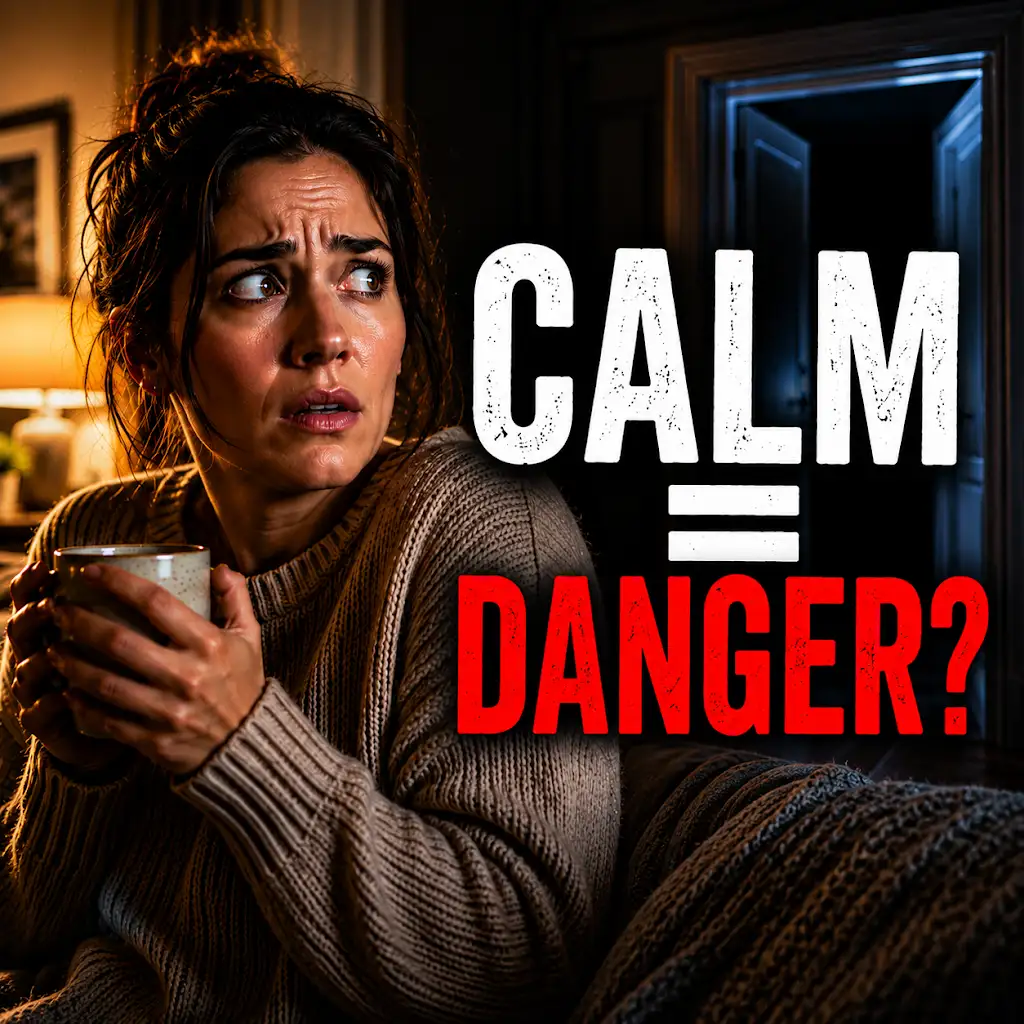
Your Life Is Safe. So Why Are You Still on Alert?
FAQs
1. What are some common reasons why people may feel unsafe even when everything seems fine?
Some common reasons why people may feel unsafe even when everything seems fine include past trauma, anxiety disorders, and a general sense of unease or hypervigilance.
2. How can past trauma contribute to feeling unsafe in safe situations?
Past trauma can contribute to feeling unsafe in safe situations by triggering memories or emotions that make a person feel as though they are in danger, even when they are not. This can lead to hypervigilance and a heightened sense of fear.
3. What role does anxiety play in feeling unsafe when everything is fine?
Anxiety can play a significant role in feeling unsafe when everything is fine, as it can cause a person to perceive potential threats or dangers that are not actually present. This can lead to a constant state of worry and fear.
4. How can individuals address feeling unsafe in safe situations?
Individuals can address feeling unsafe in safe situations by seeking therapy or counseling to address past trauma or anxiety, practicing mindfulness and relaxation techniques, and challenging irrational thoughts and beliefs about safety.
5. When should someone seek professional help for feeling unsafe in safe situations?
Someone should seek professional help for feeling unsafe in safe situations if their fear and anxiety significantly impact their daily life, relationships, or ability to function. This may indicate the presence of an anxiety disorder or unresolved trauma that requires professional intervention.