
You’ve probably heard it a million times: “Just relax.” It’s the go-to advice for stress, for pressure, for pretty much anything that’s making your shoulders ache and your jaw clench. And you, like many others, understand the concept of relaxation. You know it’s supposed to be a good thing, a state of being free from tension and anxiety, a soothing balm for a frazzled nervous system. But for you, the mere suggestion of “relaxing” can trigger a cascade of… well, anxiety. This isn’t a logical inconsistency; it’s a deeply felt paradox, one that leaves you feeling both exhausted by your own inability to do what seems so simple and, ironically, more stressed because of it.
The very phrase “just relax” is loaded. It implies an effortless state, a switch you can flip. But for you, it feels like another task, another item on an impossibly long to-do list.
The Command Performance of Calm
Imagine being told, “Just be happy.” It’s absurd, isn’t it? Happiness isn’t a directive; it’s a byproduct, an emergent feeling. And so it is with relaxation. When someone – a well-meaning friend, a doctor, a therapist – urges you to “just relax,” they’re asking you to perform a state that feels fundamentally outside your control. This instruction, meant to alleviate, actually injects a new layer of pressure: the pressure to achieve relaxation. You’re not just stressed; you’re now stressed about not being relaxed.
The Inner Critic Takes Over
This is where your inner critic, that ever-present voice of self-doubt, really gets to work. “See?” it sneers. “You can’t even relax properly. What’s wrong with you?” This internal judgment amplifies the very tension you’re trying to escape. You find yourself consciously trying to relax, which is the antithesis of relaxation itself. You analyze your breathing, your posture, the muscles in your shoulders, desperately trying to will them to loosen. This intense self-monitoring is inherently anxiety-provoking, a feedback loop of effort and perceived failure.
The Cultural Ideal of Effortless Serenity
Our culture bombards us with images of effortless serenity. Think of yoga retreats with serene participants smiling beatifically, or meditation apps featuring soothing voices guiding you to a state of pure bliss. These idealized portrayals create a benchmark that feels impossibly high. You look at these images and think, “That’s what relaxation should look like, and I’m nowhere near it.” This comparison breeds inadequacy, making your own attempts feel like pale imitations, further fueling your anxiety.
The “Shoulds” and “Oughts” of Relaxation
You find yourself falling into the trap of “shoulds” and “oughts.” You should be able to meditate without your mind racing. You ought to feel a sense of peace after a warm bath. When these expectations aren’t met, you feel like you’re failing at relaxation, not succeeding. This creates a sense of obligation that’s deeply at odds with the inherent freedom that relaxation is supposed to bring.
Many individuals experience a paradoxical response to relaxation, where the very act of unwinding can trigger feelings of anxiety. This phenomenon can be attributed to various factors, including the fear of losing control or the pressure to be productive. For a deeper understanding of this complex relationship between relaxation and anxiety, you can read more in the article found at Unplugged Psych.
The Paradox of Purposeful Leisure
Leisure time, by definition, is meant to be a break from obligation. But for you, even these sacred hours can become a source of dread.
The Productivity of Downtime
You’ve been conditioned to see value in productivity. Your worth is often measured by what you accomplish. So, when you’re not actively engaged in work or chores, there’s a nagging feeling that you should be doing something. This “something” doesn’t have to be productive in the traditional sense, but it needs to feel purposeful. Simply existing, allowing yourself to be still, feels like a wasted opportunity.
The Guilt of Idleness
The guilt of idleness is a powerful force. You might find yourself scrolling through social media, not for enjoyment, but because it’s a way to fill time that doesn’t require active engagement, yet still feels… busy. Or you might try to engage in hobbies, but the pressure to excel or to make progress turns them into another source of stress, rather than genuine escape. This internal conflict between wanting to rest and feeling the need to be “productive” is a fertile ground for anxiety.
The “Achievable” Relaxation Goals
Even the act of planning relaxation can become a source of anxiety. You might schedule meditation sessions, book spa appointments, or plan weekend getaways, all with the intention of de-stressing. But these meticulously planned events can morph into their own form of pressure. What if the meditation doesn’t work? What if the massage isn’t as good as you hoped? What if the vacation is disrupted by unexpected problems? The stakes feel high, and the potential for disappointment can make you anxious about the very activities designed to make you feel better.
The Over-Analysis of Enjoyment
You find yourself dissecting your experiences. “Am I enjoying this enough? Is this the right way to enjoy this?” This over-analysis prevents you from simply immersing yourself in the moment. Instead of feeling the pleasure of a good book, you’re worried about whether you’re reading it “correctly” or if you’re missing out on something more enjoyable. This intellectualizing of pleasure drains it of its spontaneity and ease, leaving you with a sense of unease.
The Fear of What Lies Beneath

When the external pressures of work and life temporarily subside, and you’re nudged to “relax,” it can be terrifying because it opens the door to internal disquiet.
The Uninvited Guests of Your Mind
For many, relaxation is a chance to escape thoughts and worries. But for you, when the distractions are removed, your mind can become a noisy place. The anxieties you’ve been successfully pushing to the side while you’re busy come flooding back. Without the structure of a task or the urgency of a deadline, these thoughts can feel overwhelming and chaotic.
The “What If” Vortex
The “what if” questions, which you’ve likely managed to keep at bay during your busy periods, now have free rein. “What if I fail at this job interview?” “What if this relationship ends?” “What if something terrible happens to my loved ones?” These hypothetical scenarios, devoid of immediate context or solutions, can spiral into a vortex of dread. Relaxation, in this context, feels less like a sanctuary and more like a vulnerable exposure to your deepest fears.
The Unprocessed Emotions Surface
Underneath the surface of your daily hustle, there might be a backlog of unprocessed emotions – sadness, anger, grief, or even a general sense of dissatisfaction. When you finally have the space to “be still,” these emotions can rise to the surface, demanding your attention. This can be disorienting and anxiety-provoking, especially if you haven’t developed healthy coping mechanisms for dealing with them.
The Discomfort of Stillness
You might find yourself physically uncomfortable with stillness. Your body, accustomed to being in motion, might feel restless or agitated. You might fidget, shift your weight, or feel an urge to get up and do something, anything, to escape the unsettling feeling of simply being. This physical manifestation of anxiety can be interpreted as a sign that you’re not cut out for relaxation.
The Illusion of Control

The desire to relax is often intertwined with a desire for control. When you can’t control external circumstances, you try to control your internal state, which, paradoxically, often leads to more anxiety.
The Battle for Internal Peace
You might approach relaxation like a battle to be won. You’re fighting against your own thoughts, your own feelings, and your own perceived inability to achieve the desired state. This combative mindset is inherently stressful. Instead of allowing peace to descend, you’re actively trying to wrestle it into submission, a futile and anxiety-inducing endeavor.
The Frustration of Failed Strategies
You’ve likely tried numerous relaxation techniques: deep breathing exercises, progressive muscle relaxation, mindfulness, guided imagery, you name it. When these don’t yield immediate, perfect results, you feel a sense of frustration. This frustration can quickly morph into anxiety, reinforcing the belief that relaxation is an unattainable luxury.
The Anxiety of the Unpredictable
Life is inherently unpredictable. While you strive for relaxation as a state of calm and predictability, the very act of trying to force it can highlight your lack of control over the world around you. If you can’t even control your own internal state, how can you possibly navigate the chaos of life? This realization can be deeply unsettling and fuel your anxiety.
The Loss of a Familiar Structure
Your busy schedule, while stressful, often provides a familiar structure. It gives you a sense of order and purpose. When you try to step away from that structure in favor of relaxation, you might feel adrift. The absence of your usual routines can be disorienting, leaving you feeling vulnerable and anxious about what comes next.
Many people find that the act of relaxing can sometimes trigger feelings of anxiety, a phenomenon that can be perplexing. This reaction may stem from the sudden shift in focus from the busyness of daily life to a more introspective state, which can bring unresolved thoughts and emotions to the surface. If you’re interested in exploring this topic further, you might find insights in a related article on the Unplugged Psychology website. Understanding the complexities of relaxation and anxiety can help in developing healthier coping strategies. For more information, you can read the article here.
Reclaiming Relaxation, One Imperfect Moment at a Time
| Reasons Why Relaxing Makes Me Anxious |
|---|
| 1. Fear of losing control |
| 2. Feeling guilty for taking a break |
| 3. Overthinking and worrying about the future |
| 4. Pressure to be productive at all times |
| 5. Difficulty switching off from work or responsibilities |
The paradox of relaxation is that the more you try to force it, the further it seems to elude you. But this doesn’t mean you’re broken or incapable of experiencing it. It means you need to adjust your approach.
Redefining Relaxation
Perhaps relaxation isn’t about achieving a state of perfect, unblemished calm. Maybe it’s about finding moments of relative ease, moments where the pressure is slightly less intense. It’s about recognizing that it’s okay for your mind to wander, for your body to feel restless. It’s about embracing the imperfect, messy reality of your inner experience.
The Gradual Unfolding of Peace
Instead of aiming for an immediate transformation, consider relaxation as a gradual unfolding. A few minutes of quiet reading, a short walk in nature, or even just a conscious pause to appreciate a cup of tea can be considered small victories. These small steps, taken consistently, can slowly chip away at the anxiety, creating more space for genuine rest.
Embracing Imperfection
The key is to let go of the idea of perfect relaxation. Understand that your mind will continue to think, your body may still feel tense at times, and that’s okay. The goal isn’t to eliminate all discomfort, but to learn to coexist with it without letting it consume you. This acceptance is a powerful form of self-compassion that can, in turn, reduce anxiety.
Practicing Self-Compassion
When you find yourself feeling anxious about not relaxing, acknowledge it. Instead of judging yourself, offer yourself some kindness. Say to yourself, “It’s okay that this is hard for me. Many people struggle with this. I’m doing my best.” This shift in self-talk can be incredibly liberating and can lessen the pressure you’re placing on yourself.
Finding Your Own Rhythm
There’s no one-size-fits-all approach to relaxation. What works for one person might not work for another. Experiment with different activities and find what genuinely brings you a sense of ease, even if it’s not the picture-perfect serenity you see in magazines. It might be listening to music, engaging in a creative pursuit that you don’t feel pressured to master, or simply spending time with a pet.
The Power of Gentle Experimentation
Approach relaxation techniques with a spirit of gentle experimentation, not as a test. If a particular meditation leaves you feeling more anxious, try a different one, or try a shorter duration. If progressive muscle relaxation feels too intense, perhaps focus on gentle stretching instead. The goal is to discover what helps you feel a little bit better, not to achieve some ultimate state of bliss.
Ultimately, the paradox of relaxation for you isn’t a sign of failure, but a testament to the complex and often contradictory nature of human experience. By understanding the underlying pressures and fears, and by adopting a more self-compassionate and flexible approach, you can begin to navigate this paradox and find moments of genuine, albeit imperfect, peace.
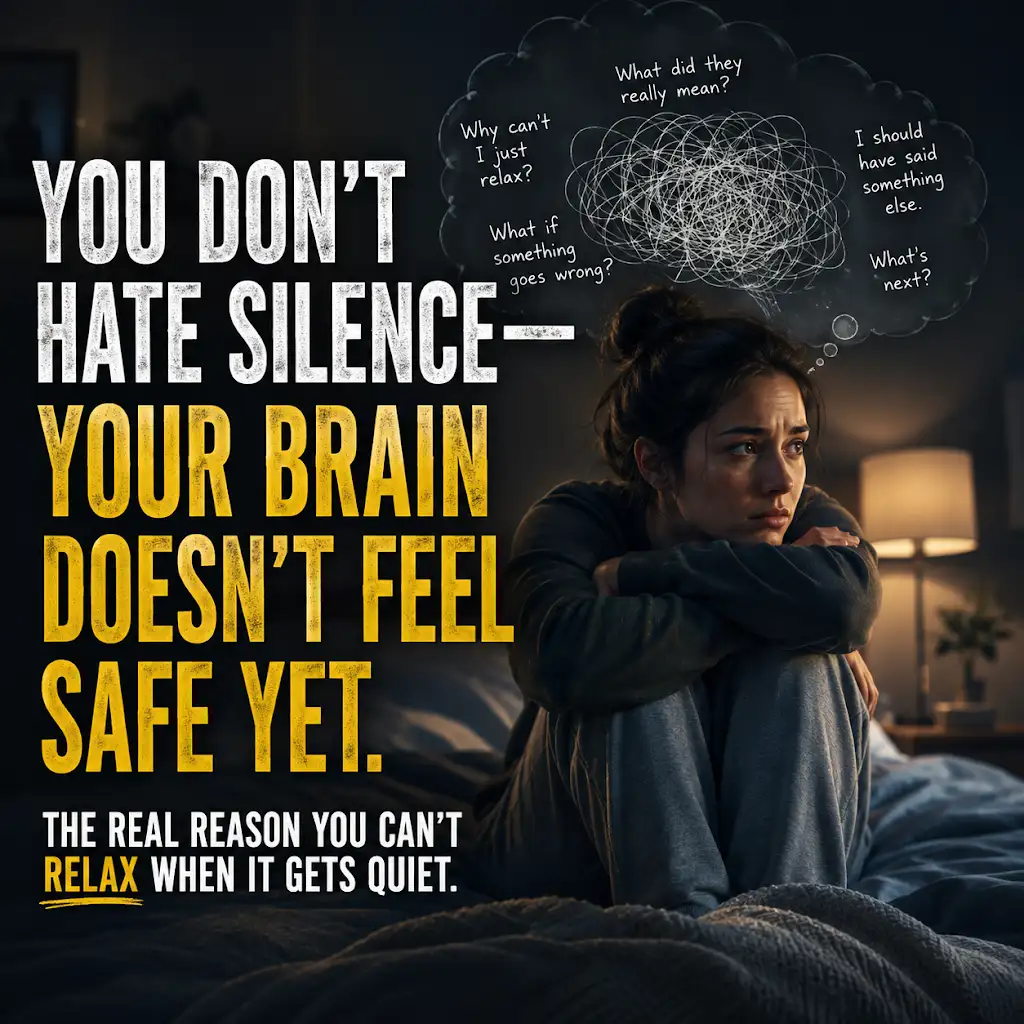
You Don’t Hate Silence—Your Brain Doesn’t Feel Safe Yet
FAQs
What is the relationship between relaxation and anxiety?
Relaxation and anxiety are often interconnected. While relaxation techniques can help reduce anxiety, some individuals may experience anxiety when trying to relax due to various reasons such as feeling guilty for taking time for themselves or fear of losing control.
Why do some people feel anxious when trying to relax?
Some people may feel anxious when trying to relax due to underlying stress, pressure to constantly be productive, or a fear of losing control. Additionally, individuals with anxiety disorders may find it challenging to relax due to heightened sensitivity to stress and difficulty in calming their minds.
How can relaxation techniques contribute to anxiety?
Relaxation techniques such as deep breathing, meditation, or progressive muscle relaxation can sometimes trigger anxiety in individuals who have unresolved emotional issues or trauma. These techniques may bring up uncomfortable emotions or memories, leading to increased anxiety.
What are some strategies to overcome anxiety when trying to relax?
To overcome anxiety when trying to relax, individuals can try incorporating relaxation techniques gradually into their routine, seeking professional help to address underlying anxiety issues, practicing self-compassion, and creating a supportive environment that promotes relaxation.
When should someone seek professional help for anxiety related to relaxation?
If anxiety related to relaxation significantly impacts an individual’s daily life, causes distress, or interferes with their ability to function, it is important to seek professional help. A mental health professional can provide guidance, support, and appropriate treatment for managing anxiety related to relaxation.