You’ve experienced it. That gnawing emptiness, the restless inactivity, the overwhelming sense that time is stretching into an agonizingly slow continuum. This is boredom, a state often dismissed as unproductive, even a failure to engage. Yet, delve into its neurobiological underpinnings, and you discover something far more nuanced, perhaps even essential, for unlocking your most potent creative fuel. Boredom isn’t a void to be feared; it’s a signal, a neurological prompt inviting you to explore the unconsidered landscapes of your mind.
Boredom, at its core, is characterized by a lack of external stimulation. When your senses aren’t bombarded with new and engaging information, your brain doesn’t simply shut down. Instead, it often defaults to a state mediated by a complex network of interconnected brain regions known as the Default Mode Network (DMN). Understanding the DMN is paramount to understanding the fertile ground boredom can cultivate.
What is the Default Mode Network?
The DMN is a collection of brain areas, including the medial prefrontal cortex, posterior cingulate cortex, and angular gyrus, that are most active when you are not focused on the external world. Think of it as your brain’s background operational system, humming along when you’re daydreaming, reflecting on the past, planning for the future, or letting your thoughts wander freely. It’s the seat of your self-referential thought, your internal narrative, and crucially, a hub for associative thinking.
The DMN and Mind-Wandering
When you’re bored, the DMN becomes particularly prominent. This increased activity facilitates mind-wandering, a phenomenon where your attention shifts away from the task at hand (or lack thereof) to your internal thoughts. While sustained mind-wandering can contribute to rumination and anxiety in certain contexts, in the absence of external demands, it becomes a powerful engine for creativity. Your mind begins to connect disparate ideas, sift through memories, and explore hypothetical scenarios without the constraints of immediate relevance. This free association is the raw material from which novel insights are forged.
Boredom as a Catalyst for DMN Activation
The very feeling of boredom acts as a signal that the DMN needs to engage. Without external distractions, your brain is essentially searching for something to do, and the DMN is readily available to provide internal stimulation. This isn’t a random process. The DMN is intricately involved in making sense of your experiences, consolidating memories, and envisioning possibilities. When boredom strikes, it’s as if the DMN is given permission to roam, unhindered by the need to solve an immediate problem or process an urgent sensory input. This unfettered exploration is a crucial precursor to creative breakthroughs.
The neurobiology of boredom has garnered increasing attention in recent years, particularly regarding its surprising role as a catalyst for creativity. A fascinating article that delves into this connection can be found at Unplugged Psych, where it explores how moments of boredom can stimulate the brain’s default mode network, leading to enhanced creative thinking and problem-solving abilities. By understanding the underlying mechanisms of boredom, we can better harness its potential as a source of creative fuel.
The Role of Dopamine: The Reward of Novelty and Exploration
While often associated with pleasure and reward, the dopaminergic system plays a more multifaceted role in boredom and creativity. It’s not simply about seeking out overt pleasures; dopamine also fuels the pursuit of novelty, the exploration of the unknown, and the satisfaction derived from making new connections.
Dopamine and the Drive for Stimulation
Boredom, paradoxically, can create a mild deficit in dopaminergic signaling related to engagement with external stimuli. This undersupply can then drive you to seek out novel experiences or internal explorations to restore that balance. Your brain, in essence, craves stimulation, and when external sources are lacking, it turns inward, guided by the dopaminergic pathways that make exploration rewarding. This intrinsic drive is your brain’s way of ensuring it doesn’t stagnate.
The Link Between Dopamine and Associative Thinking
Dopamine is instrumental in the brain’s ability to form new associations between previously unconnected information. When you’re bored and your DMN is active, dopamine helps to grease the wheels of these connections. It enhances the plasticity of neural networks, making it easier for your thoughts to jump from one idea to another, forming improbable but potentially brilliant links. This is why seemingly unrelated concepts can converge during periods of enforced idleness, leading to novel solutions or artistic inspiration.
Boredom as a “Dopamine Seeking” State
The feeling of boredom can be understood as a state where the reward pathways are anticipating a novel stimulus. When this stimulus isn’t immediately apparent externally, your brain can initiate internal processes, such as imaginative thought and problem-solving, to generate that sense of reward. This can manifest as a restless urge to do something, anything, which often leads to the very creative endeavors that alleviate the boredom. It’s a self-correcting mechanism, driven by the fundamental role of dopamine in motivating exploration and learning.
The Prefrontal Cortex: Executive Control and Creative Incubation
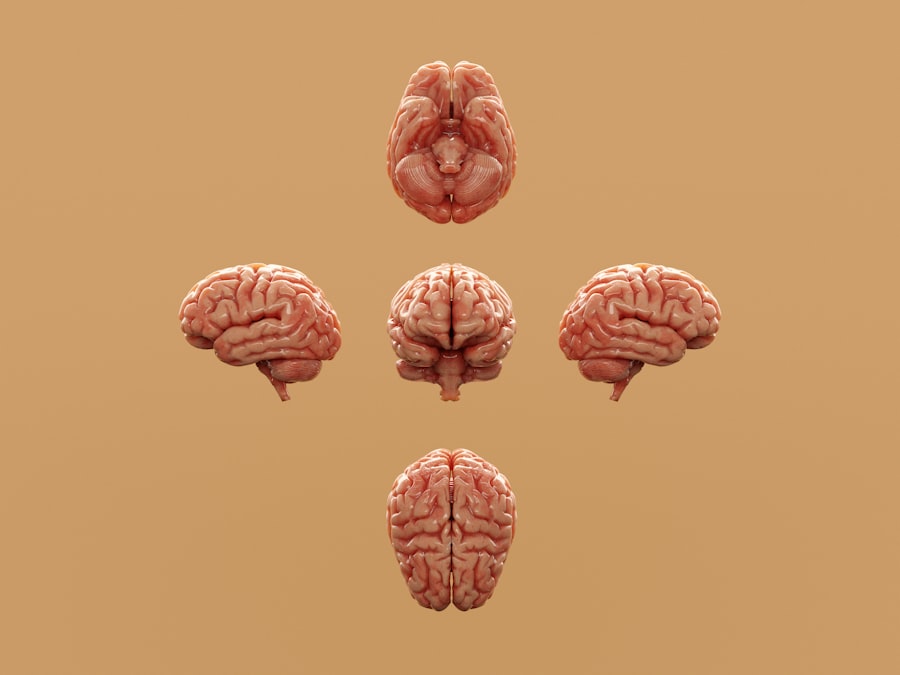
The prefrontal cortex, the brain’s executive control center, has a complex relationship with boredom. While it’s typically associated with focused attention and goal-directed behavior, it also plays a crucial role in the incubation of creative ideas that can arise during periods of reduced external engagement.
The Executive Function and Focused Attention’s Downside
Your executive functions are responsible for planning, decision-making, and controlling your impulses. When you are actively engaged in a task, these functions are in high gear, filtering out distractions and maintaining focus. However, this constant vigilance can sometimes stifle the free-associative leaps necessary for creativity. Boredom, by reducing the demands on focused attention, allows these executive functions to shift their focus from external regulation to internal exploration.
Prefrontal Cortex Demodulation and Creative Insight
During periods of boredom and mind-wandering, there’s evidence suggesting a temporary “demodulation” or reduction in the influence of certain parts of the prefrontal cortex that are heavily involved in top-down cognitive control. This doesn’t mean the prefrontal cortex shuts down; rather, it allows for a less inhibited flow of information from other brain areas, particularly those involved in memory and emotion. This loosening of executive control can be crucial for the “aha!” moments characteristic of creative breakthroughs.
The Role of Working Memory in Incubation
The prefrontal cortex is also heavily involved in working memory, the system that holds and manipulates information temporarily. During boredom, the information curated and processed by your working memory can be revisited and reconfigured in novel ways. This unconscious or semi-conscious processing, often referred to as incubation, allows for the development of solutions or ideas that were not apparent during periods of direct, focused effort. Your prefrontal cortex, in essence, is still working, but on a more subtle, associative level.
The Amygdala and Emotional Undercurrents of Boredom

While often viewed as a “negative” emotion, boredom’s relationship with the amygdala, the brain’s emotional processing center, highlights its potential to signal a need for engagement that can be met through creative pursuits.
The Amygdala’s Detection of Understimulation
The amygdala is sensitive to changes in our environment and internal state. Boredom, as a state of low external stimulation and potential under-arousal, can trigger activity in the amygdala. This activation isn’t necessarily a signal of distress, but rather a notification that your current state is lacking in engagement or perceived threat. It can prompt a desire for change, a shift in arousal level.
Boredom as a Motivational Signal
The subtle unease or dissatisfaction you feel when bored is an emotional signal. The amygdala plays a role in generating these affective states, nudging you towards action to alleviate the discomfort. In the context of creativity, this emotional undercurrent can provide the necessary motivation to engage in activities that are inherently more stimulating, such as problem-solving, artistic expression, or novel exploration. It’s the subconscious desire to move away from the “unpleasantness” of boredom that drives creative output.
Emotional Valence and Creative Exploration
While boredom is often described with negative valence, the “negative” aspect can be a powerful motivator. When you’re trying to escape the feeling of emptiness, your brain is more likely to engage in activities that promise a more positive emotional outcome. This pursuit of a more desirable emotional state can lead you to tap into your creative reserves, as these often offer a fulfilling and engaging experience. The amygdala’s subtle signals might just be the spark you need.
Recent research into the neurobiology of boredom has unveiled intriguing connections to creativity, suggesting that moments of inactivity can serve as a fertile ground for innovative thinking. A fascinating article on this topic can be found at Unplugged Psychology, where the author explores how allowing our minds to wander during periods of boredom can actually fuel creative processes. This insight challenges the conventional view of boredom as merely a negative state, highlighting its potential as a catalyst for imaginative ideas and problem-solving.
Neuronal Plasticity: Boredom as a Sculptor of Your Mind
| Metrics | Neurobiology of Boredom | Creative Fuel |
|---|---|---|
| Dopamine Levels | Decreased | Increased |
| Brain Activity | Low | Heightened |
| Neural Pathways | Underutilized | Activated |
| Attention Span | Shortened | Expanded |
Boredom is not a static state; it actively influences the structure and function of your brain through the remarkable process of neuroplasticity. Far from being a passive recipient of stimuli, your brain is constantly adapting and rewiring itself, and boredom can be a significant sculptor in this ongoing transformation.
Experience-Dependent Plasticity
Your brain’s neurons are not fixed entities. They form new connections, strengthen existing ones, and even prune away unused pathways based on your experiences. Periods of boredom, characterized by reduced external sensory input, allow for different patterns of neuronal activity to emerge. The mind-wandering and associative thinking that often accompany boredom lead to the firing of neurons in novel sequences and combinations, thereby reinforcing these connections.
The Formation of New Associative Pathways
When you’re bored, and your DMN is active, your brain is essentially practicing making connections between different pieces of information. This repeated activation of pathways linking seemingly unrelated concepts leads to an increase in the strength and efficiency of those pathways. Over time, this can enhance your ability to think divergently, to see relationships that others might miss, and to generate original ideas. Boredom, in this respect, is a period of intense, albeit internal, learning.
Boredom and the Flexibility of Cognition
The neuroplastic changes fostered by periods of boredom can contribute to greater cognitive flexibility. This means your ability to switch between different tasks, adapt to new information, and approach problems from multiple perspectives is enhanced. When your brain has been “exercised” through periods of unfocused exploration, it becomes more adept at shifting gears and engaging with novelty when it arises. You are not just passively waiting for inspiration; you are actively preparing your brain to receive and act upon it.
The Long-Term Benefits of Embracing Boredom
By understanding the neurobiology of boredom, you can begin to reframe your perception of this often-unwelcome state. Instead of fighting it, you can learn to embrace it as a vital period of mental recalibration and creative incubation. Allowing yourself moments of unstructured downtime, free from the constant barrage of digital distractions and demanding tasks, is not an indulgence; it is a strategic investment in your cognitive well-being and a powerful catalyst for unlocking your most innovative potential. The quiet hum of an unoccupied mind is not an absence of thought, but rather the fertile ground where your most compelling ideas can take root and flourish.
FAQs
What is the neurobiology of boredom?
The neurobiology of boredom refers to the brain processes and mechanisms involved in the experience of boredom. It involves the activation of specific brain regions and neurotransmitters that contribute to the feeling of boredom.
How does boredom affect the brain?
Boredom can lead to decreased activity in the brain’s reward system, specifically the dopamine pathways. This can result in a lack of motivation and engagement, as well as a decrease in overall cognitive function.
Can boredom be a source of creative fuel?
Yes, research suggests that boredom can actually stimulate creativity. When the brain is not being stimulated by external factors, it is more likely to turn inward and generate its own stimulation, leading to creative thinking and problem-solving.
What are the potential benefits of experiencing boredom?
Experiencing boredom can lead to increased self-reflection, daydreaming, and creativity. It can also encourage individuals to seek out new experiences and activities, ultimately leading to personal growth and development.
How can individuals leverage boredom for creative purposes?
To leverage boredom for creative purposes, individuals can engage in activities that allow for mind-wandering, such as taking walks, meditating, or engaging in artistic pursuits. Allowing the mind to wander can lead to new ideas and insights.