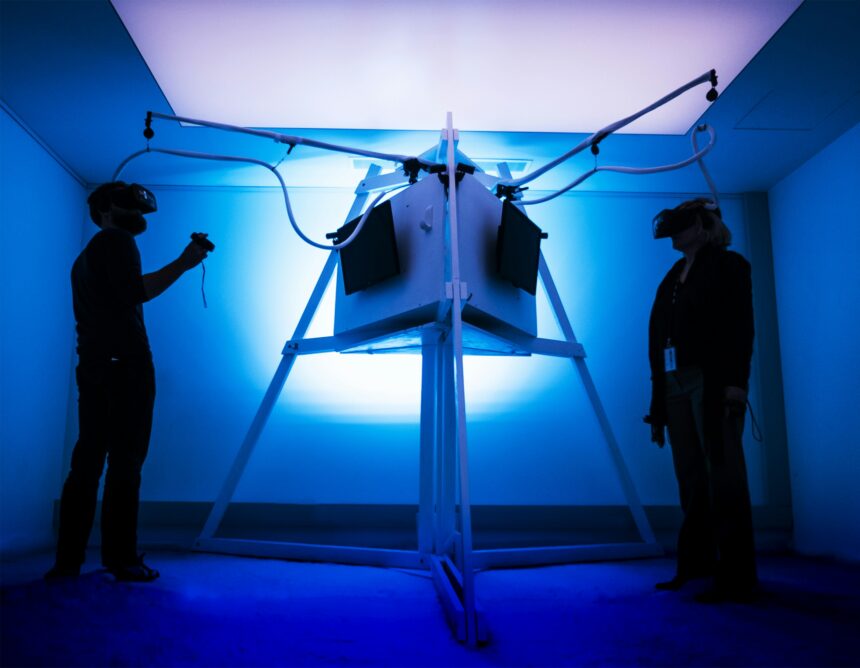
The documentary “The Mind Uncovered: Famous Psychology Experiments” embarks on a captivating journey into the heart of human behavior, shedding light on the groundbreaking studies that have shaped our understanding of the mind. Through vivid reenactments, expert interviews, and historical footage, the film dissects the methodologies, ethical considerations, and enduring legacies of some of psychology’s most iconic experiments. This exploration goes beyond mere academic curiosity, revealing the profound impact these investigations have had on our daily lives, from how we learn and interact to our perceptions of authority and morality. The documentary serves as a potent reminder that the quest to understand ourselves is an ongoing, often surprising, and always essential endeavor.
The early days of psychology were characterized by a fervent desire to establish the field as a legitimate scientific discipline. Researchers sought to move beyond philosophical conjecture and apply rigorous observation and experimentation to unravel the complexities of the human psyche. “The Mind Uncovered” dedicates significant attention to these foundational experiments, illustrating how a few key studies laid the groundwork for decades of future research and irrevocably altered our perception of human nature.
Pavlov’s Conditioning: The Salivating Dog and the Power of Association
One of the most universally recognized experiments in psychology is Ivan Pavlov’s work with salivating dogs. The documentary vividly recreates Pavlov’s laboratory, showcasing the meticulous nature of his research. It explains how Pavlov, initially studying digestion, stumbled upon a remarkable discovery: dogs began to salivate not only at the sight or smell of food but also at stimuli that had consistently preceded food, such as the sound of a bell or the footsteps of the experimenter.
Classical Conditioning: The Building Blocks of Learned Behavior
The film elaborates on the core principles of classical conditioning. It demonstrates how a neutral stimulus (the bell), when paired repeatedly with an unconditioned stimulus (food), becomes a conditioned stimulus capable of eliciting a conditioned response (salivation). The documentary’s reenactments are particularly effective in illustrating this process, showing the gradual association forming in the dogs’ minds. Expert commentary explains how this simple yet profound mechanism underlies much of our learned behavior, from phobias and preferences to the marketing strategies that leverage these associative principles. The documentary emphasizes that Pavlov’s work provided a fundamental framework for understanding how organisms learn to associate environmental cues with outcomes, a cornerstone of behavioral psychology.
Ethical Debates and Enduring Relevance
While Pavlov’s experiments were conducted with animals and are generally considered ethically sound by modern standards, “The Mind Uncovered” does touch upon the broader ethical discussions that have arisen around animal experimentation in psychology. Nevertheless, the enduring relevance of classical conditioning is highlighted, with examples drawn from everyday life, such as advertising jingles that trigger positive feelings or the conditioned fear response to certain sounds associated with past negative experiences. The documentary makes it clear that Pavlov’s insights remain a vital tool for understanding and modifying behavior.
Watson’s Little Albert: The Fearful Child and the Ethics of Emotional Manipulation
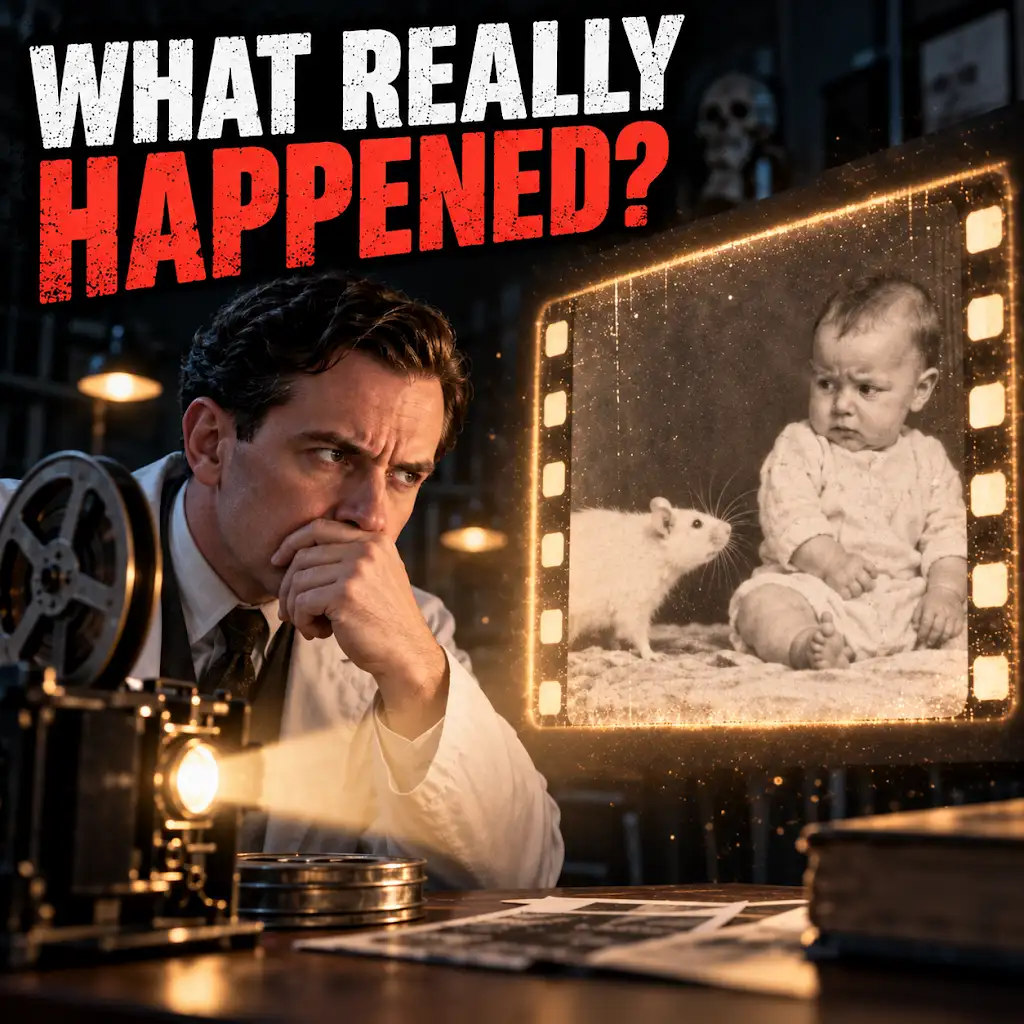
John B. Watson’s “Little Albert” experiment is presented as a stark and ethically troubling examination of how phobias can be conditioned in humans. The documentary, while acknowledging the historical significance of the study, doesn’t shy away from its controversial nature. It depicts the experiment’s setup, where an infant, Albert, is initially unafraid of a white rat. The researchers then introduce a loud, frightening noise (striking a steel bar) every time Albert reached for the rat.
The Acquisition of Phobias: A Terrifying Demonstration
The film meticulously illustrates the process by which Albert’s fear of the rat was established. Within a short period, Albert began to cry and crawl away from the rat even when the noise was absent. More disturbingly, the documentary shows how Albert’s fear generalized to other furry objects, such as a rabbit, a dog, and even a fur coat, highlighting the powerful and often unintended consequences of conditioning. The reenactments effectively convey the distress of the infant, prompting reflection on the ethical boundaries of psychological research.
Ethical Minefields and Unanswered Questions
“The Mind Uncovered” engages in a thorough discussion of the ethical violations inherent in the Little Albert experiment. The lack of parental consent, the deliberate induction of fear, and the failure to decondition Albert’s fear are all scrutinized. The documentary poses critical questions about the responsibility of researchers and the potential for psychological manipulation, even when intentions might be perceived as scientific exploration. The absence of information about Albert’s later life and well-being further underscores the ethical concerns. The film uses this case study as a potent reminder of the need for robust ethical guidelines in psychological research.
For those interested in exploring the fascinating world of psychology experiments, a related article that delves deeper into the implications and outcomes of these studies can be found at Unplugged Psychology. This documentary not only highlights famous experiments but also discusses their ethical considerations and the impact they have had on the field of psychology.
The Social Landscape: Obedience, Conformity, and the Power of the Group
Beyond individual learning, human behavior is profoundly shaped by our social environment. The second major section of “The Mind Uncovered” delves into experiments that explore the potent forces of social influence, demonstrating how the presence and actions of others can dramatically alter our thoughts, feelings, and behaviors, even against our better judgment.
Milgram’s Obedience Experiments: The Shocking Truth About Authority
Stanley Milgram’s experiments on obedience to authority are presented as a cornerstone of social psychology, revealing the unsettling capacity of ordinary individuals to inflict harm when instructed by an authority figure. The documentary recreates the experimental setup, with “teachers” (the participants) instructed to administer increasingly severe electric shocks to “learners” (actors) for incorrect answers. The film emphasizes the participants’ visible distress, their ethical qualms, and their ultimate compliance with the experimenter’s commands.
The Authoritarian Pull: Why We Obey
The documentary meticulously breaks down Milgram’s findings. It highlights the staggering percentage of participants who administered the maximum shock level, despite the supposed agony of the learner. Expert interviews explore the psychological mechanisms at play: the perceived legitimacy of the authority figure, the diffusion of responsibility, and the gradual escalation of obedience, where small concessions lead to larger ones. The film uses archival footage and participant testimonies to illustrate the internal conflict and moral dilemmas faced by those in the experiment. The documentary posits that Milgram’s work offers a chilling insight into historical events characterized by mass obedience and atrocities.
Ethical Controversies and Modern Interpretations
Milgram’s experiments are, without question, ethically controversial. “The Mind Uncovered” dedicates a significant portion to dissecting these ethical concerns, including the deception involved, the psychological distress inflicted upon participants, and the lasting impact of their participation. The documentary grapples with the question of whether the knowledge gained justified the methods used. It also explores how these findings have been reinterpreted and debated in contemporary society, particularly in light of current events and ongoing discussions about institutional power and individual responsibility. The film concludes that while the methods are now considered unacceptable, the insights into human susceptibility to authority remain profoundly relevant and cautionary.
Asch’s Conformity Experiments: The Power of the Majority to Distort Perception
Solomon Asch’s conformity experiments offer another compelling look at social influence, demonstrating how the desire to fit in can lead individuals to deny their own perceptions. The documentary recreates Asch’s simple yet powerful setup: a participant joins a group of confederates who are asked to judge the length of lines. On several trials, the confederates unanimously give obviously incorrect answers.
The Pressure to Be “Normal”: Yielding to the Group
The film visually illustrates the immense social pressure experienced by the lone, naive participant. The reenactments capture the awkward silences, the nervous laughter, and the palpable tension as the participant struggles to reconcile their own clear judgment with the unanimous dissenting opinion of the group. The documentary explains that a significant percentage of participants conformed to the incorrect majority, even when their own perception was demonstrably correct. Expert analysis delves into the psychological reasons for this conformity, including the desire to be liked, the fear of ridicule, and the belief that the group might possess superior information.
The Unseen Influence: When We Doubt Ourselves
“The Mind Uncovered” emphasizes that Asch’s experiments reveal a fundamental human tendency to value social harmony and avoid standing out. The documentary explores the implications of this research for various aspects of life, from classroom dynamics and workplace conformity to political discourse and consumer behavior. It prompts viewers to consider the times they may have silently acquiesced to a group opinion, even when it contradicted their own understanding. The film highlights that the power of conformity is often subtle and unconscious, shaping our decisions in ways we may not even realize.
The Stanford Prison Experiment: Power, Roles, and the Degradation of Humanity
Philip Zimbardo’s infamous Stanford Prison Experiment is presented as a chilling testament to the corrosive effects of power and the rapid adoption of social roles. The documentary uses dramatic reenactments and archival footage to recreate the simulated prison environment where volunteer students were assigned the roles of either guards or prisoners.
The Rapid Descent: From Roles to Reality
The film meticulously details the swift and disturbing transformation of the participants. The guards, given absolute authority, quickly became authoritarian and abusive. The prisoners, stripped of their autonomy, became passive and demoralized. The documentary graphically portrays the psychological torment inflicted upon the prisoners, their increasing despair, and the eventual breakdown of the experiment due to its ethically untenable nature. Expert commentary discusses the concept of deindividuation, where individuals lose their sense of self in a group, and how it contributes to such extreme behavior.
The Dark Side of Human Nature: A Cautionary Tale
“The Mind Uncovered” does not shy away from the profound ethical transgressions of the Stanford Prison Experiment. The documentary dedicates substantial time to discussing the lack of ethical oversight, the failure to intervene when clear harm was occurring, and the long-term psychological impact on the participants. Zimbardo’s own role and his participation in the degradation are critically examined. The film concludes that this experiment serves as a stark and enduring cautionary tale about the ease with which individuals can succumb to the intoxicating allure of power and the devastating consequences for those on the receiving end. It forces a confrontation with the darker potentials of human nature when placed in certain environments.
The Cognitive Conundrum: Memory, Decision-Making, and the Biases of the Mind
The third significant thematic block of “The Mind Uncovered” shifts focus from social dynamics to the inner workings of our minds, exploring the intricacies of cognition and the often-unseen biases that influence how we perceive, remember, and decide. These experiments reveal that our minds are not always the rational, objective entities we might believe them to be.
Loftus’s Misinformation Effect: The Fragility of Memory
Elizabeth Loftus’s groundbreaking research on the misinformation effect is presented as a profound revelation about the reconstructive nature of memory. The documentary explains how memories are not static recordings but are actively reassembled each time we recall them, making them susceptible to distortion. The film details experiments where participants were shown videos of car accidents and then asked questions about the events.
Shaping Our Past: How Suggestions Alter Recollection
The documentary illustrates how subtle changes in questioning—for example, using different verbs like “smashed” versus “hit” when describing the collision—could significantly alter participants’ recollections of details like speed, broken glass, and even the presence of a stop sign. The film emphasizes that this phenomenon is not about deliberate lying but about how post-event information can be integrated into existing memories, creating false recollections. Expert interviews discuss the implications for eyewitness testimony, legal proceedings, and the general understanding of how memory functions.
The Reconstructive Nature of Recollection
“The Mind Uncovered” underscores the idea that memory is a fluid and malleable construct. It highlights the potential for false memories to be implanted, leading individuals to believe they have experienced events that never actually occurred. The documentary discusses the ethical implications of this research, particularly in cases involving recovered memories of abuse, and the importance of critical evaluation of personal recollections. The film leaves viewers with a profound understanding of the fallibility of their own memories and the ease with which they can be unknowingly altered.
Kahneman and Tversky: Prospect Theory and the Irrationality of Choice
Daniel Kahneman and Amos Tversky’s pioneering work on prospect theory, which challenged the traditional economic notion of rational decision-making, is a central focus of this section. The documentary explains how they demonstrated that people often make choices based on perceived gains and losses, rather than purely on objective probabilities.
The Framing Effect: How Presentation Alters Perception
The film uses vivid examples to illustrate the framing effect. For instance, participants are presented with hypothetical medical treatments. One group is told that a treatment has a “90% survival rate,” while another is told it has a “10% mortality rate.” Despite referring to the same outcome, the first framing leads to significantly higher acceptance of the treatment, demonstrating how the way information is presented can powerfully influence decisions. The documentary elaborates on other biases, such as loss aversion, where the pain of losing is felt more intensely than the pleasure of an equivalent gain.
Cognitive Biases: Navigating the Landscape of Imperfect Reasoning
“The Mind Uncovered” explores the wide-ranging implications of prospect theory and cognitive biases. It explains how these irrational tendencies affect financial decisions, consumer choices, risk assessment, and even political opinions. The documentary encourages viewers to become more aware of their own cognitive shortcuts and biases, empowering them to make more informed and less emotionally driven decisions. The film concludes that understanding these psychological underpinnings of choice is crucial for navigating a complex world.
The Developmental Journey: Childhood, Learning, and the Building Blocks of Self

Understanding human behavior is incomplete without examining how it develops over the lifespan. “The Mind Uncovered” dedicates a significant portion to exploring key experiments that have illuminated the stages of childhood development, the processes of learning, and the formation of our sense of self.
Piaget’s Stages of Cognitive Development: The Developing Mind of a Child
Jean Piaget’s influential theory of cognitive development is presented as a revolutionary framework for understanding how children’s thinking evolves. The documentary explains Piaget’s observation-based research, which categorized cognitive development into distinct stages, each characterized by unique ways of thinking and problem-solving.
Sensorimotor, Preoperational, Concrete Operational, and Formal Operational: Milestones of Thinking
The film provides clear and engaging explanations of each of Piaget’s stages. It illustrates concepts like object permanence in the sensorimotor stage, egocentrism in the preoperational stage, and the development of logical reasoning in the concrete operational and formal operational stages through relatable demonstrations. For example, the documentary might show a child struggling with conservation tasks, where they fail to understand that the quantity of a substance remains the same despite changes in its appearance. Expert commentary contextualizes Piaget’s work within its historical period and discusses its enduring impact on early childhood education.
The Active Learner: Constructing Knowledge Through Experience
“The Mind Uncovered” emphasizes Piaget’s view of children as active learners who construct their own understanding of the world through exploration and interaction. The documentary highlights the importance of providing children with opportunities for hands-on learning and experimentation, aligning with Piagetian principles. The film explores how Piaget’s ideas have fundamentally shaped our approach to educating young children and our understanding of the natural progression of intellectual growth.
Bandura’s Bobo Doll Experiment: Observational Learning and the Imitation of Behavior
Albert Bandura’s Bobo doll experiment is showcased as a pivotal study demonstrating the power of observational learning. The documentary recreates Bandura’s experiment, where children observed adults behaving aggressively towards a Bobo doll. The film clearly illustrates how children who witnessed the aggressive behavior were more likely to imitate it themselves when given the opportunity.
Learning by Watching: The Social Learning Theory
The documentary delves into Bandura’s social learning theory, explaining that learning can occur through observation, imitation, and modeling, without direct reinforcement or punishment. Expert interviews discuss how this theory revolutionized our understanding of how children acquire a wide range of behaviors, from language and social skills to aggression and prosocial actions. The film explores the role of media in shaping children’s behavior, linking Bandura’s findings to contemporary discussions about violence in television and video games.
The Role of Models: Shaping Behavior Through Example
“The Mind Uncovered” emphasizes the critical role of role models in shaping behavior, both positively and negatively. The documentary encourages critical reflection on the behaviors we model for children and the impact of media portrayals. The film concludes that Bandura’s work provides a vital understanding of how social influences are internalized and how observing others’ actions can profoundly shape our own, making it crucial to be mindful of the examples we set.
In exploring the fascinating world of psychology, one cannot overlook the impact of famous experiments that have shaped our understanding of human behavior. A related article that delves deeper into these groundbreaking studies is available at Unplugged Psychology, where you can find insightful analyses and discussions on various psychological theories and experiments. This resource provides a comprehensive overview that complements any documentary on the subject, making it an excellent addition for those interested in the intricacies of psychological research.
The Unseen Influences: Perception, Emotion, and the Subtleties of the Mind
| Experiment Name | Researcher(s) | Year | Purpose | Key Findings | Documentary Title |
|---|---|---|---|---|---|
| Stanford Prison Experiment | Philip Zimbardo | 1971 | Investigate the psychological effects of perceived power | Situational forces can lead to abusive behavior | The Stanford Prison Experiment |
| Milgram Obedience Study | Stanley Milgram | 1961 | Examine obedience to authority figures | People obey authority even when causing harm | Obedience: The Milgram Experiment |
| Asch Conformity Experiment | Solomon Asch | 1951 | Study conformity in groups | Individuals conform to group pressure despite clear evidence | Conformity: The Asch Experiment |
| Little Albert Experiment | John B. Watson & Rosalie Rayner | 1920 | Demonstrate classical conditioning of fear | Fear can be conditioned in humans | Little Albert: The Fear Experiment |
| Bobo Doll Experiment | Albert Bandura | 1961 | Investigate observational learning and aggression | Children imitate aggressive behavior observed in adults | Bandura’s Bobo Doll Experiment |
The penultimate section of “The Mind Uncovered” turns its attention to the more nuanced and often unconscious aspects of human experience: perception, emotion, and the subtle ways in which our minds process information and react to the world.
The Gestalt Principles: The Brain’s Quest for Order
The documentary explores the fundamental principles of Gestalt psychology, highlighting how our brains actively organize sensory information into meaningful wholes, rather than simply perceiving individual elements. The film uses classic Gestalt figures and demonstrations to illustrate concepts like proximity, similarity, closure, and continuity.
Seeing Patterns: How Our Brains Create Meaning
Through visually engaging examples, the documentary shows how we tend to group nearby objects, perceive similar items as belonging together, and mentally “fill in the gaps” to complete incomplete figures. Expert commentary explains that these innate organizational tendencies are crucial for making sense of a complex and often ambiguous sensory environment. The film demonstrates how Gestalt principles are applied in design, art, and even how we navigate our daily surroundings, allowing us to perceive order and coherence where there might otherwise be chaos.
The Illusion of Simplicity: The Active Construction of Reality
“The Mind Uncovered” suggests that our perception is not a passive reception of reality but an active construction. The documentary encourages viewers to appreciate the sophisticated processes by which our brains organize information, revealing the inherent drive to find patterns and meaning. The film concludes that understanding Gestalt principles offers insight into how we interpret visual information and how our brains work to create a unified and comprehensible experience of the world.
The Dual-Process Theory: Fast Thinking vs. Slow Thinking
The documentary introduces the concept of dual-process theory, most famously articulated by Daniel Kahneman, which posits that our thinking operates on two distinct systems: System 1 (fast, intuitive, and emotional) and System 2 (slow, deliberate, and logical). The film uses relatable scenarios and thought experiments to differentiate between these two modes of cognition.
Intuition vs. Deliberation: The Two Modes of Thought
The documentary illustrates how System 1 quickly jumps to conclusions based on heuristics and emotions, while System 2 engages in more effortful and reasoned analysis. Examples might include recognizing a familiar face instantly (System 1) versus solving a complex mathematical problem (System 2). Expert commentary discusses how these systems interact and often lead to cognitive biases when System 1 overrules System 2. The film highlights the importance of recognizing when System 1 might be leading us astray and when it’s necessary to engage System 2 for more accurate decision-making.
Navigating the Cognitive Landscape: Understanding Our Mental Machinery
“The Mind Uncovered” emphasizes that understanding dual-process theory is crucial for improving our decision-making and self-awareness. The documentary encourages viewers to consider which system is at play in different situations and to consciously engage System 2 when faced with important choices or potential biases. The film concludes that by recognizing the interplay of these two cognitive systems, we can gain a more profound understanding of our own mental machinery and make more effective judgments in various aspects of life.
The Enduring Legacy: Ethical Reflections and the Future of Psychological Inquiry
The concluding section of “The Mind Uncovered” reflects on the profound and sometimes troubling ethical questions raised by the experiments discussed. It also looks towards the future of psychological research, emphasizing the ongoing quest to understand the human mind.
The Ethical Tightrope: Balancing Discovery and Well-being
The documentary dedicates significant attention to the ethical evolution of psychology. It revisits the controversial aspects of experiments like Milgram’s and the Stanford Prison Experiment, emphasizing how ethical guidelines have become far more stringent. Expert interviews discuss the principles of informed consent, voluntary participation, the right to withdraw, and the imperative to minimize harm.
Learning from Mistakes: The Evolution of Research Ethics
“The Mind Uncovered” highlights that the historical experiments, despite their ethical shortcomings, have been instrumental in shaping current ethical standards. The film argues that the knowledge gained, while controversial, has ultimately led to a more responsible and humane approach to psychological research. The documentary presents a clear narrative of how the field has learned from its past, leading to greater protection for participants.
The Moral Compass of Science
The film underscores that the pursuit of knowledge must always be tempered by a strong moral compass. It encourages ongoing critical dialogue about the ethical implications of new research methodologies and technologies, ensuring that the well-being of participants remains paramount. The documentary leaves the audience with the understanding that ethical considerations are not a barrier to scientific progress but an integral part of its responsible advancement.
The Unfolding Mystery: The Future of Mind Exploration
“The Mind Uncovered” concludes by looking forward, exploring the exciting frontiers of psychological research. The documentary touches upon emerging areas like neuroscience, artificial intelligence, and the study of consciousness. It highlights how technological advancements are providing new tools and insights into the workings of the brain.
New Frontiers: Neuroscience, AI, and Consciousness
The film suggests that the future of psychology lies in interdisciplinary approaches, integrating findings from various fields to achieve a more holistic understanding of human behavior. Expert commentary points to the potential of brain imaging techniques to unlock the neural basis of thought and emotion, and the development of AI to model and understand cognitive processes. The documentary sparks curiosity about how these advancements might further revolutionize our understanding of ourselves.
The Ongoing Quest: A Never-Ending Journey of Self-Discovery
Ultimately, “The Mind Uncovered” presents the exploration of the human mind as an ongoing, dynamic, and deeply human endeavor. The documentary leaves the viewer with a sense of wonder and a renewed appreciation for the complexity and resilience of the human psyche. It is a powerful testament to the enduring fascination with understanding what makes us tick, a quest that continues to drive scientific inquiry and shape our understanding of what it means to be human. The film serves as an accessible and engaging introduction to the landmark studies that have illuminated the mind, inspiring further exploration and critical thinking about the human condition.
The Little Albert Experiment May Not Have Worked
FAQs
What is the documentary about famous psychology experiments?
The documentary explores various well-known psychology experiments conducted throughout history, shedding light on their significance and impact on the field of psychology.
Which famous psychology experiments are featured in the documentary?
Some of the experiments that may be featured include the Stanford Prison Experiment, Milgram Experiment, Little Albert Experiment, and the Marshmallow Test, among others.
Why are these psychology experiments considered famous?
These experiments are considered famous because they have had a significant influence on the field of psychology, shaping our understanding of human behavior, ethics, and the mind.
What can viewers learn from watching the documentary on famous psychology experiments?
Viewers can gain insights into the methodologies, ethical considerations, and outcomes of these experiments, as well as the implications they have had on psychology and society as a whole.
Where can one watch the documentary on famous psychology experiments?
The documentary may be available for streaming on various platforms such as Netflix, Amazon Prime, or educational websites specializing in psychology content.