
The story of “Little Albert” is a cornerstone of introductory psychology, a stark and often unsettling illustration of classical conditioning. In a series of experiments conducted in the early 1920s at Johns Hopkins University, psychologist John B. Watson and his graduate student Rosalie Rayner sought to demonstrate that fear could be conditioned in a human infant. The results were dramatic: a healthy, nine-month-old boy, initially unafraid of a white rat, was conditioned to fear it, along with a growing list of other furry objects and even abstract concepts. Yet, despite the profound impact of these experiments on our understanding of learning and emotion, a persistent mystery has clung to the identity of the child himself, casting a long shadow over this celebrated case study. The enigma of Little Albert’s true identity, and the ethical questions it raises, continues to fuel debate and investigation decades later.
The Genesis of a Controversial Study: Watson’s Bold Hypothesis
John B. Watson, a pioneering figure in behavioral psychology, was driven by a conviction that human behavior was primarily a product of environmental influences and learned associations. He famously declared, “Give me a dozen healthy infants, well-formed, and my own specified world to bring them up in, and I’ll guarantee to take any one at random and train him to become any type of specialist I might select – doctor, lawyer, artist, merchant-chief and, yes, even beggar-man and thief, regardless of his talents, penchants, tendencies, abilities, vocations, and race of his ancestors.” This deterministic worldview formed the bedrock of his experimental approach, and the Little Albert study was designed to provide compelling evidence for his theories on the formation of emotional responses.
Watson’s Behavioral Philosophy: Environment Over Inheritance
Watson’s radical behaviorism rejected the notion of innate predispositions or inherited traits as significant drivers of behavior. He believed that the mind was a blank slate at birth, and all behaviors, including complex emotions like fear, were acquired through learning. This stood in stark contrast to the prevailing psychological thought of the time, which often emphasized the role of instinct and genetics. The Little Albert experiments were intended to shatter any lingering doubts about the power of environmental conditioning in shaping fundamental human responses.
The Scientific Context: Classical Conditioning and Emotional Learning
The experiments were conducted in the context of Ivan Pavlov’s groundbreaking work on classical conditioning in dogs. Pavlov had demonstrated how a neutral stimulus (like a bell) could become associated with an unconditioned stimulus (food) to elicit a conditioned response (salivation). Watson aimed to replicate and extend these principles to human emotions, specifically fear, which he considered one of the few innate emotional responses in infants, alongside love and rage. He hypothesized that fear of specific objects could be learned through association with a naturally fear-inducing stimulus.
The identity mystery surrounding Little Albert has intrigued psychologists and historians for decades, raising questions about the ethical implications of early behavioral experiments. For those interested in exploring this topic further, a related article can be found at Unplugged Psychology, which delves into the legacy of John B. Watson’s work and its impact on the field of psychology.
The Experiment Unveiled: Conditioning Fear in a Child
The Little Albert experiments, as documented in a 1920 paper, are notorious for their ethical shortcomings. Watson and Rayner selected an infant from the Harriet Lane Home for the Care of Invalid Children at Johns Hopkins Hospital, whom they referred to as “Albert B.” The child was described as healthy and displaying no prior fear of stimuli such as a white rat, a rabbit, a dog, a monkey, masks, or burning newspapers.
The Initial Baseline: Assessing Albert’s Natural Reactions
Before introducing any conditioning, Watson and Rayner meticulously documented Albert’s reactions to a variety of stimuli. This baseline assessment was crucial to establishing that Albert was not inherently fearful of the objects that would later become the focus of the conditioning. He showed no distress when presented with the white rat, which he even reached out to touch. This initial lack of fear was the blank canvas upon which Watson and Rayner intended to paint their demonstration of learned fear.
The Conditioning Process: A Symphony of Fear
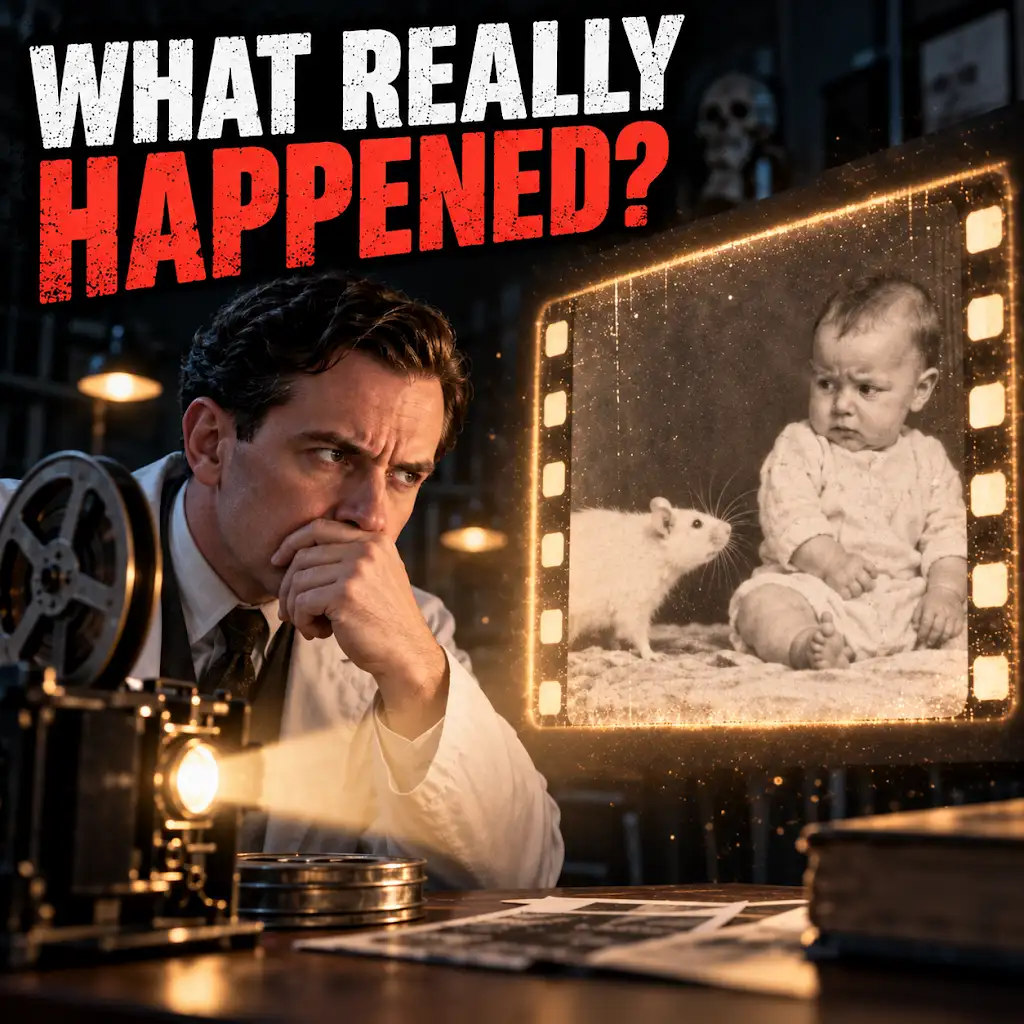
The conditioning involved presenting Albert with the white rat while simultaneously striking a steel bar behind him with a hammer. This produced a loud, startling noise that invariably caused the infant to cry and display signs of fear. After repeated pairings of the rat and the loud noise, Albert began to associate the two. Eventually, the mere sight of the white rat, without the accompanying noise, was enough to elicit a fearful response, including crying, whimpering, and attempts to crawl away.
Generalization and Retention: The Lingering Impact
The conditioning did not stop with the white rat. Watson and Rayner observed a phenomenon known as stimulus generalization, where Albert began to exhibit fear towards objects similar to the rat, such as a rabbit, a dog, and even a fur coat. They also noted that the conditioned fear persisted for some time, suggesting a degree of retention. The experiment concluded with Albert being removed from the hospital before any deconditioning procedures could be implemented, a fact that has been a major point of ethical criticism.
The Phantom Child: The Elusive Identity of Little Albert
For decades, the true identity of Little Albert remained a subject of speculation. The published reports offered only the pseudonym “Albert B.” and limited biographical details, citing the need for anonymity. This lack of concrete information left a void that fueled various theories and investigations, as psychologists and historians grappled with the ethical implications of the study and the desire to understand the full story of the child involved.
The Search for Albert: Early Investigations and Leading Candidates
Early attempts to identify Little Albert were hampered by the passage of time and the scarcity of records. Several individuals were proposed as potential candidates, each with varying degrees of supporting evidence. These early investigations, while often speculative, laid the groundwork for more rigorous historical research.
The Breakthrough: The Work of Russ H. Albert and Colleagues
A significant breakthrough in identifying Little Albert came with the diligent research of Russ H. Albert, an educator and psychologist, along with his colleagues. Through painstaking archival research, they unearthed documents that pointed towards a specific child named Albert Bartholomew (or sometimes, Albert Bagner) who was an orphan residing at the Harriet Lane Home during the time of the experiments. Their findings were published in the journal American Psychologist in 2007, marking a pivotal moment in unraveling the mystery.
Counterarguments and Ongoing Debates: The Persistence of Doubt
Despite the compelling evidence presented by Russ H. Albert and his team, the identity of Little Albert remains a topic of ongoing debate within the psychological community. Some researchers have raised questions about the completeness of the evidence, pointing to discrepancies in dates or names. The possibility of multiple Alberts being involved, or the misinterpretation of historical records, has been suggested, keeping the mystery alive for some.
Ethical Shadows: The Moral Quandary of the Little Albert Study
The Little Albert experiments, while influential, are now widely recognized as a landmark example of unethical psychological research. The study raises profound questions about the responsibility of researchers towards their participants, especially vulnerable infants. The lack of informed consent, the potential for lasting psychological harm, and the failure to decondition the child are all points of grave ethical concern.
The Absence of Consent: A Violation of Autonomy
In the early 20th century, ethical guidelines for psychological research were rudimentary compared to today’s standards. The concept of informed consent, particularly for infants who cannot verbally agree, was not a central tenet. Albert, as an orphan, was not in a position to consent to the experiment, and it is unclear if his guardians, if any, were fully aware of the nature and potential risks of the procedures.
The Potential for Lasting Harm: A Childhood Scar?
The most significant ethical criticism revolves around the potential for permanent psychological damage to Albert. Watson and Rayner successfully conditioned a fear response, and there is no evidence that they ever attempted to reverse this conditioning. The long-term consequences for Albert, if he experienced ongoing fear and anxiety as a result of the experiment, remain unknown and deeply troubling.
The Failure to Decondition: An Unresolved Trauma
The fact that the study concluded with Albert still exhibiting conditioned fears, and that he was subsequently removed from the hospital without any attempt at deconditioning, is a particularly egregious ethical lapse. Deconditioning would have involved systematically reintroducing Albert to the feared stimuli without the aversive noise, aiming to extinguish the learned fear response. This crucial step was omitted, leaving the child potentially carrying his conditioned fears into his life.
The identity mystery surrounding Little Albert has intrigued psychologists and historians alike for decades, leading to various theories about the child’s true identity and the implications of the experiment conducted by John B. Watson and Rosalie Rayner. For those interested in exploring this topic further, a related article can be found on Unplugged Psychology, which delves into the ethical considerations and the lasting impact of the Little Albert experiment on the field of psychology. You can read more about it in this insightful piece at Unplugged Psychology.
The Legacy of Little Albert: Lessons Learned and Unanswered Questions
The story of Little Albert, despite its dark undertones, has undeniably shaped the field of psychology. It serves as a powerful, albeit controversial, illustration of the principles of classical conditioning and the malleability of human emotions. However, the enduring mystery surrounding his identity and the unresolved ethical questions continue to prompt reflection and discussion.
The Influence on Learning Theory: A Pivotal Demonstration
The Little Albert experiments provided a compelling, real-world example of how fear could be learned. This reinforced the behaviorist perspective and had a significant impact on the development of learning theories, influencing subsequent research on phobias, anxieties, and therapeutic interventions aimed at modifying learned behaviors.
The Evolution of Research Ethics: A Cautionary Tale
The ethical shortcomings of the Little Albert study have served as a crucial cautionary tale, contributing to the development of robust ethical guidelines and review boards in psychological research. The case highlights the paramount importance of protecting vulnerable participants and ensuring that the pursuit of knowledge does not come at the expense of human welfare.
The Enduring Enigma: A Call for Continued Inquiry
The persistence of the Little Albert identity mystery, even with recent advancements, underscores the complexities of historical research and the human desire for closure. It also raises broader questions about the responsibility of researchers to account for the well-being of their subjects, even retrospectively. While some may find the current identification of Albert Bartholomew satisfactory, the lingering doubts and the ethical implications ensure that the story of Little Albert will continue to be a subject of scrutiny and debate for years to come. The shadow of the child, whose fear was so expertly manufactured, still looms large, reminding us of the powerful and sometimes unsettling ways in which our environment shapes who we become.
The Little Albert Experiment May Not Have Worked
FAQs

What is the Little Albert identity mystery?
The Little Albert identity mystery refers to the ongoing debate and speculation surrounding the true identity of the infant known as “Little Albert” in the famous psychology experiment conducted by John B. Watson and Rosalie Rayner in 1920.
Why is the identity of Little Albert still a mystery?
The identity of Little Albert remains a mystery because the actual identity of the infant participant in the experiment was never definitively confirmed or documented by Watson and Rayner. There are various theories and claims regarding who Little Albert might have been, but none have been conclusively proven.
What was the significance of the Little Albert experiment?
The Little Albert experiment is significant in the field of psychology as it demonstrated classical conditioning principles and the potential for fear responses to be learned through association. The study had a lasting impact on the understanding of behaviorism and the influence of early experiences on emotional development.
What are some theories about the identity of Little Albert?
Some theories about the identity of Little Albert suggest that he may have been the son of a wet nurse at Johns Hopkins University, while others propose that he could have been the child of a hospital employee or a child from a nearby orphanage. However, none of these theories have been definitively proven.
How has the mystery of Little Albert’s identity influenced psychology research?
The mystery surrounding Little Albert’s identity has sparked interest and debate among psychologists and researchers, leading to discussions about research ethics, participant confidentiality, and the importance of documenting research participants. The case of Little Albert continues to be a topic of interest and discussion in the field of psychology.