The annals of psychological research are punctuated by studies that, while controversial, have irrevocably shaped our understanding of human behavior. Among these, the “Little Albert Experiment” stands as a particularly chilling, yet undeniably significant, landmark. For decades, the details of this early 20th-century study, conducted by psychologist John B. Watson and his graduate student Rosalie Rayner at Johns Hopkins University, have been disseminated through textbooks and academic discussions. However, the actual visual evidence of the experiment, particularly the impact on its infant subject, Little Albert, has remained largely elusive, confined to grainy black-and-white still photographs. Now, a groundbreaking discovery promises to illuminate this dark chapter with unprecedented clarity: the revelation of rare, previously unseen footage of the Little Albert Experiment.
This article delves into the significance of this newfound visual documentation, exploring its potential to deepen our understanding of classical conditioning, the ethical quagmire it represents, and the enduring legacy of a study that continues to provoke debate and introspection within the scientific community. We will examine the historical context, the methodology employed, the controversial findings, and the profound ethical questions that have persistently shadowed this research. The availability of this footage marks a pivotal moment, allowing for a more visceral and nuanced engagement with one of psychology’s most notorious case studies.
The Little Albert experiment, conducted by John B. Watson and Rosalie Rayner in the early 20th century, remains a significant study in the field of psychology, particularly in understanding classical conditioning and emotional responses. For those interested in exploring more about this groundbreaking experiment and its implications, you can read a related article that delves deeper into the ethical considerations and the impact of the findings on modern psychology. Check it out here: Unplugged Psychology.
A Glimpse into the Past: The Genesis of the Little Albert Experiment
The early 20th century was a period of burgeoning scientific inquiry, where the nascent field of psychology sought to establish itself as a rigorous and empirical discipline. John B. Watson, a pioneering figure in behaviorism, was deeply influential in this movement. Watson advocated for a scientific approach to psychology that focused exclusively on observable behavior, rejecting introspective methods and the study of subjective mental states. His philosophy, known as behaviorism, posited that all behavior is learned through interaction with the environment.
The Behaviorist Manifesto
Watson’s seminal 1913 paper, “Psychology as the Behaviorist Views It,” is often considered the foundational text of behaviorism. In this paper, he argued that psychology should be a science of behavior, not of the mind. He believed that by studying observable stimulus-response relationships, psychologists could predict and control behavior. This radical departure from previous psychological thought, which often delved into consciousness and internal mental processes, laid the groundwork for a new era of experimental psychology.
The Search for a Scientific Demonstration
Driven by his behaviorist principles, Watson sought to demonstrate the power of conditioning in shaping emotional responses in humans. He believed that fears and phobias, often considered innate or deeply rooted in childhood experiences, could in fact be learned through associative processes. He aimed to prove that even complex emotional reactions could be systematically elicited and conditioned, thus supporting his claim that the environment, rather than genetics or innate predispositions, was the primary determinant of behavior.
The Selection of a Subject
The identity of “Little Albert” has been a subject of much speculation and historical investigation. While Watson and Rayner did not reveal the child’s real name, subsequent research has strongly suggested that he was Albert Barger, an infant residing in the Harriet Lane Home for Invalid Children at Johns Hopkins Hospital. This institutional setting likely facilitated Watson’s access to an infant who was readily available for study and whose caretaking environment could be controlled to some extent. The limited options for subjects in such research during that era, coupled with the ethical ambiguities of the time, contributed to the selection of an orphan or institutionalized child, a practice that would be unthinkable today.
The Controversial Methodology: Conditioning Fear in a Young Child

The Little Albert Experiment, as it is commonly recounted, involved conditioning a fear response in a healthy, nine-month-old infant to a formerly neutral stimulus. The experiment proceeded in a series of stages, meticulously documented in the original psychological reports, but the visual impact of these stages was always a matter of inference based on descriptions and still images. The newly revealed footage promises to transform these inferences into stark visual realities.
Stage One: Baseline and Neutral Stimuli
Initially, Watson and Rayner established Albert’s baseline emotional responses to a variety of stimuli. This included presenting him with a white rat, a rabbit, a dog, a monkey, masks with and without hair, and burning newspapers. As expected, Albert displayed no fear of these objects. He actively reached for them and showed signs of curiosity and engagement. This initial phase was crucial for demonstrating that the fear response was not innate to these particular stimuli. The presence of the white rat was particularly important, as it would become the conditioned stimulus.
Stage Two: The Introduction of the Unconditioned Stimulus
The core of the conditioning process involved pairing the white rat with an aversive, unconditioned stimulus. This unconditioned stimulus was a loud, startling noise, produced by striking a steel bar with a hammer behind Albert’s head. Each time Albert was presented with the white rat, the loud noise was immediately produced. This pairing was designed to create a conditioned emotional response of fear. The original reports describe Albert’s cries and attempts to escape when the noise was made, indicating a genuine fear response to the startling sound. The footage will likely capture this crucial interaction with unprecedented detail, showcasing Albert’s immediate and visceral reaction to the sudden, jarring sound.
Stage Three: Generalization of the Fear Response
Following repeated pairings of the white rat and the loud noise, Watson and Rayner observed that Albert began to exhibit fear responses to the white rat alone. He would cry, whimper, and attempt to crawl away when the rat was presented, even without the accompanying noise. This demonstrated that the fear had been successfully conditioned to the rat. However, the experiment did not stop there. The researchers also observed a phenomenon known as stimulus generalization.
The Spread of Fear: From Rat to Other White, Fluffy Objects
The conditioned fear response began to extend beyond the white rat. Albert started to display fear towards other furry, white objects. This included a rabbit, a fur coat, and even a Santa Claus mask with a white beard. This generalization suggested that Albert was not just afraid of the specific rat, but rather of the general characteristics associated with it, such as its white color and furry texture. The footage is expected to provide compelling visual evidence of this generalization, showing Albert’s fearful reactions to these new stimuli, reinforcing the breadth of the conditioning.
Stage Four: The Ethical Void and the End of the Experiment
A significant and deeply troubling aspect of the Little Albert Experiment is its abrupt and ethically questionable conclusion. After approximately one month, and after observing the generalization of fear, Albert was removed from the hospital by his mother. Watson and Rayner did not undertake any systematic deconditioning procedures. This means they did not attempt to extinguish the conditioned fear response in Albert. The expectation was that they would reverse the conditioning, but this crucial step was omitted. The implication of this omission is that Albert likely left the hospital with a persistent, conditioned fear that was never addressed. The rare footage may offer glimpses into Albert’s state as the experiment concluded, perhaps hinting at his emotional condition, or the lack of any intervention to mitigate the learned fear.
The Chilling Findings: Behaviorism in Action
The results of the Little Albert Experiment, though ethically fraught, provided significant empirical support for Watson’s behaviorist theories, particularly concerning classical conditioning and the acquisition of emotional responses. The study demonstrated, in a stark and undeniable manner, how learned associations could create powerful behavioral changes.
Classical Conditioning at Play
The experiment is a textbook example of classical conditioning, a learning process first described by Ivan Pavlov. In this paradigm, a neutral stimulus (the white rat) is repeatedly paired with an unconditioned stimulus (the loud noise) that naturally elicits an unconditioned response (fear). After sufficient pairings, the neutral stimulus becomes a conditioned stimulus, capable of eliciting a conditioned response (fear) on its own. Little Albert’s reactions to the white rat after conditioning directly illustrate this principle.
The Power of Generalization
The phenomenon of stimulus generalization observed in Little Albert was also a critical finding. It suggested that learned responses are not always specific to the exact stimulus that triggered them. Instead, similar stimuli can also elicit the conditioned response. This has profound implications for understanding how fears, anxieties, and even preferences can develop and spread. The footage may offer a clearer visual representation of how Albert’s fear manifested across various objects that shared characteristics with the original conditioned stimulus, thereby underscoring the concept of generalization.
The Omission of Deconditioning: A Lingering Ethical Shadow
Perhaps the most contentious aspect of the findings is the deliberate omission of deconditioning. Watson and Rayner claimed that they intended to reverse the conditioning, but the opportunity was lost when Albert was removed. This decision has been widely criticized by ethicists and psychologists alike. It left Albert with a seemingly irrational fear, a direct consequence of a scientific experiment. The lack of follow-up and deconditioning has led to lasting ethical debates and has heavily influenced the development of ethical guidelines for psychological research involving human subjects. The rare footage may, by its very existence, prompt a re-examination of the researchers’ decisions and the responsibility they held towards their subject.
The Little Albert experiment is a fascinating yet controversial study in psychology that explored classical conditioning in humans. For those interested in delving deeper into the implications and ethical considerations surrounding this experiment, a related article can provide valuable insights. You can read more about the broader context of psychological experiments and their impact on the field by visiting this article. Understanding these historical studies helps us appreciate the evolution of ethical standards in psychological research.
The Ethical Abyss: Questioning the Morality of the Experiment
| Metric | Details |
|---|---|
| Experiment Name | Little Albert Experiment |
| Researcher | John B. Watson and Rosalie Rayner |
| Date Conducted | 1920 |
| Subject | Albert B. (an infant) |
| Purpose | To demonstrate classical conditioning in humans |
| Conditioned Stimulus (CS) | White rat |
| Unconditioned Stimulus (US) | Loud noise (striking a steel bar) |
| Conditioned Response (CR) | Fear of white rat and similar objects |
| Duration of Experiment | Approximately 7 weeks |
| Footage Availability | Rare; some clips exist in archives and documentaries |
| Ethical Considerations | Highly controversial; lack of informed consent and follow-up |
The Little Albert Experiment remains one of the most frequently cited examples of unethical research in psychology. Even by the standards of the time, the experiment pushed the boundaries of acceptable scientific practice, and by today’s standards, it is considered profoundly unethical. The revelation of rare footage will undoubtedly amplify these ethical concerns, allowing for a more profound contemplation of the researchers’ actions and their impact.
Informed Consent: A Concept Unforeseen
In the early 20th century, the concept of informed consent for research participants, particularly infants, was virtually non-existent. Albert, being too young to comprehend or consent, was subjected to a potentially distressing and harmful procedure without any form of agreement from a guardian who fully understood the risks involved. While Albert’s mother was present, the extent of her understanding and the voluntariness of her consent remain subjects of debate. The footage may offer insights into the interactions between Albert’s mother and the researchers, or the environment in which he was housed, potentially shedding light on the power dynamics and the level of awareness regarding the experiment’s nature.
The Principle of Non-Maleficence: “Do No Harm”
A cornerstone of modern ethical research is the principle of non-maleficence, which dictates that researchers must avoid causing harm to their participants. The Little Albert Experiment demonstrably violated this principle. By intentionally conditioning a fear response in an infant, and then failing to reverse it, Watson and Rayner inflicted psychological distress and potentially long-lasting emotional consequences on their subject. The rare footage, by providing a more direct and impactful visual of Albert’s distress, will undoubtedly underscore the gravity of this ethical transgression. It will allow viewers to witness, rather than just read about, the potential suffering of the child.
The Long-Term Consequences: A Lingering Question Mark
The ultimate fate of Little Albert and the long-term impact of the experiment on his life remain largely unknown. While some later investigations have suggested potential identities for Albert, definitive proof and detailed accounts of his life after the experiment are scarce. The lack of follow-up and deconditioning has left a lingering question mark over his emotional well-being. The newly revealed footage, by offering a more intimate look at Albert during the experiment, may fuel further investigation into his life and the lasting effects of this controversial study. It might provide clues or impetus for descendants or historians to seek out more information, aiming to bring closure to a chapter that has remained open for so long.
The Legacy of Little Albert: Shaping Ethics and Understanding
Despite its profound ethical shortcomings, the Little Albert Experiment has undeniably left an indelible mark on the field of psychology. It has served as a potent, albeit negative, teaching tool, highlighting the importance of ethical considerations in research and contributing to the development of rigorous ethical guidelines. Furthermore, the study continues to inform our understanding of learning, fear acquisition, and the power of environmental influences on behavior.
The Evolution of Ethical Guidelines
The controversy surrounding the Little Albert Experiment, along with other ethically questionable studies of the past, played a crucial role in the evolution of ethical guidelines for psychological research. The establishment of Institutional Review Boards (IRBs) and the formalization of informed consent procedures are direct responses to the need to protect human participants from exploitation and harm. The Little Albert Experiment serves as a stark reminder of what can happen when ethical boundaries are crossed. The rare footage will likely serve as a powerful visual aid in ethics education, reinforcing the lessons learned from this historical study.
Insights into Learning and Emotional Development
On a purely scientific level, the experiment offered valuable insights into the mechanisms of classical conditioning and the development of emotional responses. It demonstrated that fear, often considered an innate or deeply ingrained emotion, could be learned and generalized. This understanding has been foundational in the development of behavioral therapies used to treat phobias and other anxiety disorders. The visual documentation can offer a more tangible understanding of these learning processes, making them more accessible and impactful for students and researchers alike.
The Enduring Debate: Science vs. Morality
The Little Albert Experiment continues to provoke a debate that pits the pursuit of scientific knowledge against fundamental moral principles. While the findings were significant, the cost to the individual subject raises questions about whether such knowledge is worth the ethical price. The revelation of rare footage will undoubtedly reignite this debate, forcing a renewed confrontation with the complex relationship between scientific progress and human welfare. It presents an opportunity to critically assess the motivations behind such research, the responsibility of the researchers, and the enduring implications for both the individuals involved and the scientific community as a whole. The footage will serve as a potent catalyst for this ongoing and vital discussion.
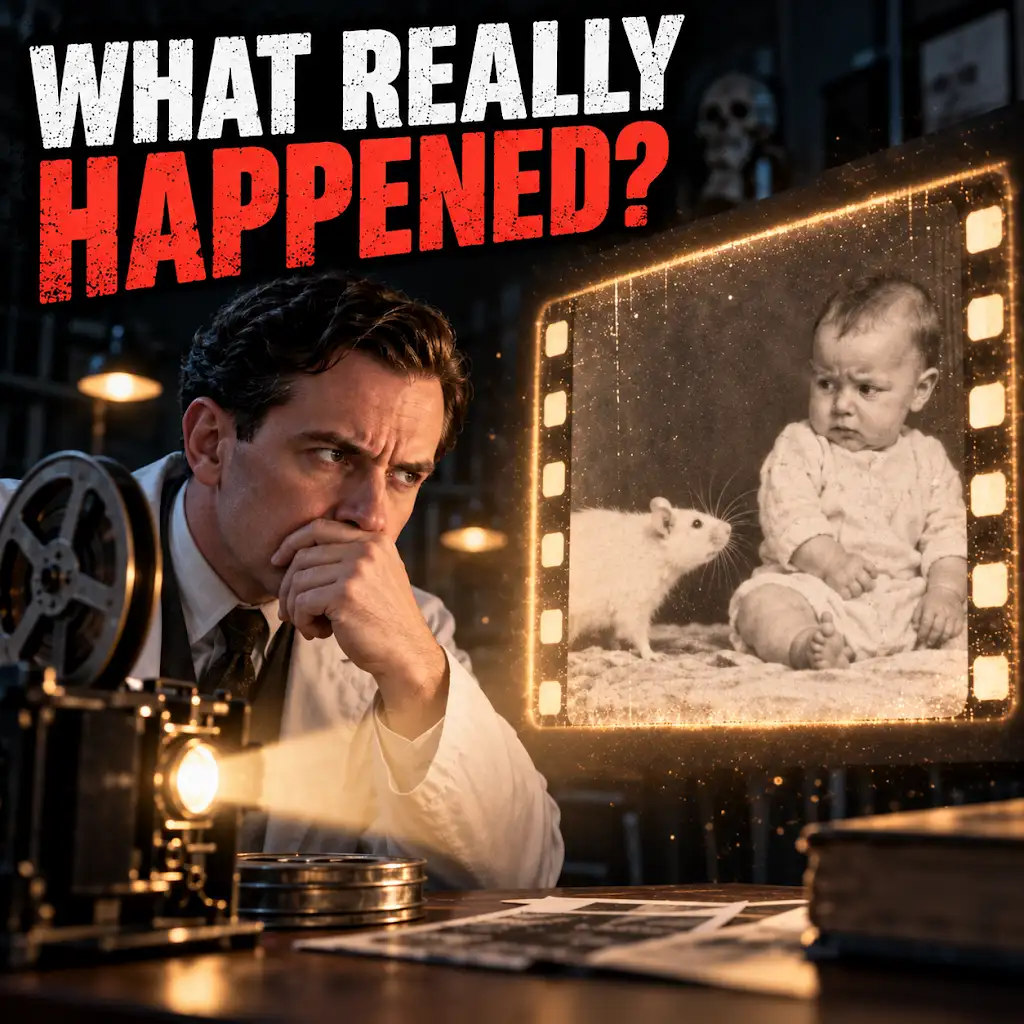
The Little Albert Experiment May Not Have Worked
FAQs
What is the Little Albert experiment?
The Little Albert experiment was a famous psychology experiment conducted by John B. Watson and Rosalie Rayner in 1920. It involved conditioning a young boy named Albert to fear a white rat by pairing the rat with a loud noise.
Why is the Little Albert experiment controversial?
The Little Albert experiment is controversial because it involved unethical practices, such as causing fear and distress in a young child without his consent or understanding. The experiment also lacked proper informed consent and debriefing procedures.
What was the purpose of the Little Albert experiment?
The purpose of the Little Albert experiment was to demonstrate that fear could be conditioned in a child through classical conditioning. The researchers wanted to show how emotions and behaviors could be learned and influenced through environmental factors.
Was the Little Albert experiment successful in achieving its goals?
Yes, the Little Albert experiment was successful in demonstrating that fear could be conditioned in a child through classical conditioning. Albert developed a fear of not only the white rat but also other similar objects and animals that were presented to him.
Is there footage of the Little Albert experiment available?
While there are reports and descriptions of the Little Albert experiment, there is no known footage of the actual experiment. The original film footage of the experiment, if it ever existed, has not been found or made publicly available.