The whispers surrounding the Little Albert experiment have long been a fixture in psychological lore, a cautionary tale of controversial methodology and profound ethical questions. For decades, the academic community and the public alike have grappled with the legacy of John B. Watson and Rosalie Rayner’s work, piecing together fragmented accounts and historical records. Now, an extraordinary revelation promises to shed unprecedented light on this seminal, yet deeply unsettling, study: the discovery and purported release of original footage from the Little Albert experiment. This event, if validated and made widely accessible, represents a watershed moment in the history of psychology, offering a visceral and potentially harrowing glimpse into the past.
The early 20th century marked a fertile ground for new scientific inquiry, and psychology was no exception. Behaviorism, championed by figures like Watson, was emerging as a powerful force, challenging the introspective methods of earlier psychological schools. Behaviorism posited that psychology should focus on observable behaviors rather than internal mental states. This led to a desire to demonstrate how behavior could be learned, conditioned, and manipulated.
John B. Watson and the Dawn of Behaviorism
John B. Watson, a pivotal figure in the development of behaviorism, believed that human behavior was primarily a product of environmental influences. He famously declared, “Give me a dozen healthy infants, well-formed, and my own specified world to bring them up in, and I’ll guarantee to take any one at random and train him to become any type of specialist I might select – doctor, lawyer, artist, merchant-chief, and, yes, even beggar-man and thief, regardless of his talents, penchants, tendencies, abilities, vocations, and race of his ancestors.” This audacious statement encapsulated the core tenets of his radical environmentalism.
The Quest for Empirical Evidence
Watson’s ambition was to provide robust empirical evidence for his theories. He sought to demonstrate that complex emotional responses, such as fear, could be learned through classical conditioning, a process first described by Ivan Pavlov with his experiments on dogs. The Little Albert experiment was conceived as a direct test of this hypothesis, aiming to condition fear in an infant towards an initially neutral stimulus.
The Ethical Landscape of Early Psychology
It is crucial to contextualize the ethical standards of the time. While we now possess stringent ethical guidelines for research involving human subjects, particularly children, the early 20th century was a different era. Ethical considerations were nascent, and the pursuit of scientific knowledge often took precedence over the potential well-being of participants. This is not to excuse the actions of Watson and Rayner, but to understand the historical backdrop against which their experiment unfolded.
The Little Albert experiment, conducted by John B. Watson and Rosalie Rayner in the early 20th century, is a pivotal study in the field of psychology that explored classical conditioning and emotional responses. For those interested in delving deeper into this fascinating topic, a related article that discusses the implications and ethical considerations of the experiment can be found at Unplugged Psychology. This resource provides valuable insights into the historical context and the lasting impact of the Little Albert study on psychological research and practice.
The Little Albert Experiment: A Historical Overview
The scant information available about the Little Albert experiment has fueled much speculation and debate. The published reports by Watson and Rayner, while influential, are limited in their descriptive detail, leaving many questions unanswered.
Identifying “Little Albert”
The true identity of “Little Albert” remains a subject of intense scholarly debate. Watson and Rayner identified the subject only by this pseudonym. Various theories have emerged, suggesting Albert was the son of a wet nurse employed at the Phipps Psychiatric Clinic at Johns Hopkins University, where the experiment took place. More recent research has proposed other identities, including Douglas Merritte, the son of a former janitor at the clinic, or even William Barger, whose mother was a nurse at the hospital. The lack of definitive identification further complicates our understanding of his circumstances and the ethical implications of his participation.
The Experimental Setup and Procedure
The experiment, conducted in 1920, aimed to condition a fear response in Albert, an eleven-month-old infant. Initially, Albert showed no fear of a white rat, a rabbit, a monkey, masks with and without hair, or cotton wool. The conditioning procedure involved presenting the white rat to Albert, and as he reached for it, a loud, startling noise was produced by striking a steel bar with a hammer behind him. This pairing was repeated multiple times.
The Conditioning Phase
The core of the experiment involved the repeated association of the white rat (the neutral stimulus) with the loud, frightening noise (the unconditioned stimulus). Watson and Rayner’s hypothesis was that through this consistent pairing, Albert would come to associate the rat with the fear-inducing sound, leading him to exhibit a fear response to the rat alone.
Generalization of Fear
Following the conditioning, Watson and Rayner observed that Albert indeed began to show distress and fear when presented with the white rat without the accompanying noise. Crucially, they also reported that this fear generalized to other furry objects, including a rabbit, a dog, a sealskin coat, and even Watson’s hair. This generalization was a significant finding, suggesting that learned fears could extend beyond the original conditioned stimulus.
The Role of the “Mother” Figure
The reports also mention Albert’s mother, identified as a wet nurse, and her role in the experiment. Her consent, or lack thereof, and her understanding of the procedures remain points of contention. Some accounts suggest she was aware of the experiment but was not fully apprised of its potential impact on her son.
The Shocking Revelation: Original Footage Unveiled
The announcement of the discovery of original footage from the Little Albert experiment has sent ripples of excitement and apprehension through the psychological community. For years, the only tangible remnants of the study were written accounts, often dry and clinical, lacking the emotional immediacy that visual documentation can provide.
The Unearthing of a Historical Treasure
The details surrounding the discovery of this footage are still emerging, but early reports suggest it was found in archival collections, possibly miscataloged or overlooked for decades. The prospect of seeing the actual interactions between Watson, Rayner, and Albert, observing Albert’s reactions in real-time, is a prospect that ignites curiosity and a desire for a more complete understanding.
What the Footage Might Reveal
This footage holds the potential to answer questions that have long plagued researchers. We might see the precise methodology employed, the subtle nuances of Albert’s behavior, and the emotional tone of the interactions. It could offer a more accurate depiction of the conditioning process, the extent of the fear generalization, and the immediate aftermath of the experimental sessions.
Witnessing the Conditioning Process
The visual evidence of the conditioning itself would be invaluable. Seeing how Albert was presented with the rat, how the noise was made, and his immediate reactions would provide a far richer understanding than written descriptions. It could confirm or challenge the timeline and intensity of the fear response as described by Watson and Rayner.
Assessing the Generalization of Fear Visually
The generalization of fear is a key aspect of the Little Albert experiment. The footage could visually demonstrate how Albert reacted to other furry objects, offering compelling evidence of this phenomenon. The intensity and consistency of these reactions would be scrutinized.
The Child’s Demeanor and Well-being
Perhaps the most anticipated aspect of the footage is its potential to illuminate the child’s overall demeanor and well-being during the experiment. Were his cries of distress evident? Did he appear traumatized or merely upset? This visual record could offer a more poignant and perhaps disturbing perspective on his experience.
Ethical Reckonings and Methodological Critiques

The Little Albert experiment has been a lightning rod for ethical criticism since its inception. The revelation of original footage amplifies these concerns, demanding a renewed and critical examination of the study’s ethics and methodology.
The Enduring Ethical Dilemma
The fundamental ethical issue revolves around the consent of the participant and the potential harm inflicted. Albert was an infant, incapable of providing informed consent. The decision to subject him to conditioning that induced fear, and potentially lasting psychological distress, raises profound questions about the responsibilities of researchers to their subjects.
The Question of Consent
As mentioned, the identity and consent of Albert’s mother are crucial. If she was not fully informed of the risks or the nature of the experiment, then the ethical foundation of the study is severely compromised. The footage might offer subtle clues about her involvement or presence, but the definitive answer likely lies in historical records.
The Potential for Lasting Harm
The conditioning of fear in an infant is inherently problematic. While Watson and Rayner claimed Albert was “desensitized” by a “Santa Claus mask” and that his mother removed him from the hospital before further conditioning or deconditioning could occur, the potential for long-term psychological consequences remains a significant concern.
Methodological Scrutiny and Replications
Beyond the ethical considerations, the methodology of the Little Albert experiment has also faced considerable scrutiny. Critics have pointed to several potential flaws that might limit the generalizability and reliability of its findings.
The Reliability of the Observations
Without independent verification and with the subjective nature of interpreting infant behavior, the reliability of Watson and Rayner’s observations has been questioned. The footage could potentially offer a more objective basis for evaluating their interpretations.
The Absence of a True Control Group
A significant methodological weakness is the lack of a rigorous control group. While Albert was tested with other stimuli before conditioning, the experiment did not involve a comparable group of infants who were not subjected to the conditioning procedure. This makes it difficult to definitively attribute the observed changes solely to the conditioning process.
The Limitations of Generalization
While generalization was a key finding, the extent and permanence of this generalization are debated. The footage might offer more nuanced insights into the range and duration of Albert’s fear responses.
The Little Albert experiment remains one of the most discussed studies in psychology, particularly due to its implications for understanding classical conditioning and emotional responses. For those interested in exploring the original footage and its context, a related article can provide valuable insights into the ethical considerations and the impact of the experiment on modern psychology. You can read more about it in this detailed analysis that examines the legacy of Little Albert and its relevance today.
The Future of Psychological Research and Ethical Standards
| Metric | Details |
|---|---|
| Experiment Name | Little Albert Experiment |
| Researcher | John B. Watson and Rosalie Rayner |
| Date of Experiment | 1920 |
| Subject | Infant known as “Little Albert” |
| Purpose | To demonstrate classical conditioning in humans |
| Original Footage Availability | No known original footage exists |
| Experiment Duration | Several weeks |
| Conditioned Stimulus | White rat |
| Unconditioned Stimulus | Loud noise (hammer striking steel bar) |
| Conditioned Response | Fear of white rat and similar objects |
| Ethical Concerns | Yes, including lack of informed consent and no follow-up care |
The revelation of the Little Albert experiment footage is not just an event of historical significance; it is a catalyst for ongoing dialogue and a reinforcement of evolving ethical standards in psychological research.
Learning from the Past, Shaping the Future
The footage serves as a stark reminder of a time when ethical considerations in research were less developed. It underscores the importance of rigorous ethical review boards, informed consent procedures, and the protection of vulnerable populations. The goal is not to condemn past researchers wholesale but to learn from their experiences and ensure that current and future research upholds the highest ethical principles.
The Importance of Transparency and Accessibility
The responsible release and accessibility of such historical footage are paramount. Psychologists, historians, and ethicists will need to engage with this material critically and thoughtfully. Ensuring that the footage is made available for scholarly analysis, while also considering the sensitive nature of the content, will be a crucial task.
Public Engagement and Education
The footage offers a powerful opportunity for public education about the history of psychology, the evolution of ethical standards, and the importance of critical thinking when evaluating scientific claims. It can spark important conversations about the balance between scientific inquiry and human welfare.
Scholarly Scrutiny and Debate
The academic community will undoubtedly engage in extensive debate and analysis of the footage. This will likely lead to new interpretations of the experiment, refine our understanding of early behaviorism, and potentially challenge long-held assumptions.
The unveiling of original footage from the Little Albert experiment promises to be a profoundly significant moment. It offers a unique, albeit potentially unsettling, window into a pivotal experiment that has shaped psychological thought for a century. As we prepare to view these historical images, we must do so with a critical eye, a deep respect for the ethical considerations, and an understanding that the pursuit of knowledge, while vital, must always be guided by a commitment to human dignity and well-being. The legacy of Little Albert is complex, and this new evidence demands a thorough and ethical reckoning.
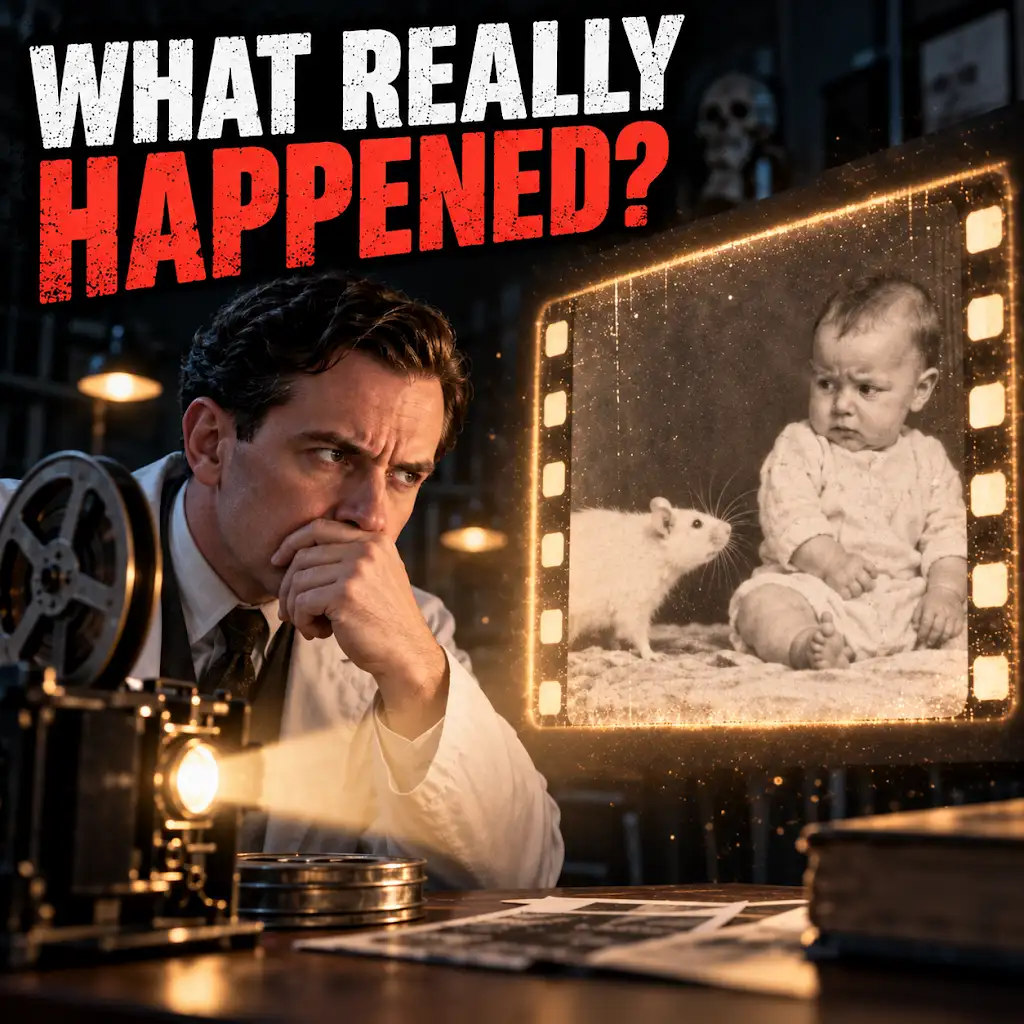
The Little Albert Experiment May Not Have Worked
FAQs
What is the Little Albert experiment?
The Little Albert experiment was a famous psychology experiment conducted by John B. Watson and Rosalie Rayner in 1920. It aimed to demonstrate how classical conditioning could be used to condition a fear response in a young child.
Who was Little Albert?
Little Albert was the pseudonym given to the infant participant in the experiment. His real identity was later revealed to be Douglas Merritte. He was around 9 months old at the time of the experiment.
What was the procedure of the Little Albert experiment?
In the experiment, Little Albert was exposed to a white rat, a rabbit, a monkey, masks, and burning newspapers. Initially, he showed no fear of these objects. However, Watson and Rayner paired the presentation of these objects with a loud, jarring noise to create a conditioned fear response in Little Albert.
What were the ethical concerns surrounding the Little Albert experiment?
The Little Albert experiment raised ethical concerns due to the emotional distress caused to the infant participant. Little Albert was not desensitized after the experiment, and his fear response was left unresolved. Additionally, consent was not obtained from Little Albert’s mother for his participation in the study.
Is there original footage of the Little Albert experiment available?
No, there is no known original footage of the Little Albert experiment. The only existing records of the experiment are written descriptions and accounts provided by John B. Watson and Rosalie Rayner in their published research papers.