The story of Little Albert, a nine-month-old infant purportedly recruited for a psychological experiment, remains one of the most controversial and illuminating episodes in the history of behaviorism. Conducted by John B. Watson and his graduate student Rosalie Rayner at Johns Hopkins University, the experiment sought to demonstrate the principles of classical conditioning in humans, specifically the creation of a phobia through learned association. While the ethical implications have been widely debated and criticized, the experiment provided a stark, albeit disturbing, illustration of how fear could be conditioned, solidifying Watson’s position as a pioneer of behaviorism and leaving an indelible mark on the field of psychology.
The Intellectual Climate of the Early 20th Century
The early 20th century was a fertile ground for scientific inquiry, with significant advancements being made across various disciplines. In psychology, however, the dominant paradigm was introspection, a method that relied on individuals reporting their subjective conscious experiences. This approach, championed by figures like Wilhelm Wundt, was seen by many as unscientific and unreliable, as it was inherently subjective and lacked empirical verifiability. The scientific community yearned for a more objective and measurable approach to understanding the human mind.
John B. Watson: A Revolutionary Voice
John B. Watson, a charismatic and ambitious psychologist, emerged as a powerful critic of introspection. He argued that psychology, to be considered a true science, needed to abandon the study of consciousness and focus solely on observable and measurable behaviors. In his seminal 1913 paper, “Psychology as the Behaviorist Views It,” Watson declared that the goal of psychology should be to predict and control behavior. He posited that the environment, not innate predispositions, was the primary architect of human development and personality. This radical shift in perspective laid the foundation for what would become known as behaviorism.
The Influence of Pavlov’s Work
A significant influence on Watson’s thinking was the work of Russian physiologist Ivan Pavlov. Pavlov’s experiments with dogs, demonstrating how they could be conditioned to salivate at the sound of a bell (an originally neutral stimulus) after it was repeatedly paired with food (an unconditioned stimulus), provided a compelling model for learned associations. Watson saw in Pavlov’s work a powerful mechanism for understanding how complex behaviors, including emotions like fear, could be acquired. He believed that if a neutral stimulus could be associated with an innate, unconditioned fear response, then that neutral stimulus could, in turn, elicit fear.
The Little Albert experiment, conducted by John B. Watson and Rosalie Rayner in 1920, is a pivotal study in behaviorism that demonstrated how emotions can be conditioned through classical conditioning. For a deeper understanding of this experiment and its implications in the realm of psychology, you can explore a related article that discusses the ethical considerations and the impact of behaviorism on modern psychological practices. To read more, visit this article.
The Unveiling of the Little Albert Experiment
The Subject: A Curious Case of Identity
The identity of “Little Albert” has been a subject of considerable debate and investigation for decades. Watson and Rayner, in their 1920 publication, described Albert as an “orphan” from the Johns Hopkins Hospital. This vague description led to numerous theories and attempts to identify the child. In recent years, researchers have presented compelling evidence suggesting that Little Albert was, in fact, a young boy named Douglas Merritte, who was being raised by his mother, a wet nurse at the hospital. The alternative theory points to William Barger, another child in the hospital. The ambiguity surrounding Albert’s identity, while adding to the experiment’s mystique, also highlights the ethical shortcomings of the research.
The Methodology: A Controlled Creation of Fear
The experiment was designed to demonstrate that fear could be conditioned in a human infant. The researchers selected Albert, described as a healthy and unemotional child, as their subject. The process involved several stages, meticulously documented in their publication.
Stage One: Baseline Observation and Initial Stimuli
Before the conditioning began, Watson and Rayner observed Albert’s reactions to various stimuli. They noted that he showed no fear of a white rat, a rabbit, a dog, a monkey, masks, or burning newspapers. This initial assessment was crucial to establish that Albert possessed no pre-existing fear of the stimuli that would later be used for conditioning.
Stage Two: The Unconditioned Stimulus and Response
The researchers identified a loud, startling noise – produced by striking a steel bar with a hammer behind Albert’s head – as the unconditioned stimulus (UCS). This sound invariably produced a fear response (UCR) in Albert, characterized by crying, whimpering, and an attempt to crawl away. This demonstrated the innate, unlearned nature of fear in response to sudden, loud noises.
Stage Three: Conditioning the Fear Response
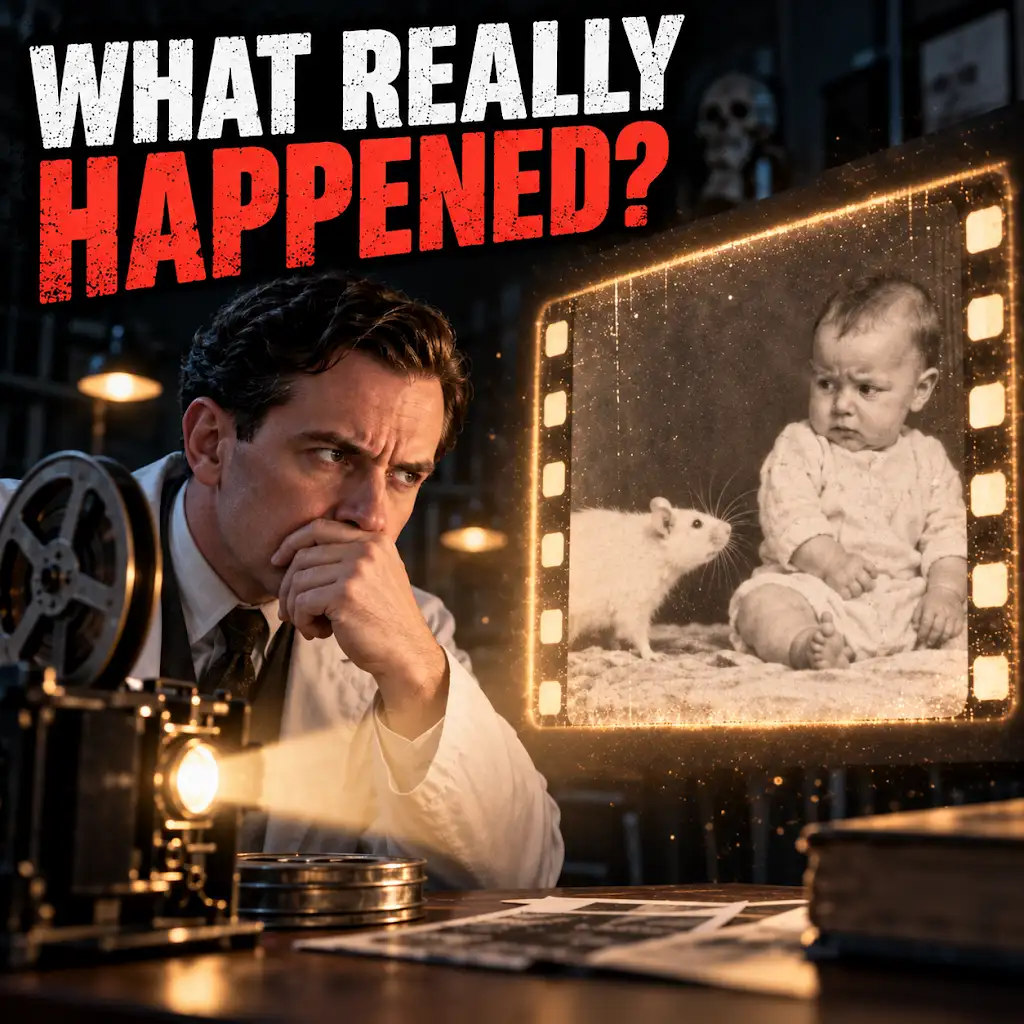
This was the core of the experiment. The white rat, initially a neutral stimulus (NS), was presented to Albert. As Albert reached for the rat, the loud noise (UCS) was produced. This pairing of the rat and the loud noise was repeated several times. The hypothesis was that Albert would begin to associate the sight of the rat with the frightening sound.
Stage Four: The Conditioned Stimulus and Response
After several pairings, the white rat (now a conditioned stimulus, CS) was presented to Albert without the accompanying loud noise. The researchers observed that Albert now exhibited a fear response (CR) to the rat alone. He would cry, shrink away, and show signs of distress simply upon seeing the rat. This demonstrated that the fear response, originally elicited by the loud noise, had been conditioned to the previously neutral stimulus of the white rat.
Generalization: The Spread of Fear
A critical aspect of the experiment was the demonstration of stimulus generalization. Watson and Rayner presented Albert with other furry objects and white, fluffy stimuli, such as a rabbit, a dog, a fur coat, and a Santa Claus mask with white whiskers. To their observation, Albert exhibited similar fear responses to these stimuli as he did to the white rat. This suggested that the conditioned fear was not limited to the specific conditioned stimulus (the rat) but had generalized to other similar stimuli. This phenomenon further supported the idea that learned associations could have a broader impact on an individual’s behavior.
The Ethical Minefield: A Legacy of Controversy

The Absence of Consent and the Exploitation of a Child
The most significant ethical criticism leveled against the Little Albert experiment lies in the complete lack of informed consent. As an infant, Albert was incapable of consenting to participate in the study. Furthermore, the decision to expose him to such a distressing procedure was made by adults without any consideration for his well-being or the potential long-term consequences. This raises profound questions about the exploitation of vulnerable populations in scientific research.
The Creation and Failure to Extinguish a Phobia
Beyond the initial conditioning, the ethical concerns deepen with the realization that Watson and Rayner created a phobia in a young child and then, according to their own accounts, failed to properly decondition it before Albert was removed from the hospital. While they claimed to have attempted some form of “reconditioning,” their methods were not described in detail and are widely considered insufficient to alleviate the profound fear they had instilled. The lasting impact of such a trauma on a child’s development is a deeply troubling aspect of the experiment.
The Role of Watson and Rayner: Scientific Ambition vs. Human Decency
John B. Watson and Rosalie Rayner, driven by scientific curiosity and the desire to validate their behaviorist theories, made a decision that would forever taint their contributions to psychology. While their work was groundbreaking in its scientific rigor and its challenge to established norms, the ethical compromises made in the Little Albert experiment are undeniable. Their ambition to prove a theoretical point came at the cost of a child’s emotional well-being, a stark reminder of the ethical responsibilities that accompany scientific exploration.
The Lasting Impact on Behaviorism and Psychology

The Power of Conditioning: A Paradigm Shift
Despite its ethical failings, the Little Albert experiment undeniably demonstrated the power of classical conditioning in humans. It provided tangible evidence that complex emotional responses, such as fear, could be learned through association. This finding was instrumental in solidifying behaviorism as a dominant force in psychology. Watson’s assertions that behavior could be shaped by environmental factors, rather than solely by innate instincts or conscious thought, gained significant traction due to experiments like this.
The Birth of Phobia Treatment and Behavioral Therapy
The insights gained from the Little Albert experiment, while ethically problematic in their acquisition, inadvertently paved the way for future advancements in the treatment of phobias and other psychological disorders. The understanding that fears could be learned implied that they could also be unlearned. This principle became a cornerstone of behavioral therapy, with techniques like systematic desensitization and exposure therapy developed to help individuals overcome debilitating phobias by gradually re-associating feared stimuli with feelings of relaxation and safety.
The Ethical Reckoning and the Evolution of Research Standards
The enduring controversy surrounding the Little Albert experiment served as a critical catalyst for the evolution of ethical guidelines in psychological research. The severe ethical breaches highlighted the necessity for stringent regulations concerning informed consent, the protection of vulnerable subjects, and the duty of researchers to ensure the well-being of their participants. Modern research ethics boards and stringent protocols are a direct consequence of lessons learned from studies like Little Albert, ensuring that scientific progress does not come at the expense of human dignity and safety.
The Little Albert experiment is a pivotal study in behaviorism that demonstrated how emotions can be conditioned through classical conditioning. For those interested in exploring this topic further, an insightful article can be found at Unplugged Psychology, which delves into the implications of this experiment and its ethical considerations. Understanding the outcomes of the Little Albert study not only sheds light on the principles of behaviorism but also raises important questions about the treatment of subjects in psychological research.
The Enduring Enigma: What Happened to Little Albert?
| Metric | Details |
|---|---|
| Researcher | John B. Watson and Rosalie Rayner |
| Year Conducted | 1920 |
| Subject | Little Albert (infant boy, approximately 9 months old) |
| Conditioned Stimulus (CS) | White rat |
| Unconditioned Stimulus (US) | Loud noise (striking a metal bar) |
| Unconditioned Response (UR) | Fear/startle response to loud noise |
| Conditioned Response (CR) | Fear response to white rat |
| Number of Conditioning Trials | 7 sessions over 2 weeks |
| Generalization Observed | Fear response generalized to other white furry objects (e.g., rabbit, fur coat) |
| Ethical Considerations | No informed consent; subject not desensitized; experiment considered unethical by modern standards |
The Search for Closure and the Lingering Questions
The unanswered question of Little Albert’s ultimate fate continues to haunt the narrative of the experiment. The lack of definitive information about his life after the experiment fuels speculation and underscores the ethical void left by Watson and Rayner. While the identification of Douglas Merritte offers a plausible answer, the absence of a definitive historical record leaves a lingering sense of unresolved closure for many. The ethical implications of not knowing the full story of his life after such a traumatic experience are profound.
The Legacy of a Traumatized Child and a Controversial Scientist
The Little Albert experiment stands as a complex and deeply problematic testament to the early days of behaviorism. It showcases the brilliance of a scientific theory and the power of empirical demonstration, but it is forever shadowed by the ethical cost paid by a child. John B. Watson’s legacy is thus inextricably linked to both his revolutionary ideas and the controversy that his most famous experiment ignited. The story of Little Albert serves as a perpetual reminder of the delicate balance between scientific pursuit and ethical responsibility, a lesson that continues to shape the landscape of psychological research and practice today. The echoes of his cry, amplified by the clang of a steel bar, resonate through the annals of psychology, a somber reminder of behaviorism unveiled.
The Little Albert Experiment May Not Have Worked
FAQs
What is behaviorism?
Behaviorism is a psychological theory that focuses on observable behaviors and how they are influenced by the environment, rather than internal mental processes.
What was the Little Albert experiment?
The Little Albert experiment was a famous study conducted by psychologist John B. Watson and his assistant Rosalie Rayner in 1920. The experiment aimed to demonstrate how classical conditioning could be used to condition a fear response in a young child named Albert.
How was the Little Albert experiment conducted?
In the experiment, Little Albert was exposed to a white rat, a rabbit, a monkey, masks, and other objects. Initially, Albert showed no fear of these items. However, whenever Albert reached for the white rat, Watson would make a loud noise by striking a steel bar with a hammer. Eventually, Albert began to show fear and cry whenever he saw the white rat, even without the loud noise.
What were the ethical concerns surrounding the Little Albert experiment?
The Little Albert experiment raised ethical concerns due to the lack of informed consent from Albert’s parents, the potential for causing psychological harm to the child, and the lack of debriefing after the experiment. Additionally, the long-term effects of the experiment on Albert’s mental health were unknown.
What was the impact of the Little Albert experiment on the field of psychology?
The Little Albert experiment is considered a classic example of classical conditioning and has had a significant impact on the field of psychology. It demonstrated the power of conditioning in shaping behavior and emotions, and it raised important ethical considerations regarding the treatment of human subjects in research.