The Little Albert Experiment: A Dark Chapter in Psychology
The early days of psychology were a fertile ground for groundbreaking research, often pushing the boundaries of what was considered ethically permissible in the pursuit of understanding the human mind. Among the most infamous of these endeavors stands the Little Albert experiment, a study conducted in 1920 by John B. Watson and his graduate student Rosalie Rayner at Johns Hopkins University. This experiment, designed to explore the principles of classical conditioning in humans, has since become a stark reminder of the ethical quagmires that can arise when scientific curiosity eclipses fundamental human rights and well-being.
John B. Watson: The Architect of Behaviorism
John B. Watson was a pivotal figure in the development of behaviorism, a school of thought that emphasized the study of observable behavior rather than internal mental states. He believed that all human behavior, from simple reflexes to complex emotions, could be understood and manipulated through conditioning. Watson’s radical approach challenged the prevailing introspectionist methods of psychology, which relied on individuals reporting their own thoughts and feelings. He argued that such subjective data was unreliable and unscientific, advocating instead for a focus on the stimulus-response (S-R) connections that govern behavior.
The Core Tenets of Behaviorism
Watson’s behaviorism was built upon the foundational work of Ivan Pavlov, the Russian physiologist who discovered classical conditioning through his experiments with dogs. Pavlov demonstrated that a neutral stimulus (like a bell) could become associated with an unconditioned stimulus (food) that naturally elicits a response (salivation). Through repeated pairings, the neutral stimulus would eventually elicit the same response (salivation) on its own, becoming a conditioned stimulus. Watson sought to prove that this same principle applied to human emotions, particularly fear.
The Quest to Condition Fear
Watson’s ambition extended beyond merely demonstrating that fear could be conditioned. He aimed to prove that complex emotional responses, which many believed to be innate or deeply rooted in early childhood experiences, could be artificially constructed. This desire to dissect and reconstruct emotional behavior formed the bedrock of his controversial work with Little Albert. He envisioned a future where psychology could offer precise methods for shaping human behavior, a vision that, while partially realized in areas like behavioral therapy, was tragically illustrated in the Little Albert experiment’s ethical failings.
The Subject: Little Albert
The identity of “Little Albert,” the infant participant in the experiment, has remained a subject of historical debate. Watson and Rayner identified him only as “Albert B.” and later as “Douglas Merritte” in subsequent publications, though definitive confirmation of his identity has been elusive. What is known is that Albert was an infant of approximately nine months old at the commencement of the experiment, brought to the hospital by his mother, who worked as a wet nurse there. This particular circumstance provided Watson and Rayner with a convenient, albeit ethically questionable, access to a subject whose age and presumed lack of prior significant emotional trauma made him an ideal candidate for their conditioning experiment.
A Child of Circumstance
Little Albert was reportedly healthy and displayed no signs of fear towards the stimuli that would later be used to elicit distress. Watson’s own descriptions paint him as a relatively stoic child, which ironically made him a more compelling subject for demonstrating the power of conditioning. The lack of a clear familial guardian actively advocating for Albert’s welfare, beyond his mother who was employed by the hospital, further amplified the ethical concerns surrounding his participation. This passive environment, where parental oversight was limited, allowed the researchers to proceed with a study that would be unthinkable today.
The Absence of Informed Consent
A crucial ethical failing of the Little Albert experiment was the complete absence of informed consent. While Albert’s mother was aware of the study and allowed her son to participate, it is highly unlikely that she fully understood the nature or potential long-term implications of the conditioning process. The concept of informed consent as it is understood and practiced in modern research was in its infancy, and the prevailing attitude was that researchers had significant latitude in conducting studies on children, especially within institutional settings. This lack of robust ethical oversight allowed the experiment to proceed without adequate safeguards for the child’s well-being.
The Little Albert experiment, conducted by John B. Watson and Rosalie Rayner in 1920, is a pivotal study in the field of psychology that explored classical conditioning and emotional responses. For a deeper understanding of this controversial experiment and its implications in behavioral psychology, you can read a related article that provides insights into its historical context and ethical considerations. For more information, visit this article.
The Experiment Unfolds: Conditioning Fear
The Little Albert experiment was meticulously designed to demonstrate that fear could be conditioned in a human infant. The researchers selected a series of stimuli, some of which were initially neutral and others that were inherently frightening. The core of the experiment involved pairing a neutral stimulus with a fear-inducing one, aiming to create a learned association.
The Initial Stimuli: Neutral and Fear-Inducing
Watson and Rayner began by presenting Albert with a variety of objects and sounds to gauge his reactions. These included a white rat, a rabbit, a dog, a monkey, masks with and without hair, a ball of yarn, and burning newspapers. Initially, Albert showed no fear of these items, often reaching out to touch them. However, they also introduced a loud, sudden noise – the striking of a steel bar with a hammer behind him – which consistently startled and frightened the infant. This sound served as the unconditioned stimulus (UCS), naturally eliciting a fear response (UCR).
The White Rat: The Neutral Stimulus
The white rat was chosen as the neutral stimulus. Albert showed curiosity towards it, reaching out to interact with it. This indicated that, at this stage, the rat did not evoke any fear. Watson and Rayner’s strategy was to associate this previously neutral object with the unconditioned stimulus of the loud noise. This pairing was the cornerstone of their hypothesis that a learned fear response could be established.
The Loud Noise: The Unconditioned Stimulus
The loud, jarring sound produced by striking a steel bar was the unconditioned stimulus. It was a powerful and inherently frightening experience for an infant, reliably eliciting crying, screaming, and attempts to escape. This innate fear response was the foundation upon which Watson and Rayner sought to build a conditioned fear. They understood that this stimulus would evoke a strong emotional reaction, which they intended to transfer to other, previously neutral stimuli.
The Conditioning Process: Pairing and Association
The core of the experiment involved repeatedly pairing the sight of the white rat with the loud noise. When Albert was presented with the rat, and just as he reached for it, Watson would strike the steel bar. This action generated a startling noise, causing Albert to cry and recoil. This process was repeated over several sessions, with the researchers systematically associating the neutral stimulus (the rat) with the unconditioned stimulus (the loud noise).
Session One: The First Pairings
During the initial sessions, Albert was presented with the rat. As he began to show interest, the loud noise was produced. This caused him to become frightened and recoil from the rat. The researchers observed this immediate reaction and repeated the pairing. The goal was to create a strong enough association between the rat and the fear-inducing sound so that the rat alone would eventually elicit a fear response.
Subsequent Sessions: Strengthening the Conditioned Response
The conditioning was reinforced over subsequent sessions. The researchers continued to present Albert with the white rat and immediately strike the steel bar. They observed that Albert’s fear response became more pronounced with each pairing. He began to show signs of apprehension even before the noise was made, indicating that the association between the rat and fear was solidifying. The speed and intensity of his reactions suggested that the conditioning was occurring effectively from a behaviorist perspective.
Generalization and Lasting Effects

The Little Albert experiment did not stop at simply conditioning a fear of the white rat. Watson and Rayner went on to observe the phenomenon of stimulus generalization, where the learned fear response extended to similar objects. Furthermore, they noted that the conditioned fear appeared to persist even after the conditioning sessions ended, raising significant concerns about the long-term psychological impact on the child.
The Little Albert experiment, conducted by John B. Watson and Rosalie Rayner in the early 20th century, is a pivotal study in the field of psychology that explored the principles of classical conditioning. This controversial experiment involved conditioning a young child to fear a white rat, demonstrating how emotional responses can be learned through association. For a deeper understanding of the ethical implications and historical context surrounding this experiment, you can read a related article on the topic at Unplugged Psychology. This resource provides valuable insights into the lasting impact of the Little Albert experiment on psychological research and ethical standards.
Stimulus Generalization: The Spread of Fear
Following the conditioning, Albert was presented with other furry objects, such as a rabbit, a dog, a fur coat, and even Watson’s hair. To the researchers’ satisfaction, Albert displayed signs of fear towards these new stimuli, even though they had not been directly paired with the loud noise. This demonstrated stimulus generalization – the tendency for a learned response to occur in the presence of stimuli that are similar to the conditioned stimulus.
The Rabbit and the Dog: New Objects of Fear
When presented with a rabbit, Albert exhibited the same fear he had shown towards the rat, recoiling and crying. Similarly, when shown a dog, he displayed apprehension. This indicated that his fear was not limited to the white rat but had generalized to other furry animals. This finding was significant in behaviorist theory, as it suggested that learned fears could be broadly applied.
The Fur Coat and Watson’s Hair: Further Evidence
The generalization extended even further. Albert showed distress when presented with a fur coat and even Watson’s hair. These findings underscored the power of association and the broad applicability of learned fear responses, suggesting that the conditioned fear was not specific to one object but rather to a range of associated characteristics.
The Persistence of Fear: A Lingering Distress
The experiment concluded by observing Albert’s reactions to the white rat several days after the conditioning sessions had ceased. He continued to exhibit fear and distress, demonstrating that the conditioned fear was not a fleeting response but had a degree of permanence. This aspect of the experiment is particularly troubling, as it suggests the child was left with a lasting phobia that was artificially induced.
Lingering Apprehension towards the Rat
Even without the accompanying loud noise, Albert would now cry and move away when the white rat was presented. This indicated that the rat had become a conditioned stimulus (CS) capable of eliciting a conditioned fear response (CR) on its own. The implications of this were profound: a neutral object, through association, had become a source of genuine anxiety for the child.
The Unknown Future: An Unresolved Ethical Dilemma
The most significant ethical concern surrounding the persistence of Albert’s fear is that the experiment did not include a deconditioning phase. Watson and Rayner did not attempt to reverse the learned fear. It is unknown what happened to Albert after the experiment concluded, and whether he ever overcame his phobias. This unresolved ethical dilemma casts a long shadow over the study’s legacy.
Ethical Criticisms and Legacy

The Little Albert experiment, despite its significant contributions to behaviorist theory, is widely condemned by modern ethical standards in psychological research. The experiment raised profound questions about the use of vulnerable populations, the necessity of informed consent, and the potential for lasting psychological harm.
The Absence of Deconditioning
One of the most prominent criticisms is the lack of a deconditioning phase. Ethical research protocols today would mandate that any induced negative emotion or behavior be reversed. Watson and Rayner made no attempt to alleviate Albert’s fear, leaving him potentially with a lifelong phobia. This omission is considered a severe ethical breach, prioritizing scientific observation over the participant’s well-being.
The Moral Obligation to Reverse Harm
Researchers have a moral obligation to ensure that their studies do not cause undue harm to participants. In cases where negative responses are elicited, it is imperative to implement strategies to mitigate or reverse these effects. The failure to decondition Albert’s fear demonstrates a disregard for this fundamental ethical principle.
The Unanswered Questions of Albert’s Future
The enduring mystery of Albert’s fate further amplifies the ethical concerns. Without knowing if his fears were addressed or if they persisted, the experiment remains a stark example of how scientific pursuit can overlook individual welfare. The lack of follow-up care or attempts at remediation leaves a lasting stain on the study.
The Use of a Vulnerable Subject
The use of an infant, who cannot provide informed consent and is inherently vulnerable, is another major ethical concern. Infants are not equipped to understand the implications of experimental procedures and are reliant on the adults responsible for their care to protect their interests. Placing an infant in a situation designed to induce fear is a violation of this trust.
The Exploitation of Innocence
Albert, being a young child, was unable to comprehend the nature of the experiment or to refuse participation. He was essentially a passive subject whose trust was exploited for scientific gain. Modern ethical guidelines strictly prohibit research on children that could cause them significant distress or harm without extraordinary justification and rigorous safeguards.
The Power Imbalance in Research
The inherent power imbalance between researcher and subject is particularly acute when the subject is a child. This imbalance necessitates an even greater degree of caution and ethical consideration. Watson and Rayner’s actions highlight the potential for this imbalance to lead to exploitation if not rigorously managed by ethical review boards.
The Enduring Impact and Lessons Learned
Despite its ethical failings, the Little Albert experiment undeniably advanced the understanding of classical conditioning in humans. It demonstrated that emotional responses, like fear, could be learned and generalized. However, the lessons learned from this dark chapter in psychology are not just about the power of conditioning, but also about the crucial importance of ethical considerations in scientific inquiry.
A Catalyst for Ethical Reform
The notoriety of the Little Albert experiment, along with other ethically questionable studies of the era, served as a catalyst for significant reforms in research ethics. It highlighted the need for institutional review boards (IRBs), strict informed consent procedures, and a greater emphasis on participant welfare. These reforms have since become the cornerstone of responsible psychological research.
The Importance of Balancing Curiosity and Compassion
The legacy of Little Albert serves as a perpetual reminder that scientific curiosity, while essential for progress, must always be tempered with compassion and a deep respect for human dignity and well-being. The pursuit of knowledge should never come at the expense of harming vulnerable individuals, and the Little Albert experiment stands as a somber testament to the potential consequences of such a misguided pursuit. The lessons learned continue to shape the ethical landscape of psychological research, ensuring that the pursuit of understanding the human mind is conducted with the utmost care and responsibility.
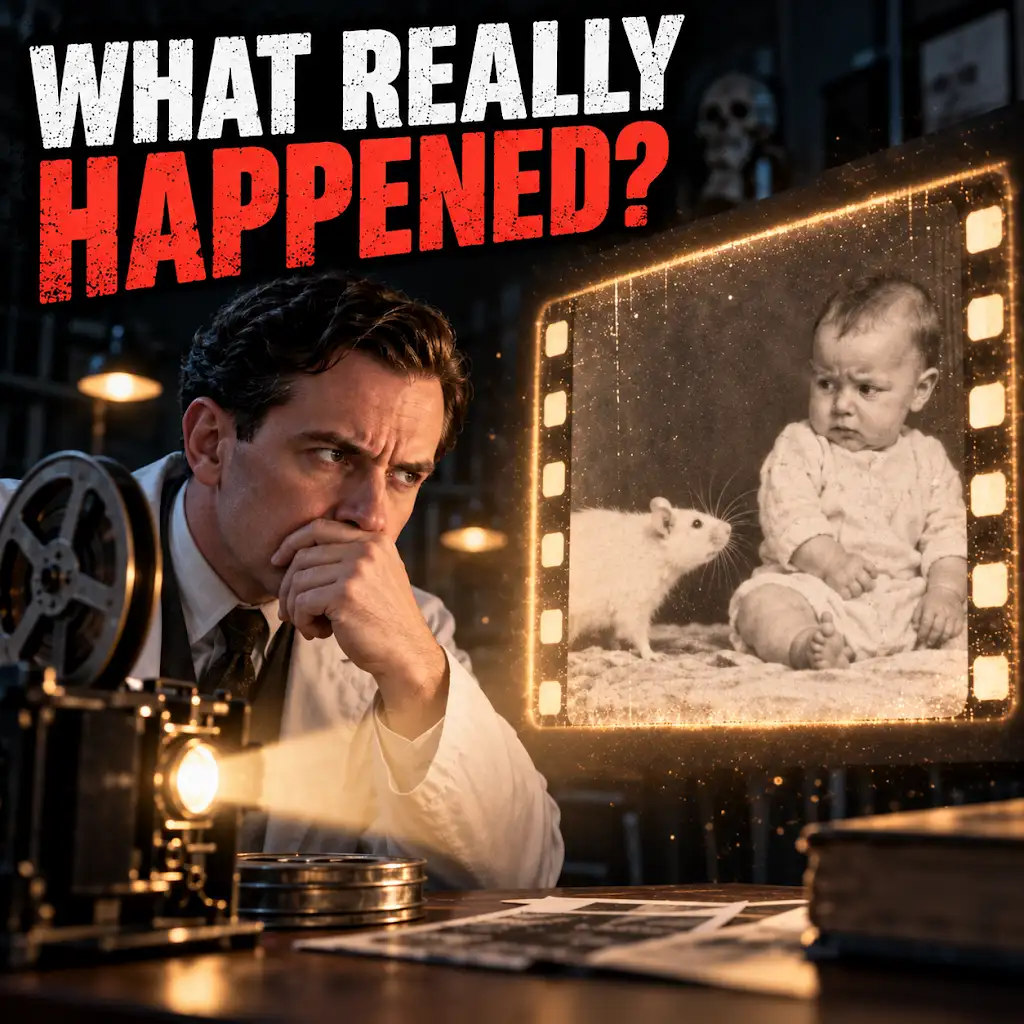
The Little Albert Experiment May Not Have Worked
FAQs
What was the Little Albert experiment?
The Little Albert experiment was a study conducted by psychologist John B. Watson and his assistant Rosalie Rayner in 1920. It aimed to demonstrate that emotional responses could be conditioned in humans.
Who was Little Albert?
Little Albert was the pseudonym given to an infant who participated in the experiment. His real identity was later revealed to be Douglas Merritte, a child from a hospital in Baltimore.
What was the procedure of the Little Albert experiment?
In the experiment, Little Albert was exposed to a white rat, a rabbit, a monkey, masks, and burning newspapers to observe his reactions. Whenever Little Albert reached for the white rat, a loud noise was made behind him, causing him to show fear and distress.
What were the ethical concerns surrounding the Little Albert experiment?
The experiment raised ethical concerns due to the lack of informed consent from Little Albert’s mother, the potential long-term psychological effects on the child, and the use of fear-inducing stimuli without proper debriefing or follow-up.
What was the impact of the Little Albert experiment on psychology?
The Little Albert experiment is considered a classic example of classical conditioning and has had a lasting impact on the field of psychology. It highlighted the importance of ethical considerations in research involving human subjects and influenced future studies on behaviorism and conditioning.