
The Fate of Little Albert: A Psychological Experiment’s Impact
John B. Watson, a pioneer in behaviorism, sought to demonstrate that complex human emotions, particularly fear, could be conditioned. In 1920, he embarked on what would become one of psychology’s most infamous and ethically dubious experiments, involving an infant later known as “Little Albert.” The goal was to prove that fear could be acquired through association, a cornerstone of behaviorist theory. Watson, alongside his graduate student Rosalie Rayner, meticulously planned an experiment designed to evoke a conditioned fear response in an 11-month-old infant.
The Behaviorist Paradigm and Classical Conditioning
At the time, behaviorism was gaining significant traction as a scientific approach to understanding human behavior. Watson himself was a leading figure, advocating for psychology to focus solely on observable actions and environmental influences, rejecting introspection and subjective experience. Classical conditioning, a concept borrowed from Ivan Pavlov’s work with dogs, posited that a neutral stimulus could become associated with an unconditioned stimulus that naturally elicits a response. Through repeated pairings, the neutral stimulus would then elicit a conditioned response similar to the unconditioned response. Watson aimed to apply this principle to the complex realm of human emotion, specifically fear, a foundational emotion in developmental psychology.
Pavlov’s Legacy: A Foundation for Conditioning
Ivan Pavlov’s groundbreaking research in the early 20th century laid the groundwork for understanding associative learning. His experiments with dogs, where he observed them salivating at the sound of a bell that had been repeatedly paired with food, demonstrated the power of conditioned reflexes. Pavlov identified unconditioned stimuli (UCS) like food, which naturally elicit unconditioned responses (UCR) like salivation, and neutral stimuli (NS) that initially elicit no relevant response. Through conditioning, the NS becomes a conditioned stimulus (CS), eliciting a conditioned response (CR) that mirrors the UCR. Watson saw this as a powerful model for understanding how humans learn, and he was eager to test its application in a more complex human context.
Watson’s Ambitious Hypothesis
Watson’s hypothesis was straightforward: he believed he could condition fear in an infant by pairing a loud, startling noise (the unconditioned stimulus) with a neutral object. He theorized that if the infant associated the neutral object with the fear-inducing noise, the object itself would eventually elicit fear. This was a bold claim, as it suggested that even fundamental emotional responses could be learned, rather than being innate. The implications for understanding phobias, anxieties, and the very development of personality were immense.
The case of Little Albert, a famous experiment conducted by John B. Watson and Rosalie Rayner in 1920, raises important ethical questions about psychological research and the treatment of subjects. For a deeper understanding of the implications of this study and its relevance to modern psychology, you can read a related article that discusses the ethical considerations in psychological experiments at this link: Unplugged Psychology.
The Little Albert Experiment: Methodology and Findings
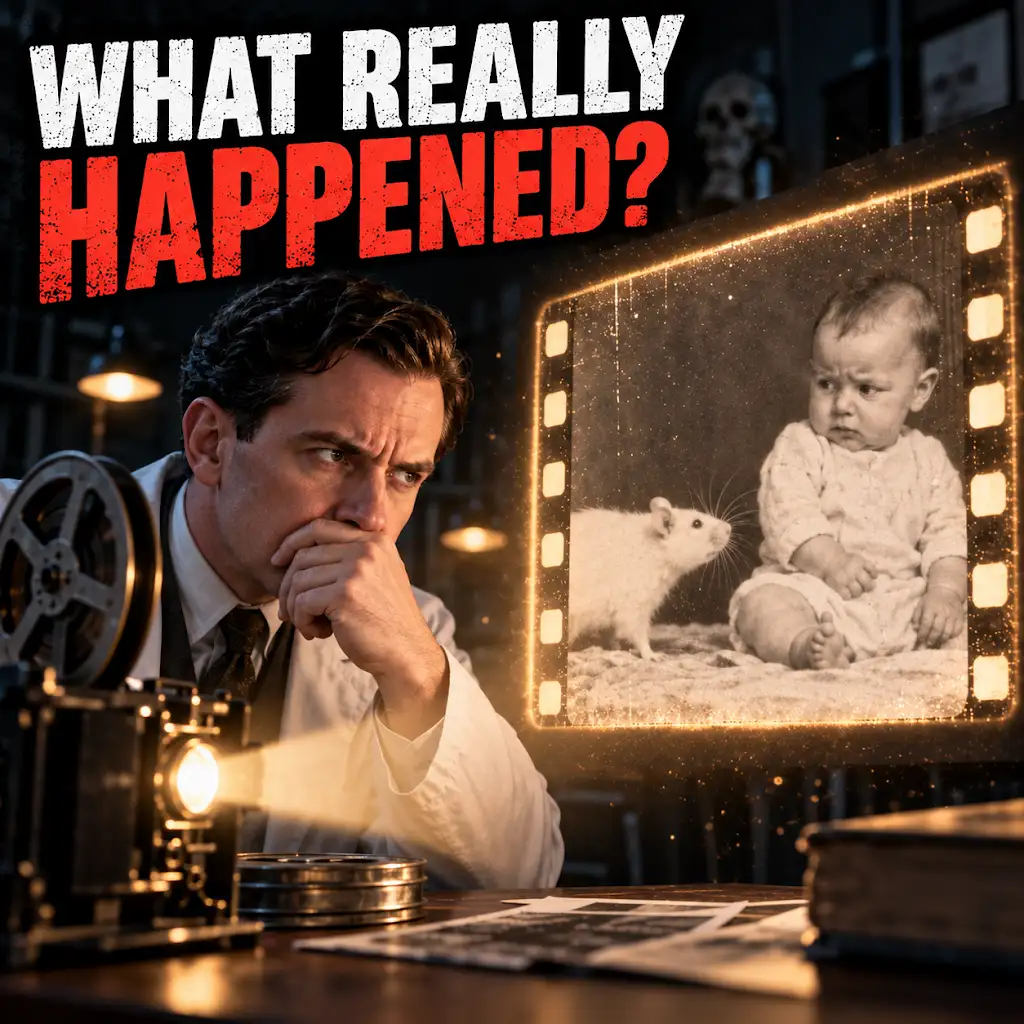
The experiment itself was conducted at the Johns Hopkins University. Little Albert, described as a healthy and generally fearless infant, was selected for the study. Watson and Rayner introduced Albert to a series of objects, including a white rat, a rabbit, a dog, a monkey, masks with and without hair, and cotton wool. Albert showed no fear of these items. The crucial phase of the experiment involved pairing the presentation of a white rat (the neutral stimulus) with a loud, jarring noise produced by striking a steel bar with a hammer behind Albert’s head (the unconditioned stimulus).
The Conditioning Process
The conditioning was not immediate. Over several sessions, Albert was presented with the white rat, and just as he reached for it, the loud noise was made. This sequence was repeated multiple times. Initially, Albert would cry and show distress only when the noise was presented. However, after a few pairings, he began to show distress and fear when he saw the white rat alone, even without the accompanying noise. This demonstrated a conditioned fear response.
Generalization of Fear
Perhaps more concerning was the subsequent observation of stimulus generalization. Albert’s fear did not remain confined to the white rat. When presented with other furry objects, such as a rabbit, a dog, and even a fur coat, he exhibited similar fearful reactions, crying and attempting to crawl away. This suggested that the conditioned fear had generalized to stimuli that shared some characteristics with the original conditioned stimulus. This aspect of the experiment had profound implications for understanding how phobias might develop in real-world scenarios, where fear responses can extend beyond the initial trigger.
The Unanswered Questions and Ethical Concerns
One of the most significant and enduring aspects of the Little Albert experiment is the lack of conclusive information regarding the long-term fate of the child. Watson and Rayner’s published report details the conditioning process and the immediate aftermath, but it provides scant details about Albert’s subsequent life or whether the conditioned fear was ever extinguished. The ethical implications of this experiment are profound and continue to be a subject of intense debate among psychologists and ethicists.
The Ethical Quagmire: A Violation of Research Standards
The Little Albert experiment stands as a stark example of how psychological research, particularly in its early stages, could disregard ethical considerations. The use of an infant without parental consent (or at least with highly questionable consent), the intentional induction of fear, and the failure to decondition the fear response all represent significant breaches of modern research ethics. The lack of informed consent from the infant’s caregiver and the potential for lasting psychological harm are central to these criticisms.
The Question of Consent
The precise circumstances surrounding Albert’s participation remain murky. While some accounts suggest his mother was a wet nurse at the hospital and consented, the extent of her understanding of the experiment’s potential impact is highly questionable. In contemporary research, informed consent is paramount, requiring full disclosure of the study’s purpose, procedures, risks, and benefits, along with the right to withdraw at any time without penalty. The absence of such a process for Little Albert is a critical ethical failing.
Intentional Harm and Deconditioning Neglect
The deliberate creation of a fear response in an infant, without any clear plan for its removal or mitigation, is a particularly disturbing aspect of the experiment. Modern ethical guidelines strongly prohibit researchers from causing unnecessary distress or harm to participants. Furthermore, the absence of any attempt to decondition Albert’s fear after the experimental phase highlights a significant ethical oversight. Deconditioning, or extinction, is a standard procedure to remove learned fear responses and would have been a crucial step to ensure the child’s well-being.
The Search for Little Albert: Unraveling the Mystery
For decades, the identity of Little Albert remained a subject of speculation and investigation. Researchers and historians of psychology scoured records in search of clues, driven by a desire to understand the long-term consequences of the experiment and to offer some form of closure. The lack of definitive information fueled various theories and continued the ethical debate, as the potential suffering of an identifiable individual remained a lingering concern.
Identifying the Subject: Harding, Fouts, and Beck
Several researchers have dedicated significant effort to uncovering Little Albert’s true identity. Notable among them is psychologist Russ Powell, who, along with colleagues, conducted extensive research. In 2012, researchers Benjamin Harris and Albert Watson (no relation to John B. Watson) identified a likely candidate: Douglas Merritte, the son of a wet nurse who worked at the Harriet Lane Home for Invalid Children at Johns Hopkins. However, further investigation by other researchers, including Sally Olds and Stephen Fouts, challenged this conclusion, suggesting that Douglas Merritte may have died at a young age from hydrocephalus, a condition that would have precluded his participation.
The Case for William Barger
More recently, the work of psychologists Dawn Haller, Alan Fouts, and David Fouts has pointed towards another potential candidate: a child named William Barger. Their research, published in 2017, suggests that William was an orphan living at the Harriet Lane Home and that his mother may have had cognitive disabilities, potentially impacting her ability to provide informed consent. This ongoing search underscores the difficulty in definitively identifying Little Albert and the persistent ethical questions surrounding his treatment. The continued mystery highlights the impact of the experiment and the ongoing desire to understand its human cost.
The case of Little Albert, a famous experiment conducted by John B. Watson and Rosalie Rayner, raised significant ethical questions about the treatment of subjects in psychological studies. This experiment demonstrated how fear could be conditioned in a young child, leading to lasting implications for behavioral psychology. For those interested in exploring the broader implications of such experiments, a related article can be found at Unplugged Psych, which discusses the ethical considerations and the evolution of psychological research practices over the years.
The Lasting Impact: A Paradigm Shift in Ethical Research
Despite its ethical shortcomings, the Little Albert experiment had a profound and lasting impact on the field of psychology. It served as a powerful, albeit controversial, demonstration of the principles of classical conditioning and its applicability to human emotional development. More importantly, the ethical outcry and ongoing debate surrounding the experiment played a crucial role in the development and implementation of stringent ethical guidelines for psychological research.
The Birth of Ethical Codes
The blatant disregard for ethical principles in the Little Albert experiment, along with other questionable studies of the era, directly contributed to the establishment of formal ethical codes within psychology. Organizations like the American Psychological Association (APA) developed comprehensive guidelines for research involving human participants, emphasizing principles such as informed consent, confidentiality, minimizing harm, and the right to withdraw. These codes are now considered fundamental to responsible research practice.
The “Little Albert” Effect: A Cautionary Tale
The term “Little Albert effect” has sometimes been used to describe the generalization of conditioned fears. However, more broadly, the story of Little Albert has become a potent cautionary tale within psychology. It serves as a constant reminder of the responsibility researchers bear towards their participants and the potential for even well-intentioned scientific inquiry to inflict harm if not guided by strict ethical considerations. The experiment remains a central case study in ethics courses, illustrating the evolution of scientific responsibility.
The Legacy of Little Albert: A Complex and Enduring Influence
The fate of Little Albert remains shrouded in a degree of mystery, a testament to the incomplete documentation of the experiment and the elusive nature of the child’s identity. Yet, his story, however ethically compromised, has undeniably left an indelible mark on the landscape of psychology. The experiment, while abhorrent by today’s standards, provided a stark illustration of how powerful associative learning can be, influencing our understanding of fear acquisition and the development of phobias.
From Behaviorism to Cognitive Psychology
While the experiment’s findings were instrumental to the behaviorist movement, its ethical implications have also spurred advancements in other areas of psychology. The limitations of a purely behaviorist explanation for complex human experiences, such as consciousness and subjective feelings, have become more apparent. This has contributed to the rise of cognitive psychology, which emphasizes internal mental processes, and the integration of behavioral and cognitive approaches.
The Ongoing Relevance of Ethical Inquiry
The story of Little Albert continues to resonate because it forces us to confront the enduring tension between the pursuit of scientific knowledge and the protection of human welfare. It underscores the imperative for continuous re-evaluation of research practices and the unwavering commitment to ethical conduct. The quest to understand the true impact on the individual child, even decades later, reflects a societal and scientific need for accountability and a profound respect for the dignity of every human being, regardless of their role in a scientific study. The shadow of Little Albert serves as a perpetual reminder that scientific progress must always be tempered by empathy and ethical responsibility.
The Little Albert Experiment May Not Have Worked
FAQs

What is the Little Albert experiment?
The Little Albert experiment was a study conducted by psychologist John B. Watson and his assistant Rosalie Rayner in 1920. It involved conditioning a young boy, known as Little Albert, to fear a white rat by pairing its presence with a loud, startling noise.
What happened to Little Albert after the experiment?
After the experiment, Little Albert’s identity remained unknown for many years. It was later discovered that his real name was Douglas Merritte. Unfortunately, Douglas passed away at the age of 6 from hydrocephalus, a condition where fluid builds up in the brain.
What were the ethical concerns surrounding the Little Albert experiment?
The Little Albert experiment raised ethical concerns due to the lack of informed consent from the child’s mother, the potential for psychological harm inflicted on Little Albert, and the lack of debriefing or follow-up after the experiment.
What impact did the Little Albert experiment have on the field of psychology?
The Little Albert experiment is considered a classic example of classical conditioning and has had a lasting impact on the field of psychology. It highlighted the importance of ethical considerations in research and the potential for long-lasting effects of conditioning on behavior.
What are some criticisms of the Little Albert experiment?
Critics of the Little Albert experiment argue that it lacked scientific rigor, had questionable ethical practices, and did not provide adequate follow-up or care for the child involved. Additionally, some question the generalizability of the findings to real-world situations.