
You’re slumped on the sofa, the remote clutched in your hand, the glow of the television a pale imitation of comfort. Your mind, however, is anything but still. It’s a buzzing hive of to-do lists, unfinished tasks, and nagging worries. You try to focus on the fluffy cat curled on your lap, on the gentle hum of the refrigerator, on the taste of that herbal tea you brewed with such hopeful intention. But it’s no use. The relentless churn of your thoughts pulls you back to the anxieties that have become your constant companions. Relaxation, that mythical state of serene ease, feels as attainable as a unicorn. You know you should be able to switch off, to unwind, to recharge. But the very act of trying to relax seems to amplify your tension. This is the elusive art of relaxation, and for so many of us, it feels impossibly out of reach.
Your brain, bless its industrious heart, has been trained for a specific kind of performance. In today’s hyper-connected world, it’s a finely tuned engine of productivity, constantly scanning, processing, and problem-solving. This hypervigilance, once a survival mechanism, has become a relentless default setting.
The Digital Siren Song
You reach for your phone instinctively, a brief scroll through social media or a quick check of emails. It’s a habit so ingrained it’s almost involuntary. Each notification, each new piece of information, is a tiny dopamine hit, a brief distraction that ultimately feeds the beast. You’re not just checking in; you’re inviting the external world, with all its demands and distractions, directly into your personal space. This constant influx of stimuli prevents your nervous system from ever truly disengaging.
The Illusion of Connectivity
You tell yourself you’re staying connected, that you need to be in the loop. But this “connectivity” often breeds a sense of inadequacy and comparison, fueling a desire to keep up, to be more, to do more. This subtly erodes your sense of self-sufficiency and contentment, making genuine relaxation even harder to find.
The Overtime Mind
Even when you’re physically at rest, your mind is often working overtime. It replays conversations, rehearses future scenarios, and meticulously catalogues every perceived failure. This internal monologue is exhausting, a constant barrage of mental activity that leaves you feeling drained, not refreshed, by your downtime.
The “What If” Machine
Your mind is a master of the “what if.” What if I miss this deadline? What if they don’t like my presentation? What if something bad happens to my loved ones? These hypothetical anxieties, while often unfounded, consume vast amounts of mental energy and create a constant undercurrent of stress.
Many people struggle with the feeling that relaxing is impossible, often due to the pressures of daily life and the constant barrage of responsibilities. For a deeper understanding of this phenomenon, you can explore the article on Unplugged Psych, which delves into the psychological barriers that prevent us from unwinding. This insightful piece offers strategies to help individuals overcome these obstacles and find true relaxation. To read more, visit this article.
The Cult of Productivity and the Guilt of Stillness
We live in a society that glorifies busyness. Productivity is our religion, and any deviation from it is often met with a quiet, insidious guilt. This cultural conditioning makes it incredibly difficult to simply be without feeling like you’re wasting precious time.
The Hustle Culture Haze
From a young age, you’re taught that success is measured by output, by accomplishments, by the sheer volume of your efforts. This “hustle culture” has permeated every aspect of modern life, leading you to believe that if you’re not actively doing something, you’re falling behind. Downtime can feel like a sign of weakness or laziness.
The Inner Critic’s Whisper
Your inner critic, a voice shaped by years of societal messages, chimes in: “You should be doing something productive. You’re wasting your potential. Others are achieving more.” This relentless self-judgment makes it almost impossible to embrace stillness without feeling a pang of guilt.
The Fear of Missing Out (FOMO) and Relaxation
Ironically, the very things that are supposed to help you relax can sometimes trigger FOMO. While others might be out networking, attending events, or pursuing ambitious projects, you might feel a twinge of regret for choosing to stay in and simply unwind. This internal conflict can undermine the effectiveness of your relaxation efforts.
The Comparison Trap
Social media is a particularly potent breeding ground for the comparison trap. You see curated highlight reels of other people’s lives, their apparent effortless success and constant engagement, and it’s easy to feel like your own quiet moments of rest are somehow inadequate or a sign of not living your life to its fullest.
The Physical Manifestations of an Overstimulated Nervous System

Your mind isn’t the only part of you that struggles with relaxation. Your body, finely attuned to your mental state, carries the burden of your stress, making physical relaxation an uphill battle.
The Tightened Muscles and Restricted Breath
When you’re stressed, your fight-or-flight response kicks in. Your muscles tense up, ready for action, even when there’s no immediate threat. This chronic tension can manifest as headaches, back pain, neck stiffness, and a general feeling of being coiled and ready to spring. Your breathing often becomes shallow and rapid, further exacerbating feelings of anxiety.
The Shallow Breath of Anxiety
You might not even notice it, but your breath has likely become a shallow, chest-level affair. This deprives your body of oxygen and signals to your brain that something is wrong, perpetuating the cycle of stress. True relaxation involves deep, diaphragmatic breathing, a skill that can feel foreign when your nervous system is constantly on high alert.
The Insomnia and Restlessness Cycle
The inability to switch off your mind directly impacts your sleep. You lie in bed, replaying the day’s events or worrying about tomorrow, and sleep becomes a precious commodity you can’t seem to grasp. This chronic sleep deprivation further impairs your ability to cope with stress, creating a vicious cycle where lack of sleep fuels anxiety, and anxiety prevents sleep.
The Racing Thoughts at Bedtime
As soon as your head hits the pillow, your brain seems to spring to life. The quiet stillness of the night becomes a breeding ground for a torrent of thoughts, each one pulling you further away from the restful sleep you desperately need.
Unlearning the Art of Being Tense

The good news is that the “art of being tense” is not innate. It’s a learned behavior, and like any learned behavior, it can be unlearned. This requires a conscious and consistent effort to retrain your mind and body.
Reclaiming Your Time and Space
The first step is to recognize that your time and space are valuable and deserve to be protected. This means setting boundaries, both internally and externally, to create opportunities for genuine rest.
The Power of Saying “No”
Learning to say “no” is a radical act of self-care in our overcommitted world. It’s not about being unhelpful or uncooperative; it’s about prioritizing your well-being. Saying “no” to an extra commitment allows you to say “yes” to yourself and to the restorative power of relaxation.
Cultivating Mindfulness and Present Moment Awareness
Mindfulness is the practice of paying attention to the present moment without judgment. It’s about actively engaging with your senses and bringing your awareness back to what is happening now, rather than dwelling on the past or worrying about the future.
The Anchor of Your Breath
Your breath is a powerful anchor to the present moment. By consciously focusing on the sensation of your breath entering and leaving your body, you can gently guide your wandering mind back to the here and now. Even a few moments of focused breathing can make a significant difference.
Mindful Sensory Engagement
Engage your senses fully. When you’re eating, savor the flavors and textures. When you’re walking, feel the ground beneath your feet and notice the sights and sounds around you. When you’re listening to music, truly listen to the melodies and rhythms. This practice pulls you out of your head and into the physical reality of the moment.
Many people struggle with the feeling that relaxing is impossible, often due to the constant demands of modern life and the pressure to stay productive. This overwhelming sense of urgency can lead to anxiety and make it difficult to unwind. For those seeking to understand this phenomenon better, an insightful article on the topic can be found at Unplugged Psych, which explores the psychological barriers that prevent us from truly relaxing and offers practical tips to help reclaim our peace of mind.
The Gradual Re-Education of Your Nervous System
| Reasons Why Relaxing Feels Impossible |
|---|
| High levels of stress |
| Constantly thinking about work or responsibilities |
| Feeling guilty for taking time for oneself |
| Difficulty in switching off the mind |
| Physical discomfort or pain |
| Overwhelmed by the demands of daily life |
Relaxation isn’t a switch you can simply flip. It’s a skill that needs to be cultivated and practiced. It’s about gradually re-educating your nervous system to recognize that it’s safe to let go of its constant vigilance.
Embracing Micro-Moments of Calm
You don’t need an hour-long spa treatment to find moments of relaxation. Look for opportunities throughout your day to inject small doses of calm.
The Power of a Five-Minute Break
Step away from your desk, close your eyes, and take five deep breaths. Or perhaps step outside for a few minutes to feel the sun on your skin. These small pauses can act as mini-resets, preventing stress from building up to overwhelming levels.
Gentle Movement and Mindful Activity
The idea of vigorous exercise might feel like another demand when you’re already tired, but gentle movement can be incredibly therapeutic.
The Soothing Rhythms of Yoga or Tai Chi
Practices like yoga and Tai Chi combine mindful movement with breathwork, encouraging your body to release tension and your mind to quiet down. They teach you to be present in your body and to find a sense of flow.
A Gentle Walk in Nature
There’s a profound sense of peace to be found in nature. A leisurely walk through a park or forest allows you to disconnect from the digital world and reconnect with the natural rhythms of the earth, which can be incredibly grounding and restorative.
The Art of Play and Joyful Engagement
When was the last time you truly played? In our adult lives, we often relegate play to childhood. But engaging in activities that bring you pure, unadulterated joy is a powerful form of relaxation.
Rediscovering Hobbies and Passions
What did you love to do as a child? What activities bring a smile to your face and a lightness to your spirit? Whether it’s painting, playing an instrument, gardening, or building with LEGOs, reconnecting with these passions can be incredibly rejuvenating.
The Simple Pleasure of Laughter
Laughter is a potent antidote to stress. Seek out opportunities to laugh – watch a funny movie, spend time with people who make you giggle, or even practice laughter yoga. The physical release of laughter can help dissipate tension and shift your mood.
The elusive art of relaxation isn’t about achieving a perfect state of blissful idleness. It’s about the ongoing, gentle practice of learning to quiet the noise, to be present in your own body, and to grant yourself permission to simply be. It’s a journey, not a destination, and with consistent effort, you can gradually reclaim the peace and ease that have felt so out of reach. You deserve it.
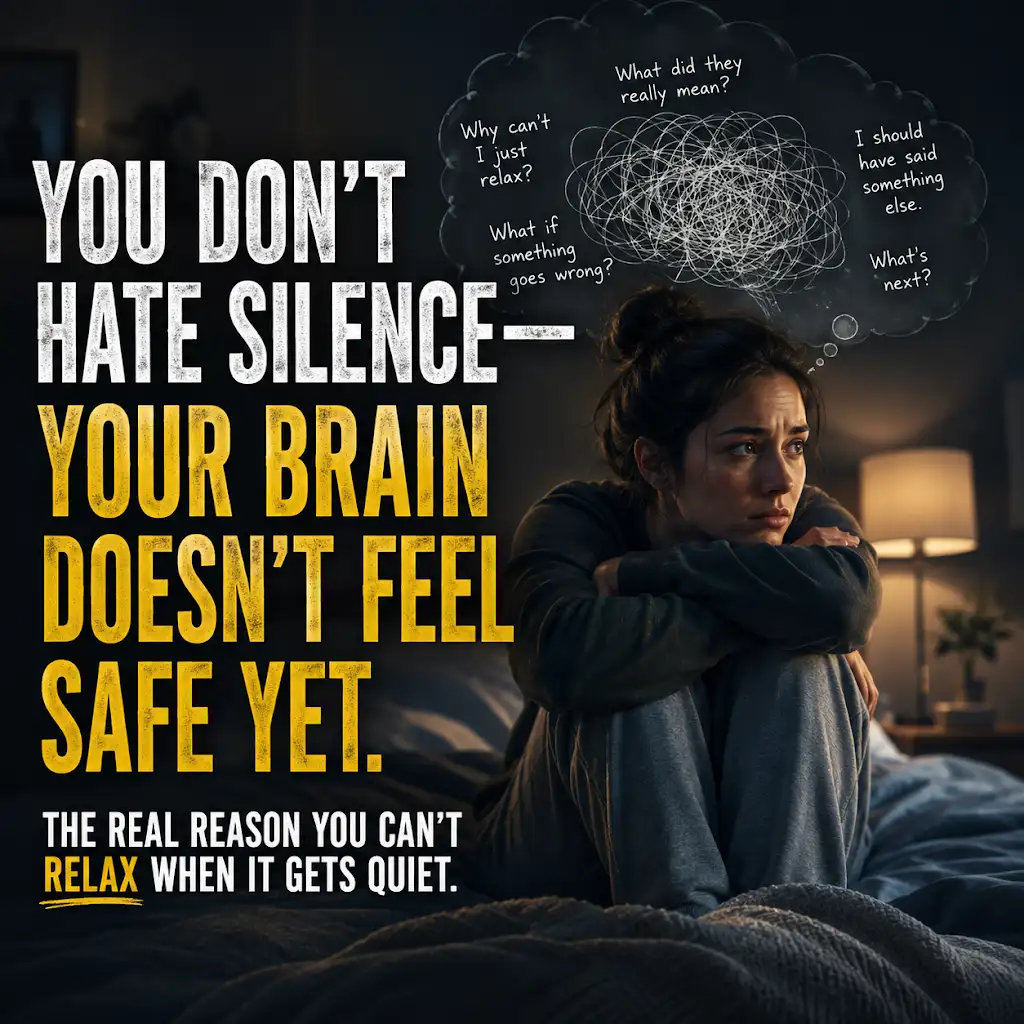
You Don’t Hate Silence—Your Brain Doesn’t Feel Safe Yet
FAQs
1. What are some common reasons why relaxing feels impossible?
Some common reasons why relaxing may feel impossible include high levels of stress, anxiety, overstimulation from technology, and an inability to switch off from work or other responsibilities.
2. How does stress impact our ability to relax?
Stress can impact our ability to relax by triggering the body’s “fight or flight” response, leading to increased heart rate, muscle tension, and heightened alertness. This can make it difficult to unwind and calm the mind.
3. What role does technology play in making relaxation difficult?
Technology can make relaxation difficult by constantly bombarding us with notifications, emails, and social media updates, leading to overstimulation and an inability to disconnect from the digital world.
4. How can overthinking contribute to the feeling of being unable to relax?
Overthinking can contribute to the feeling of being unable to relax by causing a constant stream of racing thoughts and worries, making it challenging to quiet the mind and find a sense of calm.
5. What are some strategies for making relaxation feel more attainable?
Some strategies for making relaxation feel more attainable include practicing mindfulness and meditation, setting boundaries with technology, engaging in physical activity, and seeking support from a therapist or counselor to address underlying stress and anxiety.