
You understand, perhaps instinctively, that the world you navigate is awash in information. Much of it is true, verifiable, and contributes to your understanding. However, you also recognize the insidious undertow of misinformation, a current that continues to shape perceptions, erode trust, and even dictate actions on a global scale. This is not a new phenomenon; misinformation has been a shadow accompanying human communication since its inception. Yet, the current era, characterized by unprecedented connectivity and rapid dissemination, presents unique challenges that you, as an engaged citizen, must confront.
You might wonder why, despite all the advancements in critical thinking education and fact-checking initiatives, misinformation persists. Consider it a hydra: cut off one head, and two more, perhaps more venomous, emerge. This resilience stems from deeply ingrained psychological and sociological factors that are not easily overcome.
Psychological Vulnerabilities
Your own cognitive architecture, while remarkably powerful, possesses inherent biases that misinformation cleverly exploits. You are, for instance, a pattern-seeking creature, and sometimes, erroneous connections are made.
Confirmation Bias
You are inherently more likely to accept information that aligns with your existing beliefs and less likely to scrutinize it. This isn’t a failing on your part, but a natural tendency. If you already hold a certain political conviction, you will readily consume news that validates it, even if that news is misleading. This creates a self-reinforcing echo chamber, where dissenting information struggles to penetrate.
Cognitive Dissonance Avoidance
When presented with information that conflicts with your core beliefs, you experience psychological discomfort. To alleviate this, you may actively reject the discordant information, even if it is factual, in favor of maintaining your internal consistency. This protective mechanism, while serving to preserve your worldview, can also render you susceptible to misinformation that offers a comfortable narrative.
Illusory Truth Effect
The more times you are exposed to a piece of information, regardless of its veracity, the more likely you are to believe it to be true. Repetition, even of falsehoods, fosters a sense of familiarity and consequently, a perception of truth. This is a critical principle understood by purveyors of misinformation, who often repeat their narratives extensively across various platforms.
The continued influence effect of misinformation highlights how false information can persist in people’s beliefs even after they are presented with corrections. A related article that delves deeper into this phenomenon is available at Unplugged Psych, where the complexities of how misinformation shapes our understanding of reality are explored. This article provides valuable insights into the mechanisms behind the retention of incorrect information and its implications for decision-making and belief formation.
The Amplification Mechanisms of the Digital Age
While psychological predispositions lay the groundwork, the digital landscape acts as a powerful accelerant, spreading misinformation with a speed and reach unimaginable in previous eras. You are, in effect, a node in this vast network, both a potential disseminator and a target.
Social Media Algorithms
You might think you control what you see on your social media feeds, but in reality, sophisticated algorithms play a significant role. These algorithms are designed to maximize engagement, keeping you scrolling and interacting.
Filter Bubbles and Echo Chambers
The algorithms learn your preferences and feed you more of what you already interact with. This creates a “filter bubble” where you are primarily exposed to information that confirms your existing views and fewer dissenting opinions. Within these bubbles, “echo chambers” form, where misinformation can amplify unchecked, resembling a feedback loop where false narratives gain credibility through repetitive exposure from like-minded individuals.
Viral Spread
Misinformation, particularly emotionally charged or sensational content, is often designed for virality. Its novelty or shocking nature makes you more likely to share it, regardless of truthfulness. This rapid sharing enables falsehoods to outpace corrections, often reaching a wide audience before any debunking efforts can take hold. You become, unwittingly, a conduit for its proliferation.
The Erosion of Traditional Gatekeepers
Historically, established media organizations acted as gatekeepers, vetting information before it reached the public. While not perfect, they provided a level of journalistic scrutiny. The digital age has blurred these lines.
Citizen Journalism and the Democratization of Information
The ability for anyone to publish content online has democratized information dissemination. While this offers immense potential for diverse voices, it also means that the rigorous editorial processes of traditional journalism are often absent. You are left to discern credibility without the prior assurance of professional verification.
Decline in Trust in Mainstream Media
Years of partisan attacks and genuine journalistic missteps have led to a significant decline in public trust in traditional media outlets. When you distrust established sources, you become more susceptible to alternative narratives, even those that lack factual grounding. This vacuum of trust is readily filled by purveyors of misinformation.
The Diverse Motivations Behind Misinformation
You might assume that all misinformation stems from malicious intent, but the reality is more nuanced. While some actors explicitly aim to deceive, others may unintentionally contribute to the problem. Understanding these motivations is crucial to effectively addressing the issue.
Political Manipulation and Influence Operations
You are undoubtedly aware that political actors frequently leverage misinformation to achieve their objectives. This often involves shaping public opinion, discrediting opponents, or sowing discord within a society.
Domestic Political Agendas
Within your own country, political campaigns and partisan groups may disseminate misleading information to sway voters, undermine trust in democratic institutions, or promote particular policies. These efforts often tap into existing grievances and anxieties to resonate with target audiences.
Foreign Interference
Across borders, state-sponsored actors engage in sophisticated influence operations, using misinformation to destabilize rival nations, interfere in elections, or advance their geopolitical interests. These operations can be highly coordinated, employing networks of fabricated accounts and deliberately false narratives to achieve their aims.
Financial Gain
For some, misinformation is a lucrative business model. You might encounter websites or social media accounts that profit from the traffic generated by sensational and often false headlines.
Clickbait and Ad Revenue
Websites that publish exaggerated or fabricated stories often do so to maximize page views, which directly translates to advertising revenue. The more shocking the headline, the more likely you are to click, inadvertently feeding their financial incentive.
Exploitation of Conspiracy Theories
Conspiracy theories, often built on misinformation, can also be monetized through books, documentaries, and merchandise. These products cater to a specific audience, creating a niche market for unsubstantiated claims.
Ideological Extremism
Misinformation is a powerful tool for extremist groups to recruit new members, justify violence, and reinforce their radical ideologies. You will find that these narratives often present a simplistic, binary worldview.
Radicalization and Recruitment
Extremist organizations use false narratives to demonize out-groups, create a sense of victimhood within their own group, and present their ideology as the only solution. This can lead individuals down a path of radicalization, where they may eventually embrace violence.
Justification of Prejudice and Discrimination
Misinformation is frequently used to propagate stereotypes and prejudices against minority groups, immigrants, or other “out-groups.” These narratives, steeped in falsehoods, serve to justify discrimination and societal division.
The Far-Reaching Consequences of Misinformation
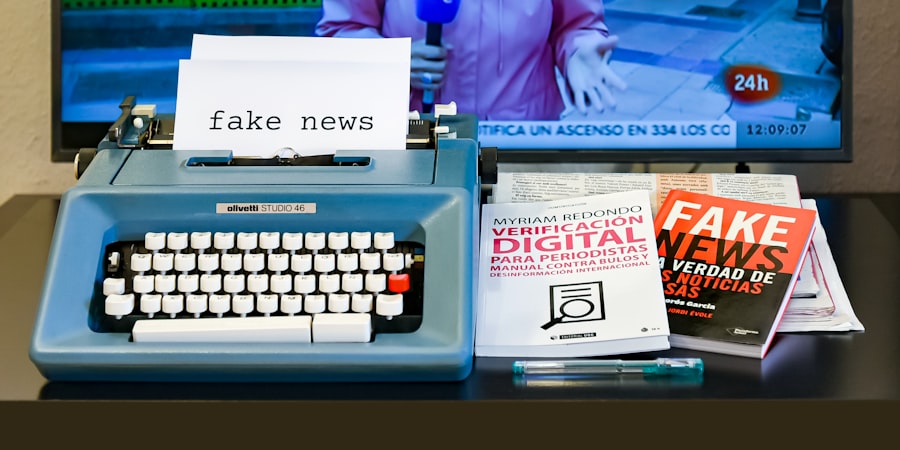
The persistent presence of misinformation is not merely an intellectual inconvenience; it has profound and tangible ramifications that affect various aspects of your life and the health of your society. You are not immune to these effects.
Erosion of Trust
Perhaps the most insidious effect of widespread misinformation is the corrosion of trust – trust in institutions, in experts, and even in each other.
Decline in Trust in Science and Experts
When scientific consensus is consistently undermined by false narratives, you become less likely to trust expert advice on critical issues like public health, climate change, or economic policy. This skepticism can lead to inaction on pressing challenges.
Paranoia and Social Fragmentation
A constant barrage of conflicting information, particularly when framed as a battle between “truth” and “lies,” can foster widespread paranoia. This can lead to social fragmentation, where different groups inhabit entirely separate informational realities, making constructive dialogue nearly impossible.
Impact on Public Health
During times of crisis, particularly public health emergencies, misinformation can have direct, life-threatening consequences. You have witnessed this first-hand.
Vaccine Hesitancy
False claims about vaccine efficacy and safety, despite overwhelming scientific evidence to the contrary, have fueled vaccine hesitancy, leading to preventable outbreaks of diseases and a significant health burden.
Misleading Health Advice
The proliferation of unverified health remedies and treatments online can lead individuals to reject evidence-based medical care in favor of dangerous or ineffective alternatives, jeopardizing their well-being.
Threats to Democracy
The health of your democratic processes relies on an informed citizenry. Misinformation poses a direct threat to this fundamental principle.
Undermining Electoral Integrity
False claims of electoral fraud, voter suppression, or foreign interference, even without evidence, can erode public confidence in election results and the democratic process itself. This can lead to political instability and distrust in governance.
Polarization and Political Paralysis
When political discourse is dominated by misinformation and outrage, it becomes increasingly difficult to find common ground and engage in cooperative governance. This hyper-polarization can lead to political paralysis, where critical policy decisions are stalled due to intractable divisions.
The continued influence effect of misinformation highlights how false information can persist in our memories, even after we are exposed to corrections. This phenomenon is crucial to understand, especially in today’s digital age where misinformation spreads rapidly. For further insights into this topic, you can explore a related article that delves deeper into the psychological mechanisms behind this effect. To read more about it, visit this article which provides valuable information on how our minds can be influenced by inaccurate narratives.
Combating Misinformation: Your Role and Collective Efforts
| Study | Type of Misinformation | Correction Method | Measurement Metric | Effect Size (Continued Influence) | Key Findings |
|---|---|---|---|---|---|
| Ecker et al. (2010) | False news report | Direct correction with explanation | Belief rating scale (1-7) | 0.45 (moderate continued influence) | Corrections reduce but do not eliminate misinformation effects |
| Lewandowsky et al. (2012) | Climate change myths | Fact-checking with detailed rebuttal | Agreement with misinformation (%) | 25% residual belief after correction | Myths persist despite corrections, especially in motivated reasoning |
| Johnson & Seifert (1994) | Crime report misinformation | Retraction notice | Recall accuracy (%) | 30% continued influence effect | Misinformation continues to influence memory even after retraction |
| Swire et al. (2017) | Political misinformation | Simple correction vs. detailed correction | Belief change magnitude | Simple: 0.2; Detailed: 0.35 (effect size) | Detailed corrections more effective but some misinformation remains |
| Thorson (2016) | Health misinformation | Social media correction | Sharing intention reduction (%) | 15% reduction, but 10% still share misinformation | Corrections reduce sharing but do not fully stop misinformation spread |
You are not powerless in the face of this pervasive challenge. While the problem is vast, individual and collective actions can significantly mitigate the influence of misinformation. It requires a multifaceted approach, much like building a robust immune system against cognitive pathogens.
Cultivating Media Literacy
The most potent weapon against misinformation is critical thinking. You must become a discerning consumer of information.
Fact-Checking Habits
Before you share or believe a piece of information, you should pause and consider its source. Is it a reputable news organization? Does it cite verifiable evidence? Utilize established fact-checking websites to verify doubtful claims. Treat every piece of information as a provisional truth that needs testing.
Source Evaluation
Learn to identify the hallmarks of credible sources. Look for transparency, editorial standards, and evidence of journalistic integrity. Be wary of sensational headlines, anonymous sources, and websites with suspicious URLs or unprofessional designs. Understand that even credible sources can make mistakes, but their commitment to correction and transparency sets them apart.
Supporting Reputable Journalism
In a chaotic information environment, quality journalism acts as a lighthouse. You have a role in sustaining it.
Subscribing to News Outlets
Consider subscribing to newspapers, magazines, or online news platforms that uphold journalistic standards. Your financial support helps these organizations invest in investigative reporting and fact-checking, which are crucial for uncovering and debunking misinformation.
Advocating for Ethical Media Practices
Demand accuracy and accountability from all media outlets. Support efforts that promote ethical journalism and hold purveyors of misinformation responsible for their actions. Your voice, when joined with others, can influence media behavior.
Promoting Critical Discourse
Engaging in civil, fact-based discussions is essential for challenging false narratives and fostering understanding. You must be prepared to respectfully challenge misinformation when you encounter it.
Challenging Misinformation Respectfully
When confronting someone who has shared misinformation, avoid accusatory language. Present factual corrections calmly and provide reliable sources. Focus on the information itself, rather than attacking the person. This approach is more likely to be effective than confrontational tactics.
Encouraging Diverse Perspectives
Seek out and engage with diverse perspectives, even those that differ from your own. This broadens your understanding and helps you recognize the nuances of complex issues, making you less susceptible to simplistic, misleading narratives.
Ultimately, the continued influence of misinformation underscores a fundamental truth: the health of your information ecosystem is directly tied to the health of your society. Your vigilance, critical thinking, and commitment to truth are not merely personal virtues; they are essential civic responsibilities in an interconnected world. You are not a passive recipient of information; you are an active participant in shaping the narrative.
FAQs
What is the continued influence effect of misinformation?
The continued influence effect of misinformation refers to the phenomenon where people continue to rely on false or corrected information in their reasoning and decision-making, even after it has been debunked or retracted.
Why does misinformation continue to influence people even after correction?
Misinformation persists because initial information often forms a mental model that is difficult to update. Cognitive biases, memory limitations, and the way corrections are presented can all contribute to the continued influence effect.
How can the continued influence effect impact society?
This effect can lead to the spread of false beliefs, poor decision-making, reduced trust in institutions, and challenges in public health, politics, and other areas where accurate information is critical.
What strategies are effective in reducing the continued influence effect?
Effective strategies include providing clear and detailed corrections, explaining why the misinformation is false, offering alternative explanations, and repeating corrections to reinforce accurate information.
Is the continued influence effect the same for all types of misinformation?
No, the effect can vary depending on factors such as the topic’s complexity, emotional impact, the credibility of the source, and individual differences in cognitive processing and prior beliefs.