You know that feeling, don’t you? The quiet hum of a day without incident, the predictable rhythm of your routine. On paper, it’s the picture of serenity. The ideal state of being. Yet, for you, it often lands with a thud, a hollow echo in your chest that’s far from the promised peace. Instead, a subtle unease unfurls, a prickling awareness that something is off. It’s not a sharp anxiety, not the panic that sends your heart into a frantic sprint. It’s a low-grade hum, a whisper that suggests this stillness is a precarious illusion, a temporary lull before… well, before what? This is the paradox you often find yourself in: the comfort of familiar chaos, and the unsettling unfamiliarity of true peace.
You’ve spent so much time navigating the choppy waters of disruption, haven’t you? Your life, at various points, has been a masterclass in adaptability, a testament to your ability to pivot, to improvise, to simply survive. This constant state of vigilance, while exhausting, has also become a strange kind of home. It’s a landscape you understand, where the dangers are recognizable, and your responses, though perhaps born of necessity, are well-worn paths.
The Hypervigilance Habit
Think back to those times when things were consistently unpredictable. Did you find yourself developing a sixth sense for impending trouble? You learned to read the subtle shifts in atmosphere, the almost imperceptible cues that signaled a storm was brewing. This honed your ability to anticipate, to react before the wave crashed over you. It was a survival mechanism, and a highly effective one. But the problem is, that instinct doesn’t just switch off when the storm passes. It remains, a silent alarm system perpetually on high alert.
The “What If” Machine
Your mind, a brilliant but often overzealous guardian, has been trained to scan for threats. In the absence of any immediate danger, it starts to invent them. You’ll find yourself replaying past scenarios, dissecting them for lessons learned, but also for potential future pitfalls. The “what ifs” become a constant soundtrack, a meticulous blueprint of how things could go wrong, even when everything is currently going right. This mental preparation, which once served you so well, now acts as a saboteur of calm.
The Internal Barometer
Your internal barometer is set to detect shifts in external pressures. When there’s no pressure, no fluctuation, it starts to signal an anomaly. It’s like a fire alarm that keeps going off in an empty building. The absence of an alarm triggers a new kind of alarm. This internal compass, which was so adept at pointing you towards danger, now points you towards the perceived danger of safety.
The Erosion of Self-Reliance
When your world was in constant flux, you learned to rely on yourself, implicitly and explicitly. You were the architect of your own stability, the problem-solver in chief. This fostered a strong sense of agency, a belief in your own capacity to overcome adversity. But when that adversity vanishes, so too does the opportunity to exercise that powerful muscle of self-reliance.
The Unused Tools
Imagine having a toolbox full of specialized tools, meticulously maintained and ready for use. Now, imagine being placed in a perfectly organized workshop where nothing needs fixing. Those tools, so crucial in your previous life, suddenly feel redundant. You might even feel a pang of loss for the tasks they were designed to accomplish. This is how your problem-solving skills can feel in a stable environment. They are ready, willing, and able, but with nothing to address, they can contribute to a sense of idleness and a subtle questioning of your own utility.
The Rehearsal for Disaster
You’ve rehearsed so many scenarios of things falling apart. You’ve played out the script of crisis management countless times. When you’re not actively engaged in that rehearsal, a part of you feels… unprepared. It’s as if you’re a seasoned actor who’s suddenly been cast in a play with no lines. The quiet leaves you feeling exposed, as if the stage lights are too bright and the audience is waiting for a performance you’re no longer equipped to deliver.
In exploring the concept of why familiar chaos often feels safer than peace, one can refer to a related article that delves into the psychological underpinnings of this phenomenon. The article discusses how individuals may find comfort in chaos due to its predictability and the sense of control it provides, contrasting sharply with the vulnerability that can accompany peace. For a deeper understanding of this intriguing topic, you can read more in the article available at Unplugged Psych.
The Siren Song of Stress: Why We Crave the Familiar Frenzy
It’s not that you want things to be difficult. It’s not that you actively seek out hardship. But there’s an undeniable draw, a magnetic pull towards the familiar chaos that once defined your existence. This isn’t masochism; it’s a deeply ingrained pattern of behavior and thought.
The Dopamine Rush of Drama
Your brain, in its pursuit of stimulation, can become accustomed to the rush of adrenaline and the subsequent dopamine release that comes with navigating high-stress situations. It’s a powerful, albeit unhealthy, reward system. When the stress subsides, so does that particular chemical cocktail, leaving you feeling flat, apathetic, and even a little bored.
The “Fight or Flight” Addiction
The physiological response to stress, the fight-or-flight mechanism, is designed for immediate survival. It triggers a cascade of hormones that sharpen your senses and prepare your body for action. For some, this heightened state of arousal becomes a baseline, and its absence can feel like a withdrawal. You might find yourself subconsciously creating minor stressors just to feel that familiar surge.
The Rush of Competence
When you’re in the thick of it, solving problems and overcoming obstacles, there’s a powerful sense of competence that washes over you. You are actively engaged, proving your capabilities with every successful maneuver. This feeling of mastery is incredibly addictive. When that challenge disappears, so does that immediate validation, leaving you with a yearning for that sense of purpose and effectiveness.
The Illusion of Control Through Action
Paradoxically, in the midst of chaos, you often feel more in control. Why? Because you are doing something. You are actively engaged in problem-solving, in mitigating damage, in steering the ship through the storm. This sense of agency, of being an active participant rather than a passive observer, can be incredibly empowering, even if the situation itself is out of your ultimate control.
The “Busy” Badge of Honor
In many cultures, being busy has become a status symbol. It’s seen as a sign of importance, of productivity, of being in demand. When you are in a state of organized calm, you might feel less “important,” less needed. This can lead to a subconscious desire to fill that perceived void with activity, even if that activity is simply manufactured busyness to recreate a sense of purpose.
The Narrative of the Survivor
Your story, the narrative you tell yourself and others, is often framed by your ability to overcome challenges. You are the survivor, the resilient one. This identity, while empowering, can be threatened by a life free from significant obstacles. The comfortable chaos provides you with ongoing material for your narrative, reinforcing your self-image as a capable and strong individual.
The Unseen Anchor: When Stability Feels Like Stagnation
Stability is what most people strive for. It’s the bedrock of security, the foundation for building a life. Yet, for you, it can feel like an anchor, heavy and restrictive, holding you back from… well, from what? You’re not entirely sure, but the stillness feels like a lack of progress, a pause that’s too long.
The Fear of Missing Out (on What?)
You’ve witnessed others thrive in stability, building families, careers, and lives without the constant upheaval you’ve experienced. But when you’re presented with that same stability, a nagging fear can surface: are you missing out on something vital? Is this peace simply a plateau, and is life truly lived on the precipice of change and challenge?
The FOMO of Fulfillment
It’s not necessarily about missing out on material possessions or social events. It’s a deeper FOMO, a fear of missing out on a certain kind of fulfillment that you believe can only be found in the crucible of adversity. You might observe others who seem content in their quiet lives and wonder if they are sacrificing something essential for their peace. And then you wonder if you are doing the same.
The Uneasy Emptiness
When the demands of chaos subside, an almost palpable emptiness can emerge. It’s not necessarily sadness, but a lack of stimulation, a quiet that feels too profound. This is the void where the familiar problems used to reside. You might find yourself looking for something, anything, to fill that space, even if it’s just a minor inconvenience.
The Suspicion of the Unearned
You’ve worked hard for every ounce of peace you’ve ever managed to snatch. It’s been a hard-won battle, a prize earned through immense effort and resilience. So, when peace arrives effortlessly, it can feel suspect. It feels unearned, as if you’re receiving a reward you haven’t quite qualified for.
The Guilt of Ease
There can be an underlying guilt associated with experiencing ease. If others you care about are still struggling, or if you know that significant challenges still exist in the world, your own period of calm can feel like a betrayal. You might feel undeserving of this reprieve, as if you’re somehow shirking your responsibility to experience hardship.
The Internal Audit of Worth
When you’re constantly fighting fires, your worth is often measured by your ability to do so. You are defined by your resilience, your problem-solving skills, your ability to endure. In the absence of these challenges, you might find yourself conducting an internal audit of your worth. If you’re not actively demonstrating these qualities, then who are you? And what is your value?
The Relearning of Rest: Embracing the Unfamiliar Calm

The good news is that this is not a permanent state. You are not destined to forever crave the chaos. It’s a learned behavior, and like any learned behavior, it can be unlearned. The journey requires a conscious effort to redefine what peace means to you, and to actively cultivate the skills needed to thrive in it.
The Practice of Presence
One of the most powerful tools you have at your disposal is the practice of being present. This means actively engaging with your current reality, rather than dwelling on the past or fearing the future. It’s about noticing the small joys, the quiet moments, the simple beauty that often gets overlooked in the rush of activity.
Mindfulness as a Muscle
Mindfulness isn’t a destination; it’s a practice. It’s like building a muscle. The more you engage in it, the stronger it becomes. Start with short periods, focusing on your breath, your senses, or a simple activity. Over time, you’ll find it easier to anchor yourself in the present moment, even when the old anxieties try to pull you away.
Savoring the Silence
Instead of viewing silence as an absence, try to experience it as a presence. What can you hear in the quiet? The gentle hum of the refrigerator, the distant chirping of birds, the rhythm of your own breathing. These are the subtle sounds of peace, and learning to appreciate them is a significant step.
Redefining Your Identity Beyond the Struggle
Your identity has been shaped by your experiences, and that’s natural. But it’s time to expand that definition. You are more than just a survivor; you are also capable of growth, of creativity, of connection, and of peace.
Cultivating New Narratives
Start to actively construct new narratives about yourself. Instead of focusing on your ability to overcome adversity, focus on your ability to create, to nurture, to learn, and to simply be. Celebrate your achievements in these new arenas, no matter how small they may seem.
The Joy of Being, Not Just Doing
There’s a profound joy to be found in simply being. In moments of quiet reflection, in connection with loved ones, in the appreciation of art and nature. Shift your focus from a constant need to do to a gentle embrace of being. This can be a challenging shift, but it is ultimately deeply rewarding.
Many people find that familiar chaos feels safer than peace, as it often provides a sense of control and predictability, even if the circumstances are challenging. This phenomenon can be further explored in an insightful article on the topic, which discusses how our brains are wired to seek out familiarity, even when it leads to stress. For a deeper understanding of this concept, you can read more in this related article that delves into the psychology behind our attachment to chaos.
The Quiet Revolution: Building a Life of Sustainable Serenity
| Reasons | Explanation |
|---|---|
| Familiarity | Chaos may feel safer because it is familiar and known, while peace may feel unfamiliar and uncertain. |
| Control | Some people may feel more in control in chaotic situations, as they are used to navigating through them, while peace may feel like a loss of control. |
| Comfort Zone | For some individuals, chaos may be within their comfort zone, and peace may feel uncomfortable and unfamiliar. |
| Adrenaline Rush | Chaos can provide an adrenaline rush, making it feel more exciting and stimulating than peace. |
The ultimate goal isn’t to eliminate all stress from your life – that’s neither possible nor desirable. It’s about building a sustainable form of serenity, one where you can navigate challenges without being consumed by them, and where you can find genuine comfort in the quiet moments.
Gradual Exposure to Calm
Just as you were gradually exposed to chaos, you can now gradually expose yourself to calm. Don’t expect to go from perpetual motion to perfect stillness overnight. Introduce periods of quiet into your routine, and gradually increase their duration and frequency.
Structured Downtime
Schedule dedicated time for rest and relaxation, just as you would schedule important meetings. Treat this downtime with the same respect and commitment. This structured approach can help combat the feeling of “wasted time” and reinforce the importance of these periods.
Conscious Disconnection
In a world of constant connectivity, consciously disconnecting is a revolutionary act. Set boundaries around your technology use, dedicate screen-free evenings, and create spaces in your life where you are not constantly bombarded with external stimuli.
The Power of Support Systems
You don’t have to do this alone. Building and nurturing strong support systems can provide you with the encouragement and perspective you need to navigate this transition.
Sharing Your Journey
Talk to trusted friends, family members, or a therapist about your experiences. Articulating your feelings and receiving validation can be incredibly powerful. Hearing that others have experienced similar struggles can normalize your feelings and reduce any sense of isolation.
Seeking Professional Guidance
A therapist can provide you with tools and strategies to address the underlying patterns that contribute to your comfort in chaos. They can help you unpack past experiences and develop healthier coping mechanisms for dealing with stress and embracing peace.
Embracing peace isn’t about becoming a passive bystander in your own life. It’s about redefining strength, about understanding that true resilience lies not only in enduring storms but also in building a life that can weather them gracefully. It’s about recognizing that the quiet moments are not voids to be filled, but opportunities to be savored, to grow, and to truly, deeply live. You are capable of this. You deserve this. The journey might feel unfamiliar, even a little unsettling, but the comfort you will find in genuine serenity will be a reward far greater than any temporary rush of familiar chaos.
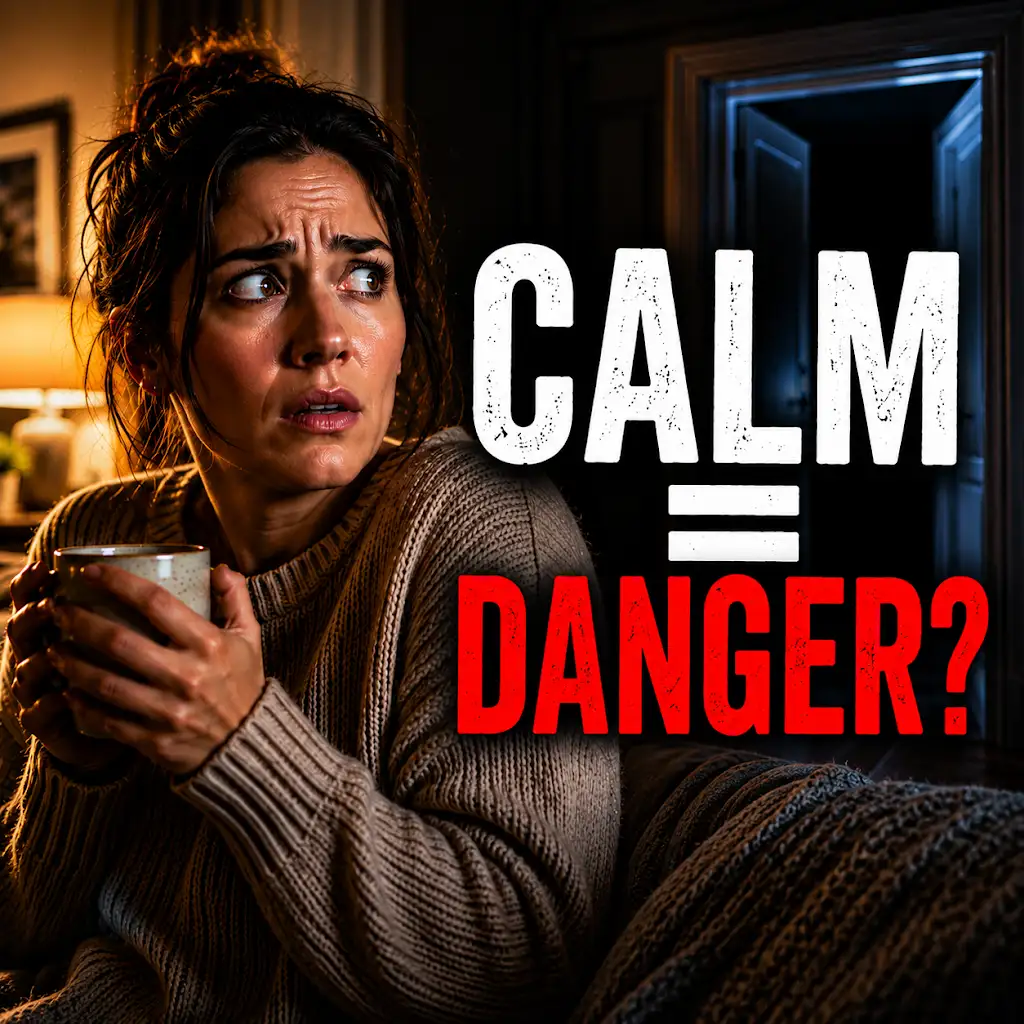
Your Life Is Safe. So Why Are You Still on Alert?
FAQs
What is familiar chaos?
Familiar chaos refers to a state of disorder or confusion that is familiar or habitual to an individual or group. It may include recurring patterns of dysfunction, conflict, or instability that have become normalized over time.
Why does familiar chaos feel safer than peace?
Familiar chaos can feel safer than peace because it provides a sense of predictability and control, even if the situation is negative. The unknown and uncertainty of peace can be unsettling for some individuals, leading them to seek out familiar chaos as a way to maintain a sense of stability.
What are the potential consequences of preferring familiar chaos over peace?
Preferring familiar chaos over peace can lead to prolonged stress, emotional turmoil, and hindered personal growth. It may also perpetuate unhealthy patterns of behavior and relationships, ultimately impacting one’s overall well-being and quality of life.
How can individuals break free from the cycle of familiar chaos?
Breaking free from the cycle of familiar chaos often requires self-awareness, willingness to change, and seeking support from trusted individuals or professionals. This may involve setting boundaries, seeking therapy, and actively working towards creating a healthier and more peaceful environment.
What are some strategies for embracing peace and letting go of familiar chaos?
Strategies for embracing peace and letting go of familiar chaos may include practicing mindfulness, cultivating positive relationships, setting realistic goals, and engaging in self-care activities. It may also involve challenging negative thought patterns and actively seeking out new, healthier experiences.