You are a biological organism, a finely tuned machine operating within a complex social ecosystem. This ecosystem, whether you recognize it explicitly or not, is governed by intricate rules, and at its foundation lies the interplay of intimidation and what can be termed “status economics.” This isn’t merely about dominance displays or raw power; it’s about a sophisticated biological calculus that influences your behavior, your decision-making, and ultimately, your survival and reproductive success. You navigate a world where perceived value and the capacity to inspire apprehension are currencies, constantly exchanged in the subtle, and sometimes overt, arenas of social interaction.
Intimidation is not a learned behavior in its most primal form; it’s etched into your neural architecture. Think of your brain as a sophisticated threat-detection system, constantly scanning your environment for potential dangers.
The Amygdala: Your Internal Alarm Bell
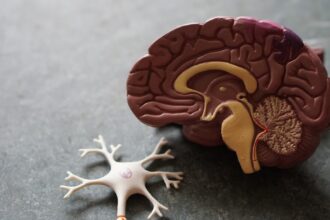
Your amygdala, a small, almond-shaped structure deep within your temporal lobes, is the conductor of your fear response. When you perceive a threat – whether it’s a looming physical danger or a subtly intimidating social cue – the amygdala fires up. It triggers a cascade of physiological responses designed for immediate action: increased heart rate, sharpened senses, and a flood of stress hormones like cortisol and adrenaline. This is your body preparing for a fight-or-flight scenario, a biological predisposition that has kept your ancestors safe for millennia. The sight of a larger, more aggressive individual, the sharp tone of a voice, or even a particular posture can all activate this ancient circuitry, sending involuntary signals through your nervous system.
The Prefrontal Cortex: The Regulator and Interpreter
While the amygdala provides the initial, instinctive reaction, your prefrontal cortex, the seat of executive functions like reasoning and decision-making, plays a crucial role in modulating and interpreting these signals. It allows you to process the information that triggered the amygdala’s alarm and decide on a more nuanced response. In the context of intimidation, your prefrontal cortex helps you to assess whether the perceived threat is real, what its potential consequences might be, and what strategies are available to mitigate it. It’s the difference between a deer freezing in the face of a predator and a primate assessing the predator and considering escape routes or defensive maneuvers. This internal dialogue, between the rapid-fire alarm of the amygdala and the more deliberate assessment of the prefrontal cortex, dictates much of your social maneuvering.
Hormonal Influences: Testosterone and Cortisol
Hormones are the chemical messengers that orchestrate much of your biological symphony. Testosterone, often associated with aggression and dominance, plays a significant role in the expression and perception of intimidating behaviors. Elevated testosterone levels can lead to bolder, more assertive actions, increasing the likelihood of an individual projecting an aura of dominance. Conversely, cortisol, the stress hormone, is released in response to perceived threats. High cortisol levels can lead to heightened vigilance and anxiety, making you more susceptible to intimidation. The intricate dance between these hormones within your system underpins your capacity to both intimidate and be intimidated.
In exploring the intricate relationship between the biology of intimidation and status economics, one can gain valuable insights from the article available at Unplugged Psychology. This resource delves into how biological factors influence social hierarchies and the mechanisms of intimidation, shedding light on the underlying psychological processes that drive status dynamics within various social contexts. Understanding these connections can enhance our comprehension of human behavior and the societal structures that emerge from them.
Status Economics: The Currency of Social Hierarchies
In the biological marketplace of social interactions, status is a form of capital. It’s not just about who is at the top of a pecking order, but about the perceived value and competence an individual holds within a group. This perceived value is not static; it’s a dynamic economy where individuals constantly strive to accrue and maintain status.
The Resource Control Hypothesis
One of the fundamental drivers of status economics is the control of resources. These resources can be tangible, such as food, territory, or mates, or intangible, like information, social alliances, or even attention. Individuals who can effectively control and dispense these resources naturally accrue higher status. Think of a skilled hunter in a primitive tribe; their ability to provide sustenance elevates their standing. In modern human societies, this translates to individuals with financial wealth, influential positions, or specialized knowledge. Your own drive to acquire resources, whether it’s a promotion at work or a sought-after social connection, is intrinsically linked to your desire for social capital.
The Signaling of Quality
Status is often a signal of underlying quality. An individual who consistently demonstrates competence, skill, and reliability is more likely to attain and maintain high status. This is because others in the group benefit from associating with such individuals. Their proven abilities suggest they can navigate challenges, solve problems, and contribute positively to the group’s overall well-being. This isn’t simply about bragging rights; it’s about demonstrating genuine value. You observe this in your own choices: do you seek advice from someone who consistently makes poor decisions, or from someone known for their expertise? The answer speaks volumes about the biological imperative to align oneself with quality.
Reciprocity and Social Exchange
The dynamics of status economics are heavily influenced by principles of reciprocity and social exchange. An individual who has helped others, offered support, or shared resources is likely to receive preferential treatment in return. This creates a feedback loop where acts of generosity and cooperation can build social capital and elevate status. Conversely, those who consistently take without giving can find their social currency dwindling. You experience this in your friendships and professional relationships; the give-and-take nature of these interactions dictates the strength of the bonds and the perceived value of each participant in the exchange.
The Role of Intimidation in Maintaining Status

Intimidation, particularly in its more subtle forms, serves as a crucial mechanism for individuals to consolidate and maintain their hard-won status within social hierarchies. It acts as a deterrent, discouraging challenges from those lower down the ladder.
Threat Displays and Dominance Signals
From the puffed-up chest of a territorial bird to the narrowed eyes and stiff posture of a human confronting a rival, threat displays are universal signals of dominance. These visual and behavioral cues communicate an individual’s readiness and capacity to defend their position. You might not consciously recognize them as such, but you process these signals constantly. A direct gaze that lingers too long, a voice that drops in pitch and volume, or the deliberate occupying of space can all serve as subtle but potent assertions of dominance, warning others to tread carefully.
Social Exclusion and Ostracism
While overt aggression can be costly and counterproductive in many social contexts, the threat of social exclusion or ostracism is a powerful tool for maintaining status. Individuals who defy group norms or challenge established hierarchies can find themselves gradually marginalized, their social connections severed, and their access to resources restricted. This form of intimidation is particularly insidious because it operates on the deeply ingrained human need for belonging. To be ostracized is to be cut off from the very ecosystem that sustains you, a potent biological deterrent against defiance.
The Cost of Confrontation
For individuals at the lower rungs of the status hierarchy, confronting a higher-status individual often carries significant costs. This could range from direct physical harm to social repercussions. The biological imperative to avoid such costly confrontations means that intimidation, even when perceived, can effectively suppress challenges and reinforce existing social structures. You instinctively weigh the potential rewards of challenging a superior against the likely costs, and this calculation is heavily influenced by the perceived intimidating capacity of the individual you are considering confronting.
Intimidation and Status Economics in Action

Observing the interplay of intimidation and status economics in the natural world and human societies reveals a consistent pattern: those who can effectively project an aura of competence and possess the capacity to deter challenges often rise to positions of influence.
Animal Hierarchies: The Alpha and Beyond
In many animal species, dominance hierarchies are clearly defined. The “alpha” individual, often the strongest or most aggressive, commands respect and has privileged access to resources. However, status in animal groups is not solely about brute force. It can also be about social intelligence, the ability to form alliances, and the capacity to de-escalate conflicts when necessary. Intimidation in this context is often a ritualized display, minimizing the need for actual combat. You see echoes of this in human interactions, where the loudest bark doesn’t always win the fight; strategic displays of power and subtle threats are often more effective.
Human Social Structures: From the Workplace to Politics
In human societies, the principles of status economics and intimidation are evident in a multitude of contexts. In the workplace, individuals who demonstrate superior skills, take initiative, and are perceived as confident leaders often gain promotions and increased influence. Intimidation here might manifest as a leader’s assertive communication style, their confident demeanor, or the implied threat of professional repercussions for underperformance or insubordination. In politics, candidates who project an image of strength, decisiveness, and the ability to overcome obstacles often garner more support. The language used, the staged events, and the public persona all contribute to a perception of power and dominance, a form of political intimidation.
The Interplay of Competition and Cooperation
It’s important to understand that intimidation and status economics are not solely about zero-sum competition. Cooperation and altruism also play significant roles. Individuals who are perceived as fair, trustworthy, and willing to cooperate can also accrue high status. However, even within cooperative frameworks, the underlying dynamics of intimidation and status can influence who leads, who contributes more, and who benefits most from the collective effort. A benevolent leader who is also capable of swift and decisive action when necessary will often command greater respect than a leader who is perceived as weak or ineffectual.
Recent research has shed light on the intricate relationship between the biology of intimidation and status economics, revealing how these factors influence social dynamics and individual behavior. For a deeper understanding of these concepts, you can explore a related article that discusses the psychological mechanisms behind intimidation and its impact on social hierarchies. This fascinating exploration can be found at Unplugged Psychology, where you will discover insights into how our biological instincts shape our interactions and perceptions of status in various environments.
The Evolving Landscape of Intimidation and Status
| Metric | Description | Biological Basis | Economic/Status Impact | Example |
|---|---|---|---|---|
| Testosterone Levels | Hormone linked to aggression and dominance behaviors | Influences muscle mass, confidence, and risk-taking | Higher testosterone often correlates with higher social status and resource control | Alpha males in primate groups exhibiting dominance |
| Physical Size and Strength | Body size as a signal of power and intimidation | Evolutionary advantage in physical confrontations | Larger individuals often gain higher status and better access to resources | Bodyguards or leaders with imposing physiques |
| Facial Width-to-Height Ratio | Indicator of aggression and dominance potential | Linked to testosterone exposure during development | Higher ratios associated with perceived leadership and intimidation | Corporate leaders with wider faces perceived as more authoritative |
| Vocal Pitch | Lower pitch signals dominance and confidence | Controlled by larynx size and testosterone levels | Deeper voices often command more respect and higher status | Politicians using deep voices to assert authority |
| Resource Control | Ability to acquire and manage valuable assets | Signals competence and social power | Directly influences social hierarchy and economic status | Wealth accumulation leading to higher social ranking |
| Display Behaviors | Postures, gestures, and rituals to intimidate rivals | Evolutionarily conserved to avoid physical conflict | Effective displays can increase status without costly fights | Peacocks showing feathers or humans using confident body language |
| Social Alliances | Forming coalitions to enhance intimidation and status | Cooperation increases survival and dominance potential | Alliances can elevate individual status beyond physical traits | Political coalitions or workplace networks |
Your species is remarkably adaptable, and the ways in which you express and perceive intimidation and status are constantly evolving, particularly with the advent of new technologies and social structures.
The Digital Arena: Online Intimidation and Status
The digital realm has become a significant arena for social interaction, and with it, new forms of intimidation and status economics have emerged. Online “trolling” and cyberbullying can be seen as forms of intimidation, designed to silence or demoralize others. Conversely, individuals who cultivate large followings, demonstrate expertise in their online niches, or possess persuasive communication skills within social media platforms can accrue significant online status. The anonymity afforded by some digital platforms can embolden individuals to engage in more aggressive forms of intimidation, while the public nature of others can create a pressure to curate a strong and confident online persona.
The Negotiation of Power: Modern Social Dynamics
Modern social dynamics often involve a complex negotiation of power and status. While overt displays of dominance may be less common in many formal settings, they still exist in more subtle forms. The ability to influence others through persuasion, charisma, and the strategic deployment of information can be as effective as physical intimidation. You witness this in boardroom negotiations, diplomatic discussions, and even everyday social interactions. The underlying biological drives remain, but the expression of these drives has become more nuanced and sophisticated, a testament to your species’ capacity for complex social maneuvering.
The Biological Foundation of Social Success
Ultimately, your biological predisposition for navigating social hierarchies, of understanding and utilizing the currencies of intimidation and status, is a fundamental driver of social success. Whether you are consciously aware of it or not, these biological imperatives are shaping your actions, your perceptions, and your place within the intricate web of human society. Understanding these underlying mechanisms provides a deeper insight into the predictable patterns of social behavior and the enduring influence of evolutionary pressures on your modern lives. You are a creature of biology, and the principles of intimidation and status economics are as relevant to your existence today as they were to your earliest ancestors.
FAQs
What is the biology of intimidation?
The biology of intimidation refers to the study of how organisms use physical, behavioral, or chemical signals to assert dominance, deter rivals, or avoid conflict. It involves understanding the evolutionary and physiological mechanisms that drive intimidating behaviors in animals, including humans.
How does status economics relate to intimidation?
Status economics examines how individuals or groups compete for social status and the resources or benefits that come with it. Intimidation can be a strategy within status economics, where individuals use threats or displays of power to improve or maintain their social standing.
What are common biological mechanisms behind intimidation?
Common mechanisms include physical displays such as size exaggeration, vocalizations like growling or shouting, chemical signals like pheromones, and behavioral tactics such as aggressive posturing. These mechanisms serve to communicate strength or dominance without necessarily engaging in physical conflict.
How does intimidation affect social hierarchies in animal groups?
Intimidation helps establish and maintain social hierarchies by allowing dominant individuals to assert control and reduce the frequency of physical fights. This can lead to more stable group structures where resources and mating opportunities are distributed according to rank.
Can understanding the biology of intimidation help in human social or economic contexts?
Yes, understanding the biological basis of intimidation can provide insights into human behavior in social and economic settings, such as workplace dynamics, negotiations, and leadership. It can help explain why certain behaviors influence status and how individuals use intimidation to gain advantages.