
The world you navigate, teeming with possibilities and potential pitfalls, is a constant whisper of “what if.” You crave clarity, a roadmap, a guarantee. But life, in its infinite, chaotic beauty, rarely offers such comforting certainties. Instead, you often find yourself staring into the abyss of the unknown, a gnawing apprehension taking root: the anxiety of uncertainty. This isn’t a fleeting worry; it’s a persistent hum in the background of your thoughts, a sense of unease that can color your every decision and cloud your every experience. You are not alone in this. The fear of the unknown is a deeply ingrained human response, a primal alarm system that, while once essential for survival, can now feel like a suffocating cage.
This article is designed to help you understand that cage, to examine its bars, and to begin the process of finding the keys. We will delve into the roots of this anxiety, explore its various manifestations in your daily life, and most importantly, equip you with strategies to navigate this inherent human struggle with greater grace and resilience.
You might wonder why this feeling of dread creeps in when the future is simply… unwritten. The answer, surprisingly, lies deep within your evolutionary past. Your ancestors, living in a world far more unpredictable than yours, relied on a finely tuned sense of caution to survive. The rustle in the bushes could signify a predator, an unfamiliar plant could be poisonous, and a storm on the horizon could mean disaster.
The Survival Instinct: A Double-Edged Sword
- The Brain’s Threat Detection System: Your brain, specifically the amygdala, is hardwired to detect potential threats. When faced with ambiguity, it flags it as a potential danger zone. This is a survival mechanism, designed to keep you alert and ready to act. Imagine your ancestor: a sudden, unexplained noise in the dark – better to freeze, assess, and potentially flee than to assume it’s just the wind. This ingrained response, while helpful for avoiding immediate physical danger, can be overstimulated in the face of modern uncertainties.
- The Need for Predictability: Humans are creatures of habit and predictability. We thrive on routine, on knowing what to expect. This allows us to conserve mental energy and make decisions more efficiently. When that predictability is shattered, your mind scrambles to create order from chaos, often by anticipating the worst-case scenario. Think about planning a vacation. You meticulously research destinations, book flights and hotels, and create an itinerary. The more detail you have, the less room there is for the unexpected, and the more comfortable you feel. The flip side is the dread of realizing a key aspect of your plans is uncertain.
- The Comfort of the Known: The known, even if it’s not ideal, often feels safer than the unknown. You understand its parameters, its limitations, and its potential outcomes. The unknown, on the other hand, is a blank canvas onto which you can project all your deepest fears and anxieties. This tendency to focus on the negative possibilities is a key component of uncertainty anxiety.
How Your Brain Fights the Unknown
- Rumination and Catastrophizing: When faced with uncertainty, your mind may engage in a cycle of rumination, replaying potential negative scenarios over and over. This can escalate into catastrophizing, where you imagine the absolute worst possible outcome. You might dwell on a job interview, not just thinking about failing, but vividly picturing yourself being humiliated and never finding employment again. This mental rehearsal of disaster is your brain’s attempt to prepare itself, but it often fuels the anxiety rather than alleviating it.
- Overthinking and Analysis Paralysis: The desire to gain control often leads you to overthink every detail. You analyze every piece of information, searching for clues or answers that may not exist. This can result in analysis paralysis, where the sheer volume of possibilities and the inability to make a perfect decision prevents you from taking any action at all. You find yourself stuck, unable to move forward because the fear of making the wrong choice is overwhelming.
Uncertainty can significantly contribute to feelings of anxiety, as individuals often struggle to cope with the unknown and the potential for negative outcomes. A related article that delves deeper into this topic is available at Unplugged Psych, which explores the psychological mechanisms behind how uncertainty triggers anxiety responses. For more insights, you can read the article here: Unplugged Psych.
Recognizing the Manifestations of Your Anxiety
The anxiety of uncertainty doesn’t always announce itself with a dramatic flair. More often, it infiltrates your life subtly, manifesting in ways you might not even recognize as directly stemming from the fear of the unknown. It’s in the hesitation before a crucial decision, the constant checking of social media for reassurance, or the avoidance of situations where outcomes are not guaranteed.
Subtle Signs and Symptoms in Your Daily Life
- Procrastination and Avoidance Behaviors: When you’re uncertain about the outcome of a task or a decision, procrastination becomes your default setting. It’s easier to delay confronting the unknown than to face the potential for failure or disappointment. This applies to anything from a challenging work project to a difficult conversation. Similarly, you might find yourself actively avoiding situations that inherently carry uncertainty, like spontaneous social gatherings or trying new experiences.
- Excessive Reassurance Seeking: You might find yourself constantly seeking validation and reassurance from others. This could involve repeatedly asking friends or family if you’re making the right decision, or excessively checking online reviews and testimonials before making any purchase, no matter how small. Your need for external validation stems from a lack of internal confidence in navigating ambiguity.
- Difficulty with Decision-Making: Even small decisions can become monumental tasks. You might spend hours weighing pros and cons for something as simple as choosing a restaurant or an outfit, because the potential for a less-than-optimal outcome is too daunting. This indecisiveness can lead to missed opportunities and a feeling of being stuck.
- Physical Symptoms: Anxiety often manifests physically. You might experience muscle tension, headaches, digestive issues, sleep disturbances, or a racing heart when confronted with uncertainty. These physical cues are your body’s way of signaling that something is amiss, even if you can’t pinpoint the exact cause.
The Impact on Your Relationships and Well-being
- Strained Interpersonal Dynamics: Your anxiety can spill over into your relationships. You might become overly needy, constantly seeking reassurance from loved ones, or you might be overly controlling, trying to dictate outcomes to minimize uncertainty. This can create friction and resentment with those around you.
- Reduced Life Satisfaction and Opportunities: When you’re constantly held back by the fear of the unknown, your life can become smaller. You miss out on exciting opportunities, personal growth experiences, and the joy of spontaneous moments because the risk of uncertainty outweighs the potential rewards. This can lead to a general feeling of dissatisfaction and a sense of having lived a life too cautious.
- The Cycle of Worry: The more you try to avoid uncertainty, the more your brain becomes conditioned to anticipate it. This creates a vicious cycle where you are constantly on edge, bracing yourself for the worst, even when there is no immediate threat. This chronic state of alert can be exhausting and detrimental to your overall mental and physical health.
Understanding Your Personal Triggers
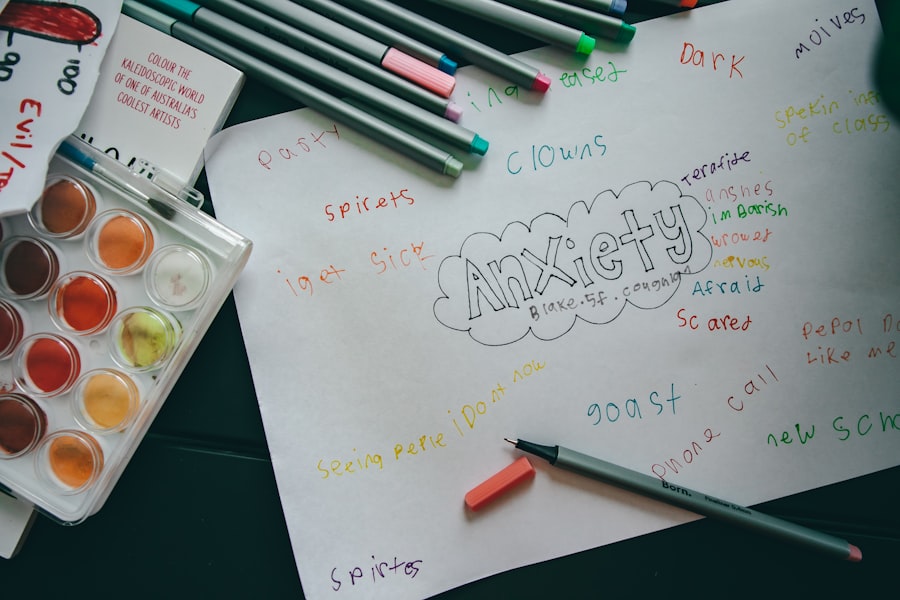
While the fear of the unknown is a universal human experience, your specific triggers can be deeply personal. What sends one person into a spiral of anxiety might be a minor inconvenience to another. Identifying these personal triggers is a crucial step in managing your uncertainty anxiety.
Identifying Your Unique Anxiety Hotspots
- Past Experiences and Trauma: Negative experiences in your past can shape your perception of uncertainty. If you’ve experienced betrayal, significant loss, or failure due to unforeseen circumstances, you may be more prone to anxiety when faced with similar situations. Your mind has learned to associate ambiguity with danger.
- Core Beliefs and Self-Perception: Your underlying beliefs about yourself and the world play a significant role. If you hold the belief that you are fundamentally incapable of handling challenges or that the world is a dangerous place, uncertainty will naturally feel more threatening. Low self-esteem often exacerbates the fear of the unknown.
- Specific Life Domains: Certain areas of your life might be more prone to triggering your anxiety. For some, it’s career uncertainty, for others, it’s romantic relationships, financial stability, or health concerns. Pinpointing these specific domains allows you to focus your efforts on developing strategies tailored to those areas.
- Personality Traits: Certain personality traits can make you more susceptible to uncertainty anxiety. Individuals who are perfectionistic, highly sensitive, or have a strong need for control may find themselves struggling more with the inherent vagueness of life.
The Role of Cognitive Distortions
Your thought patterns are powerful engines for both anxiety and resilience. When you’re experiencing uncertainty, your mind can fall into predictable traps of distorted thinking that amplify your fear.
- All-or-Nothing Thinking: You see things in black and white, with no room for nuance. If a situation isn’t perfect, it’s a complete failure. This makes any unknown outcome seem catastrophic.
- Fortune-Telling: You predict negative outcomes without any real evidence. You assume the worst will happen and base your reactions on these unfounded predictions.
- Mind Reading: You believe you know what others are thinking, and usually, you assume they have negative thoughts about you or the situation, especially when things are uncertain.
- Emotional Reasoning: You believe that because you feel something is true, it must be true. If you feel anxious about a situation, you conclude that the situation must indeed be dangerous or negative.
Strategies for Navigating the Labyrinth of Uncertainty

The good news is that you are not powerless against the anxiety of uncertainty. While you cannot eliminate uncertainty from your life, you can develop powerful coping mechanisms and shift your perspective to navigate it with greater ease. This is not about eliminating fear, but about developing the skills to manage it, to prevent it from dictating your life.
Embracing Mindfulness and Present Moment Awareness
- The Power of Anchoring: Mindfulness techniques help you to ground yourself in the present moment, pulling you away from the anxious thoughts about the future. Practicing deep breathing exercises, focusing on your senses, or engaging in a body scan can anchor you to the here and now. When your mind races with “what ifs,” gently bring your attention back to your breath, to the sensations in your body, or to the sounds around you.
- Observing Thoughts Without Judgment: Mindfulness teaches you to observe your thoughts and feelings without getting swept away by them. You learn to recognize that a thought is just a thought, not a prediction of reality. When anxious thoughts about uncertainty arise, you can acknowledge them, label them (“Ah, here’s that worry about the future again”), and then let them pass like clouds in the sky.
- Cultivating Acceptance: A core tenet of mindfulness is acceptance, not resignation. It’s about acknowledging that uncertainty is a natural part of life and that resisting it only amplifies your suffering. By accepting that you cannot control every outcome, you release the pressure to do so, freeing up mental energy to focus on what you can control.
Developing Resilience Through Cognitive Reappraisal
- Challenging Your Negative Thoughts: The first step is to become aware of your cognitive distortions. Once identified, you can actively challenge them. Ask yourself: “What evidence do I have that this negative outcome will actually occur?” or “Is there another, more positive or neutral, way to look at this situation?” This practice helps you to dismantle the irrational basis of your fears.
- Focusing on What You Can Control: In any uncertain situation, there are always elements that are within your control. Instead of dwelling on the aspects you cannot influence, shift your focus to taking action on the things you can. This might involve preparing thoroughly for a presentation, seeking out information, or developing contingency plans. This sense of agency can significantly reduce feelings of helplessness.
- reframing Uncertainty as Opportunity: This is perhaps the most powerful shift in perspective. Instead of viewing uncertainty as a threat, try to see it as an opening. It’s an invitation for growth, for creativity, for unexpected discoveries. Every uncertain situation, when approached with a curious and open mind, holds the potential for something new and valuable to emerge.
Uncertainty can often lead to heightened levels of anxiety, as individuals struggle to cope with the unknown aspects of their lives. This phenomenon is explored in depth in a related article that discusses the psychological mechanisms behind anxiety and how uncertainty plays a crucial role in exacerbating these feelings. By understanding the connection between uncertainty and anxiety, individuals can develop strategies to manage their emotional responses more effectively. For more insights on this topic, you can read the article here.
The Journey Towards a More Certain Life
| Reasons for Anxiety due to Uncertainty | Impact |
|---|---|
| Lack of Control | Leads to feelings of helplessness and insecurity |
| Fear of the Unknown | Creates anticipation of negative outcomes |
| Increased Stress | Causes physical and emotional strain |
| Difficulty in Decision Making | Leads to indecisiveness and second-guessing |
You’ve now embarked on a journey of understanding the anxiety of uncertainty, recognizing its deep roots, observing its subtle manifestations, and identifying your personal triggers. You’ve also begun to equip yourself with powerful strategies. Remember, this is not a destination, but an ongoing process, a practice.
Taking Action and Building Momentum
- Start Small and Build Gradually: Don’t try to conquer all your anxieties at once. Identify one small area of uncertainty that you can gently approach with a new strategy. Perhaps it’s making a decision about dinner without overthinking, or joining a new social group even if you don’t know everyone. Celebrate these small victories, as they build confidence and momentum.
- Seek Support When Needed: You don’t have to navigate this alone. Talking to trusted friends, family members, or a therapist can provide invaluable support, perspective, and guidance. A therapist can offer specialized tools and techniques to help you manage your anxiety more effectively.
- Practice Self-Compassion: Be kind to yourself throughout this process. There will be days when the anxiety feels overwhelming, and you will falter. This is part of the human experience. Acknowledge these moments without judgment and return to your practice with renewed determination. Your journey is unique, and your progress will be your own.
The Power of Embracing the Unknown
Ultimately, your quest is not to eliminate uncertainty, but to learn to live with it, to thrive in its presence. By understanding its nature, recognizing its impact, and actively employing coping strategies, you can transform the fear of the unknown from a paralyzing force into a catalyst for growth, resilience, and a richer, more fulfilling life. The world may always hold its mysteries, but you can learn to dance with them, finding a sense of peace and empowerment in the beautiful, unfolding tapestry of your existence. You are capable of navigating the labyrinth, not by eliminating its twists and turns, but by learning to trust your own steps.

Why You Can’t Stop Replaying That Conversation 🧠
FAQs
What is uncertainty?
Uncertainty refers to a lack of knowledge about future events or outcomes. It can arise from various sources such as ambiguity, unpredictability, or complexity.
How does uncertainty cause anxiety?
Uncertainty can cause anxiety because it creates a sense of unpredictability and lack of control. When individuals are unsure about future events or outcomes, they may experience fear, worry, and stress, leading to anxiety.
What are the effects of anxiety caused by uncertainty?
Anxiety caused by uncertainty can have various effects on individuals, including difficulty concentrating, sleep disturbances, irritability, and physical symptoms such as muscle tension and headaches. Prolonged anxiety can also contribute to the development of mental health disorders.
How can individuals cope with anxiety caused by uncertainty?
Coping strategies for anxiety caused by uncertainty may include practicing mindfulness and relaxation techniques, seeking social support, engaging in regular physical activity, and seeking professional help from mental health professionals.
Are there any long-term consequences of experiencing anxiety due to uncertainty?
Long-term consequences of experiencing anxiety due to uncertainty may include the development of chronic anxiety disorders, depression, and other mental health conditions. It can also impact overall well-being and quality of life if left unaddressed.