You’ve likely seen it on the news, or perhaps even in a dramatic reenactment on a documentary: a sudden, terrifying emergency unfolding before your eyes. Fires rage, people flee, and the air crackles with an undeniable sense of urgency. Then, sometimes, you encounter a different scenario: a controlled exercise, a drill, a simulated event designed to test preparedness. While both might appear chaotic, the chasm between a real emergency and a staged experiment is vast, impacting everything from the emotional toll to the logistical complexities. Understanding these key differences is crucial, not just for appreciating the gravity of actual crises but also for evaluating the effectiveness and purpose of preparedness exercises.
The Unpredictable Fury of the Real Deal
When you’re caught in the throes of a genuine emergency, you are not merely observing; you are a participant in an unfolding, unscripted drama. The defining characteristic of a real emergency is its inherent unpredictability. It doesn’t adhere to a pre-written script or a carefully orchestrated sequence of events. Instead, it is a dynamic and often chaotic cascade of unforeseen circumstances. Factors that are impossible to perfectly replicate in a controlled setting – human error, cascading failures, the sheer randomness of nature – come into play. This unpredictability extends to every facet: the speed at which an event escalates, the types of challenges that emerge, and the emotional and psychological impact on everyone involved. You might be dealing with a structural collapse, a natural disaster like a hurricane or earthquake, a widespread power outage, or a medical crisis of unknown scale. The motivations of individuals, the availability of resources, and even the weather can shift in ways that no planning committee could perfectly anticipate.
The Raw Emotional and Psychological Landscape
The emotional and psychological toll of a real emergency is profound and deeply personal. You are not acting under a directive; you are reacting to genuine fear, panic, adrenaline, and a desperate drive for survival. The stakes are life and death, and this reality colors every interaction and decision. You might experience overwhelming stress, anxiety, and even trauma. The sounds, smells, and sights are real and impactful. The loss of property or loved ones is not a simulated outcome but a devastating reality. This emotional intensity can impair judgment, leading to impulsive actions or, conversely, paralyzing indecision. The experience is raw, visceral, and leaves lasting scars. For first responders, the commitment is absolute; there are no “do-overs” or opportunities to reset the scenario if a plan falters. The pressure to perform flawlessly in the face of genuine danger is immense, and the consequences of failure are dire. This is not a test; it is the ultimate trial.
The Unforeseen Complications and Cascading Effects
In a real emergency, the situation is rarely contained to the initial event. You will likely encounter a web of interconnected problems that were not immediately apparent. A fire, for instance, can lead to power outages, which can disable communication systems, which can hinder evacuation efforts, and so on. These are cascading effects, where one problem triggers a chain reaction of further complications. You might also find unexpected limitations in your resources – a shortage of trained personnel, a lack of essential equipment, or logistical bottlenecks that weren’t accounted for in worst-case scenario planning. Furthermore, you have to contend with the unpredictable behavior of the public. Some will be heroic, others will be panicky, and some may even obstruct rescue efforts. The sheer complexity of managing these interlocking variables in real-time, with limited information and under immense pressure, is a hallmark of a genuine emergency. You are constantly adapting, improvising, and making critical decisions with incomplete data.
In exploring the differences between real emergencies and staged experiments, it is essential to understand how each scenario impacts human behavior and decision-making. A related article that delves deeper into this topic can be found at Unplugged Psychology, where the nuances of psychological responses in genuine crises compared to controlled settings are examined. This resource provides valuable insights into the implications of these differences for both research and practical applications in emergency management.
The Purposeful Design of Staged Experiments
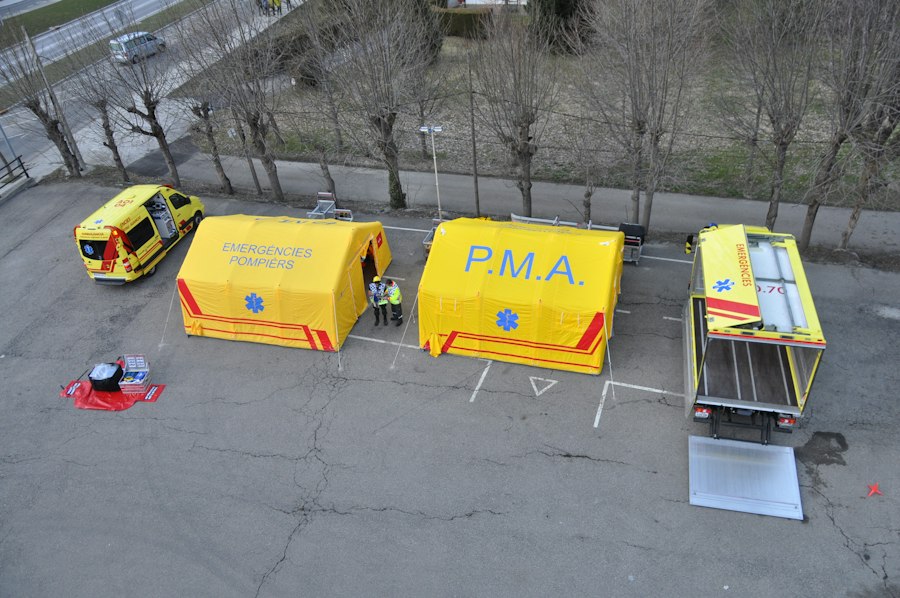
In stark contrast to the chaotic unpredictability of a real emergency, staged experiments, often referred to as drills or exercises, are meticulously planned and executed events. Their primary purpose is not to respond to an actual threat but to simulate one for the sake of learning, training, and assessment. You are participating in a controlled environment where the risks are minimized, and the primary goal is to identify strengths and weaknesses in plans, procedures, and capabilities. Think of it as a dress rehearsal for a potential crisis. Every element, from the scenario’s inception to the post-exercise debrief, is designed with specific learning objectives in mind. You are observing and acting within a framework that has been carefully constructed.
The Controlled Environment and Scripted Progression
The defining characteristic of a staged experiment is its controlled environment. This means that the “threat” is introduced and managed by facilitators. The progression of events, while designed to be challenging, often follows a predetermined script or a set of decision trees. You are not dealing with the genuine randomness of a real event; instead, you are encountering scenarios that have been crafted to test specific aspects of your preparedness. This control allows for safe experimentation and the ability to pause, rewind (metaphorically), or adjust the scenario if it deviates too much from the intended learning objectives. For instance, in a fire drill, the smoke might be simulated, the fire alarms are deliberately triggered, and the building’s evacuation routes are the focus, not the actual risk of burning. The “victims” might be role-players with specific injuries assigned to them, rather than individuals experiencing genuine distress.
The Objective-Driven Nature of Exercises
Every staged experiment is driven by clear, measurable objectives. These objectives are not about immediate survival but about assessing and improving specific skills, protocols, or systems. You might be testing evacuation procedures, communication protocols, command and control structures, or the ability of a specific team to respond to a particular type of incident. The success of the exercise is not measured by the absence of casualties or damage (as these are simulated) but by the achievement of these predefined objectives. Are the communication channels clear? Did the evacuation take place within the allotted time? Was the command structure effective in directing resources? These are the types of questions that are central to evaluating a staged experiment. The focus is on identifying what works, what doesn’t, and where improvements are needed.
The Emphasis on Learning and Improvement
The ultimate aim of a staged experiment is to foster learning and facilitate continuous improvement. Unlike a real emergency where the immediate priority is to save lives and mitigate damage, the priority in an exercise is to gather data and insights that can be used to enhance future responses. You will participate in debriefings where strengths and weaknesses are discussed openly. Feedback is solicited, and action plans are developed to address identified gaps. The environment is one where mistakes are viewed as learning opportunities, not failures with catastrophic consequences. This iterative process of planning, executing, and reviewing is what allows organizations and communities to become more resilient and better prepared for the genuine challenges they may face.
The Divergent Nature of Stakes and Consequences
The gravity of a situation is often defined by its stakes and the consequences of failure. This is where the distinction between real emergencies and staged experiments becomes most pronounced. In a real emergency, the consequences are immediate, irreversible, and often devastating. In a staged experiment, while there is a desire for realism, the consequences are deliberately contained.
The Irreversible Impact of Real-World Events
In a real emergency, the impact is felt on a deeply personal and often profound level. You witness genuine suffering, experience real fear, and grapple with the tangible loss of life, property, and livelihoods. The consequences are not theoretical; they are etched into the fabric of individual lives and communities. A home destroyed by a wildfire cannot be simply rebuilt with a “reset” button. A life lost cannot be revived. The psychological trauma of experiencing or witnessing such events can have long-lasting effects, impacting mental health and well-being for years to come. The economic repercussions can be immense, affecting local economies and individual financial stability. The ripple effects of a real emergency are far-reaching and often permanent.
The Contained and Mitigated Risks of Drills
Staged experiments, by their very design, operate with significantly mitigated risks. While the scenarios are intended to be realistic, the potential for genuine harm or loss is intentionally minimized. Safety protocols are paramount, and trained professionals oversee the entire operation to prevent any unintended harm. The “victims” are role-players, the “damage” is simulated, and the “threat” is under the control of the exercise controllers. The consequences of a poorly executed drill are primarily organizational – a need to revise procedures, retrain personnel, or reallocate resources. While there can be frustration or disappointment if objectives aren’t met, these are minor compared to the devastating realities of a true crisis. The primary risk in an exercise is usually to the training schedule or budget, not to human life or well-being.
The Emotional Resonance: Genuine vs. Simulated Stress
The emotional resonance of a real emergency is a visceral and often overwhelming experience. You are functioning on a high level of adrenaline, driven by an instinct for survival. The fear is palpable, the urgency is real, and the pressure to act is immense. This intense emotional state can be both a motivator and a hindrance, influencing decision-making in critical ways. In contrast, while staged experiments aim to create a sense of urgency and realism, the underlying knowledge that it is a simulation often tempers the absolute emotional intensity. You might feel stress, but it is generally a managed stress, often accompanied by the awareness that you can, if necessary, step out of the scenario or that the “worst-case” outcomes are not actual threats. The learning is often focused on how to manage that stress effectively, rather than enduring the raw, unadulterated fear of a life-or-death situation.
The Evaluation and Learning Processes
The way in which events are evaluated and the subsequent learning that takes place are fundamentally different between real emergencies and staged experiments. One is about survival and immediate damage control, while the other is about analysis and long-term preparedness.
The Immediate Response and Damage Assessment in Reality
In a real emergency, the immediate focus is on responding to the unfolding situation and minimizing ongoing harm. This involves search and rescue, providing medical aid, containing hazards, and evacuating affected areas. The assessment of damage is often a secondary priority, conducted as resources become available and the immediate crisis subsides. The primary evaluation is qualitative and reactive: “Did we save lives? Did we prevent further escalation? What went wrong in the heat of the moment?” The learning is often anecdotal, based on the experiences of those who were on the front lines and the immediate lessons learned from critical failures. This learning can be invaluable but is often incomplete and colored by the intense emotions of the event.
The Structured Debriefing and After-Action Reviews of Exercises
Staged experiments are built around a rigorous process of evaluation and learning. Following the exercise, a detailed debriefing session, often referred to as an After-Action Review (AAR), is conducted. This involves bringing together all participants, observers, and controllers to discuss what happened, what went well, what didn’t, and why. The focus is on objective observation and constructive criticism. The AAR is not about assigning blame but about identifying systemic issues and areas for improvement. Detailed reports are generated, outlining strengths, weaknesses, and recommended actions. These recommendations often lead to revisions in plans, updated training programs, and the acquisition of new equipment or technologies, all aimed at enhancing future preparedness.
The Focus on Systemic Improvement vs. Immediate Survival
While the ultimate goal of any emergency preparedness effort is to ensure immediate survival and mitigate damage during a real crisis, the focus of learning from staged experiments is on systemic improvement. You are not just looking at what happened during a particular drill; you are analyzing how the entire system – from individual training to inter-agency coordination – can be made more robust. The learning from an exercise aims to prevent future problems by addressing root causes. For example, if communication failed during a drill, the AAR will not just note the failure but will investigate why it failed and implement solutions that address the underlying technological, procedural, or training issues, thereby strengthening the system for any future event, real or simulated.
In exploring the differences between real emergencies and staged experiments, one can gain valuable insights into human behavior under pressure. A related article that delves deeper into this topic can be found at Unplugged Psychology, where the nuances of psychological responses in genuine crises versus controlled settings are examined. Understanding these distinctions can significantly enhance our comprehension of stress responses and decision-making processes in critical situations.
The Human Element: Roles and Motivations
| Metric | Real Emergencies | Staged Experiments |
|---|---|---|
| Response Time (minutes) | 8-15 | 5-10 |
| Number of Participants | Varies widely (10-100+) | 10-50 |
| Communication Clarity | Often compromised due to stress | Controlled and clear |
| Emotional Stress Level | High | Moderate to low |
| Resource Availability | Limited and unpredictable | Planned and sufficient |
| Data Accuracy | Variable, affected by chaos | High, controlled environment |
| Training Effectiveness | Real-world validation | Simulated validation |
| Safety Risks | High | Minimized and controlled |
The motivations and roles of individuals involved are a critical differentiator. In a real emergency, you are driven by instinct, duty, and the desire to help others. In a staged experiment, while commitment and professionalism are expected, the underlying motivations are rooted in training and development.
The Instinctual and Professional Duty in a Crisis
During a real emergency, you are often driven by a powerful combination of instinct and a deeply ingrained professional duty. For first responders, it is their sworn oath to protect and serve. For civilians, it can be a primal instinct to help those in need, coupled with a sense of civic responsibility. The motivations are often altruistic and immediate: to save a life, to comfort a distressed individual, to contribute to the collective effort of recovery. There is a palpable sense of urgency and a profound connection to the immediate reality of the situation. The risks are real, and the rewards are the satisfaction of having made a difference in a critical moment.
The Participatory Role in Training and Assessment
In a staged experiment, your role is that of a participant in a learning and assessment process. While you are expected to act with realism and professionalism, your primary motivation is to learn, practice skills, and contribute to the overall improvement of preparedness. You are aware that you are part of an exercise, and this awareness shapes your perspective. You are likely to be more analytical of your own actions and the actions of others, looking for opportunities to apply learned techniques and identify areas for personal and team development. The “stakes” are primarily professional growth and the enhancement of your organization’s capabilities.
The Impact of Real vs. Simulated Fear and Pressure
The psychological impact of real fear and pressure is a powerful differentiator. In a genuine emergency, the adrenaline rush, the fear for one’s own safety and the safety of others, and the overwhelming sense of responsibility create an intense psychological environment. This can lead to heightened performance, but also to errors in judgment due to stress. In a staged experiment, while facilitators may attempt to simulate pressure and stress, the absence of genuine threat means that the psychological impact is generally less profound. You may experience a degree of stress related to performing well, but it is typically not the life-altering, primal fear that characterizes a real emergency. This difference in psychological experience is a key reason why preparedness exercises are so important – they allow individuals to practice managing stress in a controlled environment so they are better equipped to handle it when the stakes are truly life and death.

The Kitty Genovese Story That Changed Psychology—But Was It True?
FAQs
What is considered a real emergency?
A real emergency is a situation that poses an immediate risk to health, life, property, or the environment and requires urgent intervention to prevent harm or mitigate the consequences.
How are staged experiments different from real emergencies?
Staged experiments are carefully planned scenarios designed to simulate emergency situations for training or research purposes, while real emergencies are unexpected events that occur naturally and require immediate action.
What are some examples of real emergencies?
Examples of real emergencies include natural disasters like earthquakes, hurricanes, or floods, medical emergencies such as heart attacks or accidents, and situations like fires or terrorist attacks that pose a threat to safety.
Why are staged experiments important in emergency preparedness?
Staged experiments allow emergency responders, organizations, and individuals to practice their response procedures, test equipment and protocols, and improve coordination and communication in a controlled environment before facing real emergencies.
How can one differentiate between a real emergency and a staged experiment?
One can differentiate between a real emergency and a staged experiment by assessing the context, level of preparedness and coordination of responders, presence of safety measures, and the overall controlled nature of the situation. Real emergencies often involve chaos, urgency, and unpredictability, while staged experiments are more structured and controlled.