
The intricate tapestry of human personality is a subject of enduring fascination, a complex interplay of forces that craft the unique individuals we become. For centuries, thinkers and scientists have grappled with a fundamental question: is our personality primarily determined by the genetic blueprint we inherit, or by the environment and experiences that shape us from birth? This debate, often framed as nature versus nurture, is far from a simple dichotomy. Instead, it represents a dynamic, reciprocal relationship where genetics and environment constantly influence and mold one another, culminating in the multifaceted personalities that define us. Understanding this intricate dance is crucial for comprehending human behavior, development, and even societal structures.
The Innate Blueprint: Genetic Predispositions and Inherited Traits
The concept of “nature” in the nature versus nurture debate refers to the biological and genetic factors that contribute to an individual’s personality. From the moment of conception, a unique set of genes is inherited from parents, forming the foundational biological architecture of a person. These genes carry instructions for a vast array of physical and psychological characteristics, including predispositions towards certain temperaments, behavioral tendencies, and even susceptibilities to specific mental health conditions. While genes do not dictate personality with absolute certainty, they provide the raw material, setting certain parameters and influencing the likelihood of developing particular traits.
Heritability and Personality Dimensions
The scientific exploration of genetic influence on personality often centers on the concept of heritability. Heritability, in a genetic context, refers to the proportion of variation in a trait within a population that can be attributed to genetic differences among individuals. It’s important to note that heritability is not about the extent to which a trait is inherited by a single individual, but rather the degree to which genes contribute to differences between individuals in a given population. Twin studies, which compare identical (monozygotic) twins who share 100% of their genes with fraternal (dizygotic) twins who share, on average, 50% of their genes, have been instrumental in estimating heritability. These studies consistently reveal that many personality traits, such as extraversion, neuroticism, conscientiousness, and openness to experience, exhibit significant heritability, often ranging from 30% to 60%. This suggests that a substantial portion of the variation observed in these fundamental personality dimensions can be traced back to genetic factors.
For instance, research on the Big Five personality traits – openness, conscientiousness, extraversion, agreeableness, and neuroticism – has shown considerable heritability. Individuals who are genetically predisposed to higher levels of extraversion might be more likely to seek out social stimulation and exhibit outgoing behavior. Similarly, a genetic predisposition towards neuroticism might manifest as a greater tendency towards anxiety, worry, and emotional instability. These are not fixed destinies, but rather inclinations that can be amplified or mitigated by environmental factors.
Gene-Environment Correlation: When Genes and Environment Align
The influence of genetics is rarely observed in isolation. A fascinating aspect of the nature-nurture interplay is gene-environment correlation, where an individual’s genetic makeup influences the environments they are exposed to or actively seek out. This can occur in three primary ways: passive, evocative, and active.
Passive gene-environment correlation arises because children inherit both genes and the environments in which they are raised from their parents. For example, parents who are genetically predisposed to being musically inclined might also create a home environment rich in music, exposing their children to instruments and performances. The child, through both inherited talent and environmental exposure, becomes more likely to develop musical abilities.
Evocative gene-environment correlation occurs when an individual’s genetically influenced traits elicit specific responses from their environment. A child who is naturally more outgoing and cheerful might receive more positive attention and social reinforcement from caregivers and peers, further nurturing their sociable disposition. Conversely, a child who is temperamentally more withdrawn might receive less encouragement to engage, potentially reinforcing their introverted tendencies.
Active gene-environment correlation is perhaps the most powerful, as individuals actively seek out environments that are compatible with their genetic predispositions. An individual with a genetic inclination towards thrill-seeking might actively pursue adventurous activities like rock climbing or skydiving, thereby shaping their experiences and reinforcing their adventurous personality. Similarly, someone predisposed to intellectual curiosity might seek out challenging academic pursuits or engage in extensive reading, immersing themselves in intellectually stimulating environments.
These correlations highlight that genes do not simply exist in a vacuum; they actively participate in shaping the experiences an individual has, creating a feedback loop that can reinforce or modify the initial genetic predispositions.
Research into the factors that shape personality has long focused on the interplay between genetics and environment. A fascinating article that delves into this topic is available at Unplugged Psychology, which explores how both hereditary traits and life experiences contribute to the development of individual personality traits. This comprehensive analysis highlights the complexity of personality formation and emphasizes the importance of considering both genetic predispositions and environmental influences in understanding human behavior.
The Sculpting Hand: Environmental Influences on Personality
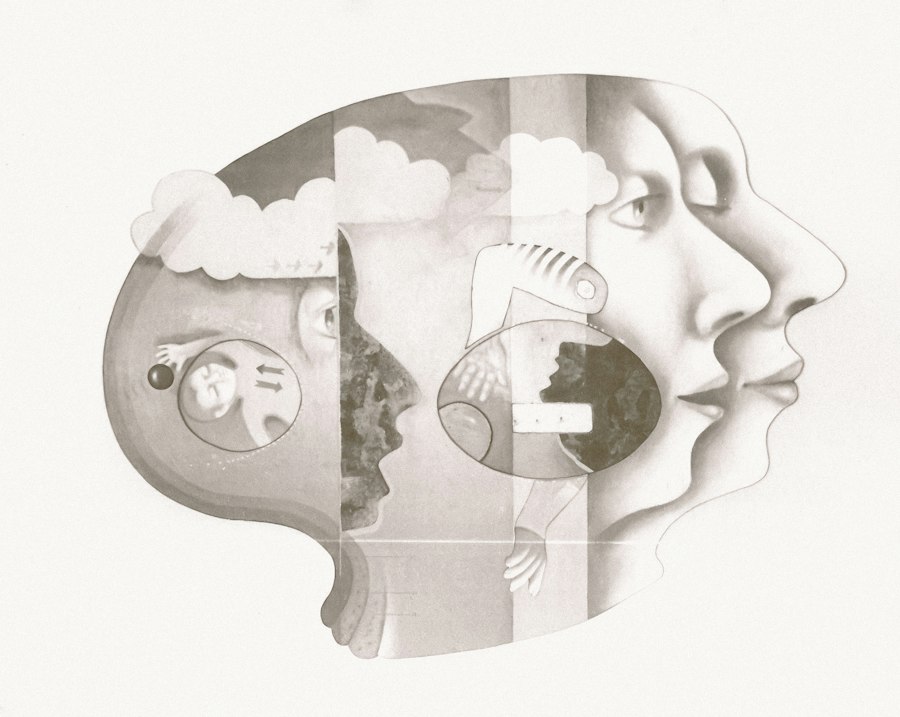
While genetics provides the foundational framework, it is the environment that acts as the sculptor, shaping and refining the raw material into the complex individual. Environmental influences encompass a vast spectrum of factors, ranging from prenatal experiences and early childhood upbringing to social interactions, cultural norms, and life events throughout the lifespan. These experiences interact with genetic predispositions, influencing which traits are expressed, their intensity, and how they manifest in behavior.
Early Childhood Experiences and Attachment Styles
The earliest years of life are a critical period for personality development. The quality of caregiving and the formation of secure attachments play a profound role. Attachment theory, pioneered by John Bowlby and Mary Ainsworth, posits that the bond formed between an infant and their primary caregiver influences their internal working models of relationships and their sense of self. Secure attachment, characterized by responsive and consistent caregiving, fosters trust, independence, and a positive self-view, which can contribute to traits like agreeableness and emotional stability. Insecure attachment styles, such as anxious-preoccupied or avoidant, can stem from inconsistent or neglectful caregiving and may be associated with traits like neuroticism, difficulty forming close relationships, and mistrust.
The environment also shapes personality through the modeling of behaviors. Children learn by observing the actions, attitudes, and emotional responses of their parents, siblings, and other significant figures. If parents exhibit high levels of empathy and prosocial behavior, children are more likely to internalize these values and develop similar traits. Conversely, exposure to aggression or negative coping mechanisms can contribute to the development of similar patterns in children.
Social Learning, Cultural Norms, and Peer Influence
As individuals grow, their social worlds expand, and social learning becomes increasingly influential. Through observation, imitation, and reinforcement, people learn social skills, values, and expectations that contribute to their personality. Cultural norms, the unwritten rules and shared beliefs of a society, also exert a powerful influence. Different cultures may value and encourage different personality traits. For example, some cultures may emphasize individualism and assertiveness, while others might prioritize collectivism and harmony. These cultural influences can shape how individuals express emotions, interact with others, and perceive themselves.
Peer relationships are particularly potent during adolescence. The desire for belonging and social acceptance can lead individuals to conform to peer group norms and adopt behaviors that are valued by their friends. This can lead to the refinement and strengthening of certain personality traits, whether it be increased assertiveness within a group of outgoing peers or a greater willingness to explore new ideas among intellectually curious friends. However, it can also lead to the suppression of certain traits if they are not congruent with the peer group’s perceived ideal.
Life Events and Personal Choices
Life is a continuous stream of experiences, and significant events, both positive and negative, can leave an indelible mark on personality. A major life transition, such as starting a new career, experiencing loss, or overcoming a significant challenge, can prompt introspection and personal growth, potentially leading to shifts in attitudes and behaviors. Resilience, the ability to bounce back from adversity, is a personality trait that is often forged through difficult experiences. Conversely, traumatic events can have profound and lasting impacts, sometimes leading to changes in emotional regulation, trust, and overall outlook on life.
Furthermore, individuals are not merely passive recipients of environmental influences; they also make active choices that shape their lives and, consequently, their personalities. The decisions people make about their education, career paths, relationships, and hobbies all contribute to the development and expression of their unique character. These choices are often informed by their existing predispositions but also by their evolving understanding of themselves and the world around them.
The Dynamic Interplay: Gene-Environment Interaction

The nature versus nurture debate is not a matter of which factor is more important, but rather how they interact and influence each other. Gene-environment interaction, also known as GxE, describes how genetic predispositions are expressed differently depending on the environmental context. This means that the same gene might lead to different outcomes in different environments, or conversely, different genes might lead to similar outcomes in specific environments.
Epigenetics: Modifying Gene Expression Without Altering DNA
A significant area of research that illuminates gene-environment interaction is epigenetics. Epigenetic mechanisms are modifications to DNA that do not change the underlying genetic sequence but can alter gene expression. These modifications can be influenced by environmental factors, such as diet, stress, and exposure to toxins. For example, stress experienced during childhood can lead to epigenetic changes that affect the expression of genes involved in the stress response system, potentially making an individual more vulnerable to anxiety and depression later in life. Conversely, positive environmental interventions, such as supportive parenting, can buffer the impact of genetic predispositions.
This concept highlights that genes are not immutable destiny. Environmental experiences can “switch on” or “switch off” certain genes, or modulate their activity, thus influencing the development of personality traits. This explains why identical twins, who share the same genetic makeup, can still develop different personalities. Their life experiences, though often similar, are never identical, and these subtle differences in their environments can lead to differential gene expression through epigenetic mechanisms.
The Diathesis-Stress Model
The diathesis-stress model provides a framework for understanding how genetic vulnerabilities (diathesis) interact with environmental stressors to influence the development of psychological disorders and certain personality characteristics. Individuals may have a genetic predisposition towards, for instance, a particular mood disorder. However, this predisposition may only manifest as a full-blown disorder when the individual is exposed to significant life stressors, such as a major loss or chronic adversity. Without the presence of these stressors, the genetic vulnerability might remain dormant or manifest in milder, subclinical ways. This model emphasizes that the combination of genetic susceptibility and environmental challenges is often crucial for the emergence of certain personality-related outcomes.
Similarly, positive environmental factors can mitigate genetic predispositions. For instance, an individual with a genetic inclination towards introversion might thrive in an environment that values deep thinking and solitary pursuits, leading to a more comfortable and well-adjusted expression of their introverted nature.
Nature AND Nurture: A Unified Perspective
The scientific consensus has moved decisively away from a strict dichotomy towards a unified understanding of personality development. It is no longer a question of “either/or” but rather “how much of each” and, more importantly, “how do they work together.” Modern psychology and behavioral genetics embrace the idea that personality is the product of an intricate and ongoing dance between our innate biological predispositions and the multitude of environmental influences we encounter throughout our lives.
The Complexity of Measurement and Research
Studying the interplay of nature and nurture presents significant challenges. Accurately measuring the contribution of genetics and environment is complex. While twin and adoption studies offer valuable insights, they are not without limitations. Furthermore, isolating specific environmental factors and their precise impact on personality is difficult due to the interconnectedness of life experiences. Researchers employ a variety of methodologies, including molecular genetics, neuroimaging, and longitudinal studies, to try and untangle these complex relationships. The development of sophisticated statistical models allows for the estimation of heritability and environmental influences while accounting for their potential interactions.
Implications for Understanding and Intervention
The understanding of nature and nurture has profound implications for various fields. In education, it informs approaches to learning, recognizing that students have different innate abilities and are influenced by diverse home environments. In mental health, it guides therapeutic interventions, acknowledging that genetic predispositions may need to be addressed alongside environmental stressors and coping mechanisms. For example, if a genetic vulnerability to anxiety is identified, therapeutic interventions might focus on developing effective stress management techniques and creating a supportive environment to mitigate the impact of that vulnerability.
Understanding this interplay also fosters a more compassionate view of human behavior. Instead of attributing certain traits solely to individual choice or failing, it acknowledges the complex web of biological and environmental factors that contribute to who we are. This nuanced perspective can lead to more effective strategies for personal growth, societal development, and addressing complex social issues. Ultimately, recognizing that our personalities are shaped by both the hand we are dealt and the way we play it is key to a comprehensive understanding of the human condition.
The ongoing debate about what shapes personality often revolves around the influence of genetics versus environmental factors. A fascinating article that delves into this topic can be found at Unplugged Psych, where various studies are discussed that highlight how both hereditary traits and life experiences contribute to our individual personalities. Understanding this interplay can provide deeper insights into human behavior and development.
Conclusion: The Ever-Evolving Self
| Factor | Description | Estimated Influence on Personality (%) | Examples |
|---|---|---|---|
| Genetics | Inherited traits from parents that influence temperament and personality traits. | 40-60% | Temperament, predisposition to anxiety or extraversion |
| Environment | External factors including family, culture, education, and life experiences. | 30-50% | Parenting style, peer influence, cultural norms |
| Gene-Environment Interaction | How genetic predispositions and environmental factors influence each other. | Variable | Stress response influenced by both genes and life events |
| Non-shared Environment | Unique experiences not shared between siblings that affect personality. | 10-20% | Different friend groups, individual life events |
The journey of personality development is a lifelong process, an ongoing negotiation between our inherited biological inheritance and the ever-changing landscape of our experiences. Nature provides the initial blueprint, the inherent tendencies and potentials, while nurture provides the context, the experiences, and the opportunities that shape how those potentials are realized. It is a dynamic interplay, a continuous feedback loop where our genes influence our environment, and our environment, in turn, influences the expression of our genes.
The notion of a fixed personality is increasingly giving way to the understanding of an evolving self. While core temperamental tendencies might remain relatively stable, the expression and refinement of personality traits continue throughout life, influenced by new experiences, learning, and personal choices. This continuous evolution underscores the agency individuals possess in shaping their own character, even within the constraints and influences of their genetic and environmental realities. The exploration of nature and nurture is not merely an academic pursuit; it is fundamental to understanding what it means to be human, to foster individual growth, and to build a more supportive and understanding society. The intricate dance between our genes and our environment is the very essence of what makes each of us uniquely and wonderfully ourselves.

100% Same Genes, Different Minds: The Dark Psychology of the Genain Quadruplets
FAQs
1. Can genetics influence personality traits?
Yes, genetics can play a significant role in shaping personality traits. Studies have shown that certain personality characteristics, such as introversion or extroversion, may have a genetic component.
2. How does the environment impact personality development?
The environment, including upbringing, culture, and life experiences, can also have a profound impact on personality development. Factors such as parenting style, social interactions, and exposure to different situations can shape personality traits.
3. Is personality solely determined by genetics or environment?
Personality is not solely determined by genetics or environment, but rather by a complex interaction between the two. Both genetics and environment play a role in shaping personality, with some traits being more influenced by one factor than the other.
4. Can personality traits change over time?
Yes, personality traits can change over time due to various factors such as life experiences, personal growth, and environmental influences. While some core traits may remain stable, others may evolve or adapt in response to different circumstances.
5. Are there specific personality traits that are more influenced by genetics than environment?
Research suggests that certain personality traits, such as temperament and predispositions to certain behaviors, may have a stronger genetic influence. However, environmental factors can still play a significant role in shaping how these traits are expressed or manifested in individuals.