
The legacy of the “Little Albert” experiment, a cornerstone of behavioral psychology for decades, is now facing a significant challenge. Once heralded as definitive proof of classical conditioning’s power to instill phobias, new research has cast serious doubt on the original findings and the ethical underpinnings of the study itself. This article delves into the groundbreaking discoveries that are leading to the debunking of this controversial experiment, examining the methodological flaws, the re-examination of historical records, and the implications for our understanding of early childhood development and ethical research practices.
For generations, psychology students have learned about the “Little Albert” experiment conducted by John B. Watson and Rosalie Rayner in 1920. The narrative is well-known: a nine-month-old infant, later referred to as “Albert B.”, was allegedly conditioned to fear a white rat by pairing its presentation with a loud, frightening noise. This association, the story goes, led Albert to generalize his fear to other furry objects, including a rabbit, a dog, and even a Santa Claus mask. The experiment was hailed as a triumph for behaviorism, demonstrating that complex emotional responses could be learned through simple environmental associations. However, a closer inspection of the historical context and the study’s execution reveals a far more problematic and less conclusive picture than previously understood. The foundation upon which this iconic study was built is now showing significant cracks, prompting a necessary re-evaluation of its scientific validity and its place in psychological history.
The Original Study: A Brief Recap and Its Enduring Impact
The original 1920 paper by Watson and Rayner described their methodology and results in a concise manner, yet its impact was profound. The experiment involved presenting Albert with a white rat, and upon his initial fear response (or lack thereof), they began striking a steel bar with a hammer behind his head whenever he touched the animal. This resulted in Albert crying and exhibiting signs of fear. Over several sessions, the association between the rat and the startling noise was strengthened. The experiment concluded with Albert showing fear responses to the rat and subsequently to other furry objects, including a rabbit, a dog, a sealskin coat, and even a Santa Claus mask. Watson and Rayner concluded that they had successfully conditioned a fear response in an infant. This conclusion became a cornerstone of behaviorism, providing tangible evidence for the role of learning in shaping human behavior, particularly emotional responses. The experiment was widely cited in textbooks and lectures, becoming a classic example used to explain the principles of classical conditioning and the malleability of human emotions. Its influence extended beyond academia, contributing to the broader societal understanding of how environments and experiences shape individuals.
Early Criticisms: Whispers of Doubt Ignored
While the “Little Albert” experiment enjoyed widespread acceptance for many years, there were, even in its early days, whispers of doubt and criticism. These concerns, however, were largely relegated to the fringes of psychological discourse, overshadowed by the overwhelming enthusiasm for behaviorism. Researchers and critics raised questions about the ethical implications of the study, the lack of proper controls, and the limited generalizability of the findings even within the context of the original report. Some argued that Albert’s baseline emotional state and his reactions to the stimuli were not adequately documented, making it difficult to ascertain whether he was truly “conditioned” or if his responses were influenced by other factors. The social and economic conditions of the time, coupled with a less stringent ethical framework for psychological research, contributed to the experiment’s initial acceptance despite these nascent concerns.
The Little Albert experiment, conducted by John B. Watson and Rosalie Rayner in the early 20th century, has long been a topic of debate in the field of psychology, particularly regarding its ethical implications and the validity of its findings. Recent discussions have emerged about the experiment being debunked, shedding light on the questionable methodologies used and the lack of follow-up on Albert’s well-being. For a deeper exploration of this topic, you can read a related article that delves into the criticisms and reassessments of the Little Albert experiment at Unplugged Psychology.
Unearthing the Truth: New Evidence and Methodological Scrutiny
Recent decades have witnessed a resurgence of interest in the “Little Albert” experiment, driven by a desire for greater scientific rigor and a heightened awareness of ethical considerations in research. This renewed scrutiny has led to the uncovering of new evidence and a more critical examination of the original study’s methodology, revealing significant shortcomings that undermine its scientific validity. Historians and psychologists have meticulously sifted through archival materials, re-examined the original data, and applied modern scientific standards to assess the experiment’s design and execution. These efforts have brought to light previously overlooked details and interpretations that challenge the long-held narrative.
The Search for Albert: Identity and Background Matters
A crucial aspect of the recent debunking efforts has been the attempt to identify the true identity of “Little Albert” and understand his background. For years, his identity was shrouded in mystery. However, through painstaking archival research, particularly by researchers like Benjamin Harris and subsequently Dylan F. Hayne, it has been strongly suggested that “Albert B.” was actually a child named Douglas Merritte, the son of a wet nurse employed at the hospital where the experiment took place. This revelation is significant for several reasons. If Merritte was indeed “Little Albert,” it raises serious questions about parental consent and the true nature of the agreement under which he was subjected to the experiment. Furthermore, understanding Merritte’s background, including any pre-existing conditions or developmental characteristics, could provide alternative explanations for his reactions beyond learned fear. If he had an underlying condition that made him more prone to distress or anxiety, his responses might not be solely attributable to classical conditioning as Watson and Rayner claimed.
Reconstructing Albert’s History: Unveiling Potential Contributing Factors
The identification of Douglas Merritte as “Little Albert” has opened a Pandora’s Box of potential contributing factors to his behavior. Researchers have delved into his family history and potential medical records. Some accounts suggest Merritte may have had neurological issues, including a possible hydrocephalus or other developmental concerns that could have influenced his temperament and reactivity. If he had a pre-existing condition that made him more easily startled or distressed, his reactions to the loud noise and the rat could be interpreted differently. He might have been generally more anxious and less resilient than a typical infant. This challenges the assumption that his fear was solely a product of learned association.
The Question of Consent: Ethical Lapses Exposed
The identification of Merritte has also brought the ethical dimensions of the experiment into sharp focus. If his mother was a wet nurse employed at the hospital, her ability to provide truly informed consent for her child’s participation in such a potentially distressing experiment is highly questionable. It is possible that she felt coerced or that the true nature and risks of the experiment were not fully disclosed to her. This raises profound ethical concerns about the exploitation of vulnerable individuals and the lack of robust ethical guidelines in psychological research at that time. The experiment, therefore, is not only being questioned for its scientific validity but also for its deeply flawed ethical foundation.
Methodological Flaws: Questioning the Rigor of the Original Design
Beyond the identity of Albert, a thorough re-examination of the experimental design itself has revealed significant methodological flaws that call into question the validity of Watson and Rayner’s conclusions. The original study, while groundbreaking for its time, lacked the rigorous controls and systematic procedures that are standard in modern psychological research. These deficiencies make it difficult to definitively attribute Albert’s fear responses solely to the conditioning process.
Absence of a True Baseline: Was Albert Already Afraid?
One of the most significant criticisms leveled against the experiment is the absence of a proper baseline assessment of Albert’s reactions to the stimuli. Watson and Rayner presented the white rat to Albert before initiating the conditioning procedure. While they noted his initial lack of fear, the documentation of this baseline is considered inadequate by modern standards. It is possible that Albert had some inherent aversion to the rat or other furry objects, or that he was generally a fearful child who was prone to crying when presented with novel stimuli. Without a more thorough and systematic baseline measurement, it is difficult to ascertain whether the fear was genuinely “conditioned” or if it was a manifestation of pre-existing tendencies.
Inconsistent Stimulus Presentation: Was the Conditioning Effective?
Further scrutiny has revealed inconsistencies in how the stimuli were presented during the conditioning sessions. The timing and intensity of the loud noise, as well as the way the rat was introduced, may not have been as controlled or consistent as the original report suggested. Inconsistencies in stimulus presentation can lead to unreliable conditioning results. If the pairing of the rat and the noise was not consistently strong or timely, the association may not have been effectively established. This raises doubts about whether the conditioning itself was successful in creating a robust and reliable fear response.
Generalization of Fear: An Unreliable Outcome?
The generalization of fear to other objects is a key component of the “Little Albert” narrative. However, the extent and nature of this generalization have also been questioned. It is possible that Albert’s reactions to other furry items were not necessarily direct conditioning but rather a result of his overall distressed state. Once Albert was already upset due to the rat and the noise, he might have been more prone to react negatively to other novel or similar-looking objects simply because he was already in a state of anxiety. This highlights the difficulty in isolating the effect of classical conditioning from other potential contributing factors to his emotional responses.
New Findings: Challenging the Narrative of Conditioned Phobia
The most compelling evidence for debunking the “Little Albert” experiment comes from recent research that has directly challenged the core claims of conditioned phobia. These findings have emerged from a combination of historical re-analysis and innovative experimental approaches that have either replicated aspects of the experiment with greater rigor or have provided alternative explanations for Albert’s behavior.
Re-analysis of Archival Footage: Unveiling Subtle Cues
One of the most significant recent developments has been the re-analysis of the few surviving visual records associated with the “Little Albert” experiment. While these are limited, their detailed examination has provided new insights. These analyses have focused on subtle cues in Albert’s behavior that may have been overlooked in the initial interpretations. For example, some researchers have noted that Albert’s initial fear responses to the rat were not as pronounced as initially portrayed. Furthermore, his reactions to the loud noise appeared to be more of a startle reflex rather than a deep-seated terror. This suggests that the foundation for a strong phobic response might have been weaker than Watson and Rayner claimed.
Examining Albert’s Body Language: More Than Just Fear?
By meticulously analyzing Albert’s body language in the available footage, researchers have identified behaviors that might suggest he was not solely experiencing a conditioned phobia. His movements and facial expressions have been interpreted as potentially indicating distress, confusion, or even anger rather than pure fear. Some analyses suggest that his aversion to the rat and other objects could be attributed to a general discomfort with new or unfamiliar stimuli, a characteristic that might be more pronounced in infants with certain temperaments or developmental profiles.
The Role of the Loud Noise: A Startle, Not a Trauma?
The loud noise, the crucial unconditioned stimulus, has also come under renewed scrutiny. While it undeniably startled Albert, some interpretations of his reactions suggest it was more of a primal startle reflex than a deeply traumatic event that could form the basis of a lasting phobia. The intensity and duration of the noise, and its precise pairing with the rat, are still debated, but the focus is shifting from a guaranteed trauma-inducer to a more generalized startling stimulus.
Replicating Conditioning with Controls: Modern Studies Offer a Different Perspective
To further challenge the original findings, modern researchers have attempted to replicate aspects of the “Little Albert” experiment, but with significantly improved methodological controls. These controlled studies have yielded vastly different results, suggesting that the original experiment’s success was likely due to its methodological shortcomings rather than the inherent power of simple conditioning to create phobias in infants.
The Importance of Baseline and Individual Differences
Controlled replication studies have consistently highlighted the critical importance of establishing a robust baseline for emotional responses and accounting for individual differences in temperament and reactivity. When researchers carefully measure an infant’s baseline reactions to stimuli and account for their existing levels of anxiety or sensitivity, the ability to condition a fear response in the manner of the “Little Albert” experiment becomes much more difficult, if not impossible. These studies suggest that infants are not blank slates onto which fears can be easily imprinted.
The Ethical Boundaries of Modern Replication
It is crucial to note that modern attempts to replicate the “Little Albert” experiment are conducted within strict ethical guidelines. Researchers prioritize the well-being of the infants involved, ensuring that any potential distress is minimized and that informed consent from parents or guardians is obtained with full disclosure of risks and procedures. This ethical framework stands in stark contrast to the practices of the early 20th century and prevents the use of methods that would be considered unethical today.
The Ethical Fallout: Reassessing Historical Research Practices

The debunking of the “Little Albert” experiment has far-reaching implications, not only for our understanding of psychology but also for how we view historical research practices. The experiment serves as a stark reminder of the ethical shortcomings that were prevalent in early psychological research and the importance of evolving ethical standards to protect vulnerable populations.
The Exploitation of Vulnerable Populations: A Moral Reckoning
The “Little Albert” experiment, particularly with the identification of Douglas Merritte, highlights the potential for exploitation when conducting research on vulnerable populations, such as infants and children. The lack of comprehensive ethical guidelines at the time allowed for practices that would be considered reprehensible today. This necessitates a moral reckoning with the past and a commitment to ensuring that no research, regardless of its perceived scientific value, comes at the expense of human dignity and well-being.
The Legacy of Unethical Research: Lessons Learned
The “Little Albert” experiment is not an isolated incident. Many early psychological studies involved questionable methods and ethical compromises. By re-examining these historical studies through a modern ethical lens, we can learn valuable lessons about the importance of informed consent, the avoidance of harm, and the protection of participants’ rights. This ongoing process of critical evaluation helps to shape more responsible and humane research practices for the future.
The Evolution of Ethical Guidelines: A Necessary Progression
The ethical considerations raised by the “Little Albert” experiment have contributed significantly to the evolution of ethical guidelines in psychological research. Institutional Review Boards (IRBs) and ethics committees now rigorously scrutinize research proposals to ensure participant safety and well-being. The principles of informed consent, beneficence, and justice are now central to research ethics, providing a robust framework for conducting research that is both scientifically sound and ethically responsible. The lessons learned from controversial studies like “Little Albert” have been instrumental in this vital progression.
The Little Albert experiment, once a cornerstone of behavioral psychology, has faced significant scrutiny and criticism over the years, leading many to question its ethical implications and scientific validity. A recent article delves into the controversies surrounding this famous study and offers insights into how modern psychology views its findings. For those interested in exploring this topic further, you can read more about the experiment and its debunking in this informative piece found here. Understanding the historical context and the ethical considerations of such experiments is crucial for appreciating the evolution of psychological research.
The Enduring Impact: Reconstructing Psychological History
| Aspect | Original Experiment (1920) | Debunking Findings |
|---|---|---|
| Researcher | John B. Watson and Rosalie Rayner | Re-examination by later psychologists and historians |
| Subject | Infant known as “Little Albert” | Identity of Albert questioned; possible misidentification |
| Method | Conditioning fear response to white rat using loud noise | Methodological flaws and ethical concerns highlighted |
| Findings | Albert developed fear of white rat and similar objects | Fear response may have been pre-existing or due to other factors |
| Ethical Issues | No informed consent; distress caused to infant | Modern standards condemn the experiment as unethical |
| Replication | Not successfully replicated under controlled conditions | Questions raised about validity and reliability of results |
| Conclusion | Classical conditioning can create phobias | Original conclusions overstated; alternative explanations exist |
While the “Little Albert” experiment may be debunked as a definitive demonstration of conditioned phobia, its enduring impact on the field of psychology is undeniable. It has served as a catalyst for critical thinking, methodological refinement, and a deeper understanding of the complexities of human behavior and development. The process of debunking this long-standing experiment is not about erasing history but about reconstructing it with greater accuracy and ethical integrity.
The Future of Behaviorism: A More Nuanced Approach
The debunking of the “Little Albert” experiment does not invalidate the principles of behaviorism entirely. However, it does necessitate a more nuanced and sophisticated understanding of its applications. Modern behaviorism acknowledges the role of cognitive processes, individual differences, and environmental complexities in shaping behavior, moving beyond the simplistic stimulus-response models that characterized early behaviorism. The experiment’s flaws highlight the need for more robust research designs and a deeper appreciation for the intricate interplay of factors that influence human development.
Beyond Simple Conditioning: Acknowledging Complexity
The “Little Albert” experiment’s perceived success was largely based on a simplistic model of conditioning. The new findings emphasize that human behavior, particularly emotional development, is far more complex. It involves a multitude of interacting factors, including genetics, individual temperament, social influences, and cognitive appraisal, not just the direct pairing of stimuli. Future research must embrace this complexity to gain a more complete understanding of how fears and other emotional responses develop.
The Importance of Critical Evaluation: A Continuous Process
The debunking of the “Little Albert” experiment serves as a powerful reminder of the importance of critical evaluation in science. No scientific finding, however widely accepted, should be considered beyond scrutiny. Continuous re-examination of established theories and findings, coupled with the application of new methodologies and ethical standards, is essential for the advancement of knowledge. This ongoing process of critical inquiry is the hallmark of a healthy and evolving scientific discipline. The “Little Albert” experiment, once a symbol of psychological certainty, has become a testament to the dynamic and ever-evolving nature of scientific understanding.
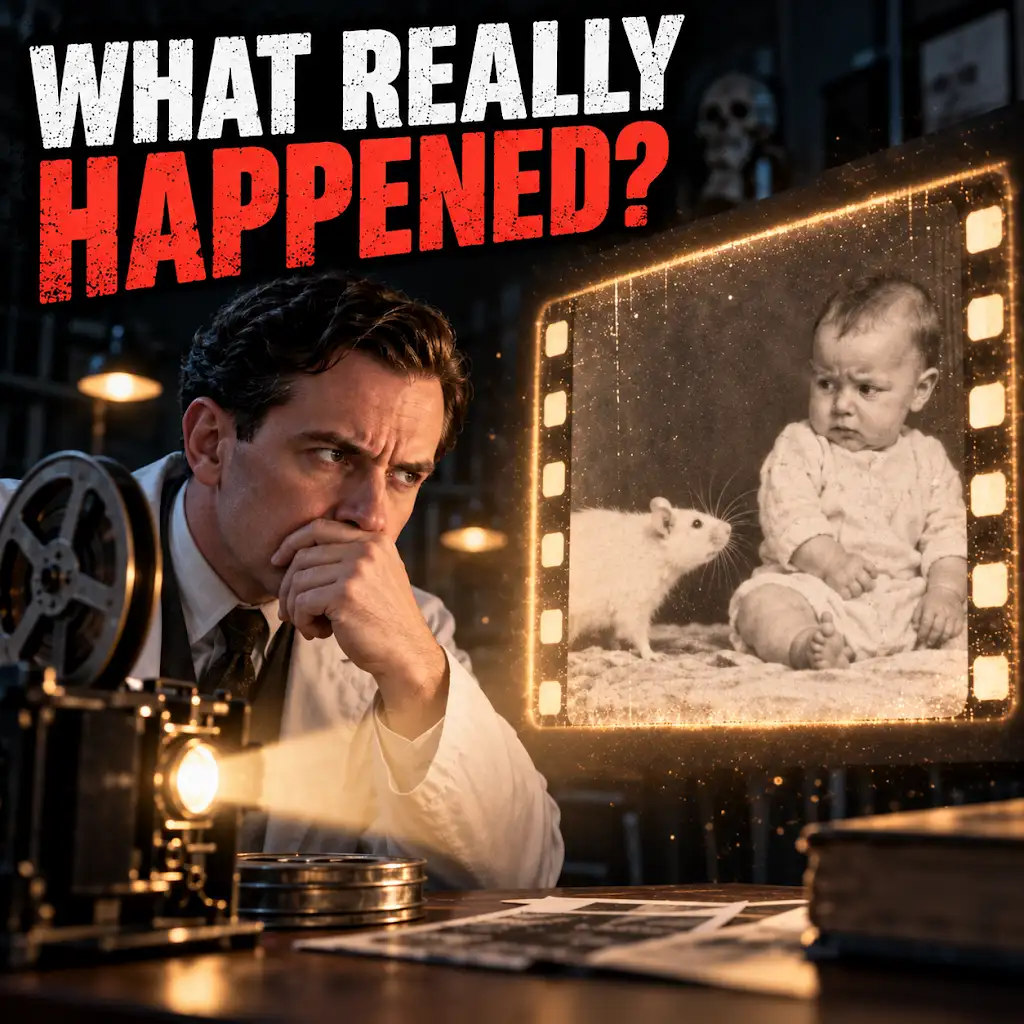
The Little Albert Experiment May Not Have Worked
FAQs
What was the Little Albert experiment?
The Little Albert experiment was a study conducted by John B. Watson and Rosalie Rayner in 1920, where they conditioned a young boy named Albert to fear a white rat by pairing its presence with a loud, startling noise.
Why has the Little Albert experiment been debunked?
The Little Albert experiment has been debunked due to ethical concerns regarding the treatment of the child participant, as well as methodological flaws in the study’s design and execution.
What were some criticisms of the Little Albert experiment?
Critics of the Little Albert experiment have pointed out issues such as lack of informed consent, potential harm to the child participant, and the lack of follow-up to assess the long-term effects of the conditioning.
What impact did the debunking of the Little Albert experiment have on psychology?
The debunking of the Little Albert experiment led to increased awareness of ethical considerations in research involving human participants, as well as a greater emphasis on the importance of informed consent and minimizing harm in psychological studies.
What are some key takeaways from the debunking of the Little Albert experiment?
Some key takeaways from the debunking of the Little Albert experiment include the importance of ethical guidelines in research, the need for rigorous scrutiny of study methodologies, and the ongoing evolution of psychological research practices to ensure the well-being of participants.